night lights

June has arrived and with it comes warmer weather, longer days and temperate nights. One of the many bonuses of longer days is more time for outside photography. We are exploring light this month. Light is the most important element in photography. Without it all photos would be pure black. I am beginning with an exploration of the lights at night.

night lights3

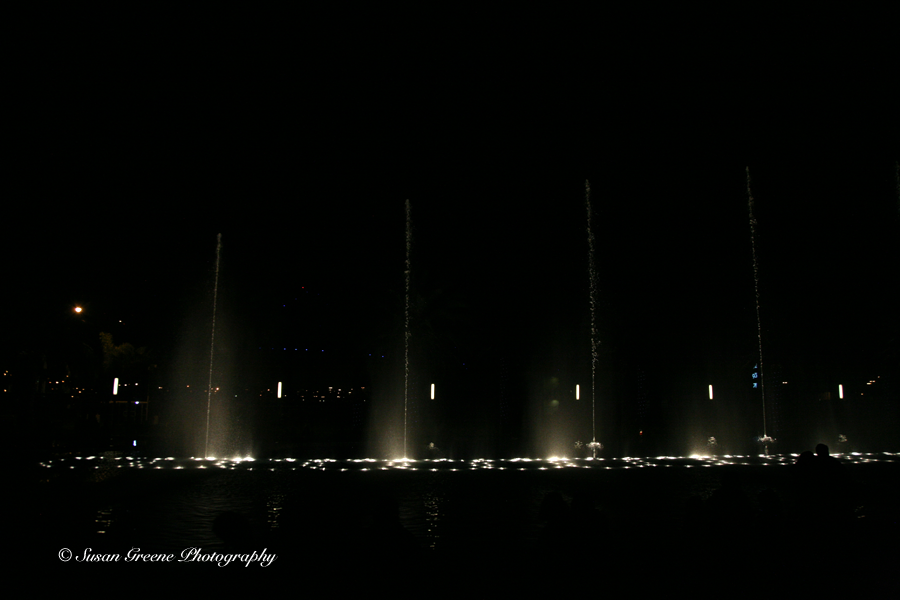
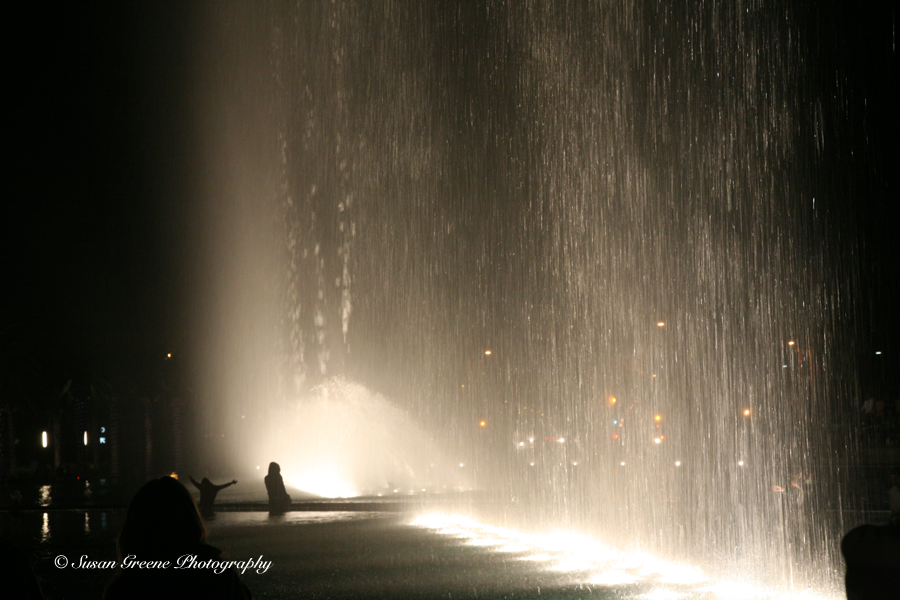
Anticipation growing during the quiet before the show got started at the Fanfare fountain at the Gateway in San Pedro, CA.

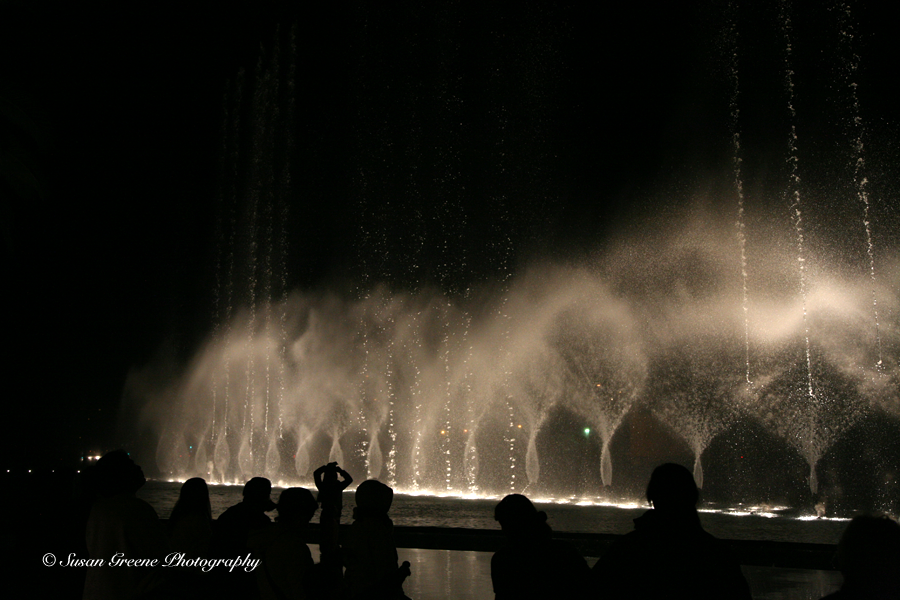
night light5The fountains are choreographed to songs as if the water is dancing.

night lights

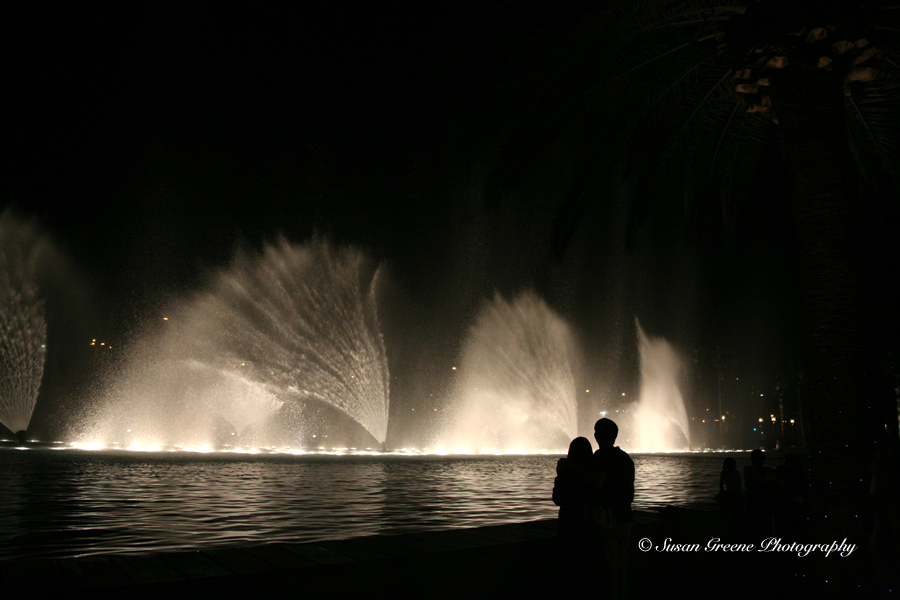
night light8When photographing lights, I like to expose for the light and create a silhouette of foreground subjects.

night light7

Seeing the water moving in time to the music is magical. To capture it, I chose 1600 ISO,   set the f-stop at 4 and varied the shutter speed depending on whether I was going to freeze the water,

night light2or let it blur. Getting swept up in the music and water motion and breaking into your own dance is not uncommon.

night light6

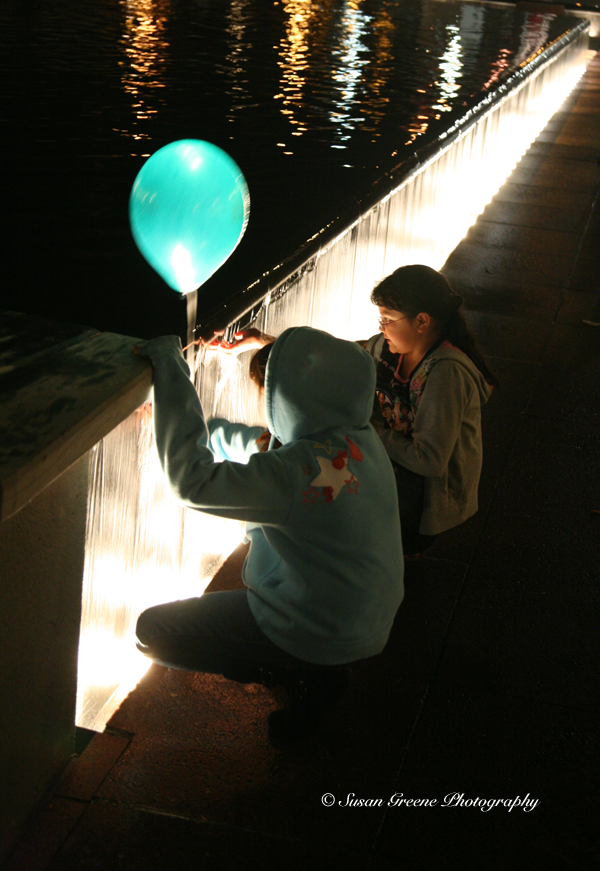
Sometimes, it can be hard to resist touching the water.

night light4A tripod is a good idea when photographing in low light situations to avoid blur from camera movement. If you don’t have one with you, placing your camera on a solid surface is an alternative (keeping your camera away from the water, of course!)

Cheers.

~ Susan


Light Writing

light write

Discovering something new is exhilarating, even if it is only new to you. It was my experimentation with the slow sync flash mode that led to a recent exhilaration. The slow sync flash mode allows a longer shutter speed to be used with flash. This creates the opportunity to gather more ambient light and also have the subject be in focus. This also makes it possible to see light trails.  I grabbed my most willing subject, a couple of flashlights, my camera and a tripod, and headed to the backyard one recent night. I envisioned the backyard daughter with some lines created next to her by her moving the lights around. We did that and realized there was enough time to try to write a word.

light write3The first attempt time ran out and the shutter closed before she was able to complete the word. But after readjusting the settings – making the aperture smaller therefore creating the need for a longer shutter speed, there was plenty of time.

light write2The first few times she wrote the word so that she would be able to read it (from her left to right or backwards for me) and I flipped the photo in Photoshop in order to be able to read it correctly. Then, she wrote backwards when we realized there was an abundance of time for writing. This very same daughter used to write messages in the steam on the shower door, backwards! We had such fun playing around with the lights and were delighted by how well it came out. Most cameras have a slow sync setting for the flash. I highly recommend checking your camera for it and getting shooting, signing off with a flourish. . .

light write1

~ Susan

News “Flash”

Here we are in May all ready, a new month, and therefore a new photographic term to explore here at backyard sisters. This month we will be investigating flash. It may seem like an odd choice for me since I don’t have flash capability with my current camera set-up. However, I have in the past and am going to examine some of the the benefits and drawbacks of the use of flash. At this point, in my photography, I prefer to use the available light but, especially in the house at night, I find limitations to my ability to capture what I want. For the photos this month, I am borrowing my daughter’s Nikon D3000 which has a built-in flash.

The first scenario I want to consider is when your subject is in a darker area in front of a brightly lit area, such as a person in the shade of a tree with a sunny area behind them or inside the house in front of a window. In these cases, if you would like to have your subject and background in focus and visible it is necessary to use a flash.

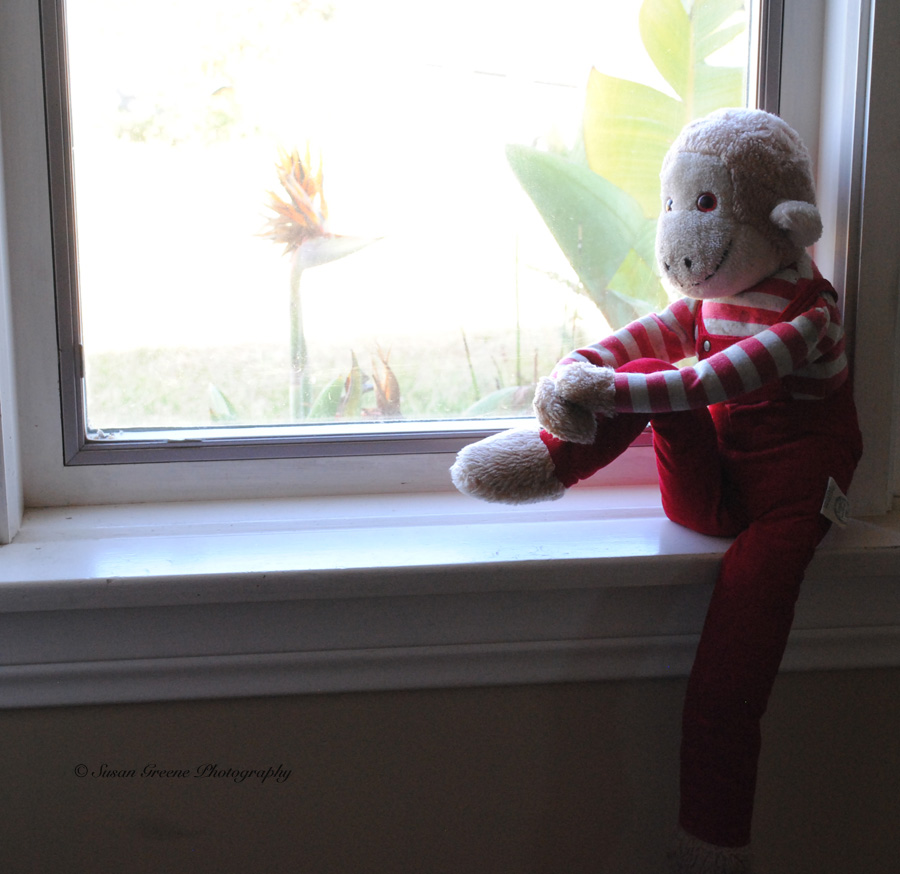
monkey in windowLet me introduce today’s subjects – they are two well-loved monkeys which have been members of our family for twenty plus years. Chester and Sam, as we call them, were a gift to our sons from their great-grandparents. Through the years, they have turned up in various locations and poses throughout the house. Just recently, I found Sam resting in the window. In this first photo, I didn’t use a flash and in order to achieve the correct exposure of Sam, the background is blown out and unrecognizable.

monkey in window2You can have your subject slightly under-exposed and the background will come into focus a bit more but some times that is not the look one wants. So, the solution is to turn on your cameras flash.

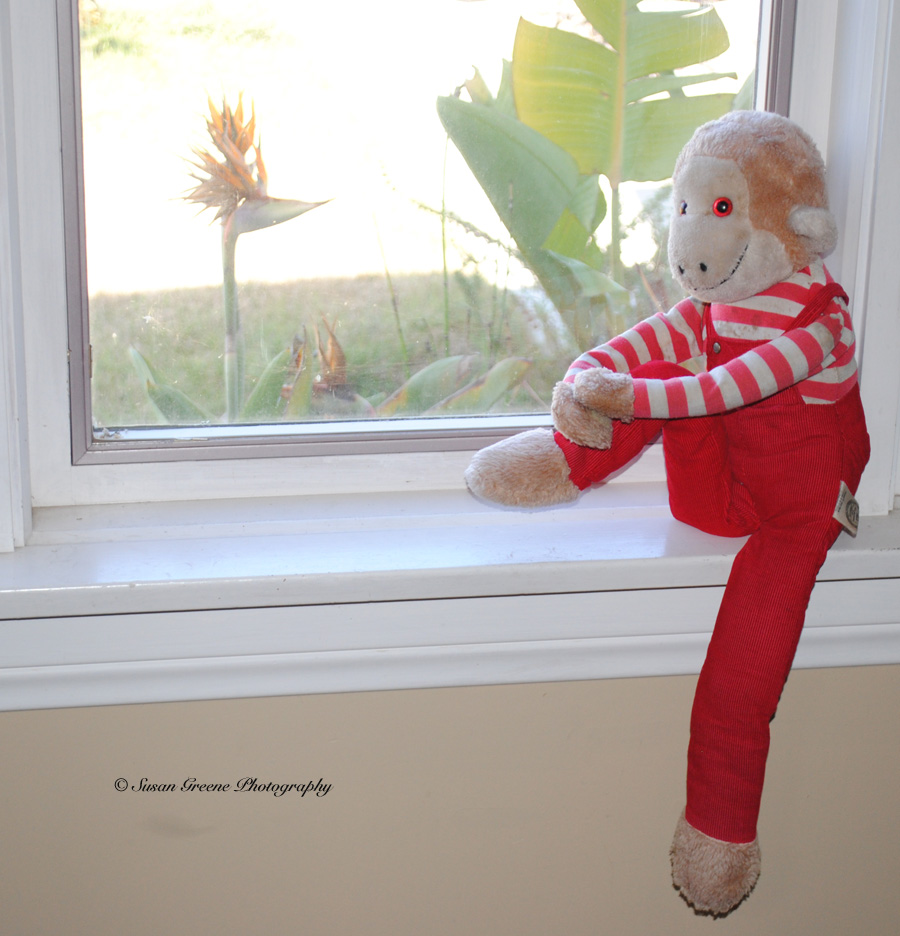
monkey in window3This allows the subject to be well lit. A word of warning here though, when using a flash in front of a window you need to be careful to avoid the flash reflection from the window in your photo. The way to do this is to stand to the side of your subject or take the picture from a lower angle.

Not wanting to be left out, Chester joined the photo shoot.

2monkeys no flashThe first one without flash and then with.

2 monkeys in windowAs you can see, the yard is much more visible in the second.  Perhaps, they are taking a break after mowing the lawn with that mower out there. . .

Cheers,

~ Susan


A Patterned Place, or Two

the rookery chicago

The patterns are out there, both natural and man-made. When looking for patterns to photograph, buildings are where I find my lens gravitating often. This week, I explore some man-made patterns and ways to look at things in your everyday life for their pattern potential. Seems to me, many architects have an affinity for repeating geometric patterns and I have discovered I too have a fondness for these patterns. Architects Daniel Burnham and John Root designed a patterned masterpiece in the Rookery building in Chicago. The light court, above, is loaded with patterns; from the intricate iron work to the painted walls, it’s an awe-inspiring space. Staircases are often an architecturally interesting and pattern producing feature.

Museum of Contemporary Art, Chicago

Museum of Contemporary Art, Chicago

CaixaForum, Madrid

CaixaForum, Madrid

This skyscraper is outside the Annenberg Space for Photography in Los Angeles.

Century City skyscrapers I am drawn to the two towers reflected in the mirrored building but I like the cut out space breaking up the pattern especially.

Sometimes, patterns can be found in unexpected places.

IMG_9366

IMG_0445

Pico House, Los Angeles

Let’s not overlook the amusement park for patterns.

Ferris Wheel

_MG_8237Incorporating patterns into your photos adds interest and impact.

This coming week, I will be looking for natural patterns.

On a patterned path,

~ Susan

Patterns are Powerful

Happy April! Here at Backyard Sisters a new month means a new photographic topic to explore and this month it’s patterns. Patterns are everywhere. Once you start taking note and incorporating them in your photos you may become a pattern fiend. Using patterns in a photo can draw in the viewer and keep them there as they are examining, following and maybe getting lost in your pattern. One place that immediately came to my mind to begin the pattern practice, The Getty Center in Los Angeles, is crawling with patterns;  in the architecture,

getty center patterns

Getty center patternsand in the gardens.

Getty garden patternsPatterns made by man,

Getty garden patternsgeometric patterns

Getty garden patternsand patterns found in nature.

pattern plantThis month, we turn our eyes and lenses to the patterns around us. See what patterns you can find as you go about your everyday life. The patterns are there, simply look around and see what designs captivate your imagination and will invite your viewers to get lost in your photos.

Looking forward to sharing a patterned month with you.

~ Susan

The Lowdown on Low Contrast

IMG_8010locontrastThere are days when the weather is not perfect, surprise! It may be cloudy or hazy or foggy. But that doesn’t mean you can’t take photos. You will get a different look to your photos those days. They will have a low contrast dreamy look to them because the sun is diffused which creates a more even lighting. The dark black shadows and bright white highlights are tempered.

IMG_2496 lo contrast.JPG I find I gravitate to coastline landscapes on these days, maybe because the fog we so often find ourselves enshrouded in here creates the low contrast lighting and there is a sense of mystery to a foggy coast.

IMG_9227locontrastI have also noticed many catalogs and wedding photographers are using low contrast lighting in their photography. One way to achieve this is to shoot towards the sun and expose for the model which often creates an overexposed background or by adjusting the contrast and brightness in post processing.

IMG_8000lo contrastSimple subjects or scenes tend to lend themselves to this type of look.

IMG_8020locontrast

Photography using low contrast is yet another method of conveying a mood or feeling to your photos and is fun to play around and experiment with both on location and in post processing.

Dreamily searching out diffusion this week,

~ Susan

Splash of Color

Color contrast adds visual interest and impact to photos. When looking at a color wheel, you notice that one side contains the warmer colors the reds, yellow and oranges and the other side is where you’ll find the cooler colors: blue, green and purple. The colors opposite from each other are considered complementary colors and as such are pleasing to the eye when used in combination. Red and green are an example of a complementary pair of colors.

DSC_0167contrastThe designers of the 7-UP can know this and here I played up the red by throwing a Coke can in to the mix. Blue and orange are another pair of complementary colors.

IMG_2383contrastThe Caribbean is full of color splashes. The towns are often painted with bright yellows, reds and oranges and many of the locals dress in the same bright colors which all complement the beautiful blue sea.

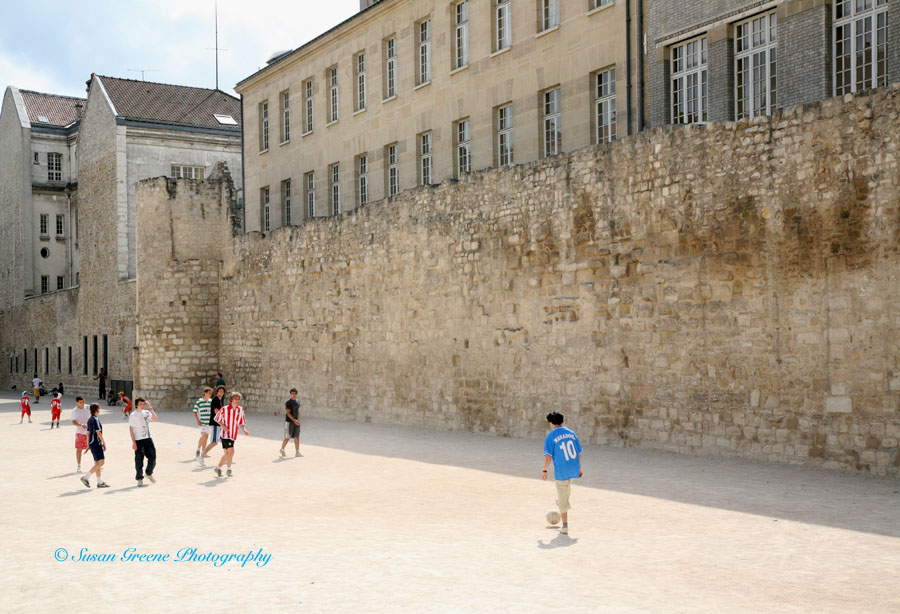
IMG_3862.JPGcontrastColor can be introduced into a monochrome scene to draw the viewer in to the photo. The players here in the vivid hued shirts stand out against the sand colored building and ground.

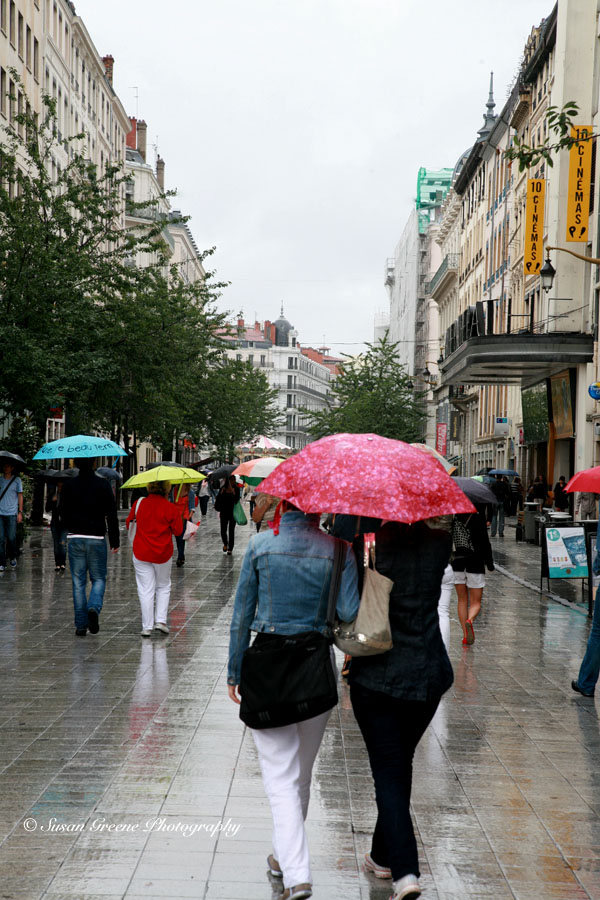
IMG_9307contrastThe gloominess of the rainy day is brightened by the umbrellas and shirts of the pedestrians. Color contrast can be added to a photo by either using a splash of complementary color in a scene of a predominate color, such as a splash of red in a predominately green scene, or by adding bright colors into a neutral toned scene.

It’s yet another tool to use when you are composing your photos. Remember, generally the cooler colors harmonize with the warmer colors.

Here a splash, there a splash.

~ Susan

Creating Lines in Portraits

To wrap up this month of leading lines, I focus on the portrait. My most willing backyard model joined me for a short photo shoot to demonstrate a few poses.DSC_0379portraits

I found some photos taken a few years ago of my backyard model to use as well.

IMG_7378portrait

Limbs, hands and hair are a few of the posing, line producing possibilities. Simply bending one or both arms draws attention to the face.

IMG_4964portraitBending legs and taking the photo straight on or outstretched legs taken from the side are two ways of using the legs to draw the eye to the face. Hand placement near the face is  another way to achieve leading lines. Finally, we used a pose involving bent legs from the side mixed with straight and bent arm with hand by face, a little bit of everything.

DSC_0401portraits

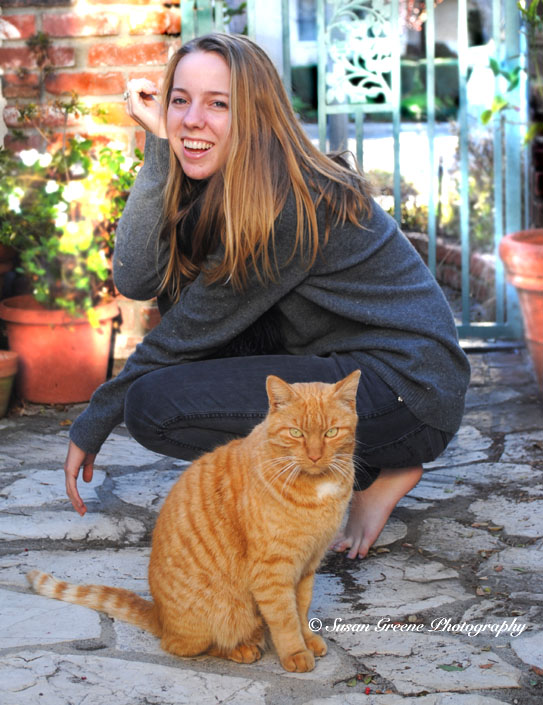
Even a neighbor’s cat wanted in on the action.

There are many possibilities for incorporating lines in poses to draw attention to the face. I have just touched the surface. I hope you will go and try finding a few of your own.

Here’s to finding a willing model.

~ Susan

Read the Lines

It’s February and that means we have a new theme. This month’s photographic concept is leading lines.  Photographically speaking, it is a compositional tool in which the photographer utilizes lines to engage and draw the viewer into the photo and/or highlight a subject.

leading lines children walkingIt can be subtle

LA city hall and musi center fountainor more obvious.

IMG_4433.JPGlead line

Sometimes, these lines will lead the eye through and out of the photo.

Park path leading line

wyoming country roadLines are everywhere once you start noticing and are often created by objects such as a road, a tree line, a building, telephone poles, stairs, there are many possibilities. Your lines  don’t have to be straight; so keep your eyes out for curvy and diagonal lines as well.

Versailles grounds leading linesWith an eye on the lines.

~ Susan

Précis:
Lines in a photo can be used to highlight a subject and bring a viewer’s eye to that subject or beyond.

Practice:
Search for lines to incorporate into your photography this week.
Look for diagonal and curved lines also.
Place your subject in such a way that the lines draw a viewer’s eyes to your subject.

Play:
Look for works by one of your favorite photographers, in a book or online or go to a museum, and see if you can find leading lines in their photos. Take note of how your experience of that picture is affected by these lines.

Embracing the Blur

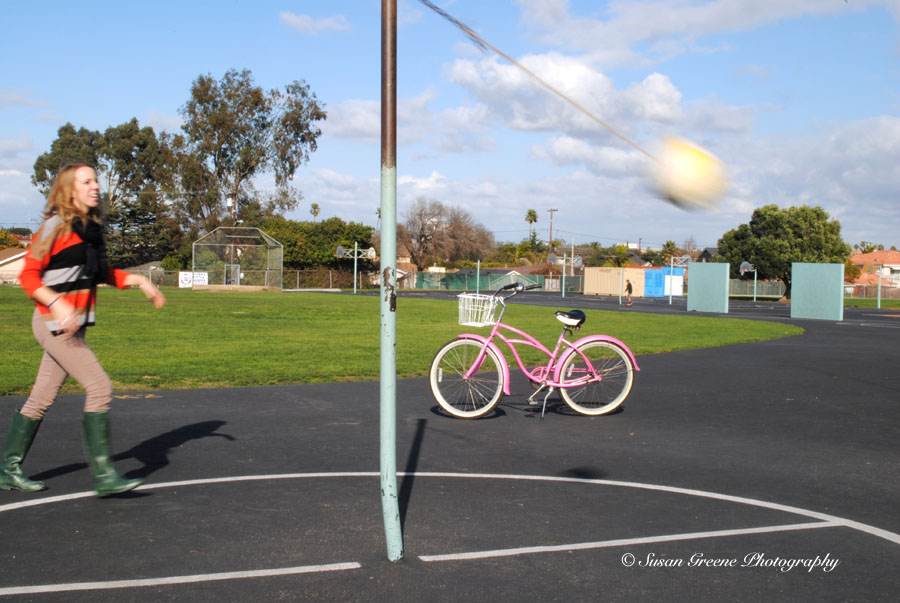
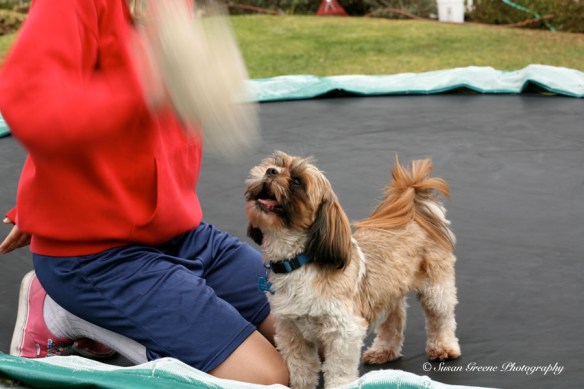
Blurry pictures are not generally a goal in photography. But there are times that blur in a photo is used as a means of conveying motion. There are a couple of different ways to accomplish this. Calling upon my most faithful backyard model for this motion photo shoot, we dusted off the old cruiser bike and headed out. The first way to convey motion with blur is to put the camera on a tripod, compose the scene, set your exposure settings using a slow shutter speed (anything from 1/30 and lower will work) and have something or someone move through your scene.

DSC_0934motionThe shutter speed I used for this was 1/25. I tried a slower one of 1/8 and it was so slow the subject was unrecognizable.

At the playground, a tether ball beckoned.
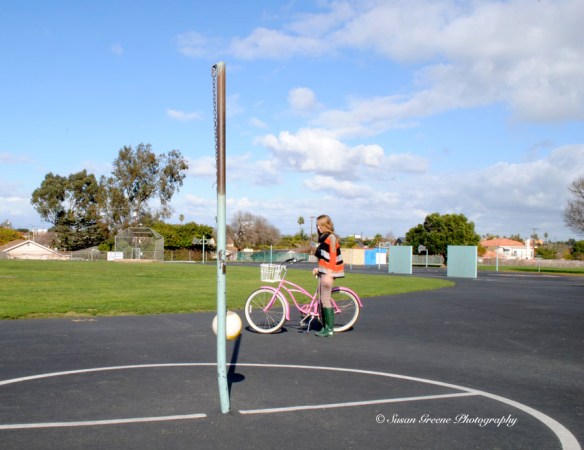
DSC_0935motionSo, we set up and had some fun here.

DSC_0940motionFor old time’s sake. . .

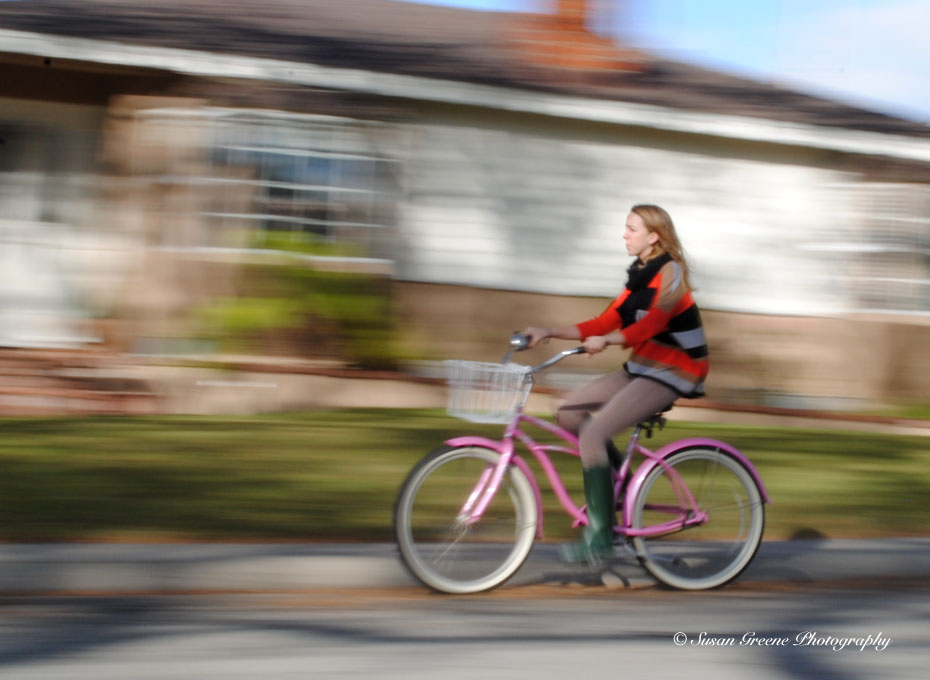
DSC_0943motionAnother method of conveying motion is panning. This involves following a subject with your camera creating a blurred background and focused subject.
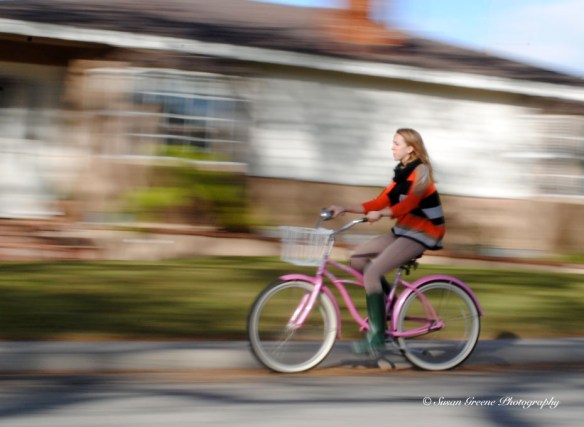
DSC_0952motion1To achieve this effect, use the tracking mode in auto-focus (or as an alternative you can preset your focus to the spot you will be capturing your image), a slower shutter speed  (once again anything from 1/30 down), holding the camera very steady follow your subject in the viewfinder and moving the camera in the same direction as your subject, shoot away. A fluid movement is key to this effect. If there is any jerkiness your subject will also end up out of focus. A mono-pod or tripod can be used but sometimes this is more troublesome, the choice is yours. This works best for subjects moving in a predictable motion that remain at a constant distance from you; subjects moving in a line parallel from you. Cars, bikers, joggers and pets (anything moving really) are all fun subjects for the panning technique. It can be tricky and may require some practice but is a fun tool to add to your photographic toolbox.

So go on and get out there and embrace the blur!
Shih tzu dog at play

~ Susan

Précis:
Blur can be used in photos to convey motion and this can be achieved by using a slower shutter speed and keeping your camera still on a tripod while an object or something moves through your scene creating a blurry subject and focused background or by using a slower shutter speed and moving your camera with your subject creating a blurry background and sharp subject.

Practice:
Think of things in motion you everyday and how you can convey that motion in a photo.
Using a tripod, set up and capture the blur of something moving while the rest of a scene stays in focus.
Pan your camera with a moving subject. This may involve taking many photos to get one but it’s worth it.

Play:
Call upon your most faithful model and set up a scene with them in motion. Could be jogging, skateboarding, bike riding, scootering or even simply walking with gusto and try using both motion capturing techniques on them. Play around using different shutter speeds also.