The Lines in the Sand

With leading lines on my mind, I recently headed down to the beach. Standing at the top of the ramp looking down, I found my first photo. The lines of the ramp were beckoning me to follow them down to the many possibilities waiting below; surfing, swimming, bike riding, walking, running or beach-combing – not this morning, it’s photography I chose this morning.

DSC_0315beach lines

Stopping to take note and looking around I see the lines are everywhere; from the tire tracks left by lifeguard trucks,

DSC_0311beach linesto the footprints left by people and birds,

DSC_0237beach lines

to   the line created by the foam of the waves rolling up to the shore,

DSC_0241beaach linesto the waves combined with footprints.

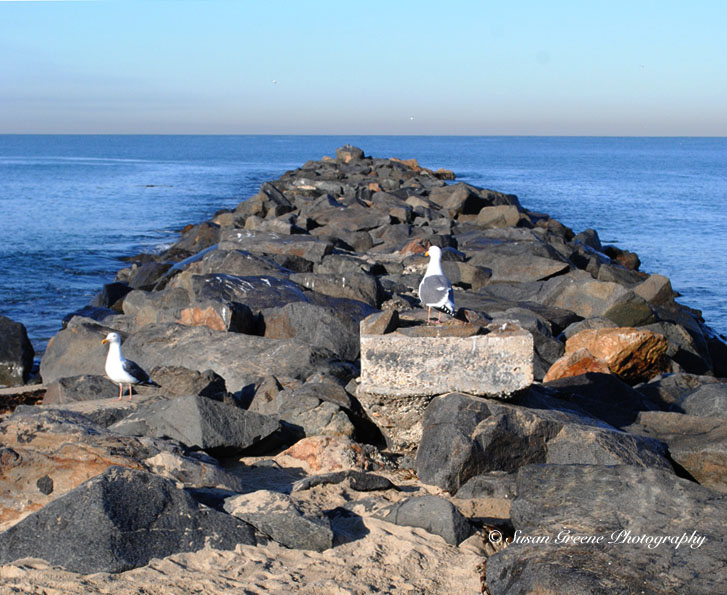
DSC_0244beach linesEverywhere I look I see lines. The jetty jutting out from the shore as if daring me to incorporate it into a photo and I must comply.

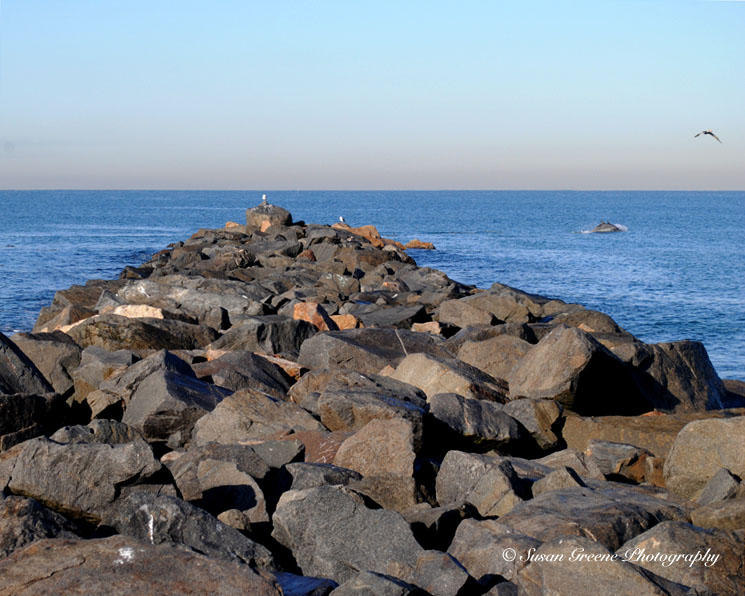
DSC_0264beach linesI got lucky because there was a pod of dolphins playing right off the jetty this morning. I had to thank it for taunting me and capturing my attention, I may have missed those dolphins if I hadn’t.

DSC_0297beach linesIt’s always thrilling to me to see the dolphins so close to shore frolicking in the surf but I can’t forget the people out and about as well.

DSC_0309beach linesThis line of cut telephone poles caught my eye too, there was no stopping me.

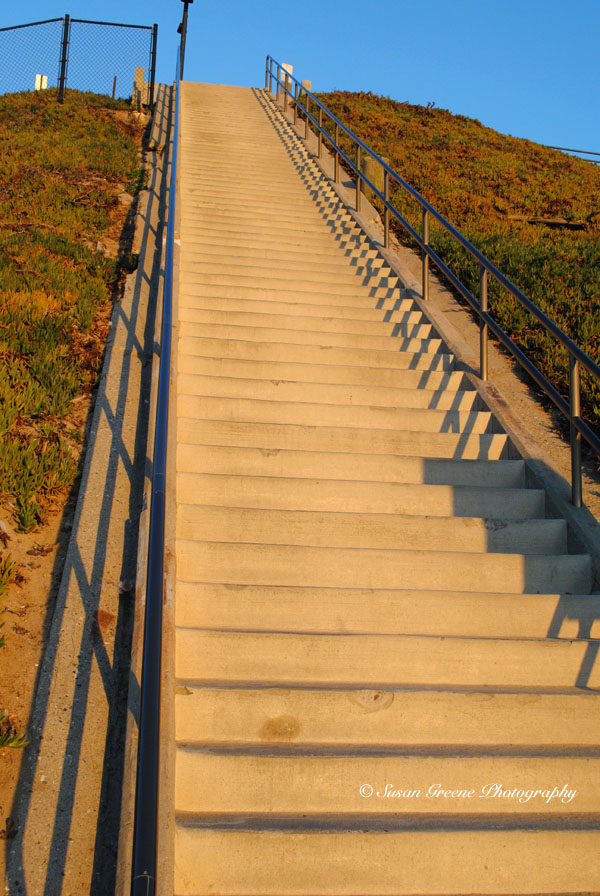
DSC_0262beach linesIn the mornings, these stairs are a well-used exercise spot usually filled with climbers taking on the “stairs to fitness” but this evening they are much quieter – but still as high. I especially like the shadows of the rails at this time of day and how they multiply the leading line effect.

DSC_0253beach linesLooking for leading lines has become a game and a bit of an obsession to me now. This coming week you can find me still looking for the lines but in a different location.

Until next week. . .

~Susan

The Weekend Dish – Roasted Beet Salad

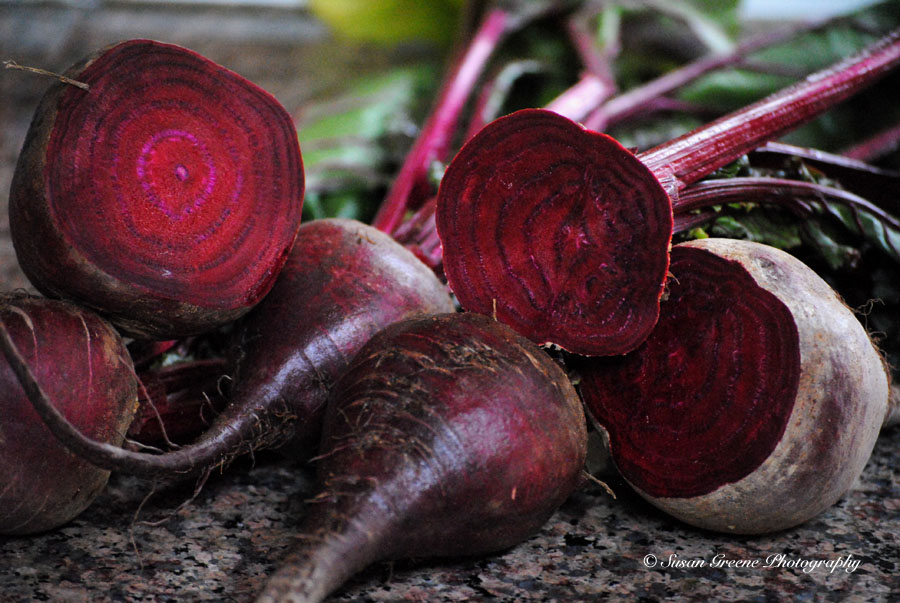
DSC_0051beetsBeets, the beautiful beet, is vibrant in color.

beets

Its’ color is festive.

cut beets

When added to a salad it’s like a party in a bowl. A salad is a fine way to start a meal; leading one into the entree if you will. This roasted beet salad is a wonderfully, delicious way to celebrate Valentine’s Day, or turn an ordinary day extraordinary.

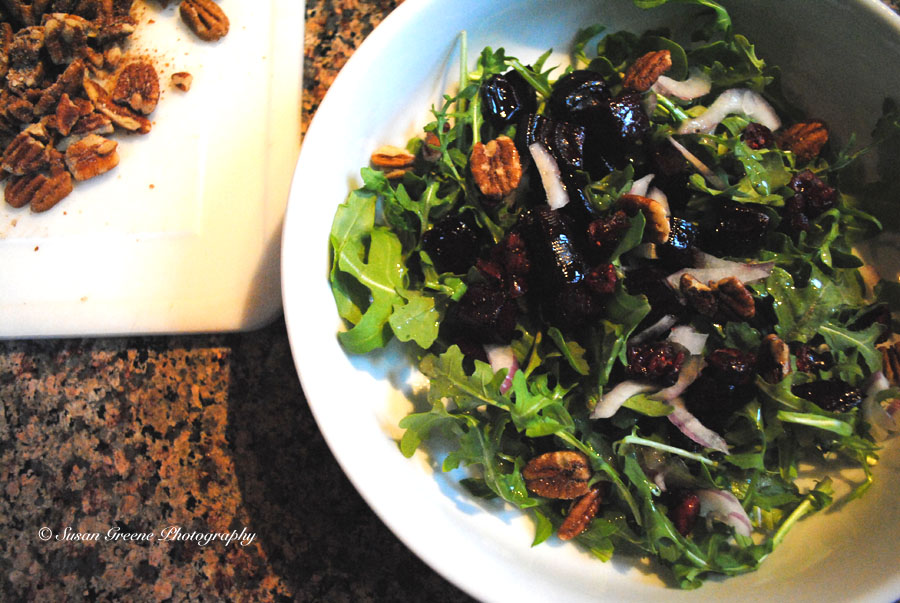
DSC_0073salad fixins

Roasted Beet Salad

6 beets, peeled and chopped into 1″ cubes
1/4 red onion
6 oz arugula
6 oz mixed baby greens
1 cup dried cranberries
3/4 cup roasted pecans

Preheat oven to 400°. Toss chopped beets with enough olive oil to coat and sprinkle with salt to taste. Roast in oven until tender, about 40 minutes.
In a large bowl toss the beets with the remaining ingredients and the dressing. Serves 12.

Dressing:
1/2 cup olive oil
1/4 cup fresh squeezed lemon juice
1 Tbsp honey
1/4 tsp black pepper
Whisk ingredients together until thoroughly mixed. Ingredients can be adjusted to taste, sometimes, if not tart enough for my taste, I will add a splash of red wine or apple cider vinegar or will add more honey if too tart.

roasted beet saladEnjoy and Happy Valentine’s Day!

~ Sue

Read the Lines

It’s February and that means we have a new theme. This month’s photographic concept is leading lines.  Photographically speaking, it is a compositional tool in which the photographer utilizes lines to engage and draw the viewer into the photo and/or highlight a subject.

leading lines children walkingIt can be subtle

LA city hall and musi center fountainor more obvious.

IMG_4433.JPGlead line

Sometimes, these lines will lead the eye through and out of the photo.

Park path leading line

wyoming country roadLines are everywhere once you start noticing and are often created by objects such as a road, a tree line, a building, telephone poles, stairs, there are many possibilities. Your lines  don’t have to be straight; so keep your eyes out for curvy and diagonal lines as well.

Versailles grounds leading linesWith an eye on the lines.

~ Susan

Précis:
Lines in a photo can be used to highlight a subject and bring a viewer’s eye to that subject or beyond.

Practice:
Search for lines to incorporate into your photography this week.
Look for diagonal and curved lines also.
Place your subject in such a way that the lines draw a viewer’s eyes to your subject.

Play:
Look for works by one of your favorite photographers, in a book or online or go to a museum, and see if you can find leading lines in their photos. Take note of how your experience of that picture is affected by these lines.

Embracing the Blur

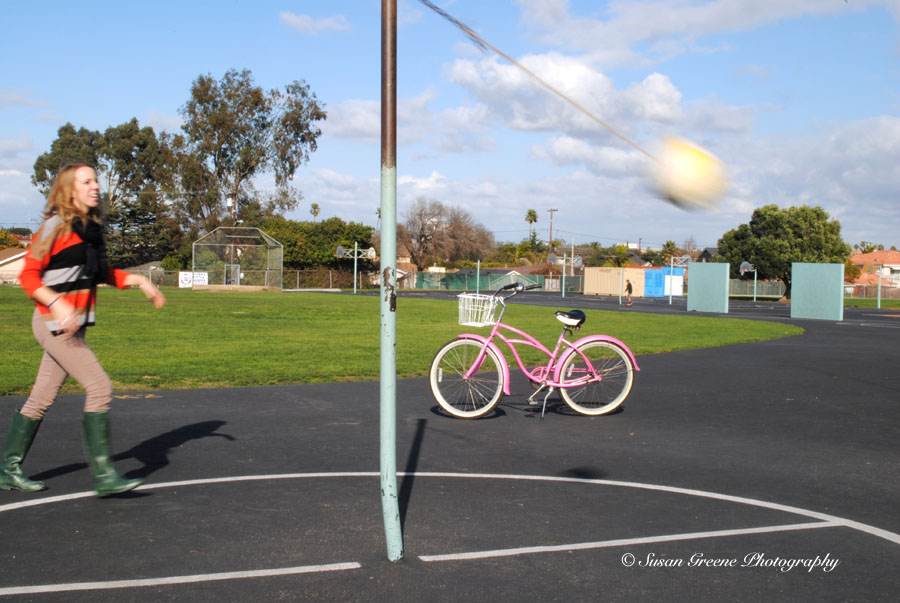
Blurry pictures are not generally a goal in photography. But there are times that blur in a photo is used as a means of conveying motion. There are a couple of different ways to accomplish this. Calling upon my most faithful backyard model for this motion photo shoot, we dusted off the old cruiser bike and headed out. The first way to convey motion with blur is to put the camera on a tripod, compose the scene, set your exposure settings using a slow shutter speed (anything from 1/30 and lower will work) and have something or someone move through your scene.

DSC_0934motionThe shutter speed I used for this was 1/25. I tried a slower one of 1/8 and it was so slow the subject was unrecognizable.

At the playground, a tether ball beckoned.

DSC_0935motionSo, we set up and had some fun here.

DSC_0940motionFor old time’s sake. . .

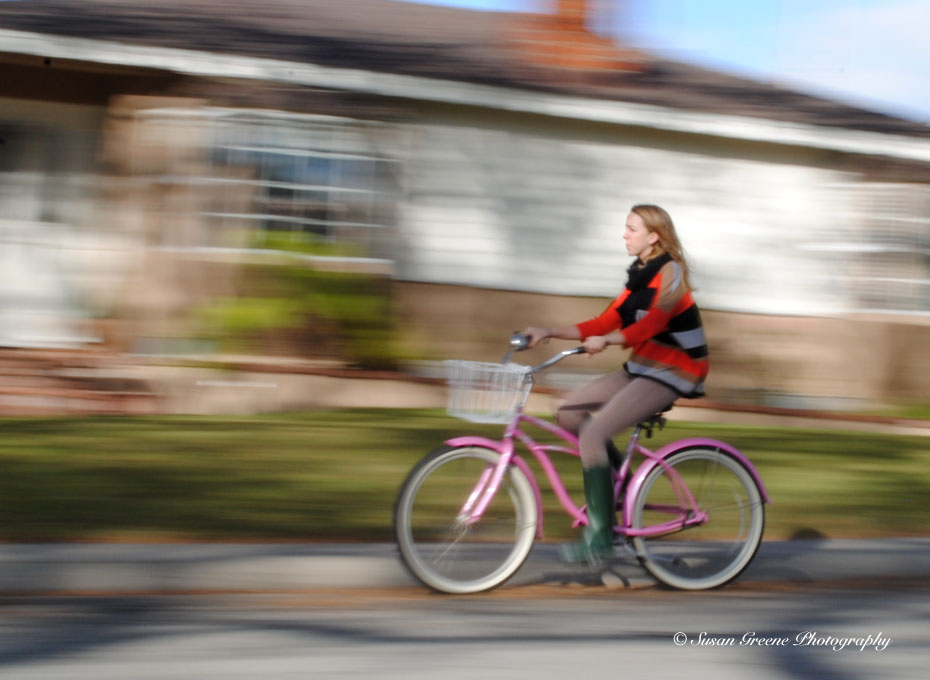
DSC_0943motionAnother method of conveying motion is panning. This involves following a subject with your camera creating a blurred background and focused subject.

DSC_0952motion1To achieve this effect, use the tracking mode in auto-focus (or as an alternative you can preset your focus to the spot you will be capturing your image), a slower shutter speed  (once again anything from 1/30 down), holding the camera very steady follow your subject in the viewfinder and moving the camera in the same direction as your subject, shoot away. A fluid movement is key to this effect. If there is any jerkiness your subject will also end up out of focus. A mono-pod or tripod can be used but sometimes this is more troublesome, the choice is yours. This works best for subjects moving in a predictable motion that remain at a constant distance from you; subjects moving in a line parallel from you. Cars, bikers, joggers and pets (anything moving really) are all fun subjects for the panning technique. It can be tricky and may require some practice but is a fun tool to add to your photographic toolbox.

So go on and get out there and embrace the blur!

Shih tzu dog at play

~ Susan

Précis:
Blur can be used in photos to convey motion and this can be achieved by using a slower shutter speed and keeping your camera still on a tripod while an object or something moves through your scene creating a blurry subject and focused background or by using a slower shutter speed and moving your camera with your subject creating a blurry background and sharp subject.

Practice:
Think of things in motion you everyday and how you can convey that motion in a photo.
Using a tripod, set up and capture the blur of something moving while the rest of a scene stays in focus.
Pan your camera with a moving subject. This may involve taking many photos to get one but it’s worth it.

Play:
Call upon your most faithful model and set up a scene with them in motion. Could be jogging, skateboarding, bike riding, scootering or even simply walking with gusto and try using both motion capturing techniques on them. Play around using different shutter speeds also.

The Weekend Dish – Curried Butternut Squash Soup

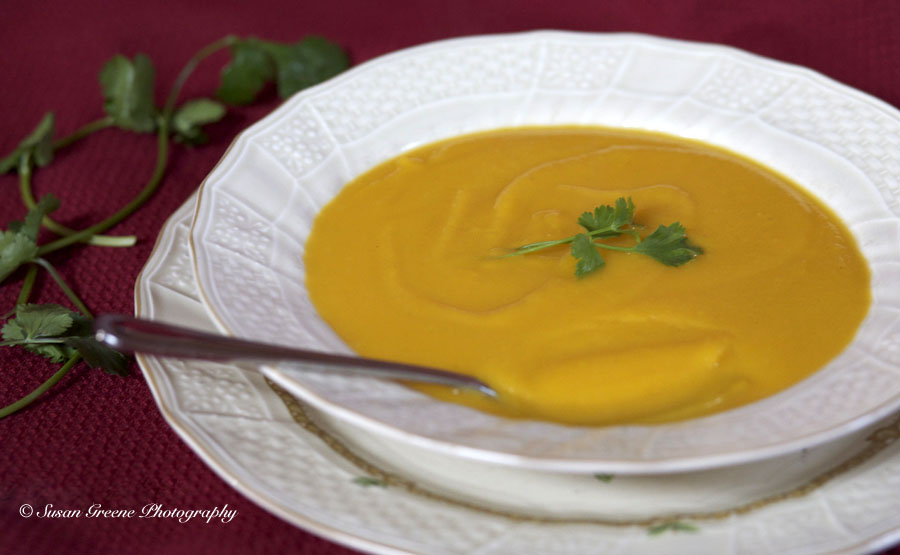
curried butternut squash soup

There are a few food scents that upon detection send me to my “happy place” – cinnamon, cloves, roasting garlic and to a slightly lesser extent coffee and cooking bacon. A new addition is curry. This month, I have been making dishes with curry more than usual and I have noticed it is beginning to have that happy effect on me. Recently, returning home after making this soup, I am transported to my aroma therapy happy place. The faint curry scent coupled with the delicate squash create an olfactory bouquet I view as a little gift to myself. In the five seconds or so I am mentally reveling in this gift, my daughter exclaims, “mmm, smells good!”, a bonus gift!

The squash, with the help of a few supporting ingredients, is elevated to a smooth, warm, savory delight and allowed to shine.

_MG_8721soupFor this simple yet elegant soup. . .

Curried Butternut Squash Soup

2 Tbsp olive oil
2 cups chopped onion
2 Tbsp chopped, seeded jalapeño pepper
1 tsp curry
6 cups cubed, peeled butternut squash (about 3 pounds)
4 cups water
1 tsp salt
2 Tbsp dry sherry

Heat olive oil in a dutch oven or large pot over medium heat. Add onion; cover and cook   5 minutes. Stir in jalapeño and curry, and cook 2 minutes. Stir in squash, water, and salt and bring to a boil over medium-high heat. Cover, reduce heat, and simmer 30 minutes or until squash is tender. Place half of the squash mixture in a blender ; process until smooth (or can be processed in pan using a hand held blender). Pour the puréed squash mixture into a bowl. Repeat the procedure with the remaining squash mixture. Return the puréed squash mixture to the pan and stir in the sherry. Can be brought back up to a simmer and kept warm.

curried butternut squash soupThe perfect dish for warming a cold, winter day.

Try it this weekend and see if you will be transported to your “happy place”.

~ Susan

It’s a Wild Life

I am a paparazzo. Positioning myself in the optimum position to capture the subject while trying to remain hidden so as not to spook it. There have been rumors of sightings. I have actually seen them here before, in this exact location, but this time they are proving to be elusive. I lay on the ground as flat as possible behind a large bush, checking the camera settings; at the ready, finger on the shutter. . . there he is! Snap!_MG_8627birds
It’s a goldfinch! Joining another one for breakfast.

_MG_8625birdsNot unlike celebrities going about their daily lives, birds are difficult subjects – camera shy, flighty, never staying too long in the same spot – downright evasive.

IMG_0893birds

Sometimes you get lucky and are able to catch them at rest.

IMG_0885birds

Giving you more time for focusing and composing the shot.

_MG_4522birds

More often than not though, you will be trying to capture a moving object . . .

hummingbird and sage

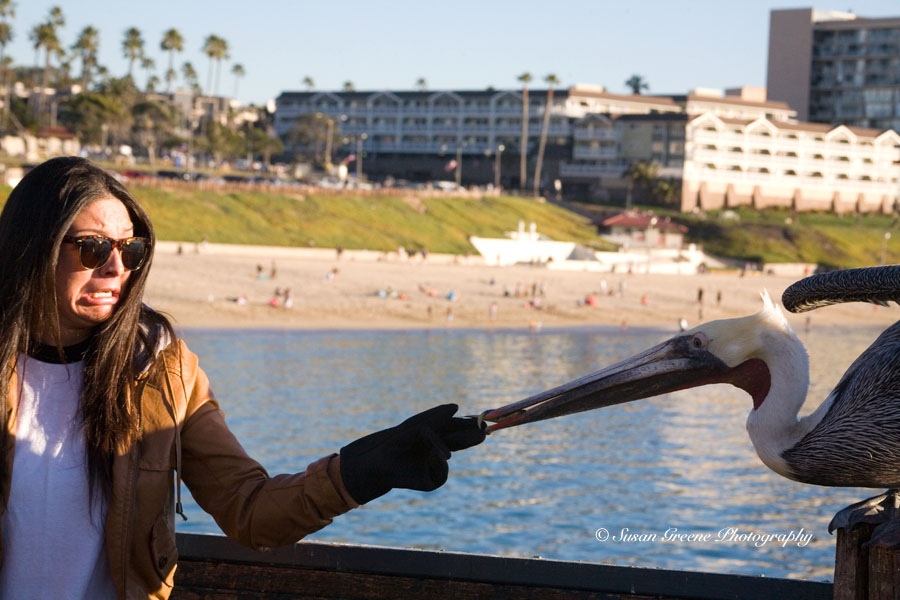
When trying to get that shot, and focus on the avian subject, you have choices. You can use auto-focus or manual focus. When choosing, auto-focus there are options within that choice – the options I describe pertain to Canon cameras, so if you have another type you will have to refer to your user’s manual for the exact terms for your camera. The auto-focus options are:  One Shot mode – which is used for still subjects,  AI Servo – for moving subjects ( if the subject is moving and the focusing distance keeps changing the camera tracks the subject) or AI Focus – for switching between the two ( if the subject is still and then moves it will switch to the AI Servo mode from the one shot mode). The auto-focus mode can be nice for capturing active subjects out in the open.Take your camera to a location where you know those celebrities congregate out in the open; perhaps near your local watering hole.

pelicanStart in either the AI Servo or AI Focus modes and shoot away.

_MG_8569birds

Often, our feathered friends choose to hang out in trees or on bushes with a lot of branches. This can create a problem with auto-focus because if the bird takes flight the camera will sometimes try to focus on the branches. The other option is manual focus discussed last week.  If having trouble in auto-focus mode switch to manual focus and see which setting works best for you in your situation.

Sometimes those avians can be very accommodating. . . “I’m ready for my close-up!”

_MG_8552birdsKeeping both eyes focused in the trees.

~ Susan

Précis:
When using auto-focus there are options as to how the camera handles the focusing of a subject. If your subject is still use One Shot mode, if your subject is moving use AI Servo mode and if your subject will be still at times and then move choose AI Focus mode.

Practice:
Use auto-focus in each of the three different settings and conditions this week and see how your camera responds. Birds make excellent action subjects but choose whatever you like.

Play:
Become a bird paparazzo capturing your subjects by being as unobtrusive as possible so you can catch them acting naturally, or catch them before they fly away!

Take Back the Control, and Focus

Cameras are great! They are tools for capturing our lives and expressing ourselves, but there are times when they just don’t get it right. Using the auto features on a camera will often work and produce the desired vision but … it’s those times when they don’t that can be exasperating. There are certain situations, when using auto-focus, the lens will have trouble bringing into focus what you want in focus. Low light, low contrast, trying to take a picture of something behind another object and active subjects are all situations that can bring on the frustrating state of the lens searching for focus but never achieving focus lock. There is a solution! Slide the button on the lens over to MF (manual focus). Follow me as I tackle some of these situations on my photographic journey . . .

We have had some clear nights here in Los Angeles lately and the city lights have been shining and twinkling brightly. Wanting to capture the lights of downtown with the outlying suburbs, I drive to my favorite city light vantage point, set up with a tripod and find that in the low light of night, manually focusing the lens is the best way to achieve focus.

_MG_8386It makes me feel as if I am in an airplane looking out at the lights below.

_MG_8389

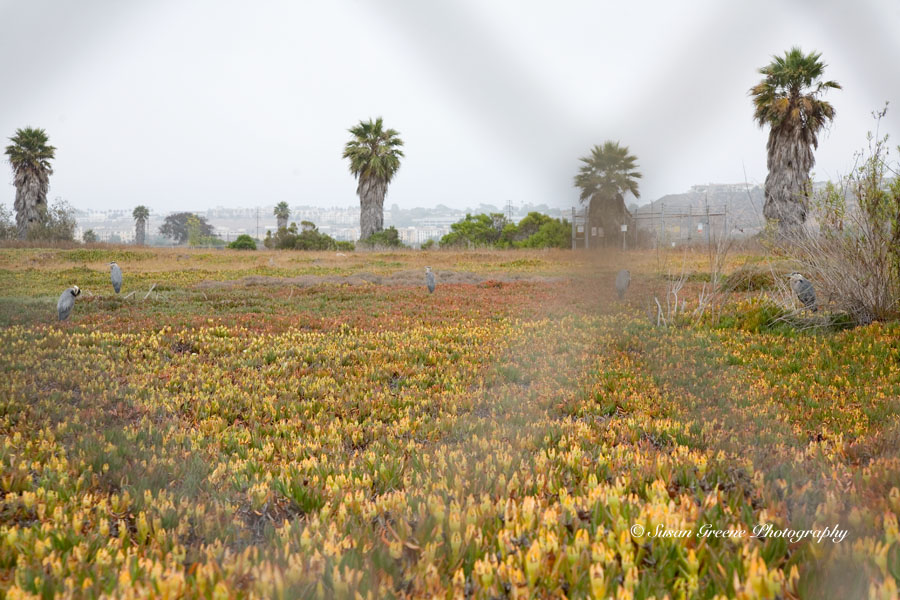
On a recent bike ride, I spot five great blue herons in a field behind a chain link fence. This is a rare occurrence in my experience on this bike path, the most I have seen before is three. Wanting to capture all five in one shot but not being able to get around the fence, I put the lens in manual focus and use the focusing ring to focus through the fencing. Maybe not the ultimate shot but I was able to capture it nonetheless._MG_5542

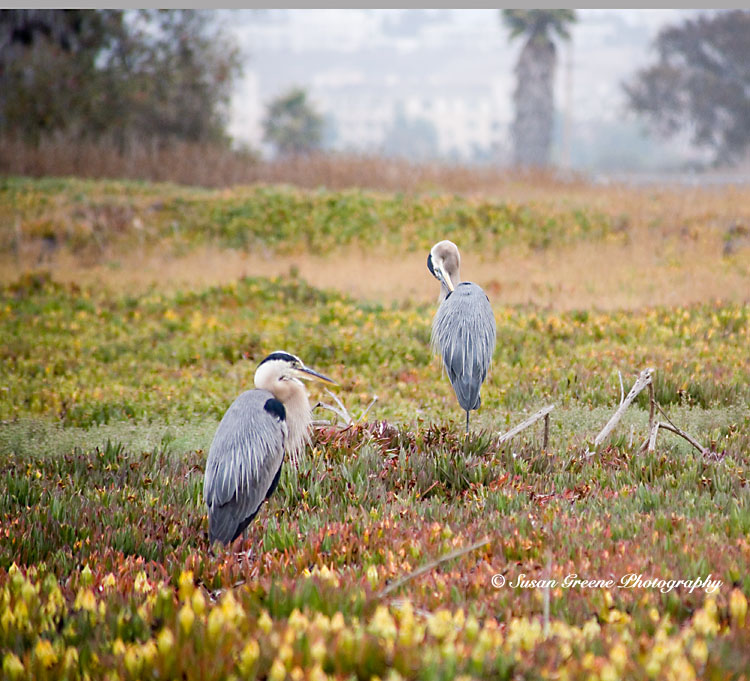
Can you see them? Then, I kept manually focusing, so any fencing wouldn’t interfere with my intended subject, and zoomed in on them, one and two at a time, through the links.

_MG_5545 _MG_5548

Sitting in my backyard, I notice the flash of white of a Matilija poppy peeking through the other foliage in the garden. I decide to take the shot through the other foliage, which is out of focus, and thus creating a frame of sorts for the poppy.

matilija copyA hummingbird is flying around a sage bush searching for nectar, so I focus on the area using manual focus and capture it. Pre-focusing on the spot the subject is expected to appear is a technique to use to help you get the shot.

hummingbirdThe pre-focus technique will work for sports, dancing, anything where the subject is in motion and is in a fairly predictable location. Simply focus on the spot the subject is expected to appear using the focus ring in manual focus and take the shot once the subject enters the frame.

Now you are ready to take on some difficult shooting situations and conquer them!

~ Susan

Using Catherine’s lovely alliterative terms from last week,

Précis:
The camera doesn’t always get it right in auto modes. Certain situations, such as low light, low contrast, moving subjects and subjects behind another object, are best approached with the lens in manual focus rather than auto focus.

Practice:
Familiarize yourself with your lenses and the manual focus ring on them (it is different from the ring you turn on a zoom lens to zoom in and out.) Think of situations where you have had trouble focusing in auto-focus. Go out of your way to put yourself in those situations this week.

Play:
Get creative in low light or shooting through objects. Take a portrait in candle light or in a garden search out a flower or fruit hiding behind leaves and see if you can capture it through manual focusing.

The Weekend Dish – Macaroni and Cheese

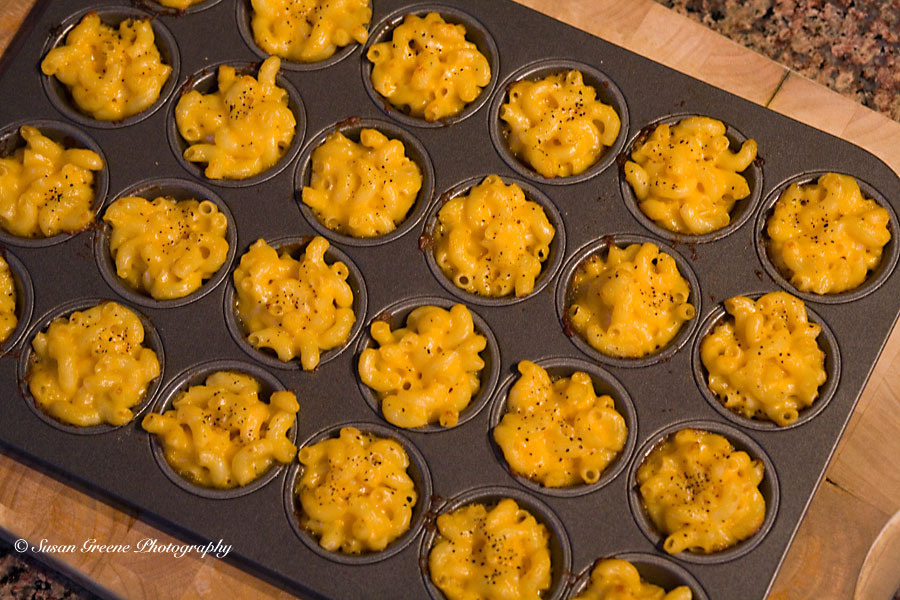
_MG_8317mac&chse Bringing the focus theme into the kitchen, the idea of recipes that focus on one or two ingredients became the clear and obvious choice for a weekend dish. Macaroni and cheese are two ingredients when combined create a simply delicious dish. In this backyard sister’s kitchen, macaroni and cheese is the ultimate comfort food. I don’t mean the boxed variety with the powdered orange cheese sauce but the made from scratch, whip up a cheese sauce and mix with your favorite pasta variety. It was the “go to” dish when I first started playing around in the kitchen with savory dishes. This happened mostly on nights when our parents were going out and we wanted to get creative with a meal.  Recently, I turned the dish into an appetizer by putting it in mini muffin tins and baking until crispy.

_MG_8331mac&chse

The Recipe:

Macaroni and Cheese

2 Tbs butter
2 Tbs flour
1 cup milk (I use non-fat)
1/2 tsp black pepper
1 pound grated cheese – I use sharp cheddar, but a mixture can be used with cheddar,     gruyere, parmesan; as long as the amount equals 4 cups grated.
1 pound elbow macaroni or your favorite small shaped pasta (I have also used penne before)

Preheat oven to 350°

Cook pasta according to package directions.

Melt the butter in a large saucepan, when melted add flour and stir to mix. Pour in the milk, add the pepper and cook over med/low heat until thickened. Add the grated cheese and stir until completely incorporated and smooth.
Add the cheese sauce to the pasta and mix until pasta is completely coated with sauce.
Pour into a greased 9 X 13 pan. Add 1/4 cup of milk to the pan and gently shake from side to side to work milk to the bottom. Bake in preheated oven until top is slightly browned, about 20 minutes.   Alternately, if you would like to make the bite-sized version place spoonfuls into a greased mini muffin tin. Use 2 tins or put remaining in a small baking dish. Bake for about 14 minutes or until crispy and browned.

_MG_8340mac&chse

We like to serve with barbecue sauce or ketchup to add a little tang.

_MG_8337mac&chseA salad and some green beans or broccoli usually round out the meal.

Enjoy and cheers,

~ Susan

Pay Attention and Focus

Focus . . .

Shih tzu dogMaybe it’s just me, but why can it be so hard to focus sometimes? Is it that there is so much to do that choosing one or two things to concentrate on is downright difficult? Or, is it that fun opportunities trump work, which can be OK, for awhile, but eventually those responsibilities won’t be able to be put off any longer? Once the decision has been made to buckle down and focus on a task at hand, it can be eye opening.

Shih tzu dogPhotographically speaking, focus is important. It shows what a photographer is trying to express by drawing attention to an object or person or part of a whole. Yet, achieving focus on the subject in your pictures can be as difficult as focusing on areas of your life. For DSLR users, I have a few tips to offer and aid in finding focus this month. First things first, it’s time for you to tell the camera what you want to focus on and don’t rely on the camera to know what you want automatically. When in auto mode, the camera chooses the focus points based on the shooting conditions. Sometimes this works, but sometimes it doesn’t and when it doesn’t it can be frustrating. You end up with your subject out of focus and something in the background in focus. To correct this, put your camera in manual, aperture priority, shutter priority or program mode,Shih tzu dog choose a focus point and take back creative control.

Shih tzu dogIt can turn your world upside down, in a good way! Now that you are out of auto, the first thing is telling your camera where to focus. Go ahead get bossy! Most modern cameras have at least nine auto-focus points (some have many more), which are the spots the camera will look to achieve focus when you have your lens set to auto-focus. Using the selection point button, you can choose one of the nine points by highlighting one and then using the dial to move the highlighter to the different points. If you highlight all the points the camera chooses automatically which point for each shot, so choose one. Often, the center point is the most sensitive and hence fastest at achieving focus, because it uses cross type focusing and the others don’t. But, maybe you don’t always want your subject in the center of your picture. What then? You can do one of two things; either change your auto-focus point to one of the others that is closer to your subject or focus using the center point and then recompose your shot. To do this, push half way down on the shutter button and when focus is locked in, you will either see a red highlight of your focus point and/or hear a beep, keep holding the shutter down half way while recomposing your shot and placing the subject where you would like; then push all the way down on the shutter button taking your shot.

Shih tzu dogWhile recomposing, it is important to remember to keep your subject in the same focal plane or risk loosing focus. Now, go out and practice, practice, practice!

This year, we are offering suggestions of ways to practice and hone the skills you may learn from Backyard Sisters and feel free to let us know how it’s going.

To Recap:

  • Getting out of auto mode and telling the camera where to focus, will give you more creative control in your photography.

Challenge Yourself:

  • Think about what you want to say in your photos this week and how focus can help convey that message.
  • Use any mode but auto and use the center point to focus lock and recompose
  • Also, try switching auto focus points using the point selection button

Cavort:

  • Try using the eyes of a person or an animal as your focus point in a photo this week. If the person is angled and the eyes are not on the same plane, focus on the eye closest to you.

Keep in mind, according to Mark Twain, “you cannot depend on your eyes if your imagination is out of focus.”

Imagine away,

Susan

Sugar and Spice Sure are Nice

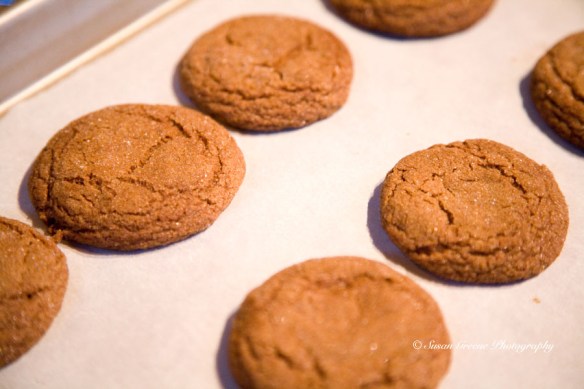
Pop a cookie sheet of these cookies in the oven and the house will fill with the scent of cinnamon, ginger and cloves. cookie doughAs the cookies progress from this:

to this:

cookies on cookies sheet

Molasses Crinkles are another one of the cookies which make an appearance on the Big Platter. The cookbook containing the original recipe is one the Backyard Sisters have turned to many times over the years.

Betty Crocker boys and girls cookbookWhen younger, and the baking urge would strike, we usually pulled out this book and flipped through the pages for just the right confection to satisfy that urge. I don’t remember what prompted the first attempt at Molasses Crinkles. Perhaps it was the exotic sounding ingredients molasses,

molassesand the spices cinnamon, cloves and ginger. Whatever it was, once mixed and baked, they have beckoned with their spicy aroma.

picking up a ccokie

Spices which boast health benefits by the way, and can evoke feelings of comfort and joy.

cookies on plateSo, bake a batch and watch them disappear.

Christmas cookies- Molasses CrinklesThe recipe:

Molasses Crinkles

Mix thoroughly in a large bowl:

3/4 cup butter
1 cup brown sugar, packed
1 egg
1/4 cup molasses

In another bowl sift together:
2 1/4 cups flour
2 tsps. baking soda
1 tsp cinnamon
1 tsp ginger
1/2 tsp cloves
1/4 tsp salt

Mix dry ingredients into butter mixture until blended well.
Chill dough in refrigerator for at least 2 hours or overnight.
Heat oven to 375°.
Roll teaspoonfuls of chilled dough into balls the size of large walnuts.
Dip the tops in granulated sugar. Place the cookies, sugar side up on a lightly greased or parchment paper covered cookie sheet, 3 inches apart.
Bake 10 minutes or just until set but not hard.
Cool on wire rack.

Makes 4 dozen.

Or bake some and share with friends and family.

~ Sue