night lights

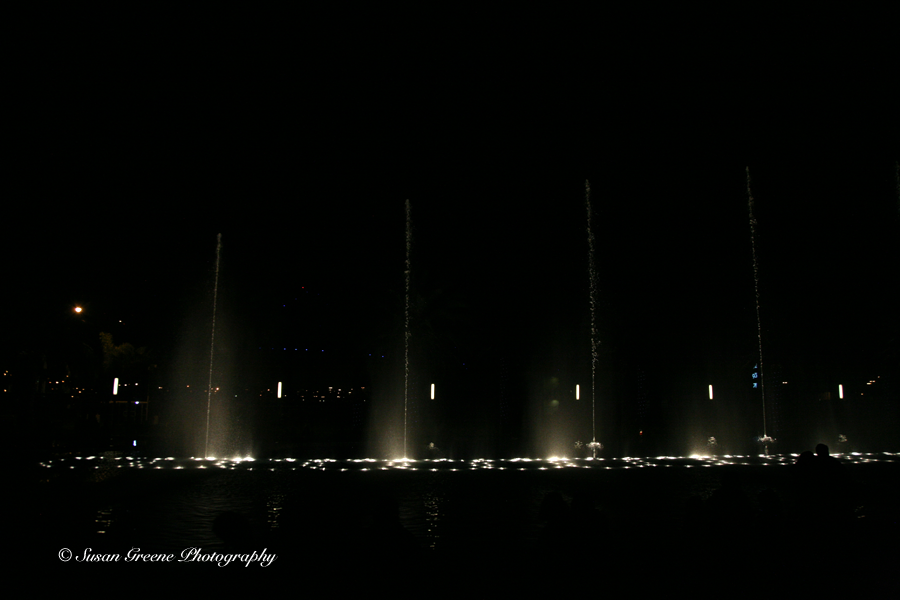
June has arrived and with it comes warmer weather, longer days and temperate nights. One of the many bonuses of longer days is more time for outside photography. We are exploring light this month. Light is the most important element in photography. Without it all photos would be pure black. I am beginning with an exploration of the lights at night.
night lights3

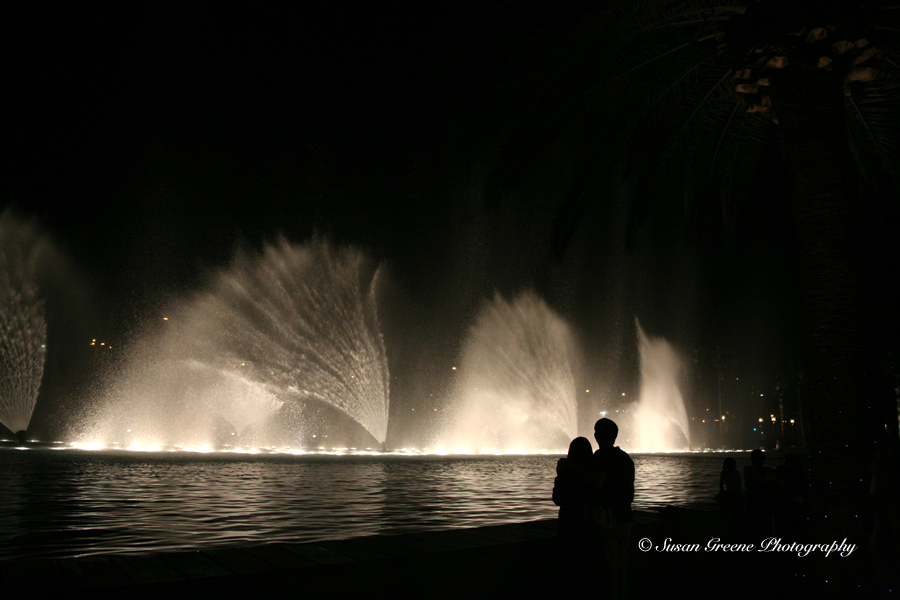
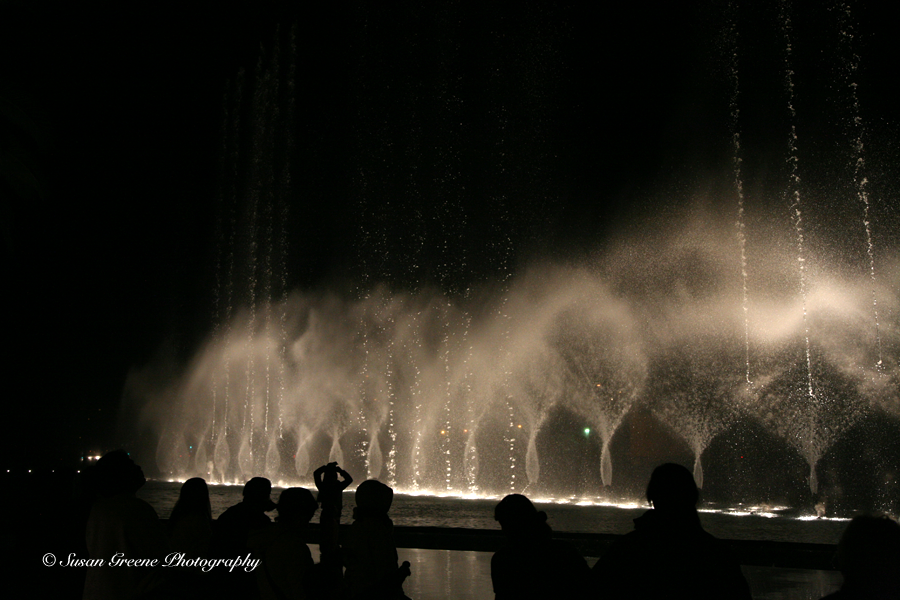
Anticipation growing during the quiet before the show got started at the Fanfare fountain at the Gateway in San Pedro, CA.

night light5The fountains are choreographed to songs as if the water is dancing.
night lights

night light8When photographing lights, I like to expose for the light and create a silhouette of foreground subjects.

night light7

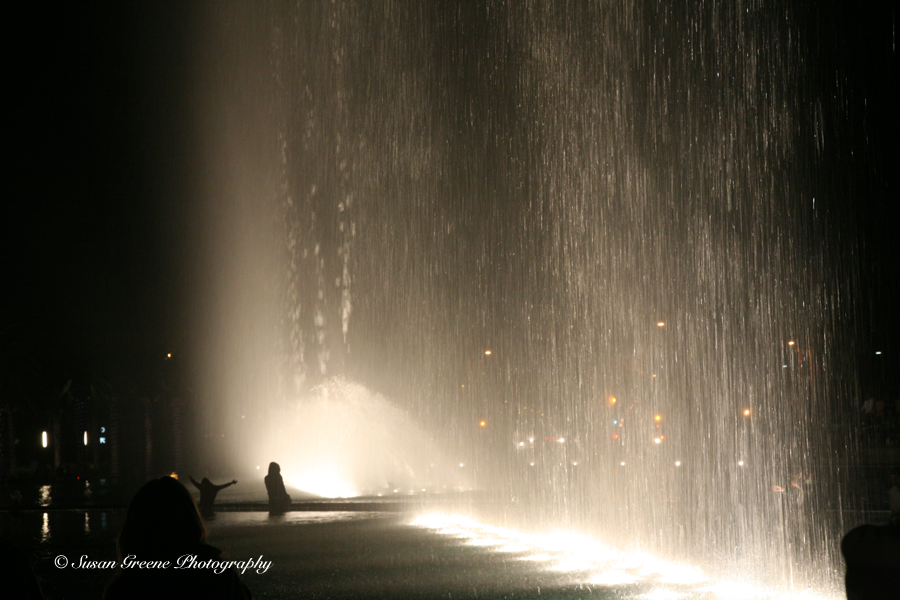
Seeing the water moving in time to the music is magical. To capture it, I chose 1600 ISO,   set the f-stop at 4 and varied the shutter speed depending on whether I was going to freeze the water,

night light2or let it blur. Getting swept up in the music and water motion and breaking into your own dance is not uncommon.
night light6

Sometimes, it can be hard to resist touching the water.
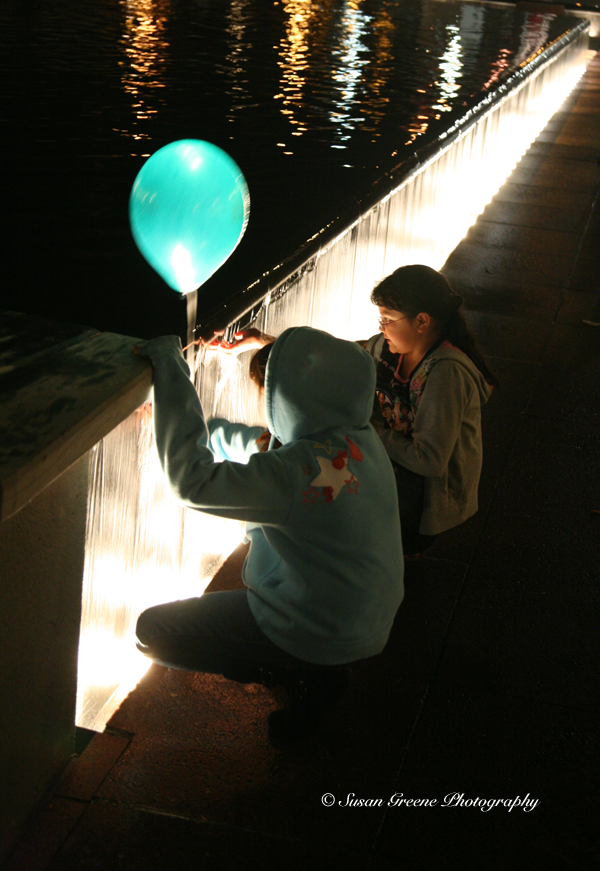
night light4A tripod is a good idea when photographing in low light situations to avoid blur from camera movement. If you don’t have one with you, placing your camera on a solid surface is an alternative (keeping your camera away from the water, of course!)

Cheers.

~ Susan


Light Writing

light write

Discovering something new is exhilarating, even if it is only new to you. It was my experimentation with the slow sync flash mode that led to a recent exhilaration. The slow sync flash mode allows a longer shutter speed to be used with flash. This creates the opportunity to gather more ambient light and also have the subject be in focus. This also makes it possible to see light trails.  I grabbed my most willing subject, a couple of flashlights, my camera and a tripod, and headed to the backyard one recent night. I envisioned the backyard daughter with some lines created next to her by her moving the lights around. We did that and realized there was enough time to try to write a word.

light write3The first attempt time ran out and the shutter closed before she was able to complete the word. But after readjusting the settings – making the aperture smaller therefore creating the need for a longer shutter speed, there was plenty of time.

light write2The first few times she wrote the word so that she would be able to read it (from her left to right or backwards for me) and I flipped the photo in Photoshop in order to be able to read it correctly. Then, she wrote backwards when we realized there was an abundance of time for writing. This very same daughter used to write messages in the steam on the shower door, backwards! We had such fun playing around with the lights and were delighted by how well it came out. Most cameras have a slow sync setting for the flash. I highly recommend checking your camera for it and getting shooting, signing off with a flourish. . .

light write1

~ Susan

The Weekend Dish – Bananas Foster

A banana tree was planted in this backyard sister’s backyard a few years ago. After noticing one in a neighbor’s front yard, and thus quelling any doubts we had about their ability to grow in our Southern California coastal climate, we decided to give it a try. Enlisting the help of a backyard son we chose a spot out near the vegetable garden, planted it and waited; with visions of Chiquita-like bananas available by a simple stroll out the back door. How excited we were when the first bunch appeared! When it turned, what we deemed a sufficiently yellow hue, we even more excitedly ran in to the house and prepared to consume this previously unimaginable treasure of a banana fresh off the tree. Peeling the tiny fruit was different from your average banana but with some effort it was accomplished and I took the first bite and was greeted by a chalky, slightly bitter, hard, dry banana. banana tree
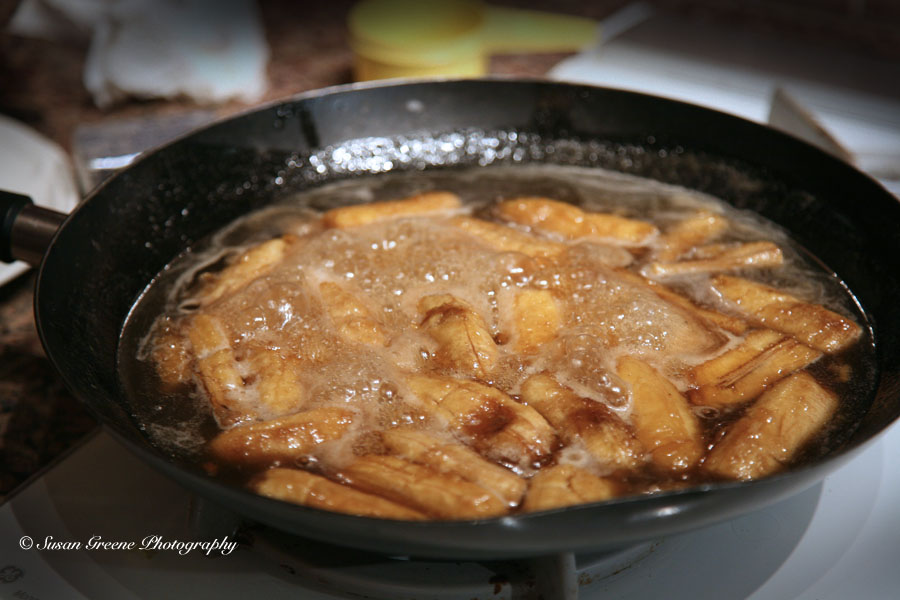
A few chalky bananas later, we came to the conclusion that these bananas weren’t improving and were more like plantains and therefore in need of some cooking (and sugar and liquor and butter!)  Bananas Foster visions happily replaced the fresh off the tree visions. Not only is the dish delicious but it makes for an impressive sight when the bananas are flambéed right before serving.

bananas foster flameIt takes caution and finesse to execute this dish.

bananas foster flame1This definitely was an improvement for these bananas or plantains. Still, these were not the best bananas or even close. The banana tree tale ends a little sadly with the decision to remove it due to its rapid rate of growth causing infringement on the vegetable garden space and its production of little, dry, chalky fruit. The banana tree is, however what lead us to try this recipe and I am eternally grateful.

~ Susan

bananas foster

Bananas Foster

  • 1/4 cup butter (1/2 stick)
  • 1 cup brown sugar
  • 1/2 tsp cinnamon
  • 1/4 cup banana liqueur
  • 4 bananas, cut in half lengthwise, then halved
  • 1/4 cup dark rum
  • 4 scoops vanilla ice cream

Combine the butter, sugar and cinnamon in a flambé pan or skillet.
Place the pan over low heat, either on an alcohol burner or on top of the stove, and cook, stirring, until the sugar dissolves.
Stir in the banana liqueur, then place the bananas in the pan.
When the bananas soften and begin to brown, carefully add the rum.
Continue cooking until the rum is hot, but not boiling or the alcohol burns off and won’t ignite.
Using a long handled match or barbecue lighter ignite the rum using the fumes at the edge of the pan. Make sure you aren’t leaning over the pan and aren’t wearing loose clothes. Never pour alcohol from bottle onto flaming pan because this can cause an explosion.
When the flames subside, lift the bananas out of the pan and place over the ice cream in dishes.
Top with generous spoonfuls of the sauce and serve immediately. This is also a delicious topping for waffles or crepes.

The Two Generation Piano in a Flash

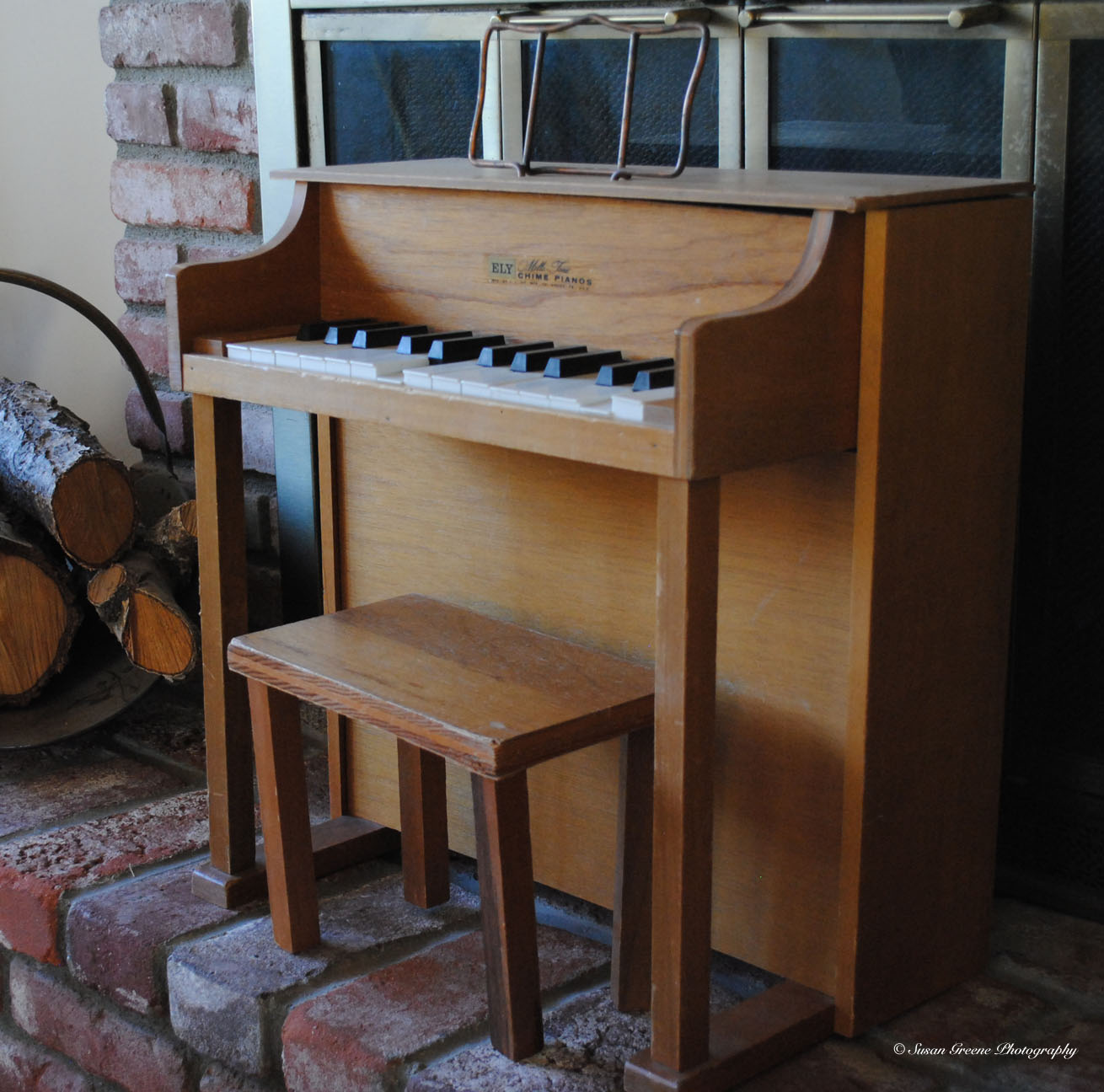
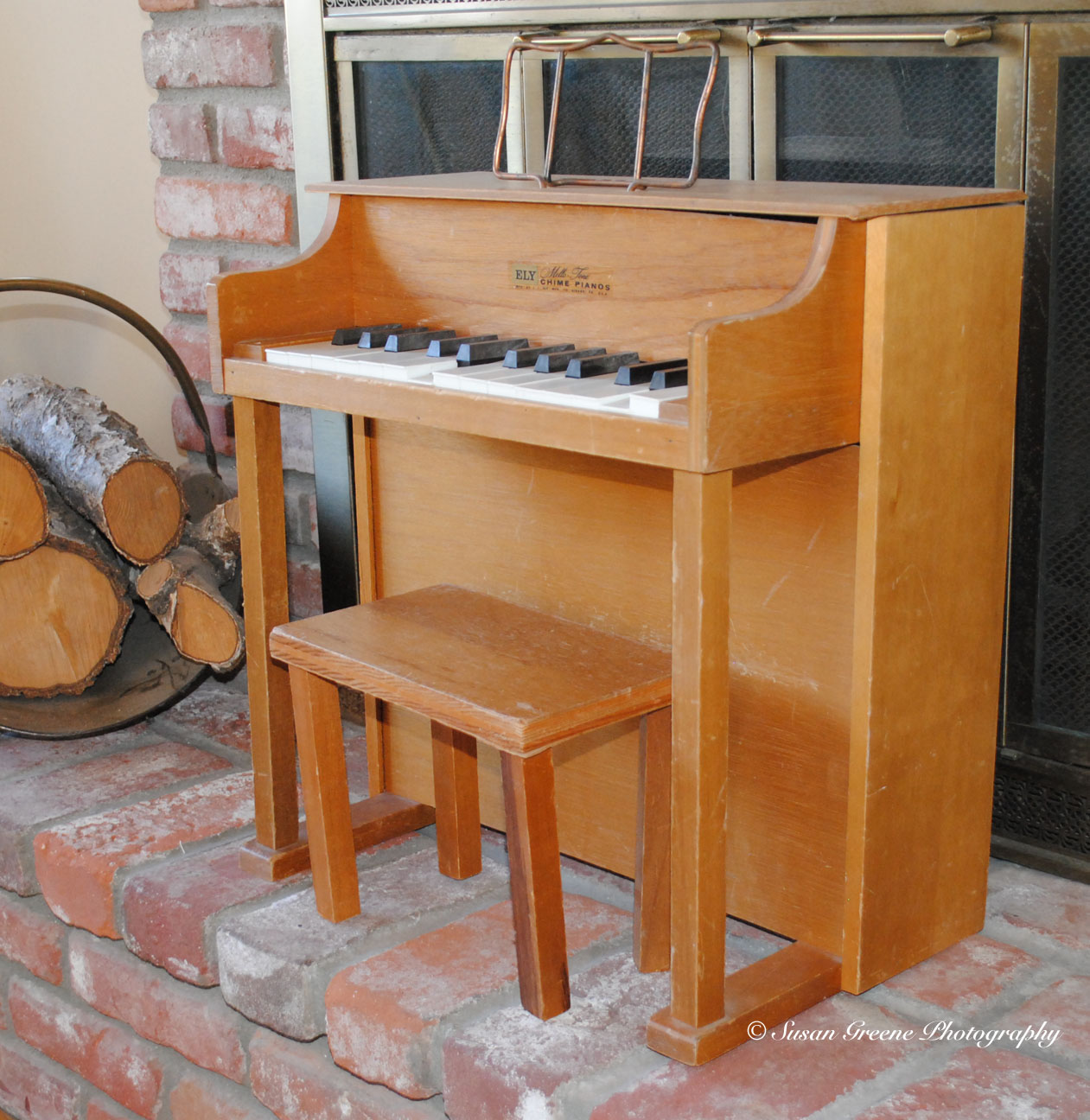
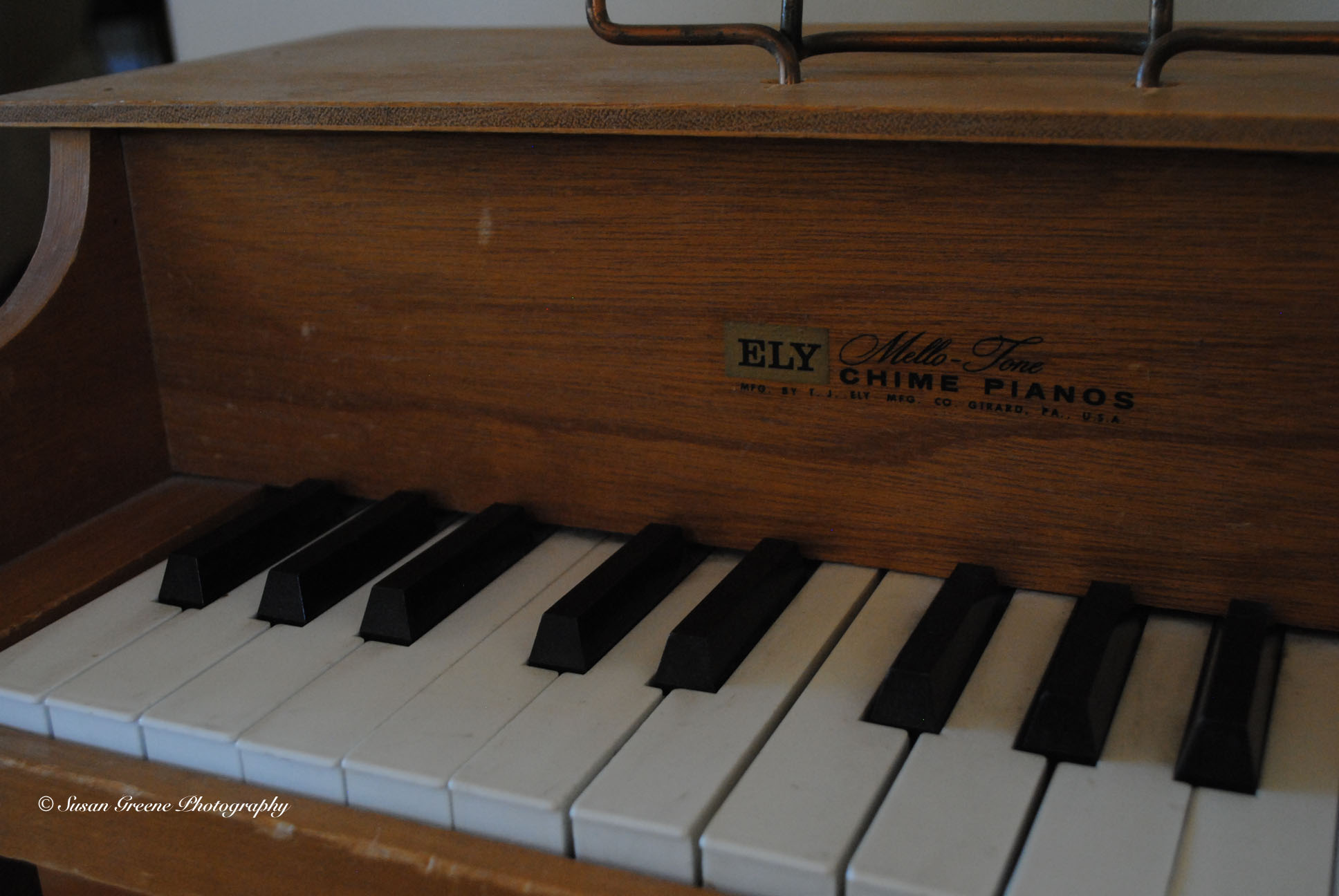
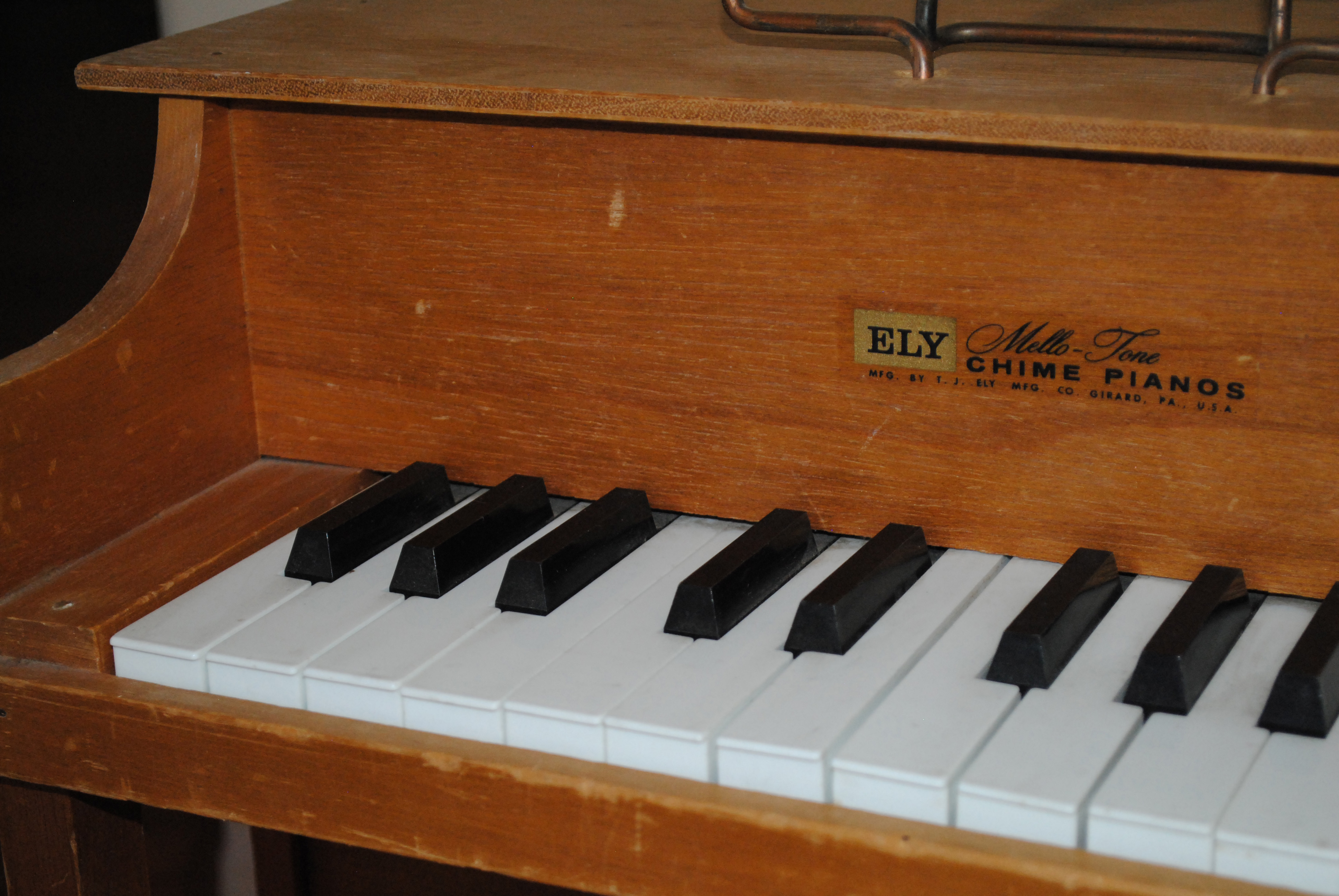
A consequence of living in the same house for many years is that some things become fixtures without you noticing it. Until one day, for an unknown reason, you look around, really look around, and realize there are some remnants of childhoods long gone sitting abandoned in a long forgotten corner of a room. Then comes the tough decision of whether to save, donate or sell. A recently implemented policy of mine to donate or sell items not being used has prompted another recently implemented policy of photographing the items before giving them away – for memory’s sake. The toy piano which has provided countless hours of musical enjoyment and delight to me and my sisters and then our children is the subject of this realization. It made the first cut because it’s just so “cute” but there is that new policy I must adhere to if I am going to keep “stuff” to a minimum.  As I begin photographing, I decide to experiment with diffusing the on-camera flash (since flash is our theme this month). My intention is to add light to capture details without obtaining the harsh look and glare which often accompanies this type of flash. First, I took one photo without any flash, simply using the available window light.

kid piano no flash1 Next, I turned on the flash using the same settings,

kid piano w- flashthere is quite a difference. The details are now visible maybe a little too visible. Lastly, I put a piece of white paper in front of the flash to spread out the light (the same principle behind umbrellas and soft boxes in studios). A small diffuser which will affix to your camera can be purchased for this purpose but I chose to go the homemade route, which requires a tripod for freeing a hand to press the shutter.

kid piano diffused flashI like it and think it is a happy medium between the two previous pictures. I tried the sequence once more with a close up.

No flash,

no flash kid piano 1flash,

flash kid pianoand diffused flash.

diffused flash kid pianoI like the softer look of the diffused flash and think it can be especially beneficial when shooting portraits. Sometimes, the direct on-camera flash gives a harsh and not terribly flattering look to people. When indoors, it is often necessary to find ways to increase the light for proper exposure  of a subject and diffusing the on-camera flash is a pleasing method of accomplishing this.

As for the little toy piano, it will hopefully find a new home where it will provide more hours of delight, fascination and enjoyment to yet another generation.

Play on,

~ Susan

News “Flash”

Here we are in May all ready, a new month, and therefore a new photographic term to explore here at backyard sisters. This month we will be investigating flash. It may seem like an odd choice for me since I don’t have flash capability with my current camera set-up. However, I have in the past and am going to examine some of the the benefits and drawbacks of the use of flash. At this point, in my photography, I prefer to use the available light but, especially in the house at night, I find limitations to my ability to capture what I want. For the photos this month, I am borrowing my daughter’s Nikon D3000 which has a built-in flash.

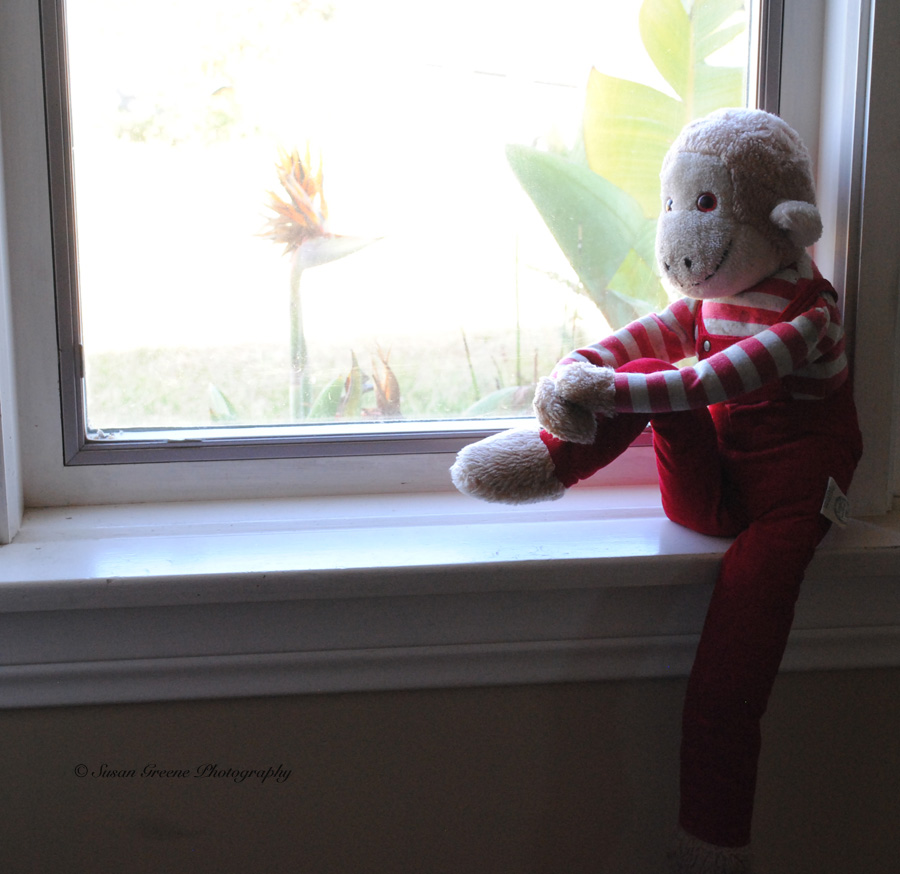
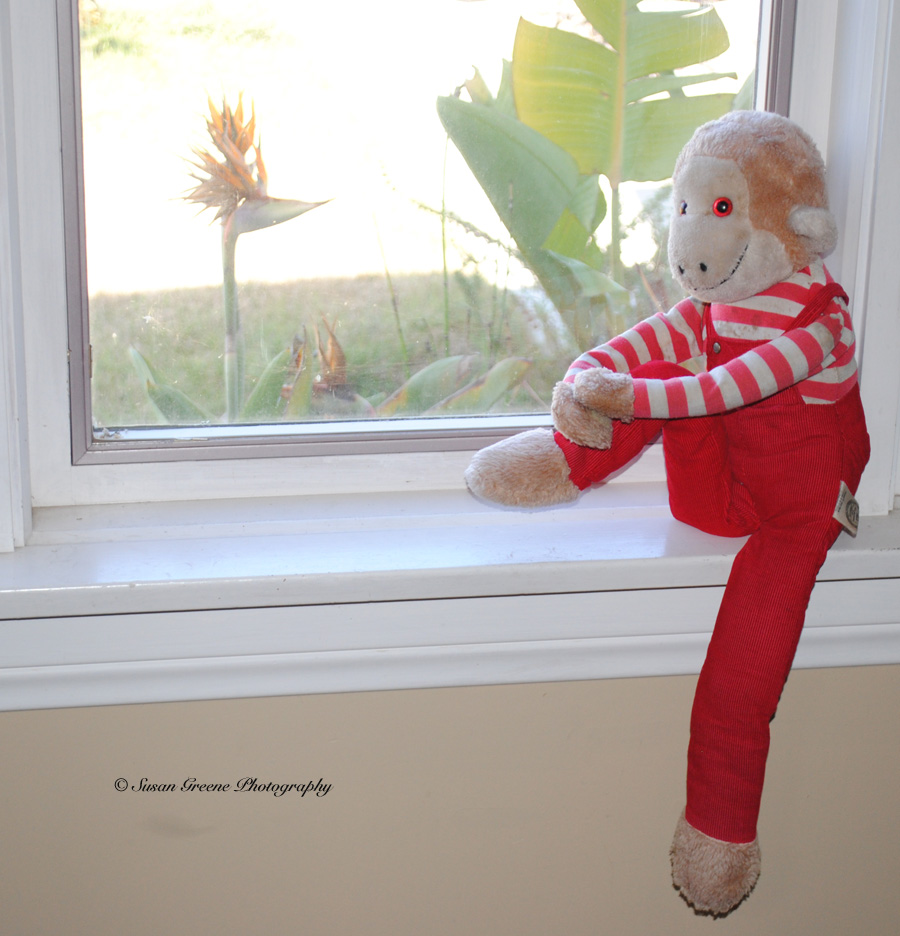
The first scenario I want to consider is when your subject is in a darker area in front of a brightly lit area, such as a person in the shade of a tree with a sunny area behind them or inside the house in front of a window. In these cases, if you would like to have your subject and background in focus and visible it is necessary to use a flash.

monkey in windowLet me introduce today’s subjects – they are two well-loved monkeys which have been members of our family for twenty plus years. Chester and Sam, as we call them, were a gift to our sons from their great-grandparents. Through the years, they have turned up in various locations and poses throughout the house. Just recently, I found Sam resting in the window. In this first photo, I didn’t use a flash and in order to achieve the correct exposure of Sam, the background is blown out and unrecognizable.

monkey in window2You can have your subject slightly under-exposed and the background will come into focus a bit more but some times that is not the look one wants. So, the solution is to turn on your cameras flash.

monkey in window3This allows the subject to be well lit. A word of warning here though, when using a flash in front of a window you need to be careful to avoid the flash reflection from the window in your photo. The way to do this is to stand to the side of your subject or take the picture from a lower angle.

Not wanting to be left out, Chester joined the photo shoot.

2monkeys no flashThe first one without flash and then with.

2 monkeys in windowAs you can see, the yard is much more visible in the second.  Perhaps, they are taking a break after mowing the lawn with that mower out there. . .

Cheers,

~ Susan


Play With Your Food, I Say!

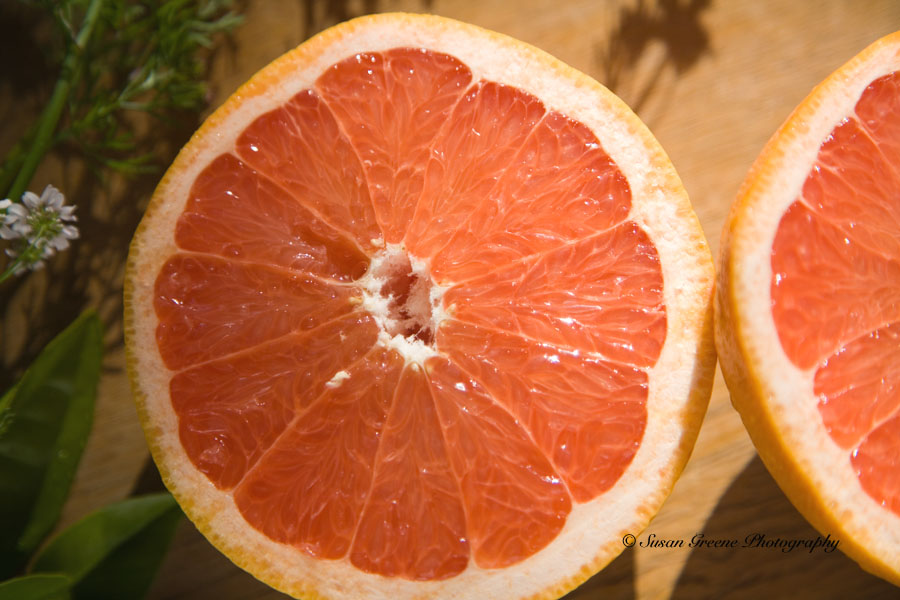
I am wrapping up this month’s exploration of patterns with a play session. When young, we are admonished to not play with our food. Aside from the occasional volcano of mashed potatoes and gravy lava I mostly adhered to this rule. But now that I am grown, I have thrown that reprimand out and taken to playing with my food. My idea of “playing with food” these days is styling and taking pictures. My latest subject – citrus, was chosen for the patterns created when cut in a cross-section.

three citrus cutA grapefruit,

grapefruit cut

a mineola tangelo,

mineola cutand a mandarin tangerine

mandarin cutare my citrus of choice.

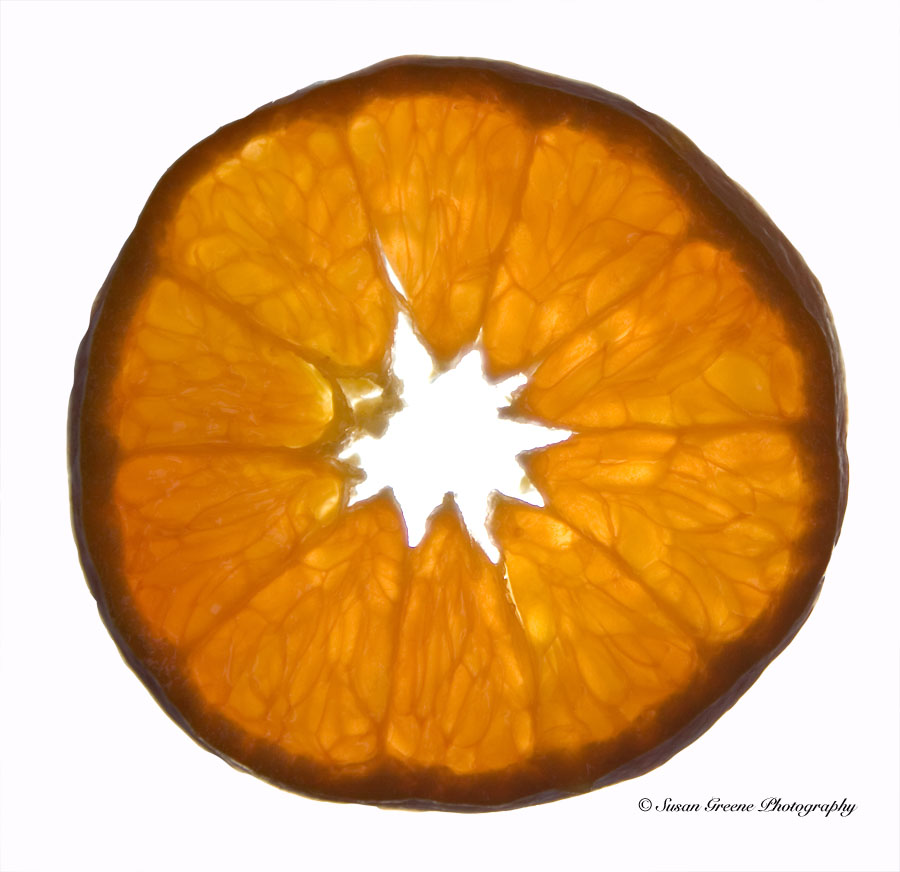
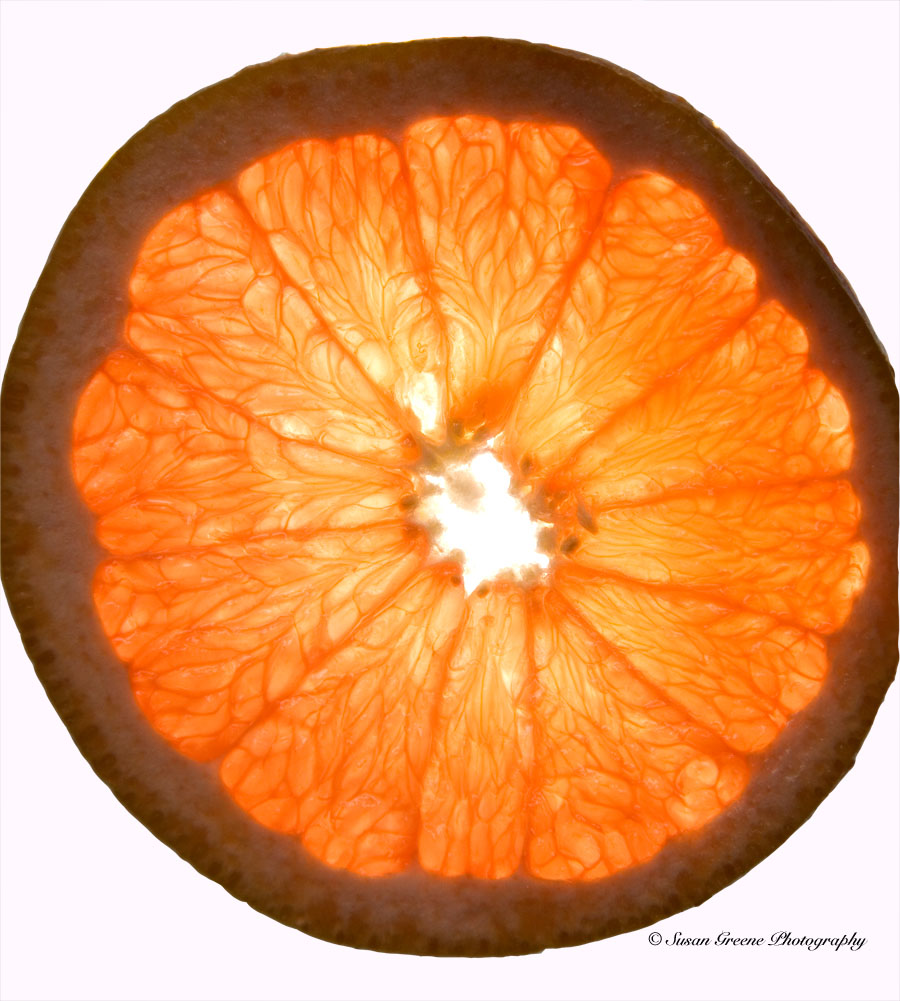
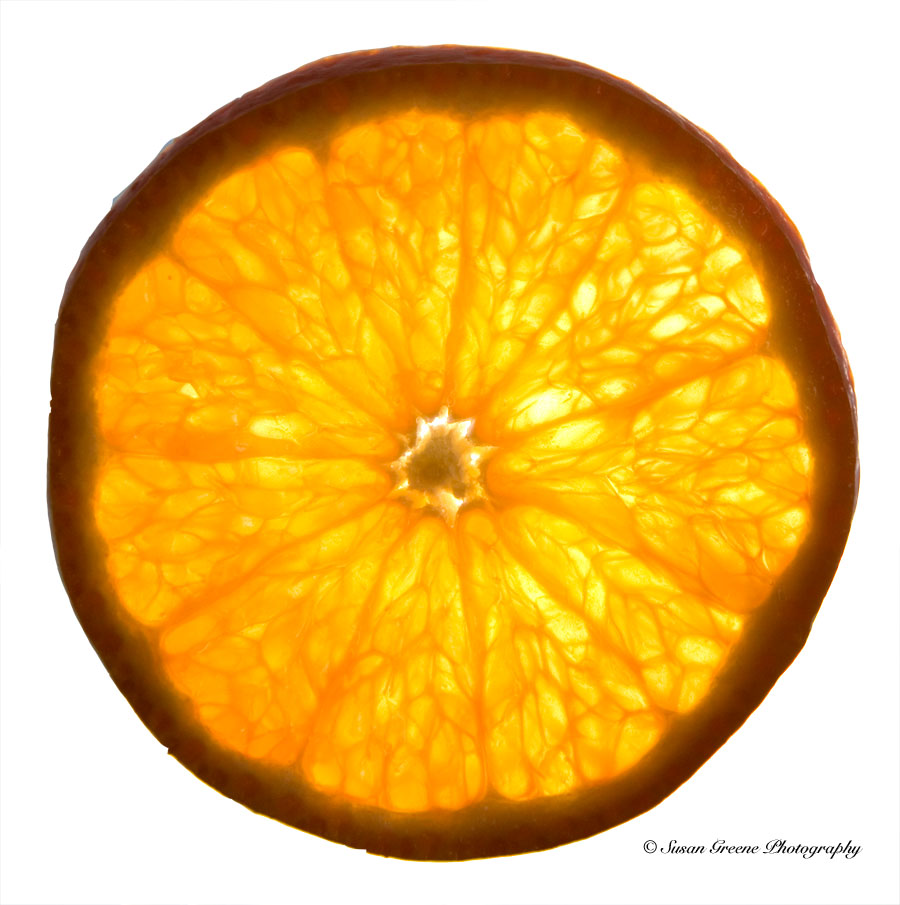
I gathered leaves and cilantro from the yard and had a great time cutting and arranging. The smell – refreshing, and a fun way to kick-off a Saturday for this backyard sister. Citrus still on my mind I had a vision of delving deeper into the pattern created in the segments. So, I rigged up a photo box using an opaque plastic storage bin turned on its side and a clip-on desk light allowing me to place the light facing up inside the box. After slicing the citrus thinner I set them on the box over the light.

tangerine sliceThe back light allows the segments making up the segments to be visible. What joy! I was made even happier by the adjustment in Photoshop of filling the background with white thus removing any distractions and allowing the fruit slice to stand alone.

grapefruit sliceThese patterns are intriguing to me as well as inspirational. I may create a backdrop based on them.

orange sliceIt reminds me of a stained glass window.

These subjects make a great snack too!

Enjoy!

~ Susan

Go Ahead and Break It

Patterns denote a certain regularity – repeating designs or behaviors.

photo credit: @1ofmykind

photo credit: @1ofmykind

I have noticed l have a tendency to fall into a photographic pattern. It hit me while going through my photos one day. Whether shooting portraits, landscapes or even editorial I become comfortable with what has worked in the past and tend to repeat it- same poses, settings, subjects.

grass pattern

It can be difficult but fun to try and break out of patterns, try a different angle, a new lens, different settings, new pose, etc.

IMG_1376I am naturally drawn to certain subjects, and I find making a conscious effort to look at them from a different angle or focusing on a smaller part of the whole, keeps me from falling into a familiar pattern.

IMG_9737Not that we have to do something different every time, simply making an effort to create new takes on old scenes can spark a freshness in our perspective and get the “creative juices” flowing.

IMG_4608Also, choosing subjects that you may not usually photograph will have the same result and often this is right in front of our eyes! We just have to remember to raise the camera, focus and click.

To a week of breaking patterns.

~ Susan

The Weekend Dish – Trifle

We gather, gab, nosh and fête frequently. The backyard sisters take our celebrations seriously. Yes,truly, getting the extended family together and feasting are not activities to be trifled with.

photo credit: @1ofmykind

photo credit: @1ofmykind

The backyard sisters, their spouses, parents, children and often in-laws and a friend or two celebrate birthdays and holidays on a regular basis. A backyard cousin, home from college for a spring break visit, spurs us to man the party stations. Just so happens one of his favorite desserts is Trifle and lucky for him his Oma makes an impressive one. Lucky for me, I was privileged to indulge in this light and creamy delicacy that night. Not only is the layered presentation special and elegant but also

trifle-layers-1

it tastes luscious. Now I know why he loves it so; it is a perfect mix of sweet, fruity flavors and creamy, airy textures. It sure impressed this guest and I daresay it would impress yours too, and that’s no trifling matter!

~ Susan

Trifle

  • Angel Food cake torn into bite size pieces
  • vanilla pudding (recipe follows)
  • strawberry sauce (recipe follows)
  • whipped cream
  • sliced fresh strawberries

A trifle dish is the optimum container but if you don’t have one don’t let that stop you, any tall glass bowl or tall glass individual dishes can work also. Begin with a layer of the angel food cake, then spoon pudding over, next the strawberry sauce and then repeat topping it with whipped cream and sliced fresh strawberries.

Vanilla Pudding

  • 2 1/2 cups whole milk
  • 2/3 cup sugar
  • 4 egg yolks
  • 1/4 cup flour
  • 3+ tsp vanilla extract (to taste)
  • 3/4 tsp salt

Mix sugar, flour and salt in a saucepan. Mix milk and egg yolks together and add to dry ingredients. Cook over low to medium heat until thickened stirring constantly. Remove from heat and add vanilla. Cool and chill.

Strawberry Sauce

  • 4 cups frozen strawberries mashed
  • 1 cup sugar
  • 3 Tbsp cornstarch
  • 1/2 cup water
  • 2 Tbsp butter
  • 1/2 tsp vanilla extract

Combine mashed strawberries sugar, cornstarch and water in a saucepan. Cook until thickened stirring frequently. Remove from heat and add butter and vanilla and stir until butter incorporated. Cool.

Whipping Cream

To a pint of whipping cream add either powdered sugar or agave and vanilla to taste. Then whip with an electric mixer on high speed until it holds its own shape. If you beat too long you will end up with butter.

Seeing the tree through the forest

Patterns in nature come in many forms. This week, I took the time to “be in the moment” when walking about and looking for natural patterns. I found them! On a recent “photo walk” in Palisades Park, Santa Monica, the eucalyptus and palm trees are abundant and once I stopped looking around them and instead looked at them the beautiful design of their trunks became apparent.

_MG_8303pattern

_MG_8299pattern

_MG_8307patternNext, the patterns in the leaves of the grape vines and apricot tree, which are just beginning their new cycle of growth, right in my own backyard.

_MG_8312pattern

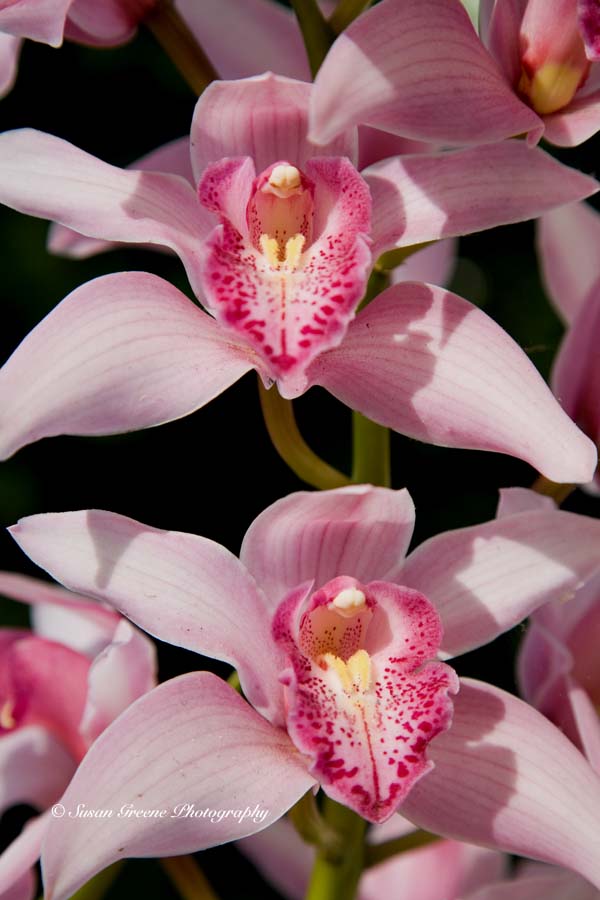
_MG_8316patternTwenty-four years ago this April, our family received a cymbidium orchid plant to celebrate the birth of our daughter (thank-you again backyard sister.) Every March and April since, it bursts forth with the most beautiful pink blooms which have an intriguing pattern in their center.

_MG_8326patternIt’s such a treat!

Sometimes, nature is used by man as a medium to create an art installation like the puppy sculpture at the Guggenheim museum in Bilbao Spain.

IMG_4513pattern.JPGOr, nature can be tamed and formed into geometric patterns creating a grand and formal garden like this one at Versailles.

IMG_3935patternThe pattern possibilities of nature are great. I’m sure I can find more if I try this exercise again. It is helpful to capture with a purpose – for it’s through practicing your photography that you will improve and hone your craft. Having a project or a purpose in mind when you are going out to photograph, makes you ponder what you are trying to convey and the best way to capture your vision. It also can keep you from falling in to a pattern of always taking the same types of pictures – more on that next week.

Naturally yours,

~ Susan

A Patterned Place, or Two

the rookery chicago

The patterns are out there, both natural and man-made. When looking for patterns to photograph, buildings are where I find my lens gravitating often. This week, I explore some man-made patterns and ways to look at things in your everyday life for their pattern potential. Seems to me, many architects have an affinity for repeating geometric patterns and I have discovered I too have a fondness for these patterns. Architects Daniel Burnham and John Root designed a patterned masterpiece in the Rookery building in Chicago. The light court, above, is loaded with patterns; from the intricate iron work to the painted walls, it’s an awe-inspiring space. Staircases are often an architecturally interesting and pattern producing feature.
Museum of Contemporary Art, Chicago

Museum of Contemporary Art, Chicago

CaixaForum, Madrid

CaixaForum, Madrid

This skyscraper is outside the Annenberg Space for Photography in Los Angeles.

Century City skyscrapers I am drawn to the two towers reflected in the mirrored building but I like the cut out space breaking up the pattern especially.

Sometimes, patterns can be found in unexpected places.

IMG_9366

IMG_0445

Pico House, Los Angeles

Let’s not overlook the amusement park for patterns.

Ferris Wheel

_MG_8237Incorporating patterns into your photos adds interest and impact.

This coming week, I will be looking for natural patterns.

On a patterned path,

~ Susan