Cacti and clouds

trail

I’ve run away from home again in the name of love. Book love.

Sometimes this writer needs to stop using her wife voice, mother voice, daughter voice, sister voice, auntie voice, professor voice, neighbor voice to recall the voice that sounds most like her inner soul. Her writing voice.

There was a red suitcase involved, a bag of books heavier than a week’s worth of groceries, my cappuccino maker, and a short to-do list.

  • Write the last poem of THE BOOK.
  • Finalize order of poems in THE BOOK. (Yes, this contradicts Item #1.)
  • Edit all poems in THE BOOK.

On Monday, the list felt an awful lot like this:

Western Prickly Pear

The weird thing is, I chose this week, right in the middle of the Association of Writers and Writing Programs annual conference, the single largest gathering of writers in North America.  More than ten thousand writers and editors traveled to Boston. I stayed in California.  I haven’t missed a conference in five years. And yet I desperately needed to be alone and write more than I needed to schmooze and buy books and be inspired by what other writers were doing.  I couldn’t afford both a writer’s retreat and to put myself up in Boston, so I chose me.  Alone.

As the week winds down, THE BOOK has been tamed back down to all lower case letters.  Needles have been plucked, rough edges smoothed.

The new perspective comes by paying attention to the Backyard Sisters theme for March: contrast.
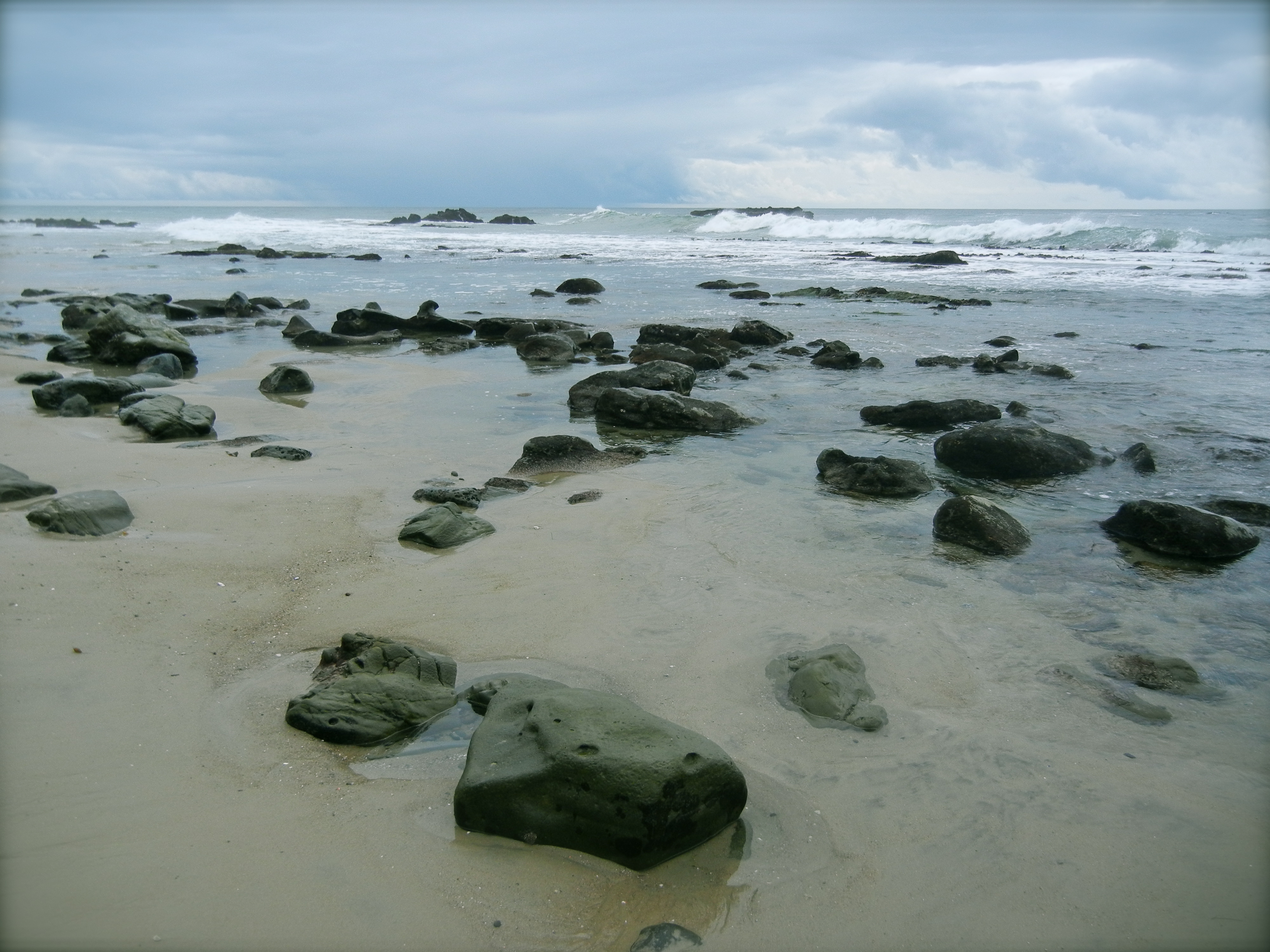
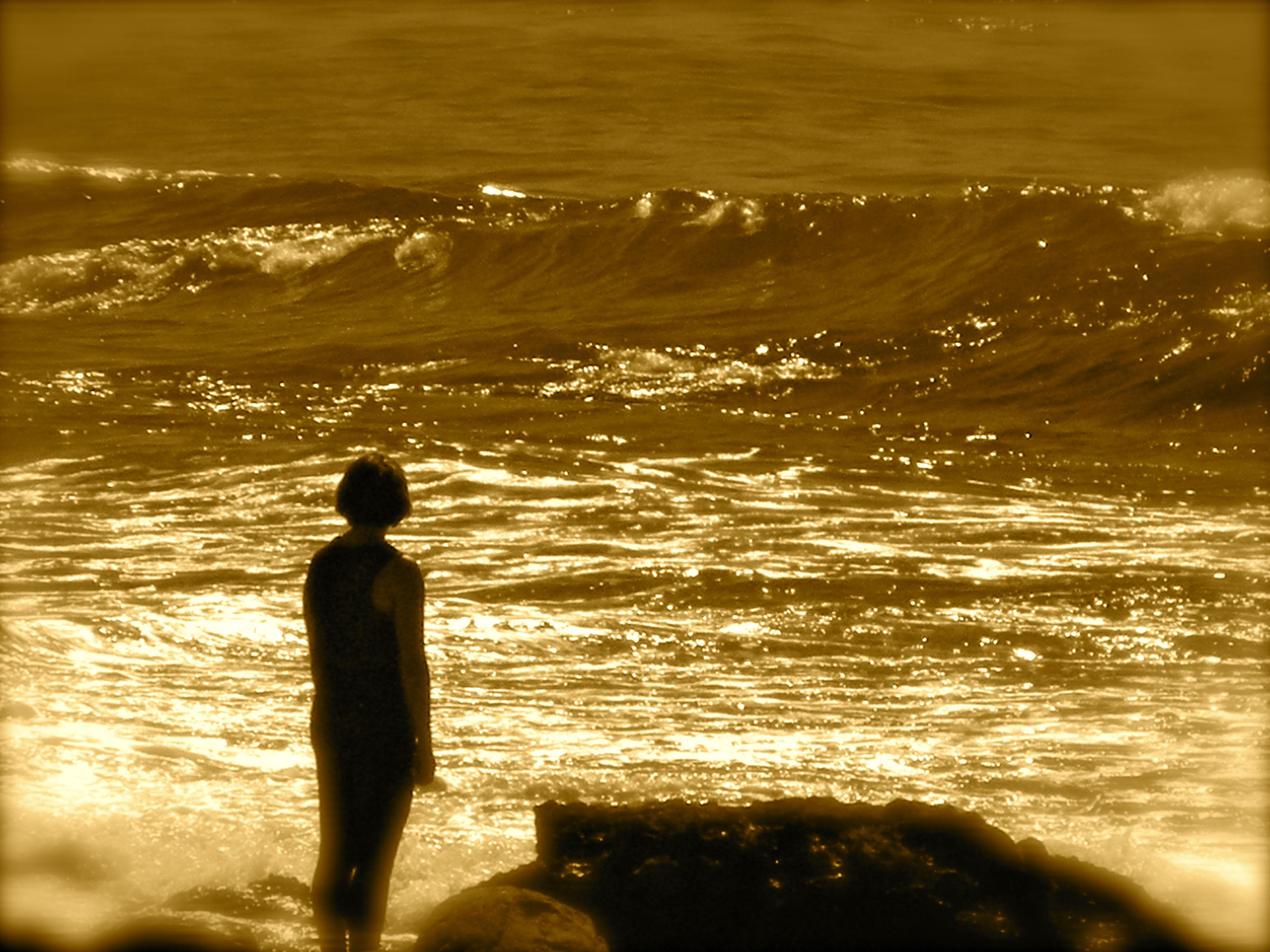
low tide rocks

Home. Not home.
Clay. Sand.
Dust. Water.
Omnipresent trail. Tidal path.
Warm toes. Cold bed.

Narrative moves forward, I tell my students, when that which is bumps up against that which is not. The best poetry happens, says poet Amy Newlove Schroeder, when there’s “a yoking together of the concrete and the abstract,” like “blending the perfect martini.”  Last year I had the pleasure of hearing Amy give a poetry talk titled “Concrete Abstraction” at Chapman University.  She urged poets to consider how all language is representational and the most “successful” poetry is that which can translate an experience, an idea, an aloneness, “from the tangible to the real.”  It’s how we don’t die of loneliness, Schroeder suggests.

If you’d like your own university classroom experience, you can view her talk here.  And if you’re anywhere near Orange County, you can catch her at Literary Orange, Sat. April 6, 2013, at the Irvine Marriott, a hotel. Not home.

Leaving. Returning.
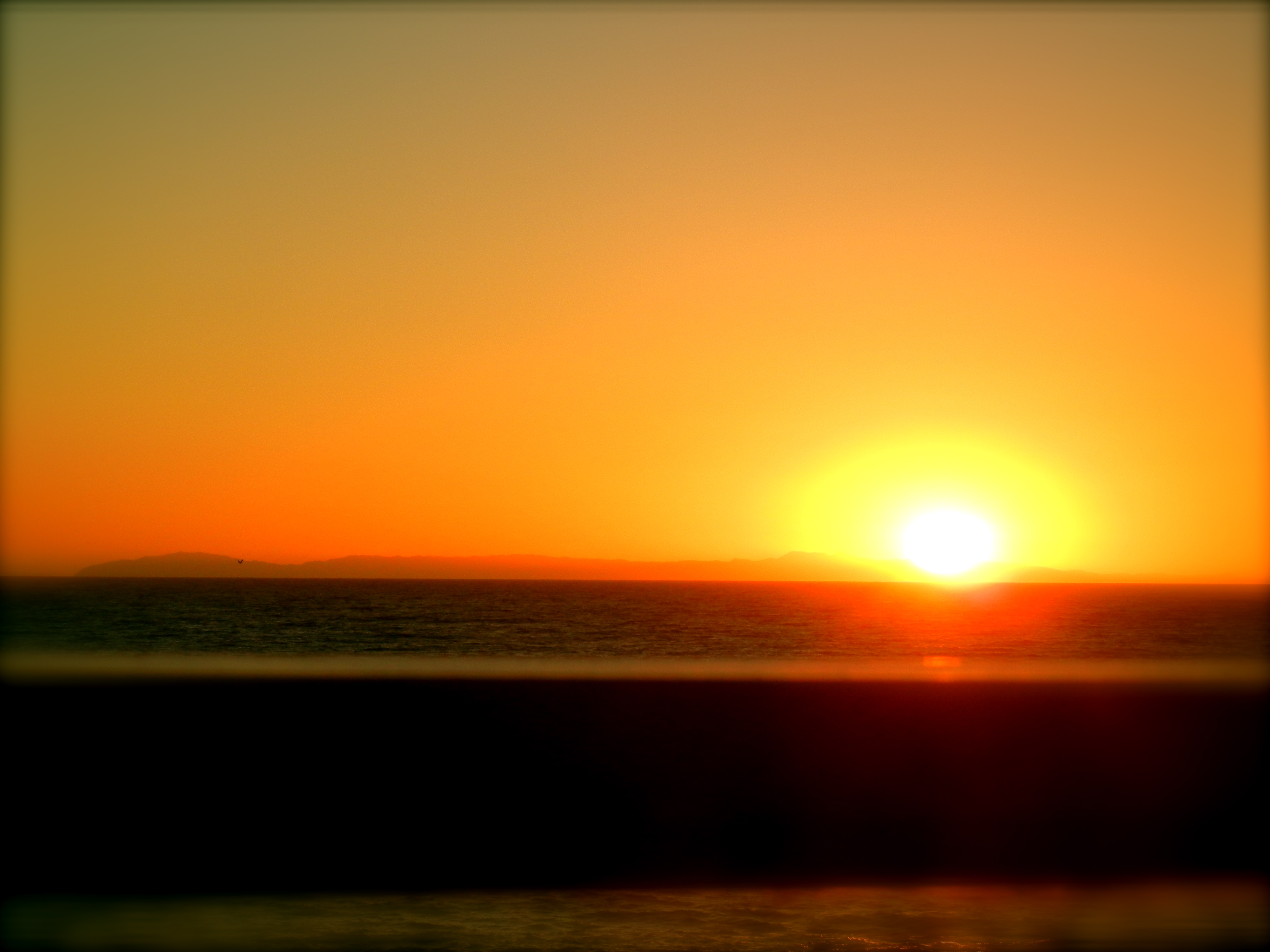
Watching the sky. Waiting for tomorrow.
Missing you. Knowing I will miss this.
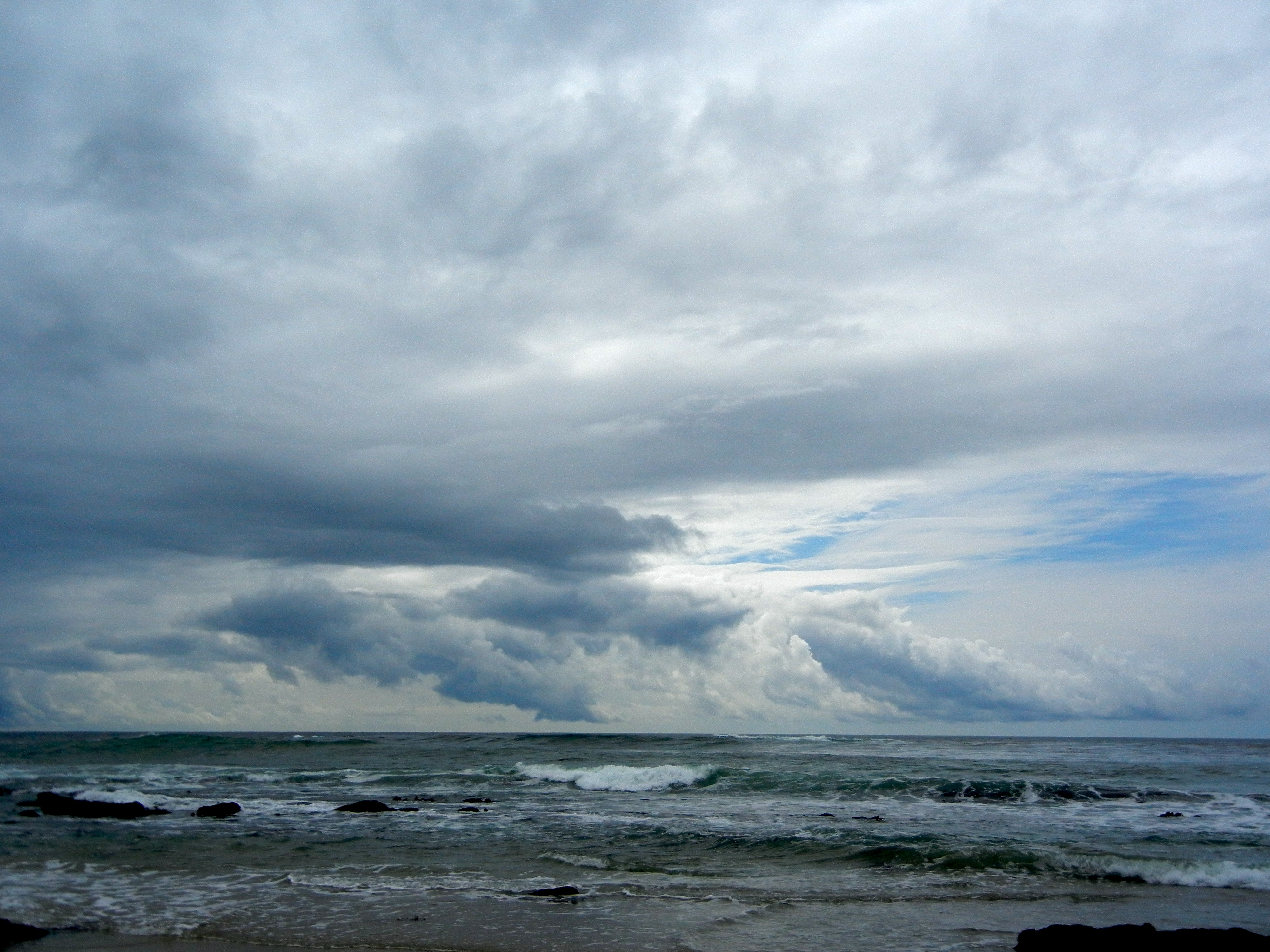
clouds and oceanWith a skip in her step,
~Catherine
 

May I direct your attention over here?

In the last deep blue February day, I followed my heart’s compass to the true north of another backyard.

true north

Today I spent my creative time on dirtcakes, the literary magazine I founded to “offer space for international writers and artists to illuminate a shared global humanity.”

There’s dirt under my fingernails.  Like any backyard task, it was difficult but satisfying work. What was it? Here’s a hint: I invented a new form of literature!

Maybe you remember “Five Lines to Challenge Chaos” when I dared myself to try each poetic form, “so that by spring, I’ll have a larder of poems that adhere to formal patterns found in nature, the sunflower, for example, or the whorl of a seashell, the number of legs on a spider for instance, or the swoop of an orb found glistening in early morning.”

I failed at that, but succeeded in invention.

The Contributor Voices Chorus is  based on a very old form of poetry – the cento. The cento is a collage, or mashup of lines from other writers, arranged in a fresh way, sort of like taking one flower from every blooming bush in your garden and creating a bouquet that looks nothing like your backyard.

For one sample of a cento, you can read “Wolf Cento” by Simone Muench.

You’ll have to wander over to dirtcakes to see my invention, the all new Contributor Voices Chorus.

It’s also time to give props. One of our readers took the poetic form challenge. In honor of The Simple Life of the Country Man’s Wife’s diligence, I’m linking to her cinquain here. I wonder how her spring larder of poems is looking? How about yours?

Adieu January, when we focused.
Goodbye February, when we explored leading lines.
See you in March when, in honor of the month’s disparate weather days, we play with contrast.

~Catherine

You are a human treasure

DSCN2586

Dear One,
Your compliment, so kind, compels me to remind you how much beauty also lives in you. You, of course, the person,  and you the word, so small in all the language.  “You” can mean the one, or “you” can mean the many. “You” can mean the Angel who I wrote about last May in “Stop this day and night with me.”

Angel returns one morning last week.  I open the oak front door to see him standing on the porch.  He shuffles his feet, looks at the stone, points to the empty dirt in my new yard and wonders if I need help planting.  His eyes are bloodshot, the scent of alcohol sweet in the morning air.  He smiles as he gestures toward the mud.

“Would you like me to put in roses? Fruit trees?”

“Let me check with J,” I say, acting like it hasn’t been months and months since he stopped gardening for me, acting like this newly emaciated body clothed in muddy khaki pants, cinched with a black belt flapping several extra inches at the end, might actually be able  to dig holes and tamp mud any better than my own.  He has a gift, this man who knows exactly how to coax a growing thing to triumph. Should I stand in the way of allowing him to work?

“Can you come next week?”

“Sure, sure.”

I give him J’s number to arrange a day, a time, a price.  Angel calls on Sunday.

“I can’t make it on Monday. I’m in the hospital. For tests. Maybe I can come on Tuesday.”

On Tuesday night Angel calls.

“I have stomach cancer. I have an operation tomorrow. I cannot come and plant your garden. Maybe next week.”

You are a human treasure.

Must I know exactly where I’m going when I compose a leading line?

chester on trail

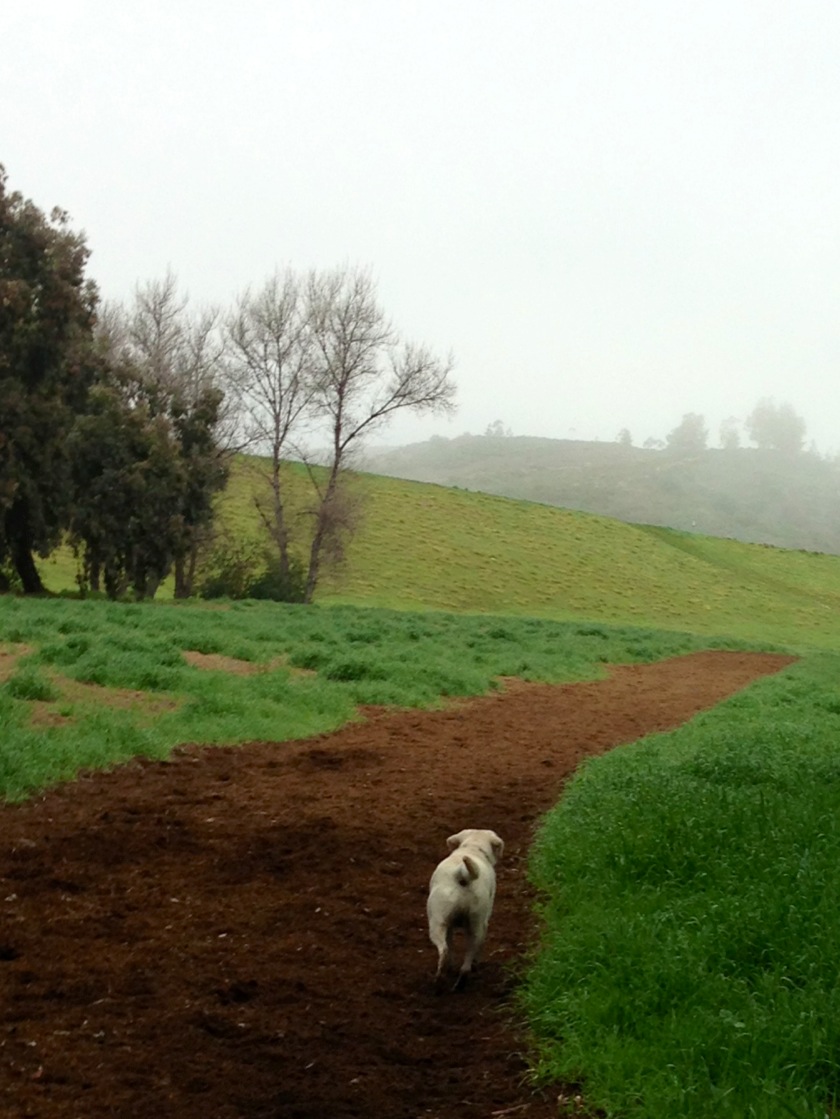
What if I have no idea how the story ends, or how to compose a view for effect, or how to make any sense of muddy paths leading straight into the fog?

Is it an accident, or part of nature’s wondrous plan that the view when looking up

Light and lattice

offers much more hope and light than the gaze that meets the ground?Two muddy feet

Yet it’s on the ground where the growing things begin. Salt of the earth.  Grounded. It’s the earth we all return to.

When a writer thinks of leading lines, a writer thinks of books, that first taste of a voice which can make a difference in the way a reader sees the world.

I am an invisible man. No, I am not a spook like those who haunted Edgar Allan Poe; nor am I one of your Hollywood-movie ectoplasms. I am a man of substance, of flesh and bone, fiber and liquids – and I might even be said to possess a mind. I am invisible, understand, simply because people refuse to see me.

from Invisible Man, Ralph Ellison

There is nothing worse I think, than the feeling of not being seen.

Even among books, some seem small in stature, insignificant when compared to the legacy of others based on copies sold, appearances on syllabi, or inclusion in the conversation among critics.

DSCN2591

Some books, some lives, are at risk of getting lost.  I’d like to highly recommend such a book that might have missed your radar.  Dominque Fabre’s The Waitress Was New, (translated from the French by Jordan Stump) is the perfect little 106 page gem to reacquaint yourself with what  Fabre describes as the, “genuine beauty, genuine dignity of  places or people that have been somehow overlooked.”

Unknown

It’s the story of an entirely undistinguished bartender.  It offers a leading line straight to the very mystery of the beauty of the anonymous life most of us exalt in. It reminds us that we must take the time to tell each other, You are a human treasure. And then, we must live as if we believe it to be true.

With all due respect,
~Catherine
Lessons from winter

Can I weave a nest for silence,
weave it of listening,
listening,
layer upon layer?

May Sarton, from “Beyond the Question”

I told you once, there are four of us Backyard Sisters.  Today’s post comes from the eldest,  Theresa, prompted by a telephone conversation.

Winter

“I drove in the dead winter,” she tells me one day.  “From Des Moines to Minneapolis. And it was darker than dark except for headlights on the highway. And I thought of letters flying through cyberspace, of too many words, like those headlights.

DSCN0884

“And I thought of a poem by May Sarton.  Then I wrote this for you.”

Theresa’s my hero. She finds a way to quietly approach life, to focus as if each moment, each person, each word matters.  I’m happy to share my big sister with you.  Here’s Theresa…

sisters

“words once spoken, can tear down or build up – but can never be destroyed.”

I wrote that when I was 14 or 15 years old, probably after an angst-producing adolescent moment – and I still think about words a lot.

DSCN0872

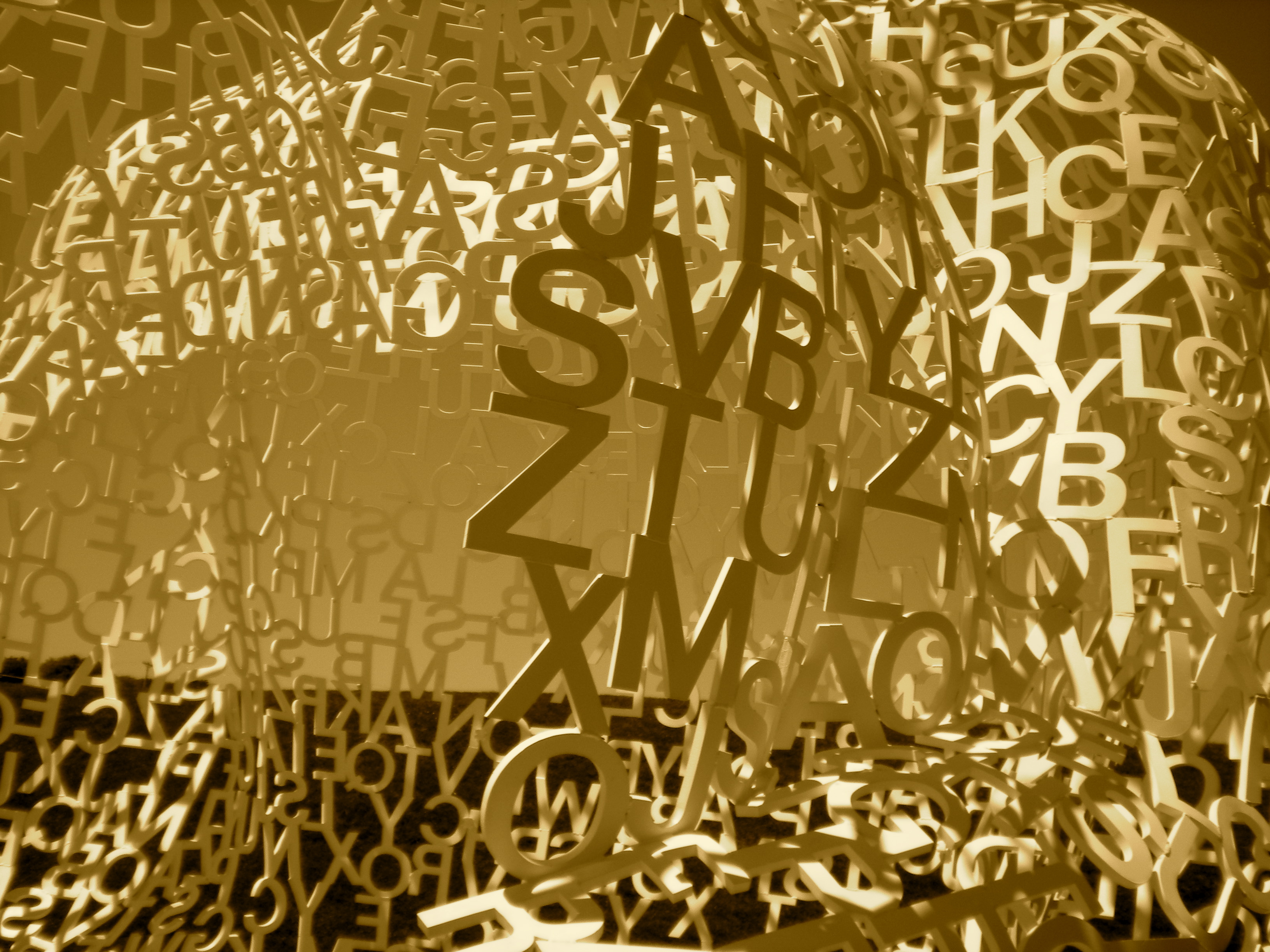
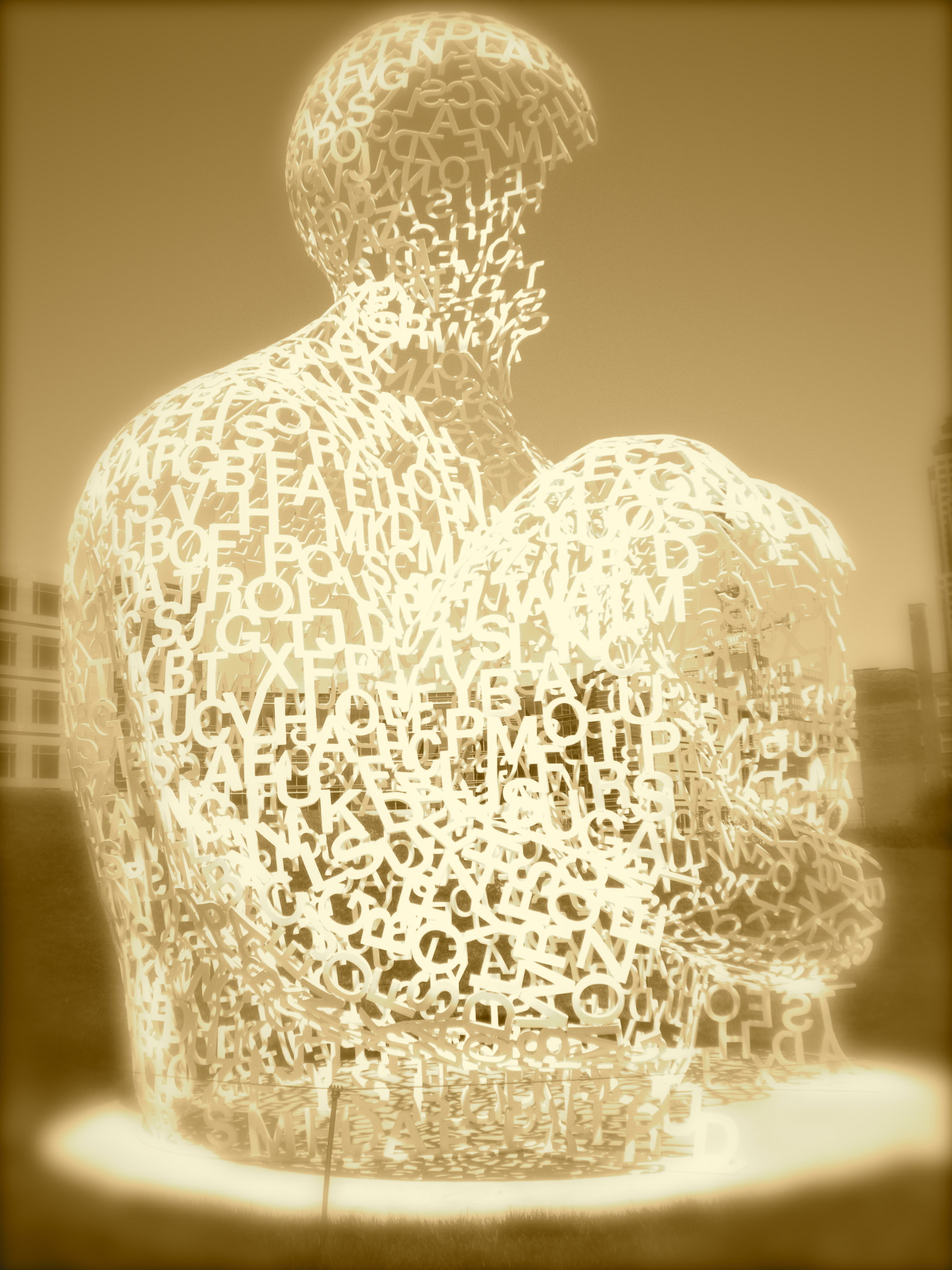
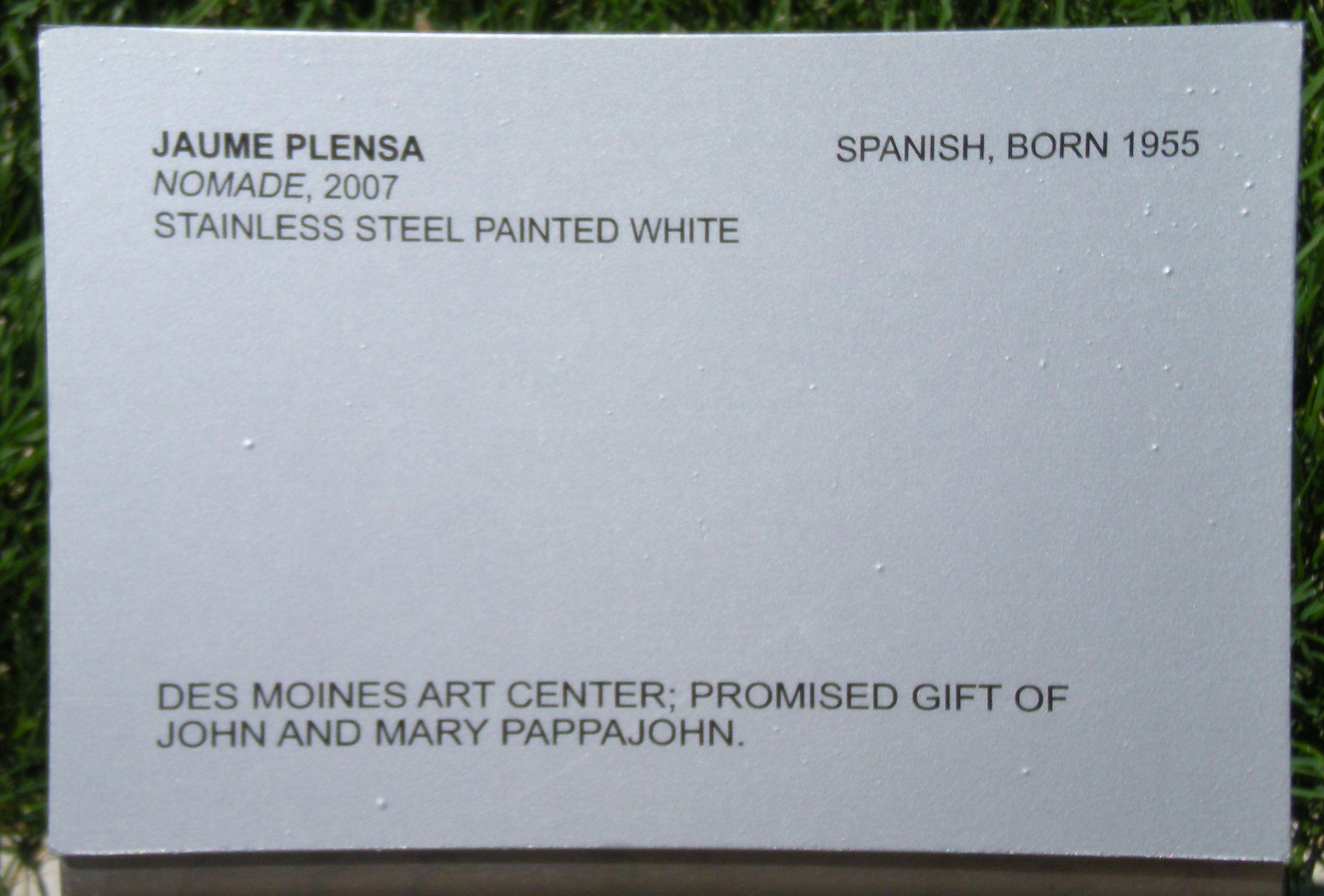
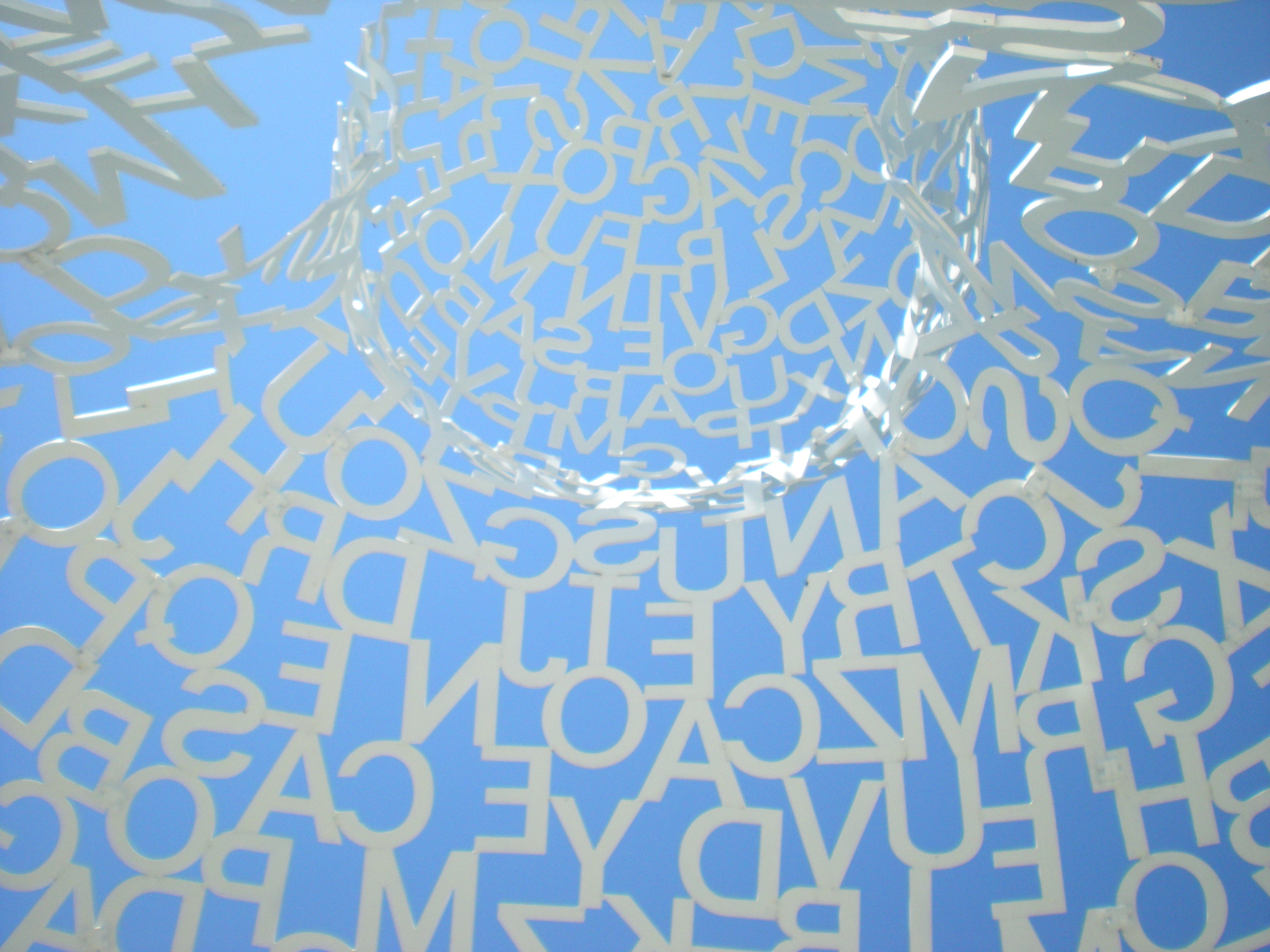
This 27 ft x 17 ft sculpture, Nomade, is by Jaume Plensa, who “envisioned the letters as building blocks for words and ideas, in the same way human cells form tissues, organs and bodies.”  It sits in Des Moines’ outdoor sculpture park.

DSCN0865I too believe that words and ideas form us in the same way our cells give us shape and I believe that we are all the better that words can’t be destroyed or we would have lost our earliest stories.

But one must first become small,

nothing but a presence,

attentive as a nesting bird,

May Sarton, from “Beyond the Question

I also think about how today thoughts can be casually dispatched as quickly as you can type and in a split second be launched at someone or some group and preserved forever in our digital minds.

I picture cyberspace as the darkest of nights, illuminated by flashing lights like lightening bugs and trailing comets, letters strung together careening and whistling to their intended targets.

And then I think about us, how we see this chatter, day and night, incessant words, constant words, bathing our thoughts and I wonder what will come of this, what are we building?

What happens in a world when conversation is mostly visual and  there are few pauses between our words? Where are the spaces in our communication now, the opportunities to pause and reflect before answering, or to just sit in comfortable silence with one and other.

Beyond the question, the silence,

before the answer, the silence.

May Sarton, from “Beyond the Question

DSCN0866

This amazing technology that allows us to connect instantly is for the most part a gift, allowing families and friends to share their lives in a way never before possible. But like all blessings, it might also be a curse, teasing us into believing that putting thoughts into words without pausing to consider the effect or substituting virtual reality for an opportunity to connect with a real person is the way it is supposed to be.

I have no answers – I suppose when the telephone first became available to most people, there were those who declared it unnatural and dangerous to humanity, most likely by someone like me who tends to think too much… However, quite by accident, I stumbled upon a book, Alone Together: Why We Expect More from Technology and Less from Each Other by Sherry Turkle.

alone-together-cover

Sherry Turkle is director of the MIT Initiative on Technology and the Self and spoke with Krista Tippett about this topic on “On Being” recently. Do you think we really expect less from each other?  I’m going to download the book on my Nook and start reading.

You don’t expect me to throw the baby out with the bathwater do you?  I’ll let you know what I learn.  Until then,

Happy wandering –
Theresa

p.s. Catherine here ~ What would happen if today, this week, this year, you focused on treating the words you release as precious as art, as air?  Celebrate silence. Be attentive “as a nesting bird.” Speak and write carefully.


Rock, paper, scissors…

Focus. Focus. I need to focus, to find an image, a metaphor to guide when life’s rapids churn around blind curves and threaten to upend me.

Rapids on the Reuss

Rapids of the Reuss, Illustration from 1,000 Miles in the Rob Roy Canoe

What’s the point, I wonder, of crafting a vision for a life, without a symbol? I try on images like new dresses.  Words from Henry David Thoreau’s Walden echo.

…beware of all enterprises that require new clothes, and not rather a new wearer of clothes. If there is not a new man, how can the new clothes be made to fit?

The first time I heard of a life image was when my daughter’s friend, poised between college graduation and a new career, said “I want to be the Swiss Army Knife, you know, that guy who’s helpful in any situation.”

swiss_army_knife

I’m not a knife. I am a rock. I am an island.  

Rock

No, I’m not a rock.  A stone is too immobile, improbable. Too cold.

Paper. Paperback writer, (paperback writer….) Too ephemeral.  Too easily ignited by flame and burned to ash.

Scissors. Sharp. Sharp tongued. Rock beats scissors.

Quick jot.
Things I love:
YouOf course. And…
Ocean.  Freedom.  Literature.

Woman’s search for image simmers on the back burner as I unpack more boxes to fill the new bookcases J built for me. I find Dove by Robin Lee Graham, a yellowed, dog-eared souvenir of my teenage reading taste.  “The true story of a 16-year-old boy who sailed his 24-foot-sloop around the world.”

dove

Sailboat?  Closer.

I unpack a stack of freshly printed copies of dirtcakes, the literary journal I founded. I remember when I first hatched the idea of birthing a journal and asked around for  inspiration. A friend told me his favorite was Kayak Magazine.  George Hitchcock, Kayak’s founder, used to say,

A kayak is not a galleon, ark, coracle or speedboat. It is a small watertight vessel operated by a single oarsman. It is submersible, has sharply pointed ends…It has never yet been successfully employed as a means of mass transport.

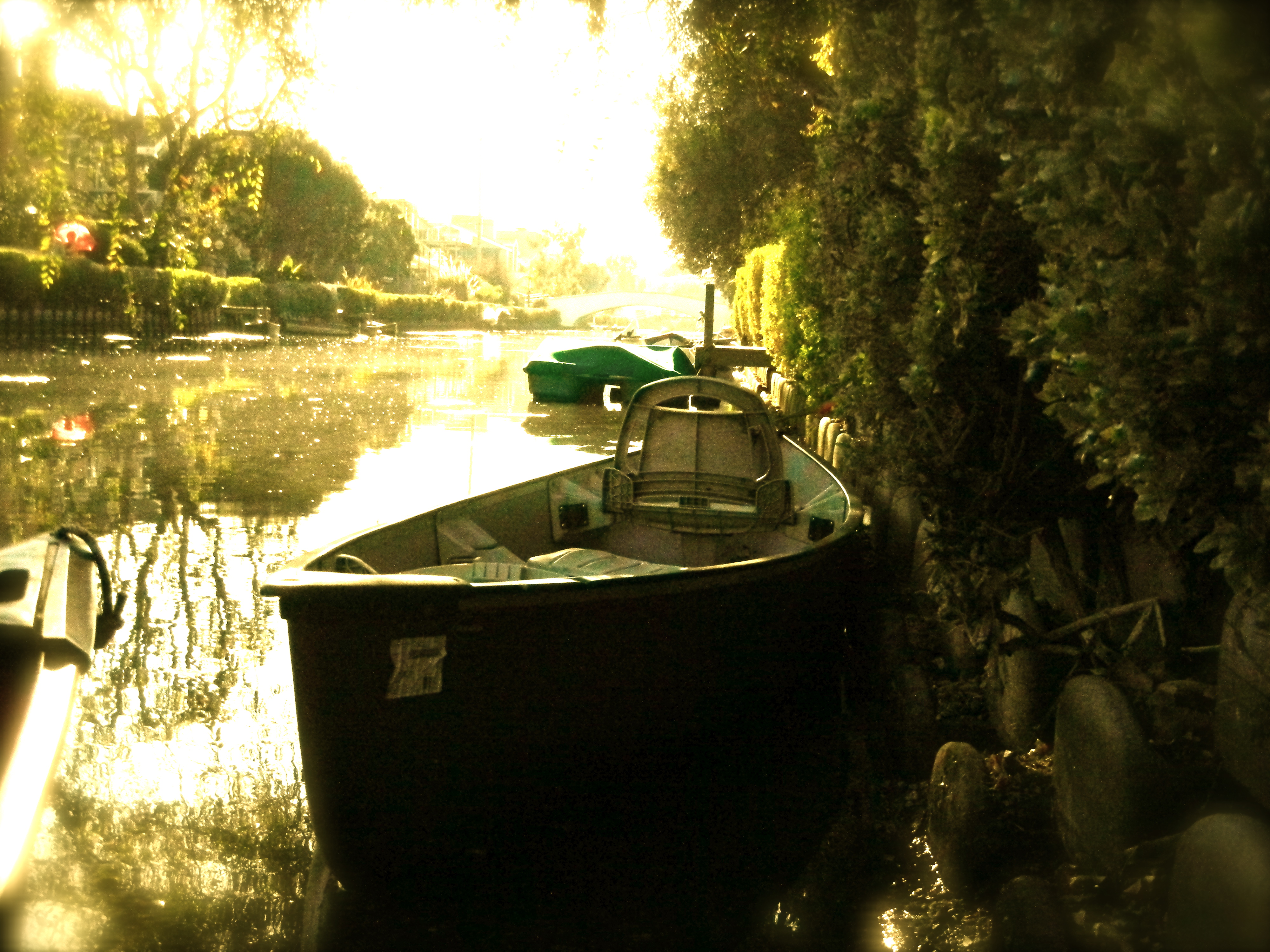
“…operated by a single oarsman…” J and I kayak together and I’m a terrible backseat paddler.  Yet a daytrip to Venice Beach finds me walking along the canals, thinking of vessels, maybe boats with only one seat, not “a means of mass transport.”

DSCN2543

Did you know almost 100 years before George Hitchcock started Kayak Magazine, another man took off alone to explore Europe in a canoe, selecting that vessel because,

…in the wildest parts of the best rivers…these very things which bother the “pair oar,” become cheery excitements to the voyager in a canoe. For now, as he sits in his little bark, he looks forward, and not backward. He sees all his course, and the scenery besides. With one sweep of his paddle he can turn aside when only a foot from destruction.

He can steer within an inch in a narrow place, and …can shove with his paddle when aground, and can jump out in good time to prevent a bad smash. He can wade and haul his craft over shallows, or drag it on dry ground, through fields and hedges, over dykes, barriers, and walls; can carry it by hand up ladders and stairs, and can transport his canoe over high mountains and broad plains in a cart drawn by a man, a horse, or a cow. (From A Thousand Miles in the Rob Roy Canoe on Rivers and Lakes of Europe by J. MacGregor.)

Kayak. Canoe. Canoe. Kayak.  Some websites say the words are interchangeable, others cite leg and seat position as defining characteristics between the two.  Kayak is a palindrome, a word that reads the same from front to back. It moves only through human effort, glides silently, is open to the sun and moon, the breeze and stars. So too, the canoe.

Kayak

Maybe for once the word matters less than the image. Kayak. Canoe. A noun. A verb. A vessel wherein the wildest parts of the river of life can, “become cheery excitements;” a vessel wherein the paddler “looks forward, not backward…and can jump out in time to prevent a bad smash;” a symbol to take along into the big wide open year.

With wobble and strength,
~Catherine

Précis:
An image can remind you to stay on track with the life vision you set for yourself.

Practice:
Explore things you love – books, places, people – for ideas to create your own personal  image.  Settle on this image/metaphor for the year.  Post it in a spot you see every day.

Play:
Read about others’ adventures where a single object becomes metaphor.  Herman Melville’s Moby Dick immediately comes to mind. What, that doesn’t sound like play to you? OK, fine; go out and kayak. Then send us a focused photo.

Through the open window…

A coyote yips and howls. I don’t know what time it is, still dark. The Siamese jumps onto the sill, presses her body against the screen, hackles raised.  She emits a low moan. In the distance an owl hoots and the dog rumbles a half-hearted growl. J still sleeps, so I get up to close the window and notice a pinking sky over the mountains.  The cat and dog settle back down, tightly tucking into furry curls against the January chill. But for me, the night is over.

Today, this not-the-first-of-the-year, but this ordinary-Thursday-when-the-holiday-rush-has-finally-faded is my annual Life Visioning day.  It begins when I light a candle against the dawn.

Candle

Actually I begin every day by lighting a candle and spending moments deep in reflection.

What am I grateful for from the previous day?

Gratitude Journal

a little dancing after dinner
candles on the hearth
neighbors who share homegrown oranges

With a smile and fortitude from recalling all that’s good, I next invite my sacred heart space to be bathed by a divine floodlight where I cannot hide, not even from myself.  I think back to the day before, and remember ways I did and didn’t act in alignment with my values and intentions.  Can I repeat what went right? Can I correct the imbalances that caused failure?

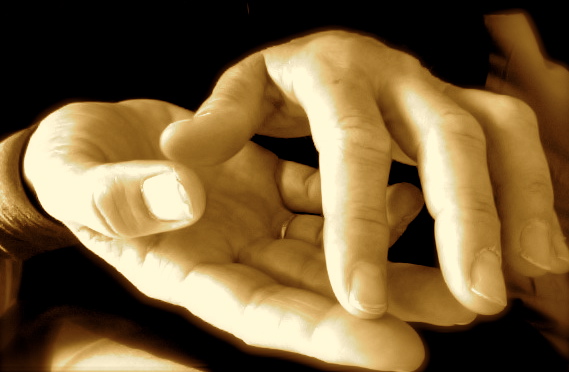
I set me intentions for this day, write my to-do list within this womb of new dawn freshness.  Then, I pray. I trace the presence of my family and friends upon my hands, using one index finger I begin at each fingertip recalling a name, a need, until the faces and the names of all those who are close to me are joined in the center of my heart-side palm.

Hands

I leave this meditation time by rejoining the entire human chain with an invocation for peace and love, “For those who will be born today, and those who will die.”  Each month I also add a special intention.  My January focus is, “For those who struggle with addiction or mental illness and for those who care for and try to love them.” I join my hands together, press them to my heart, bow to the sunrise and begin my “real” day.

Oh my goodness, telling you all this was difficult.

I’m an intensely private person by nature. There were years and years and when I didn’t even tell my own husband that I prayed, let alone that I meditated and lit candles in the dark and drew his name upon my palm.

Why change?

Maybe I’ve decided that being myself is something I should do publicly.

Maybe I wrote, be yourself out loud on my to-do list this morning and it’s too early in the year to break promises to myself.

It is, in fact, right in the middle of the month the Backyard Sisters have dedicated to focus and while Susan will tell you how to focus your camera, I am relegated to suggesting ways to focus your writing life.

I learn today that the word focus comes from the Latin focus, meaning “hearth, fireplace.

DSCN2468

focus (n.) 1640s, from L. focus “hearth, fireplace” (also, figuratively, “home, family”), of unknown origin, used in post-classical times for “fire” itself, taken by Kepler (1604) in a mathematical sense for “point of convergence,” perhaps on analogy of the burning point of a lens (the purely optical sense of the word may have existed before Kepler, but it is not recorded). Introduced into English 1650s by Hobbes. Sense transfer to “center of activity or energy” is first recorded 1796.

Inspired by the connectivity to the word focus and home, as nurturing my family ties always rises to the top of any priority list, I reread my last year’s life vision and adjust paragraphs or sections that no longer seem important.  I focus on the lines that have followed me from year to year to year.

Write a book. Write a book. Write a book.

I realize I am. I have. Written the book(s). I just haven’t pushed hard enough for publication.  I cross out the line. Write a book. I revise: Send out book.  We are only in control of our own actions, I realize. And now is the time to act with focus, with fire, with the kind of fierceness you would use to advocate for someone that you love.

With light and love
~Catherine
Précis: (This is a lovely new word I discover today. It means a summary.)
When you sit in peace, quiet self-truth speaks loudly. Pay attention to what you’re trying to tell yourself.

Practice:  
Can you create a vision for your life?  Nothing fancy, just write about the life you want to live.  I live in a house small enough to vacuum in an hour.  Date it.  Remember to include all the elements of nature: Air-spirit.  Fire-ambition.  Water-refreshment.  Earth-body.  Space-mind.  Focus on one action for each element that you can accomplish within the next month or so.  Write that down too.

Play:
Create a scene of dialogue between two characters, one whose inner and outer life is aligned – think Atticus Finch from To Kill A Mockingbird by Harper Lee – and another who projects a false outward image – think Fermina Daza from Love in the Time of Cholera by Gabriel García Márquez. Now what would happen if they end up in a story together?

“It is difficult not to write satire.”

Dear Family and Friends,

Christmas Angels

It’s seems almost impossible that one whole year has passed without a call, letter, e-mail, or text from you.  I’m sure you’ve been as busy as we have.  Let me tell you all about our wonderful year.

santa man

Ed captured the Western Hemisphere Sales Director VP and Marketing Consultant, Business Generator title at First Corporation Corp.  He’s catapulting into position to be the First Second Man!  He flies between Hong Kong, Australia, Singapore, Taiwan, Beijing, Boston, Fargo, and home on a regular route. He always appreciates the tender touches of clean underwear, socks, love notes, and credit card bills I slip into his carry-on.  Our 20th wedding anniversary was special.  We rented the Anniversary Suite at Punta Pacifica in Costa Rica. It’s a beautiful country with gorgeous beaches and many English-speaking people.  It was perfectly romantic and the two days, one night just flew by.

The blessing behind that little February interlude was Edward Jonathan III.  He’s beautiful. He’s a boy! He looks just like me even though I know he’s squinting in the picture.  He was, after all, just 12 hours old. I wrote this while nursing in the hospital since we wanted you all to get the fresh, fresh news immediately!

fuzzy angel

Elizabeth turns 3 tomorrow.  Her favorite activities are singing at Sunday School and playing nicely with other children.  She was chosen to be preschool helper at the So Good Academy twice already!  By the way, please don’t ask for any more references for your children’s applications to So Good. The Director requested that even though we are the largest donors it might be nice to let other families on the west side have a chance at the 12 spots for the ’13 and ’14 admission classes.

Grace is now 4. She’s very sweet and social.   She has many girlfriends and is invited to birthday parties often.  This trait, (guess who she takes after?) coupled with the gymnastics classes she’ll begin in January, should make her the undisputed Captain of Cheer when she begins Old Fashioned Fancy Crest as a freshman in 2021!

girl

Lauren turned 8 on the fourth of July.  Her lemonade stand on the holiday parade route brought in more sales than any other child’s! Our little firecracker still wins all the spelling bees, geography quizzes, and mathematics derbies in her classroom.  The biggest blessing about her new age is that she can finally compete outside of the Good Academy for city, region and state honors.  You’ll probably see her name in the paper just after the first of the year.  Please don’t call and congratulate her.  We’re trying to keep her humble.

Anna Mary turned 10. Her hair is finally growing out after the great candle and scissor debacle in art class so she once again looks like she belongs in the family, Ed’s side, of course.

Edwina began Old Fashioned Fancy Crest in September.  She took her first SAT exam and earned a near-perfect score of 2150, so she has three years to get even better!  Her greatest achievement was acceptance into the Big East Coast Ballet Summer Intensive Workshop.  Can you believe I sent my child across the country to spend six weeks in the company of prima ballerinas?  She was placed in second level which is incredible for someone her age! I made it to the gala extravaganza finale so I could clap and throw roses from the front row.  It was magical.

My work is really quite wonderful and exciting. I love it! I’ve been working full time on the same deal – worth $300 million! – since I started in May;  I work 80-90 hours a week, but I find out next week if the contract goes through, so, I’m hoping I’ll have a nice Christmas bonus. I spent my birthday in Toronto, Canada, on business. Last month I went from there, to Plano, TX, to Seattle, to Philadelphia, to San Francisco, Atlanta and Chicago, but now I’m on maternity leave through the holidays so I can be well rested when it’s time to ramp up again on January 2.

Anyway, do keep in touch.  We’re too busy to reply, but we count our long Christmas card list as one of life’s greatest gifts.

Air kisses!
~The Naughty Alter-Egos of Nice Catherine and Sweet Sue
Christmas Card

p.s.  Juvenal, the Roman poet whose quote titles this post, is one of history’s great satirists.   To find a fine discourse, written by Roger Kimball in The New Criterion, on Juvenal’s style, perspective and the nuances of his enduring legacy, click here.

Time to dream

Dear One,

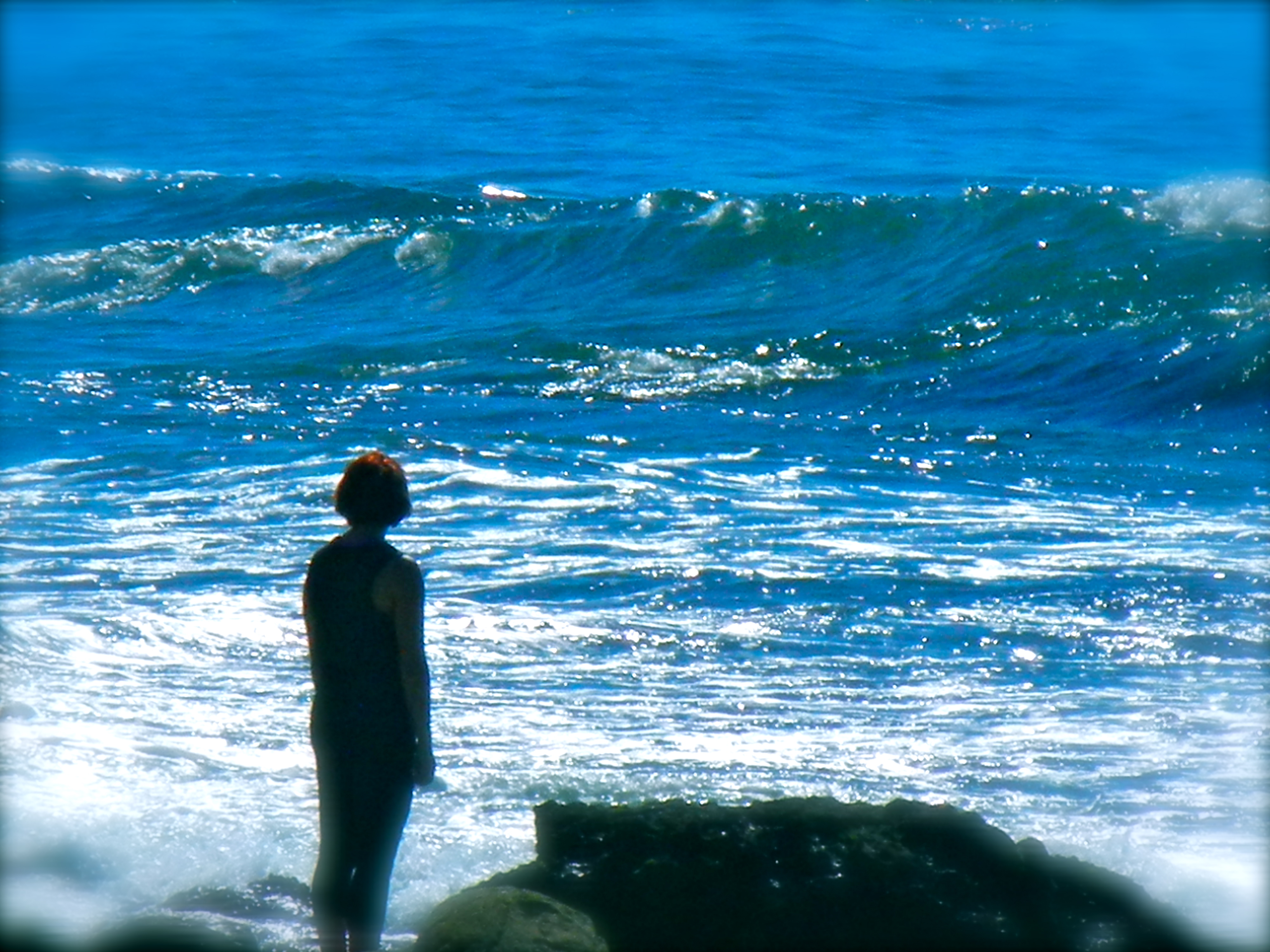
I see you standing there. I read your back and see the softened slump about your shoulders.

I hear your sigh that carries just above the shush of the Pacific, not quite a keen, but not a thing like laughter.  What is it you look for? Have you been waiting for so very long?

May I tell you something? Once I saw two boys barehanded fishing for tilapia in Kauai’s Hule’ia River. Frozen still in the shadows of the mangrove, they cupped their hands and waited.  Shhhh, they warned and I froze too, midstep on the hiking path.  All at once, like athletes on a pedestal, they raised their arms victoriously overhead and one wriggling fish flung droplets into the sky.

“Dinner!” they shrieked.

That night I dreamt I stood in the shallows of Hule’ia, hands submerged into murky water. I could not see clearly, unsure exactly what I was trying to catch.  I dreamt a cold plump softness nudging my open palms. One, two – too many sleek and slippery things to count – I grasped and missed, until at dawn I awoke empty-handed, staring blankly at the wall.

Is it like that now for you?

My friend wonders about her mounting “…sense of exhaustion and ambivalence…”

My students say, “This week is awful. It’s limp broccoli.”

It seems everyone around me is feeling…

when we would all so much rather be —

Here’s my Rx.  If you can, take a visit to your girlhood dreaming spot, or one that reminds you copiously of it. Gaze into the lantern of your inner fire. Catch the glow. Reflect the blaze.

Remember who you once were and what you said you would become.  It’s not too late. But hurry. You are waiting.  And so am I.
With vibrancy and gold,
~Catherine

p.s. If your spirits need a boost these days, stumble upon Dearest Creature by poet Amy Gerstler.  (You can read David Kirby’s New York Times review of it here.)

This is not a new book; it was published in 2009. But it’s a new discovery for me and I highly recommend any book that contains poems with titles like, “At the Back of a Closet, Two Dresses Converse” and “Chant of the Hallucinogenic Plants,” especially as an antidote if you’re in your blues period.  There’s no expiration date on golden poetry.

Friends of the Backyard Sisters

I was a new and nervous reporter, my first minute on the job at the Orange County Register, still trying to figure out office etiquette when working in a long row of cubicles so small and close together and with walls low enough that I could see the stubble on the back of the neck of the reporter in front of me.  Just as I silently sat down, that neck swiveled to reveal a smiling face.

“Hey. I’m Marty.  Welcome. It’s good to have you here.  If you have any questions or need anything, let me know. ”

Long after we left the Register, Marty and I remained writing friends and, huge caveat here, fans of each other’s work.  I invited my writer friend to stop by the backyard to tell you about his new nonfiction book, “The Wild Duck Chase.” It’s about the obscure Federal Duck Stamp Program and the strange and wonderful world of competitive duck painting.  Weird? You betcha. It’s a highly entertaining book that’s a perfect fit for our outdoorsy, michikusacentric focus here at the Backyard Sisters. Best of all, it invites a reader to tackle stereotypes.

Welcome, Marty. It’s good to have you here.

Photo Credit: Jason Wallis

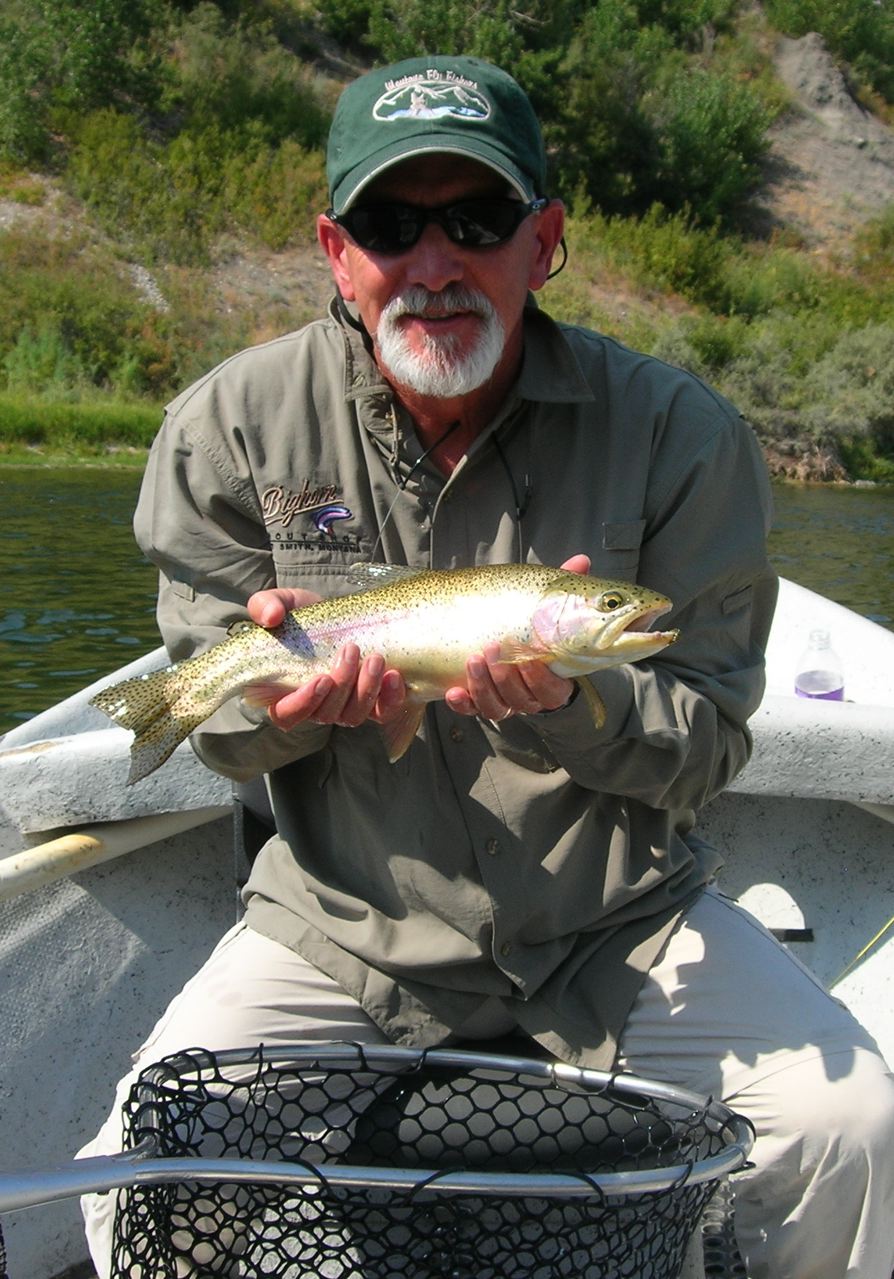
Just back from a fly-fishing trip to the Bighorn River in Montana, and was struck again (as I was while writing “The Wild Duck Chase”) by the depth of knowledge that dedicated outdoorsmen and -women have about the natural world. Robert Bealle, the 2009 Federal Duck Stamp Artist, was able to tell the specific stretch of the Potomac River where the duck he’d shot had been feeding, because of the unusual type of freshwater clams he found in the duck’s craw. One of our fishing guides on the Bighorn put a tube down the throat of a brown trout I’d landed and suctioned out the contents of its stomach to see which type of flies and worms it had been feeding on that morning (so he could choose the proper fly for my next cast). Another guide noticed a nasty wound on another fish I’d landed and deduced that the little fella had a recent brush with a spike-beaked blue heron. Still another spent at least 10 minutes trying to revive a lethargic but still-living brown trout by washing water through its gills. Now, I’m not a hunter, and not much of a fisherman. But after two years of research on the book and my accumulated experiences among hunters and fishermen, I no longer have much patience with those who dismiss them as exploiters of wildlife. They are, for the most part, mindful custodians of a world the rest of us appreciate primarily in theory.

Montana’s Finest

Marty, (that’s Martin J. Smith to you) will discuss his new book and sign copies at the
Big Orange Book Book Festival in Orange, California at 1 p.m. Friday, Sept. 21. If you’re not interested in what many consider the single greatest conservation initiative in human history, or the quirky annual art contest at its center, or a cast of characters that includes a guy who keeps 15 dead birds in his Sears Kenmore freezer, then perhaps you’ll be tempted to attend by knowing that Marty will reveal the name of the artist who managed to paint an entire passage of incredibly filthy porn movie dialogue into his entry, which was then soberly displayed by oblivious federal officials who take this stuff VERY seriously.

Marty will also be reading at Barnes & Noble in Huntington Beach, 9/18 at 7 p.m.; Book Soup in West Hollywood, 9/19 at 7 p.m.; The Book Frog in Rolling Hills Estates, 9/22, time TBA.  If you happen to be in Ogden Utah on 9/28, Marty will speak and sign books in the Weber State library at 3 p.m. right after the first round of judging for this year’s Federal Duck Stamp Contest.

Still not sure?  Read a witty review of The Wild Duck Chase here.

In addition to telling you about a great book, and a kind writing friend, I leave you with one more lasting bit of Backyard Sisters wisdom.  Writers who are supportive of other writers (and editors) sure make the world a kinder gentler place.  Have you given a shout-out to a writer you admire today?

With high regard,
~Catherine
Road Trip!

“Summer road trip” are three words that belong together like bacon, lettuce, and tomato.  While some roads are just a long haul between here and there, others are so drenched in history and literary ghosts that a ride along them is more pilgrimage than crossing.

Route 66, known as “The Mother Road,” or “America’s Highway,” is my voyage quest thanks to a family history that involves my father migrating along the route from New York in 1944 in a 1939 Chevrolet, and of course there’s John Steinbeck’s exhilarating description of the perils of the route in The Grapes of Wrath.

66 is the mother road, the road of flight…

And 66 goes on over the terrible desert, where the distance shimmers and the black center mountains hang unbearable in the distance…

It’s the main cross-country highway that begins in Chicago and led migrants from Oklahoma to California, but it travels in two directions and I first met it heading east from  Los Angeles to Arizona in a lumbering brown Pontiac Bonneville station wagon loaded to sagging with four girls, two adults, Oreos, liverwurst, grapes, bubble gum, and a Sing Along handbook.

We arose before dawn as the prospect of overheating, laden as we were, was real.  Our tires devoured miles of hot highway below while fat bugs splattered onto the windshield.  As the stars dimmed and I witnessed my first sunrise creeping into the sky turning strawberry, I saw Mojave yucas and Joshua trees – silent, dark sentinels guarding the vast emptiness with what looked like arms upturned in salute.

We were not alone on the road.  Other children in other cars hung their heads out windows too and we waved to each other.  You didn’t dare run your air conditioner crossing the desert in 1968; you might overheat so it was four, fifty-five.  Four windows down, fifty five miles per hour.

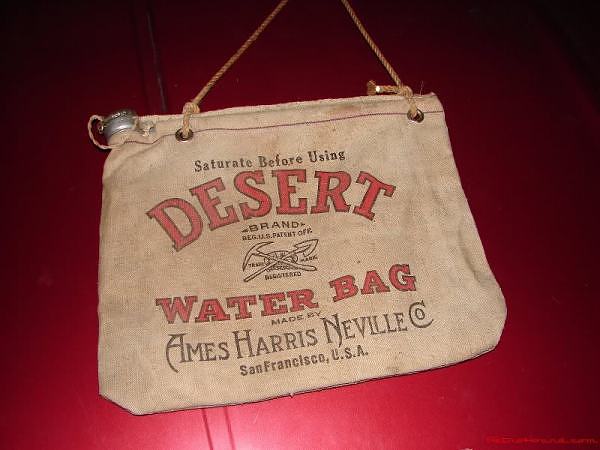
Some cars had brown flax Desert Water Bags draped over the hood ornament. Air blowing across the fabric cooled the water. Just in case the radiator blew.

The sight of cars prepared for human or auto lifesaving measures heightened my sense of the danger of crossing the desert. Desert Water Bags are a thing of the past, sold on e-bay to vintage item collectors.  Now there are cell phones and call boxes, rest stops with drinking fountains and orange-vested Caltrans workers.  The swath through the desert is more quickly traveled along Highways 15 or 40 now.  The ghosts of Dust Bowl migrants lingers only in novels and photographs.

“Summer reading” are two words that belong together like “me and you” and in Chapter 12 of The Grapes of Wrath you’ll find the best description of the precariousness of traveling the old Route 66.

In the day ancient leaky radiators sent up columns of steam, loose connecting rods hammered and pounded. And the men driving the trucks and the overloaded cars listened apprehensively. How far between towns? It is a terror between towns…

Listen to the motor. Listen to the wheels. Listen with your ears and with your hands on the steering wheel; listen with the palm of your hand on the gear-shift lever; listen with your feet on the floor boards. Listen to the pounding old jalopy with all your senses, for a change of tone.

These days you have to travel into Arizona which boasts the longest continuous stretch of Route 66 still paved and usable, reaching about 155 miles between Topock and Seligman, to see evidence of the road’s old treachery.

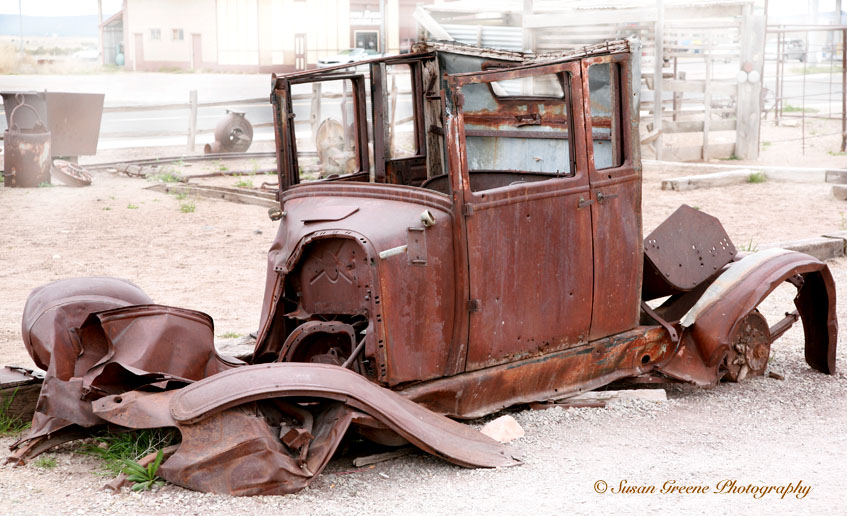
Outside the Roadkill Cafe, Seligman, AZ.

Reading Steinbeck as a passenger during my last Mojave Desert crossing made me wish for a new kind of Desert water Bag, one to capture the spirit and thoughts of those who had gone before. I felt like I was meeting the ghosts in the open land and I wanted to drink in their spirit, ripe with bravery.  If somehow The Grapes of Wrath skipped your own reading history, it’s one of the books selected by the National Endowment of the Arts “The Big Read” program which aims to inspire “people across the country to pick up a good book…listen to radio programs, watch video profiles, and read brief essays about classic authors.”

Summer Road Trip. Summer Reading. Me. You.
Where will our journeys take us this summer?

With high adventure,
~Catherine