Life Version 1.new

Composing Self: The title of a class I teach this semester. The work of a life.

I can’t tell you about the struggle between silence and witness that rumbles between my ribs this September.  Do I better serve the world with words or actions?  The gaps in my journal suggest I’m favoring the work of hands not head, behaving more like a silent tree than a writer, a physical manifestation rather than a noetic one.

DSCN2743

I sit alone with my mother-in-law in the hospital.  Between the wracking coughs of a deeply settled pneumonia, she tells me about a childhood friend who taught her to make Greek pastry and dance. “I used to love to dance,” she tells me. We stare out the window at impossibly glaring blue.  Will I dance enough?

An e-mail arrives inviting me to participate again in the Big Orange Book Festival. I find my journal entry written after last year’s event where I created and presented a mash-up of lines from dirtcakes, the literary and art journal I publish.

It’s 3:55 p.m. and I stand outside on the top of the cement steps leading to the library. I’m here to read to a crowd and there are two people waiting. One is my student trying to “get in my good graces,” the other is my niece being supportive. Muzak fills the piazza, a barefoot boy in a green shirt splashes in the fountain, a small red train on rubber wheels weaves in and out of the piazza with one mother and one girl sitting in the back car.  The conductor toots the horn and the small boy playing in the fountain giggles and waves and I pause and I wave because there’s nothing else to do.

The breeze, slight in the 94 degree afternoon with no shade, is enough to blow across the microphone meaning I must speak above the wind, above the water falling from the fountain, above the train tooting, the children laughing.

I shout out into the nothingness and even if I wasn’t a writer the metaphor for this moment as a physical manifestation of the void into which a small journal of arts and letters launches is apparent.

No one pays attention, except perhaps the man in the orange shirt with the white name tag. I can’t read his name from his distance at the bottom of the stairs but he nods, smiles encouragingly which of course he must do because he is working this literary festival.

I ditch my opening, the bit about this being the last day of summer, the question about viewing the space shuttle Endeavor on its last journey through the sky, the query about anyone knowing that today, this day, is the UN International Day of Peace.

Ten minutes I’ve promised. Ten minutes I’ll give.  The wind distorts my voice and I begin.

“This is the poem I fought.”

I’ve been fighting for this poem, this journal, this desire to rattle the status quo and inspire someone to join me, many someones  to join me, in meeting humanity in letters and poems and stories and action.

My student never looks at me. He types on his computer. My niece looks around the piazza, up in the sky as a low plane buzzes overhead, at the train, now on its third loop (toot-toot) through the piazza.

I stand a little taller.
I raise my voice.
I don’t give a damn.

“Now that she can read nothing can undo her.”

“green stagnant mother becomes a library. just bear down and bear down again.”

What the hell does it take for one woman with a global vision to make an impact? What do the laws of physics say about matter never being created nor destroyed. Surely these words land somewhere. I believe in these words, this dirtcakes project. I power through sections 1, 2 and 3 and 4,

“What the Night Maid draws when she can’t dream at night.”

I am the night maid. I created that line from my own dream of reaching readers. It hovers in the gloaming, just out of reach, a refrigerator light in a dark kitchen.

“shut the goddamn icebox.”

Today feels like an empty plate, an empty vision, a wasting of the kind that creates bloated bellies and I wonder why this ever felt so important to me.

I skip section 10 and most of 11 except this line which is exactly what I would make up on the spot if it wasn’t already in black and white in my hand:

“Imagine…me, an ordinary woman full of air, rocking and blowing into twilight.”

Rocking and blowing air and dreams and questions and frustration building into a sort of dignity coupled with the indignity of speaking to no one, but two.  I hope my words travel as (toot-toot) the train loops, the wind blows across the microphone, the little boy in the fountain stops splashing and waves at me his smile full of teeth white teeth. Will he remember any of this?

I read from section 12.

“I’m willing to hope now. Convince me.”
“turn around, say crazy trains, man, [say] crazy

I read and wonder how the poem knew it would end like this.

I decline the invitation to participate this year and wonder if I’m losing my ambition or composing a new self.  I wonder how you ever know if you danced enough. Will we spend  enough time marveling at the impossibly beautiful ordinary days?

photo

With face turned toward the blue,
~ Catherine
How many words in a world?

“I was reading the dictionary. I thought it was a poem about everything.”

Steven Wright’s quip isn’t too far off from the way this poet thinks. I look at the dictionary, all the words right there at my fingertips. If only they’d arrange themselves to perfection.

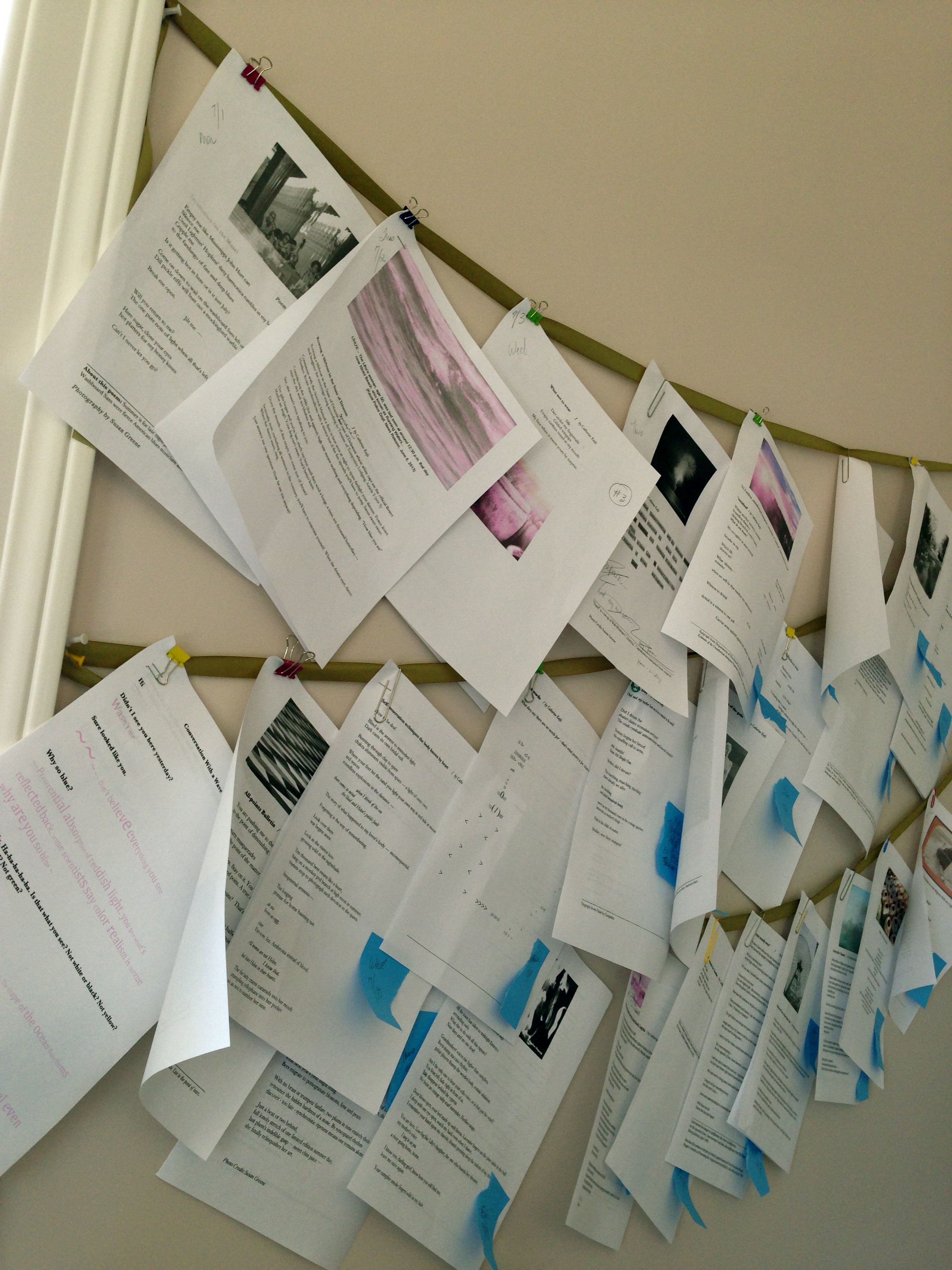
photo-48This is the corner of my office where, day by day in July, a new poem literally got hung on the line. Writing a poem a day has been a rigorous creative exercise, but the toil is completely offset by the thrill of sharing space with 8 other poets, discovering their new-to-me voices and fresh perspectives on the world each day.  To honor my fellow July poets, Risa Denenberg, Jennifer Faylor, Janet Ruth Heller, David Koehn, Richard O’Brien, Claudia Rodriguez, Mobi Warren, and Nicholas YB Wong, I created a cento using some of my favorite lines from their July poetry. A cento is a “patchwork” or collage of lines from other poets.

Highlight Reel: Homage For the July Poetry Crew      

Is a poem everything?

What I am trying to say here is my wild wiry hair suddenly has aphasia.
Fire knows no diva can sing god’s linked tongue.
Delta Force of the written word
orange swoon of monarchs

(breathe deep):   the stairway is not
red tulips.

Frogs sing in the pond, purple martins maneuver in squadrons;
orchestra of nerve endings
slows to a steady beat.

If I’m lucky, hummingbirds or deer pass through my yard, and I write a poem.
Two door hinges,
a latch, a handle from the old shed.
God’s voice
rustling toward you.
The way
most of the body is water, yet manages not to seem so.

We knew that being in love 
in saltwater is always a mistake.
The moon blue
shy at first to know you,
frenulum that binds the tongue to the mouth-cave, arresting language.

Circuit—

We hack our way through rough brush, thorns, vines that
strangle the forest—the agony of vaulting the temple wall
only to discover the gods have moved away.

The radio is a comfort–
to be on the same frequency, possibly, as you are.
Words can’t be arrested,
Go at you — rock’ em sock’ em robots.

No doom descends on Michigan.
A dull
Eye translates what
You see.

Break me a sunrise 
in a cup.

In and out of time,
the stars remain the same;
in the marrow of limestone caves,
silent albinos⎯rare blind beetles,
eyeless spiders, lived.

Alarm
the jays clamor
hidden in the pleated grass—
a warrior heart on her sleeve—

Into the air on a dare, the arrow was meant to strike a concrete
Blue whale.

A woman opens a book and finds her mother’s handwriting in the margins,
gets up to sharpen pencils.

Everything is a poem.

________________________________________________________________
To read more from the July poets, including their bios and links to their author websites, take a leap over to the Tupelo Press 30/30 Project site. It’s a rather remarkable repository of extraordinary poetic lines.

On an entirely unrelated note, yesterday I was surprised by a sudden influx of dragon flies in my garden. Maybe they want their own Sacred Garden tanka?

I wish you some sort of beautiful bewilderment today.
~Catherine

Some of us work, some of us play

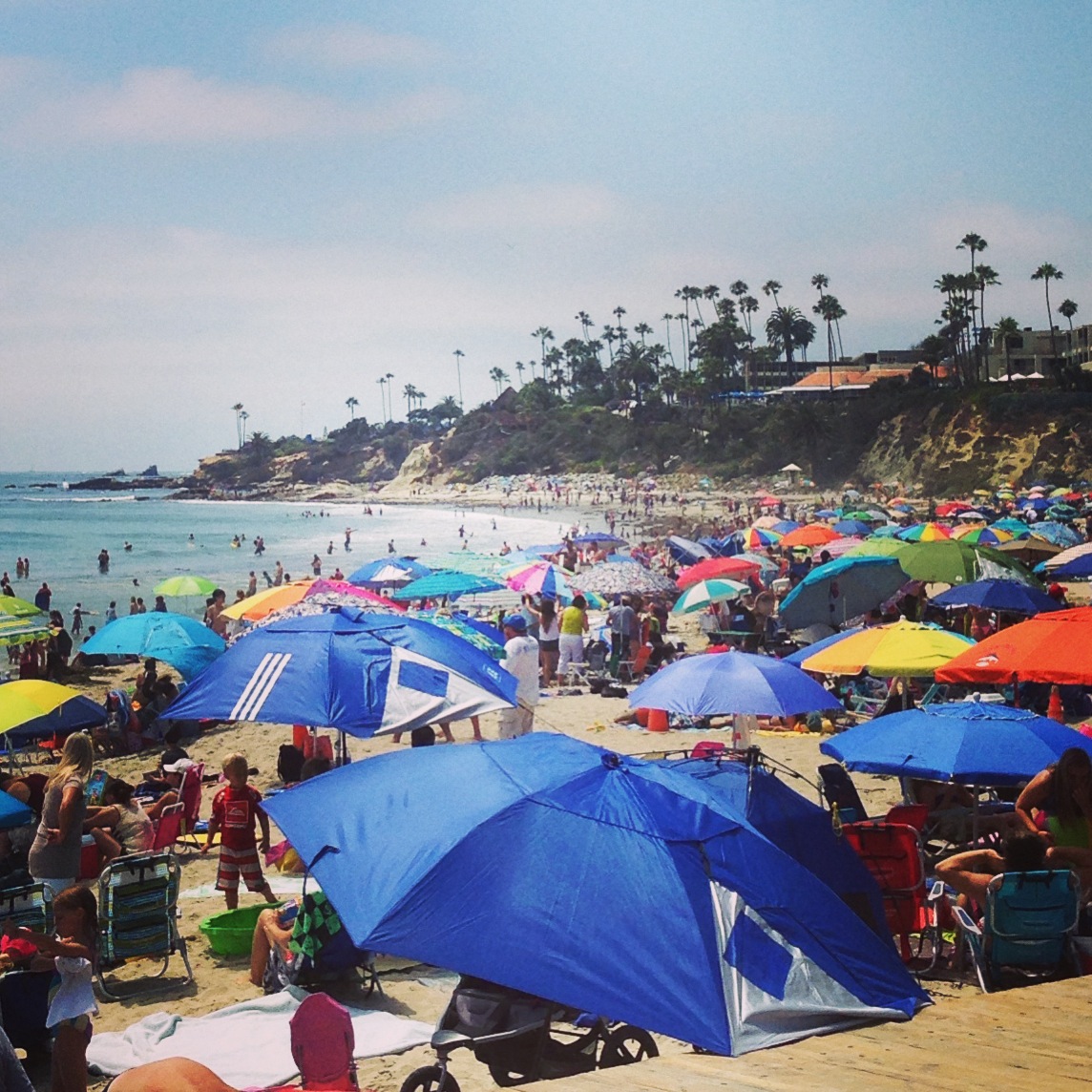
umbrellasAnd the tireless poet celebrates you all.
For your Monday morning reading pleasure, Day 29 poem:

Litany to Our Saints of Perpetual Summer
To the umbrella bearers and the striped short wearers:
Play for us.

To the sand ploppers and the watermelon choppers:
Play for us.

To the sleeping babies, squalling babies, toddling babies and nursing babies:
Play for us.

To the squealing toddlers who wear twirly skirts
and the fathers who swoop them out of waves’ way:
Play for us.

To the man dragging his foot in a cast across sand
trailing woman with red feathers stuck in her headband:
Play for us.

To all you straggly-haired feral boys who skim board at dawn and the mongrel who yelps at you:
Play for us.

To the teenage girl in black trunks and the white shirt skipping rocks in the surf
and the boy on a rock in the shadow (yes I see you) rolling weed on your skateboard:
Play for us.

To the tortilla maker, the chocolate chip baker, the spring roll roller and potato chip taker:
Play for us.

To mothers who brush sand off sons’ backs
and little girls squinting eyes against sunscreen spray:
Play for us.

To all the young girls wearing fringe string bikinis and boys in sagged bottoms,
all the hands holding hands, and the waited-for-kisses:
Play for us.

To smash ballers, and crossword scholars;
to football throwers, and volleyball spikers, to frisbee catchers and sand unicyclers;
to the lady in red cowboy hat skipping with a man in green paisley head scarf:
Play for us.

To the anorexic and the morbidly obese and the lifeguards who save us:
Play for us.

To the girl taking a picture of the boy taking a picture of himself at the beach with a girl:
Play for us.

Here’s to beer guts and melon round pink baby bellies
To furry-backed men with Brazilian-waxed babes in gold jellies
To old guys in puka shells and shark-teeth leather leashes
To thongs and board shorts and long skirts fluttering on beaches
To tattoos of stars, tattoos of tears, tattoos of dolphins and cherubs and spears
To tattoos of skulls and tattoos of crosses, to tattoos of names so as to not forget losses

To the blue cooler bearers and the plastic pail pickers
To the haters and the lovers and the daily sun seekers
To the tide pool pluckers and the drooling day nappers
To the rock sculpture builders and the sand castle blasters
To the brown bag lunch packers and the debit card snackers
To the trash bin pickers and the empty can nickers
To shade where you need it and free bathrooms and benches
and to workers cleaning up after us in the sand’s sandy trenches

To the entire communion of summer vacation day souls:
Please, please, play for us.

___________________________________________________

You’ll find dozens of more delightful poems for July on the Tupelo Press 30/30 Project website where “Litany to Our Saints of Perpetual Summer” first appeared.

Happiness,
~Catherine

Sacred Garden

Air. Earth. Water. Fire. Find the four elements of nature within life, love, work, garden, and art and you’ll create a sense of balance without boredom, surprise without chaos.

These elements have long been subjects for poets.

The Fire, Air, Earth and Water did contest
Which was the strongest, noblest and the best,

wrote Anne Bradstreet, “the first woman to be recognized as an accomplished New World poet,” in her poem, “Four Elements [Fire, Earth, Air and Water].”

DSCN3354

In the spirit of Sunday as a day of rest, and with an invitation to you, dear reader, to find sacred places within your own garden, patio, or apartment, I give you Day 28 poetry for the 30/30 Project.  I composed four tanka: 5 line poems with  5,7,5,7,7 syllables per line, for a complete 31 syllable poem.

Sacred Garden: Four Tanka
Air
Canyon breathes, trembles
manzanilla olive leaves.
Starlings flush. Startle
golden garden bells. Birthday
gift erupts in temple song.

Earth
Angel’s apple tree
holds his palm imprint above
rootline his hands once
grasped, now both deeply buried —
roots and hands at rest in ground.

angels-apple-tree

Water
Patter on copper
rain chain drips a water chant.
Peace Rose bends toward war
veteran’s gate. I watch him stand
in open storm, hands clutch rain.

Fire
Votives lit on rocks
every night an evening prayer.
Dinosaur bones once
found here, two fossils. We too
press lantern path, watch light rise.

_______________________________________________________________

While I’m happy enough with these poems – written in a day – they’re not finished, in a true poetic sense yet. Complete tanka needs a turn between lines 3 and 4, “a pivotal image, which marks the transition from the examination of an image to the examination of the personal response.” Poems, like gardens, need constant pruning, rearranging, and feeding.  What inspires you?  Why don’t you try your hand at writing tanka today while your feet are resting on a ledge.  You’ll find a complete discussion of the form on the Academy of American Poets website here.

To balance,
~Catherine

p.s. In the spirit of small things, did you know that a donation of $10 to the 30/30 Project as a gesture of support and love for poetry and its publication, is as beautiful as the tiny blossoms on Angel’s apple tree?

Oh my, thank you!

Bee still my heart.

DSCN2810

Sorry, I couldn’t resist the pun, I’m so bowled over with gratitude to you dear readers who cheered and cajoled, who read and donated to the 30/30 Tupelo Press Poetry Project this month while I turned poetic cartwheels all over the form manual based on an idea hatched about trying to harness the nature of words by grappling with poetic structure. (You can reread that post, “Five Lines to Challenge Chaos ” here.)

Art happens when we’re attentive.  I photographed this heart-shaped bee swarm on vacation in June at Kalapaki Beach, Kauai and weeks later the image worked its way into my poem, “Self Preservation Techniques the Body Knows By Heart.” (You can read it on the 30/30 Project, Day 10, here.)

Creativity blends the actual with the possible, the real with the dream, all under the wings of infinite tinkering, discipline, and technique.

If you’re the type of reader / writer who likes to experiment, I’ve made it easy for you to begin your own monthlong poetry writing adventure by cataloging the forms I played with this month.  You can find all the poems on the 30/30 Project website.

Incantation (Day 1)
Persona poems (Days 10, 12, 13, 15)
Cut-up (Day 4)
List poem (Day 6)
Concrete poetry (Day 8)
No Word poetry (Day11)
Epistolary form (Days 13 and 19)
Sonnet (Day 15)
An experiment with poetic duende (Day 19)
Cento (Days 16 and 30)
Found lines (Day 20)
Cinquain (Day 21)
Reverse poem (Day 26)
Tanka (Day 28)
Litany (Day 29)
All the other poems are lyrical free verse, including today’s, “Reseeding With Grace,” below.

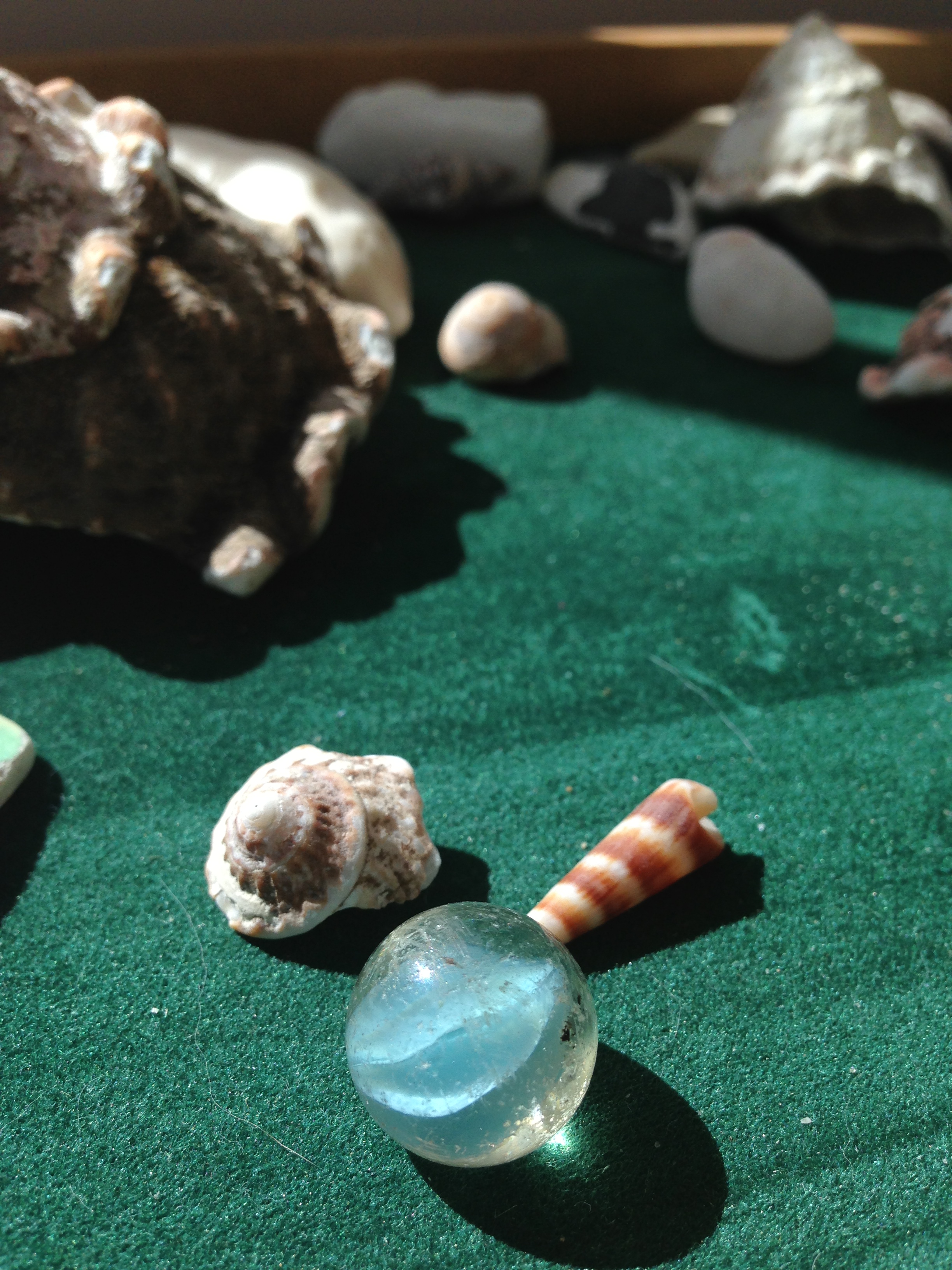
marbleReseeding With Grace

Three barefoot women alone on Glass Beach wade ankle deep into black ocean
brown paper bags bulge with marbles god it’s cold! in dead of midnight.
Grace insists on ceremony.

Glinting arcs rise by fistful
cat’s eyes, corkscrews, clearies, aggies, onyx, swirlies sail through dark;
three women in silver grace tones harmonize like McGuire Sisters
          Somethin’s gotta give, somethin’s gotta give,
A plop between waves and plip! The arthritic arm has no heat.

Full moon a cliché as silver curls from hand to sea
glassy marbles opaque as eyes turning —
returning here where marble find was proof enough of lucky day
promoted to windowsill status at homes dressed with curtains now
fading and thin as pink daisy aprons hidden behind the pantry door.

God I’m cold! Grace shivers
receding, holds up blue pearl to her eye against moon
whispers under breath
for tomorrow and tomorrow and tomorrows ‘s granddaughter
plip! last marble sinks into moon glowing foam.

Waves lap feet submerged in bone cold sand, sinking further and further.
Grace flings up hands to stars,
We lost our marbles!

Three silver women in moonlight clasp each other up against the tide
shimmy shudder silent laughter drowns out the cold,
slowly sinking treasure just now out of reach.

______________________________________________________________________

Back story?  A few years ago I spent several months near Glass Beach, WA, a treasure trove of marbles, sea glass and pottery shards. I met some women there who talked about how, at a certain age, they’d reseed the beach with their collected marbles – the most prized find – for the next generation. I often wonder if they ever did. Based on the women’s personalities, I imagine it might have gone down something like this.

If you’d like to make a small contribution on my behalf to the 30/30 Project, there are still a few more days in July.  In the meantime, I’ll keep turning cartwheels while wonderful readers like you help poetry grow and thrive, and small literary presses stay in business.

Hold onto your marbles as long as you need them,
but when it’s time to let go, here’s hoping you find all the grace you need.

With joy and gratitude,
~Catherine

Strange things happen at midnight

“This is thy hour O Soul, thy free flight into the wordless,
Away from books, away from art, the day erased, the lesson
done…”    from “A Clear Midnight” by Walt Whitman


My head has been in perpetual midnight this month. I walked off an airplane and into the terminal leaving my gate-checked carry-on luggage sitting on the tarmac. I accidentally left my cell phone on my car’s back bumper and drove away. I’ve taken Chester out for walks without his leash and set off the smoke alarm when the bread I forgot in the oven burned. For 25 days now my body has been on earth, but my heart and soul have been tuned into the frequency of the poetic muse on the Tupelo Press 30/30 Project.  Sometimes I look at my feet just to see if they’re on the ground, craving the “free flight into the wordless.”

IMG_0801

The experience has been weird and wonderful and I heartily recommend a one-month total immersion in whatever you love to do. Your support – by reading and forwarding the poems, by joining the Orange Whistle Secrets Divulged group, by e-mailing to discuss poems, and by donating to Tupelo Press – is deeply appreciated. You have no idea how much a kind word fuels literature.

Just for you, dear readers, I’ve reprised two favorites from the 30/30 Project website.

From Day 20
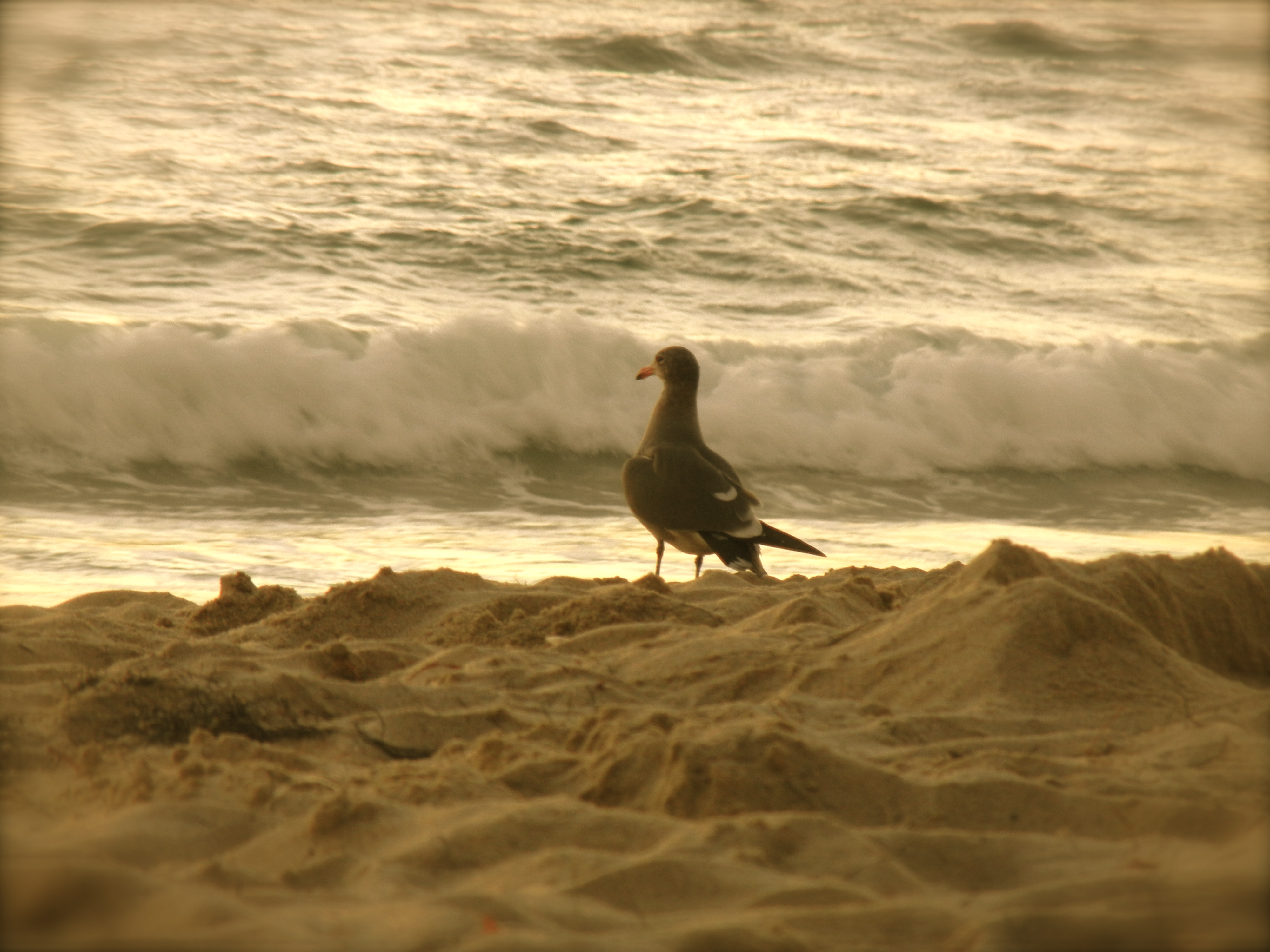
gullWhat the Gull Heard One July, Main Beach, Laguna   

If I tell you a secret, will you promise not to tell?
Never trust a woman sitting at a table alone without a glass of wine at dinner.
Of course she’s difficult, that’s her schtick. She calls herself a Mensa puzzle.
“What did you expect, hula girls?”

Careful, surf’s rough.
My wife thinks I’m at work today.
That seagull, like your eyes when you wake up before you put your glasses on.

Before I wanted to be an artist I wanted to be a saint.
What did you create this afternoon? Havoc at the very least.
I wonder if the pigs are out. No sharks today.
Only looking, no touching.

I thought the ocean would be bluer.

Mama, can we have our Daddy back?
Living gives you heart trouble.
We have so many issues we should open a newsstand.
I’m a lot like Barbara Streisand except that I don’t sing.
Would you mind if I walk alone for a bit?
This would be a great spot to get married.
Hey, hey, don’t run. You’ll knock people over.

I’m starving. I’m cold.
Hit your mute button.

Things that are worthwhile are sometimes more difficult.
There’s no need to yell.
That wave that knocked you over was God’s way of saying you shouldn’t walk out so far.
It’s nothing like the pictures.
It looks just like the photo!
3.  2.  1.
Snap.

And from today:
photo-21

Faith

We hear of rain
some years
breeching banks
creating a right flood.
Horses stampede. Fish take up in the basement. Whippoorwill trills all night.
Other times
drought.
Cicadas. Flat shimmer. Dust for breakfast.

 Water, so very much like love.

 Saying It’s the season
isn’t enough to end a parch
right where you stand
palms up, head tilted skyward, mouth an open urn.
I see you wait like you are sure
it will rain once again.


You can read all 25 poems at the 30/30 Project.  (Day 22 was written just for one of the Backyard Cousins.) If you’ve been meaning to make a small donation to the press, time’s almost up if you’d like to mark “In Honor of Catherine Keefe.” Come August 1, I’ll be back to my more grounded self and you’ll never hear me ask you for a single thing again.

Long live books and readers and poets who write at midnight. Long live those who support the arts rather than grumble about the decline of fine publishing.

Looking toward dawn,
~Catherine

Weekend Dish: Secrets

dish: The scoop, only bigger
Urban Dictionary

IMG_0491

Shhhh. I held up my hand to silence the chattering ladies sitting around a fire in our mountain cabin. It was nearing midnight on a Saturday.

tweeeeeeeet

A faint whistle chirped from down the hall. Leaving the group of women, I felt my way in the dark along the wall toward a closed door.

tweeeeeeet

Yes, the sound was definitely coming from inside the bedroom where a troop of seven-year-old Girl Scouts were “camping” heel-to-toe in sleeping bags on the floor.  I slowly pushed the door open, peering in.

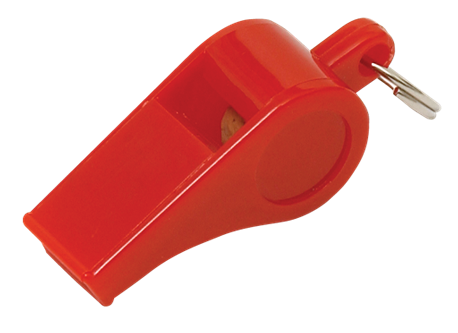
“Mrs. Keefe, Mrs. Keefe!” S sobbed. “I’m lost! I’m lost! I need to go to the bathroom but I don’t know where I am.  You said if we get lost to ‘hug a tree’ but there isn’t a tree, so I stayed where I was and blew my whistle!”  She held up a plastic orange whistle on a lanyard. We’d given all the girls a whistle at the beginning of the trip before heading out on the first hike.

Biting my lips to near bleeding to avoid laughing I helped S to the bathroom, turned on a nightlight, and returned to my fellow Girl Scout leaders around the fire to report that at least one little scout had fully learned her safety lesson for the day.

“If you get lost, hug a tree, stay where you are, and blow your whistle.”

This story flashed back brightly yesterday while having a conversation with my friend, D, the kind of friend who will read poetry because I write it and I’m working on this crazy poem-a-day in July project.  D is a brilliant retired high-tech software expert who can speak in acronyms like IT, HRMS, and ISM and know exactly what they mean.

“But I don’t get poetry,” she says. This is a difficult thing for her to admit; she’s really really smart. She’s so smart, in fact, that I’m pretty sure she does “get” poetry, but she doesn’t realize the things she intuitively picks up on are in fact some of the elemental wonders of the genre: poetry’s rhythm, its imagery and word play.

D tells me – in that way of good friends being kind so maybe they’ll lie a tiny bit – that she likes my “One Poet’s Trade” from Day 6.  (You can read it here; scroll down to Day 6.) She shakes her head as if trying to dislodge water from her ear. “But I don’t think I get it.”

“What do you get?” I ask. What I really want to know is which tree she’s hugging. I wonder if she recognizes the repetition of sounds, if she notice the two-line stanza structure, if she notices the ways each first line word and second line word are related to each other.

“Well…I hear some T sounds that are the same and some V sounds are the same. And it’s all a list. The list is in two-word order but I don’t know why.”

I nudge a little. “What if I told you that each first word is a tool of some trade? And what if I told you that each second word is a body part.”

She pauses. Thinks. “Then it goes in order from your head to your feet!”  I nod.

“But what about the end?”  Ah yes, what to make of those last lines? Who is this “you?”

I don’t answer that for her. I invite her to ponder.

And then I have a bright orange whistle of an idea.

plasticwhistle

For one week only, from July 7 – 14, if you make a $25 donation to the 30/30 Project, “In Honor of Catherine Keefe” I’ll give you all the navigation you need to get out of the woods for  Day 7-14 poems. Message me here as a comment in Backyard Sisters, or find me on Facebook.  You can pretty much ask me anything: the back story behind the poem, how it developed, the language decision-making process, and what I was hoping the poem would invoke in a reader.

In return you can tell me where the poem succeeds or fails for you, dear reader.  As Anne Stevenson once wrote,

The poet needs to reach out to people he or she has not met. That someone will read your poem and say ‘Yes, that is right; I know that, I recognise that.’ I think poetry always has that interior communicable strength.

Here’s to “communicable strength” and divulging secrets. This Backyard Sister is willing to dish.
~ Catherine

p.s. Please note that it takes up to a week for Tupelo Press to notify the poets of donations made in their honor. The minute I hear from the press, I’ll open up to you.


Why do you do what you do?

“When did you become a writer?”

The question, coming as it does from an artist at a gallery reception, surprises me. It’s like hearing, “when did you become a fish?”

“I always was one,” I reply, hoping for the simpatico understanding of a creative soul to bridge this non-specific-date-naming response, not an evasive conversational gambit, but a strange truth that still perplexes sometimes.  Decoding the world through language is as natural to me as skipping. One of my earliest childhood memories includes tracing the letters of words being spoken, turning them into stories and pictures with my right forefinger upon my left palm.
Meera's MehndiSounds and ideas danced upon my hand, to be released later onto the unlined light brown paper of a Mickey Mouse drawing pad.  I didn’t plan to be this way, I just was. Most writers I know say the same thing.

It’s this recognition of the magnetic power of some creative pull that frequently leads me to invent new ways to spark leaps in my technique.  Learning West African drum rhythms interrupts a rut of a cadence; reading books I don’t understand hopefully sparks new brain synapses and invites new subject matter into my writing.  Fifteen hundred pages of Critical Theory Since Plato anyone?  There’s a playfulness with these kinds of things, sure, but there’s also a dogged determination bordering on compulsive.  I laugh when I see myself in other writers and while reading Christian Wiman‘s Ambition and Survival: Becoming a Poet  I found a mirror self in the first few pages. Wiman writes:

When I read Samuel Johnson’s comment that any young man could compensate for his poor education by reading five hours a day for five years, that’s exactly what I tried to do, practically setting a timer every afternoon to let me know when the little egg of my brain was boiled…

I’m not quite as odd a person as I was once on the verge of becoming.

Of course my weirdness waxes and wanes.  I may be tipping the balance back toward odd as I begin a new poetry writing project for the month of July.

“Why do you do what you do?” my family wonders.

Why, when it’s summer and school’s out and nothing dictates my days but my own gentle taskmaster self, why would I commit to writing and posting a poem a day for Tupelo Press?  I believe in the need for literary presses and, being the editor of dirtcakesa small press of my own, I know  it’s impossible to sustain any sort of momentum and foster good work without readers and backers and contributors. The Tupelo Press 30/30 Project is a nifty little way for writers to forge new work and for readers to discover new writers.  It’s a community of writers that opens its hands to invite in a community of readers to share the stories written on our palms.

DSCN3284

I’ve got a few ideas of how we can work together through July. I’ll be posting them in the coming weeks. In the meantime, remember that which you love you will spend time doing. That which you spend time doing will attract your energy. That which captures your spirit will shine out from you, and ultimately reflect back upon you.  As for me and my attraction to poetry? I defer once again to Christian Wiman’s words:

…in the end we go to poetry for one reason, so that we might more fully inhabit our lives and the world in which we live them, and that if we more fully inhabit these things, we might be less apt to destroy both.

Who doesn’t want to be fully inhabit each precious moment of life?

Meerags Wedding

Stretching and spinning in anticipation of lining up a long dance with the muse,
~ Catherine

p.s. Christian Wiman is an iconic figure in the world of poetry. From 2003 – 2013 he edited Poetry magazine, “the oldest monthly devoted to verse in the English-speaking world.” The depth of his poetry knowledge and ability to articulate the aesthetic strengths of particular poets is precise and sharp, though do know his taste runs to the traditional which sometimes can miff a lover of more experimental verse. Ambition and Survival is a collection of essays to dip in and out of when you need a strong voice in your head to guide your writing practice.

What do you bring to the table?

Which way will the creek
run when time ends?
Don’t ask me until
this wine bottle is empty.

~ Jim Harrison and Ted Kooser
_________________________

“What did you notice that was beautiful today?” When J asked me this last night, just as we sat down to dinner, I cracked up.

Table

It’s not a funny question, but rather an example of his dear effort to honor a request I made after breakfast.

“Please don’t ask me at dinner what I did today, or how my day went, ask where I found beauty.” I implored him in the morning as I hustled to my office.

“And what do you want me to ask you tonight?” I called over my shoulder.

“You can ask how my day went. I like to remember what I got done.”
___________________________

Life has always yelled at me,
“Get your work done.” At least
that’s what I think she says.
~ Jim Harrison and Ted Kooser
___________________________

What we focus upon comes to light. My request was part self defense – I always give myself more to do in any given day than I can ever accomplish and then feel bad when I don’t finish. And it was part new strategy; I want to pay more attention to life’s surprises of  grace and grandeur hiding in plain sight rather than concentrating only on how I try to unruffle its challenges.  I’m trying to adjust the outlook I bring to my day and our dinner table.

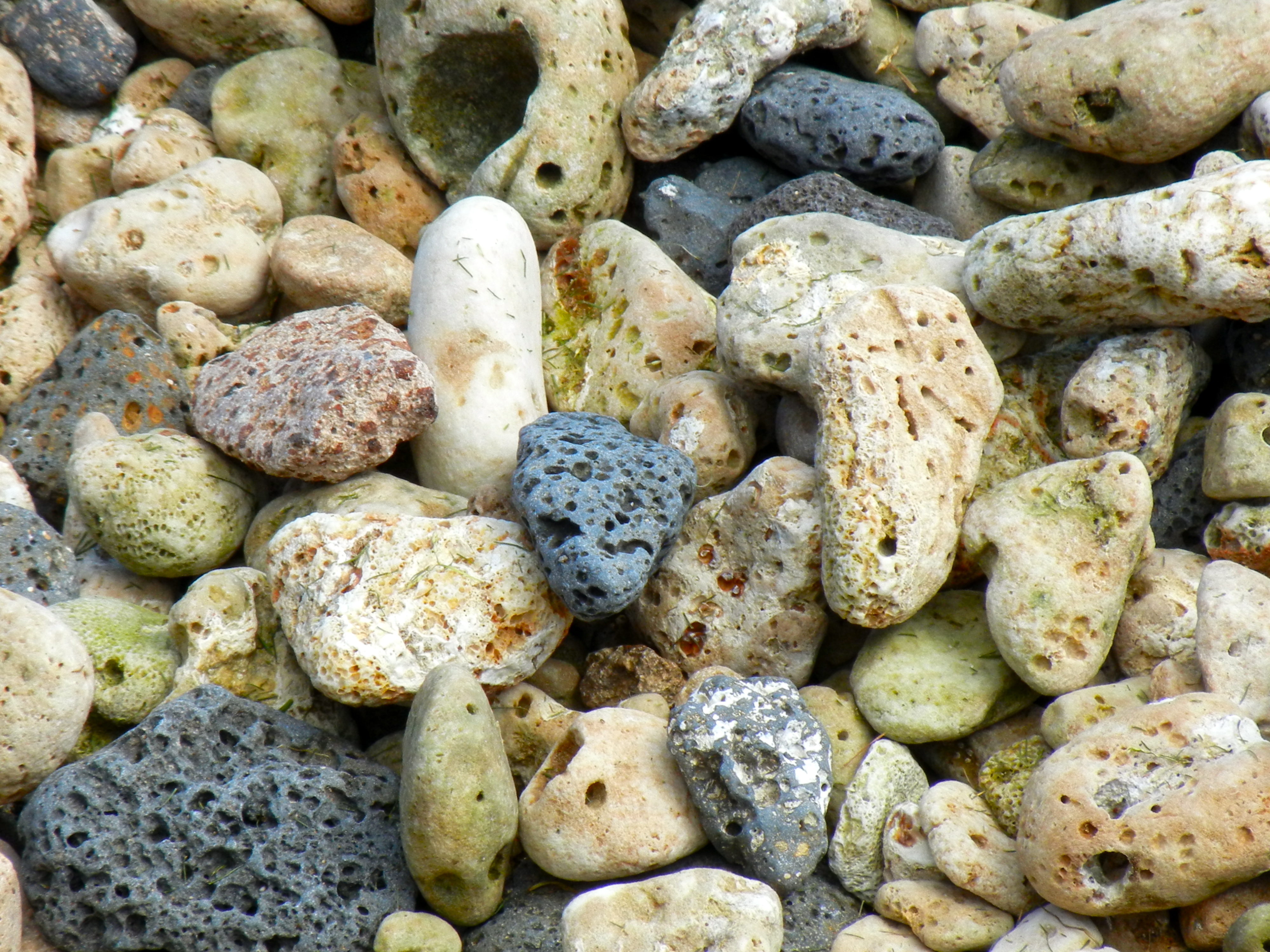
smooth coral

What do you talk about at dinner?

I’ve begun asking friends without children at home this question.

We don’t talk, we watch TV.
I don’t know, nothing, what we did that day.
What’s coming up on our calendar.
Funny stuff the dog did.

What did I expect? The better question is, what do I want, what does J want?  If gathering around the table is a nightly ritual so important that we set its time, its chef and menu (we trade cooking duty), its location and literally light its candles, then doesn’t it follow that we might also guide its conversational swoops and soars?

When our kids were home we had a standard dinner starting point that inevitably opened doors to conversation that often lasted long past dessert.

What was the best part of your day?
What was the worst?

Trials and triumphs of school and sports, of work and home life and friends trickled out over roasted chicken and broccoli.  If friends joined us, they too got pulled into the daily circle, some shy at first to say, but inevitably relaxed enough to tell about a moment that set this day apart.

I eventually bought Chat Packs, those decks of cards with dozens of conversation starters. We played Brain Quest and Would you rather?  I still sometimes put little stacks of these cards next to the napkins at dinner parties or spread them around the appetizers at family gatherings.

Am I inherently nosy? Afraid of conversational lull? Maybe yes and yes. But I like to think that even more than that, I really like the idea of getting to know the people I share time with. The worst kind of dinner is one where I don’t learn a single new thing about the ones I pause with at the end of the gift of another day.

photo-20

Last night I learned two truths. Each day delivers beauty; my husband remembers and honors my requests. Maybe those are really one big truth.

Where did you find beauty today?
~Catherine

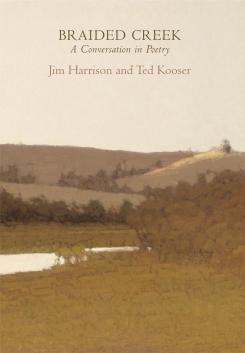
p.s. For literary grace and grandeur, you could do worse than getting your hands on a copy of Braided Creek: A Conversation in Poetry by Jim Harrison and Ted Kooser.
1317_lgTreasure what you find
already in your pocket, friend.
~ Jim Harrison and Ted Kooser
__________________________

The book is the best kind of conversation, where no one voice dominates, in fact no one poet takes individual credit for any of the short stanzas.  From the back cover:

Longtime friends, Jim Harrison and Ted Kooser always exchanged poems in their letter writing. After Kooser was diagnosed with cancer several years ago, Harrison found that his friend’s poetry became “overwhelmingly vivid,” and they began a correspondence comprised entirely of brief poems.

…When asked about attributions for the individual poems, one of them replied, “Everyone gets tired of this continuing cult of the personality…This book is an assertion in favor of poetry and against credentials.”

Maybe I’ll bring it to the dinner table tonight.

Wild thing

Coyote yips drift through the open bedroom window sometime before dawn. It’s May’s most consistent night song. Chester’s hackles rise and he growls low. I pull the sheet over my ears.

Regal ChesterChester’s been chased by a coyote three times. These aren’t the lean, mangy, skulking wild dogs of past years. This crop of fat boys trot across the trail. They sit. Cross their legs. Light a cigarette, pinky ring glinting in the morning glare before they chase.

First time it happened, J was walking Chester. He stood his ground, raised his arms and yelled “Stop!” When it was my turn at the wrong end of a coyote chase I did the same. The coyote cocked his head, tightened his silk cravat, emulated the Don Draper eyebrow lift and then slowed his pursuit to a model-like prowl.

Chester bolted, leaving me to walk backwards until I couldn’t see the whites of coyote’s eyes any more. A chilling sweep of goose bumps rose on my neck.

It’s not an option to stay indoors when this is steps from my backyard.

trail vista

But where there is prey, there are predators.

oh deer

Last night, I dream there’s a lion with full mane in my house, barreling down the hallway toward my bedroom.  I slam and lock the door, lean against the wood which cracks and creaks and splinters against my hand. I call out to J in his office. There’s a lion in the hallway! Shut your door!  He’s working on his computer and not paying attention and the lion pounces. I wrestle the lion, wrangle his scruffy neck and heave him out the office window which somehow overlooks a high stony cliff to the sea even though we’re nowhere near the ocean.

I’m sure it’s a dream inspired by recent sightings that frighten me more than coyotes. Yesterday when Chester and I walked, we heard a rustling in the oak grove at the bottom of the hill.

cool oak tree

The noise spooked us both, much louder than the familiar rabbit scurry or quail scuttle through dry leaves.  It sounded human-size, but stopped as we neared, the instinct of an animal.  Chester’s fur ruffled; he hush-growled and we turned heel, Chester wildly scanning the scrub oak lining the trail.  To one side stands a solitary oak  and within it we heard another great flurry of leaves overhead. I expected a hawk, a peregrine falcon, maybe even the screech owls that have taken up in the neighborhood but the shadow didn’t fly. It scampered down the branches, down the trunk, a shadow bigger than my dog.

It’s been about a month since J and I spotted a mountain lion off the trail about a five minute walk from this grove and a neighborhood association warning came last week.

A mountain lion has been seen in the Dove Canyon area.

The animal was picked up on cameras operated at Starr Ranch Sanctuary.

Additionally, this past week Dr. Don Earl of Lido Animal Hospital treated a greyhound that survived a serious attack from a mountain lion that climbed into the backyard of a home in Dove Canyon. The Department of Fish and Game is aware of the dog attack and has tips on its website should you encounter a mountain lion.

I read the “Keep Me Wild” tips.

  • If you encounter a mountain lion, do not run; instead, face the animal, make noise and try to look bigger by waving your arms; throw rocks or other objects. Pick up small children.
  • If attacked, fight back.

I don’t have a great track record with looking big. And I’m an awful thrower.  But I sing when I’m nervous and there’s one song that’s on rerun this spring.

http://www.youtube.com/watch?v=z9DVJE_bhVU

This morning, I hurl lyrics, loudly, and yes, maybe dance and air guitar a bit on the trail. Chester didn’t seem to mind, but I might have some explaining to do to the woman who caught me coming around a blind curve. Last I saw, she was backing away, waving her arms to the sky.

With a song on my lips,
~Catherine

Gary Snyder wrote a spot-on poem about sensing the presence of a wild thing.
One granite ridge
A tree, would be enough
Or even a rock, a small creek,
A bark shred in a pool.
Hill beyond hill, folded and twisted
Tough trees crammed
In thin stone fractures
A huge moon on it all, is too much.
The mind wanders. A million
Summers, night air still and the rocks
Warm.   Sky over endless mountains.
All the junk that goes with being human
Drops away, hard rock wavers
Even the heavy present seems to fail
This bubble of a heart.
Words and books
Like a small creek off a high ledge
Gone in the dry air.
A clear, attentive mind
Has no meaning but that
Which sees is truly seen.
No one loves rock, yet we are here.
Night chills. A flick
In the moonlight
Slips into Juniper shadow:
Back there unseen
Cold proud eyes
Of Cougar or Coyote
Watch me rise and go.