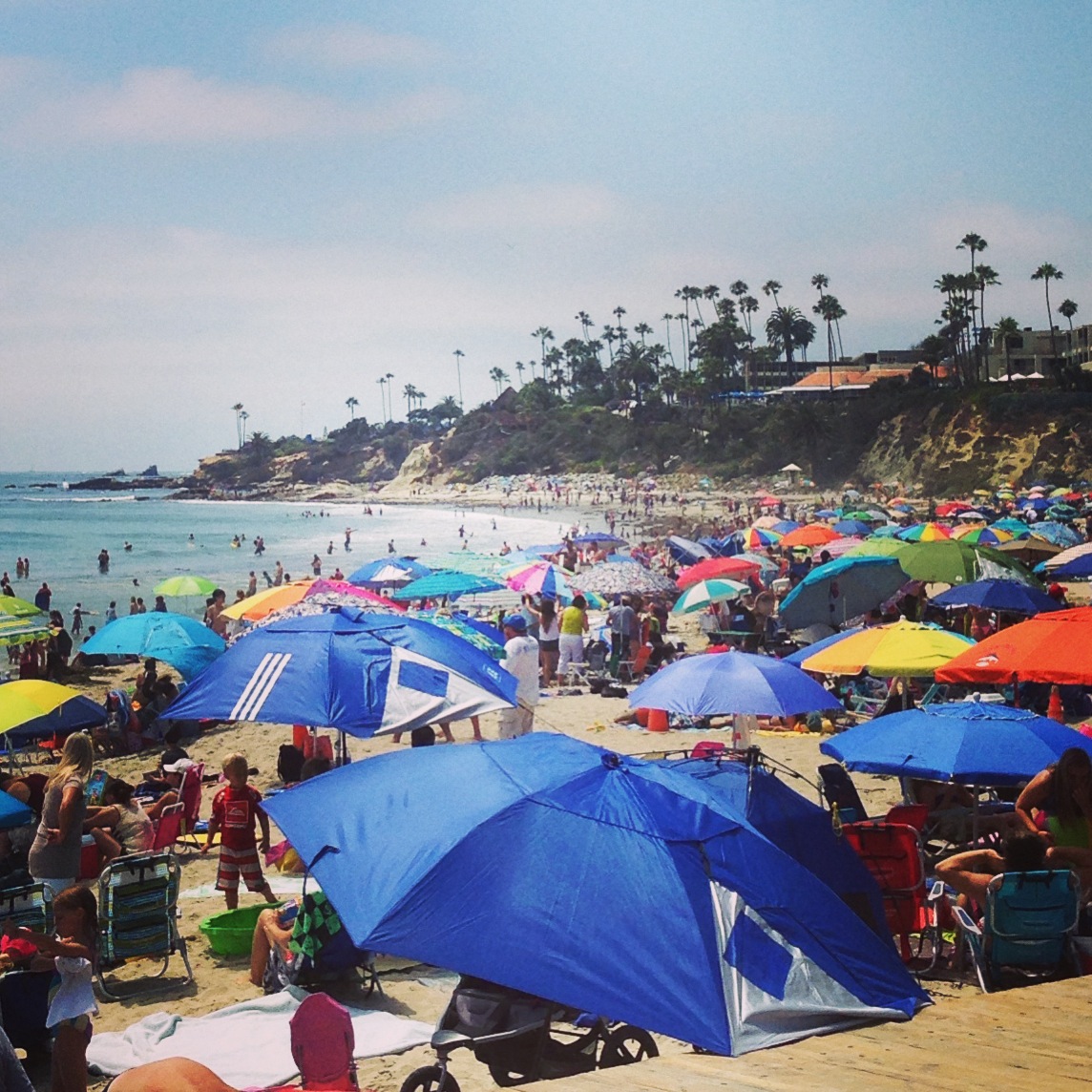
Some of us work, some of us play

umbrellasAnd the tireless poet celebrates you all.
For your Monday morning reading pleasure, Day 29 poem:

Litany to Our Saints of Perpetual Summer
To the umbrella bearers and the striped short wearers:
Play for us.

To the sand ploppers and the watermelon choppers:
Play for us.

To the sleeping babies, squalling babies, toddling babies and nursing babies:
Play for us.

To the squealing toddlers who wear twirly skirts
and the fathers who swoop them out of waves’ way:
Play for us.

To the man dragging his foot in a cast across sand
trailing woman with red feathers stuck in her headband:
Play for us.

To all you straggly-haired feral boys who skim board at dawn and the mongrel who yelps at you:
Play for us.

To the teenage girl in black trunks and the white shirt skipping rocks in the surf
and the boy on a rock in the shadow (yes I see you) rolling weed on your skateboard:
Play for us.

To the tortilla maker, the chocolate chip baker, the spring roll roller and potato chip taker:
Play for us.

To mothers who brush sand off sons’ backs
and little girls squinting eyes against sunscreen spray:
Play for us.

To all the young girls wearing fringe string bikinis and boys in sagged bottoms,
all the hands holding hands, and the waited-for-kisses:
Play for us.

To smash ballers, and crossword scholars;
to football throwers, and volleyball spikers, to frisbee catchers and sand unicyclers;
to the lady in red cowboy hat skipping with a man in green paisley head scarf:
Play for us.

To the anorexic and the morbidly obese and the lifeguards who save us:
Play for us.

To the girl taking a picture of the boy taking a picture of himself at the beach with a girl:
Play for us.

Here’s to beer guts and melon round pink baby bellies
To furry-backed men with Brazilian-waxed babes in gold jellies
To old guys in puka shells and shark-teeth leather leashes
To thongs and board shorts and long skirts fluttering on beaches
To tattoos of stars, tattoos of tears, tattoos of dolphins and cherubs and spears
To tattoos of skulls and tattoos of crosses, to tattoos of names so as to not forget losses

To the blue cooler bearers and the plastic pail pickers
To the haters and the lovers and the daily sun seekers
To the tide pool pluckers and the drooling day nappers
To the rock sculpture builders and the sand castle blasters
To the brown bag lunch packers and the debit card snackers
To the trash bin pickers and the empty can nickers
To shade where you need it and free bathrooms and benches
and to workers cleaning up after us in the sand’s sandy trenches

To the entire communion of summer vacation day souls:
Please, please, play for us.

___________________________________________________

You’ll find dozens of more delightful poems for July on the Tupelo Press 30/30 Project website where “Litany to Our Saints of Perpetual Summer” first appeared.

Happiness,
~Catherine

Weekend Dish: Secrets

dish: The scoop, only bigger
Urban Dictionary

IMG_0491

Shhhh. I held up my hand to silence the chattering ladies sitting around a fire in our mountain cabin. It was nearing midnight on a Saturday.

tweeeeeeeet

A faint whistle chirped from down the hall. Leaving the group of women, I felt my way in the dark along the wall toward a closed door.

tweeeeeeet

Yes, the sound was definitely coming from inside the bedroom where a troop of seven-year-old Girl Scouts were “camping” heel-to-toe in sleeping bags on the floor.  I slowly pushed the door open, peering in.

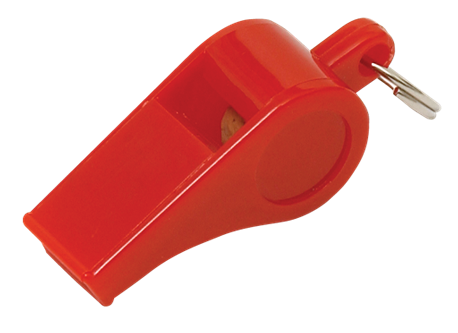
“Mrs. Keefe, Mrs. Keefe!” S sobbed. “I’m lost! I’m lost! I need to go to the bathroom but I don’t know where I am.  You said if we get lost to ‘hug a tree’ but there isn’t a tree, so I stayed where I was and blew my whistle!”  She held up a plastic orange whistle on a lanyard. We’d given all the girls a whistle at the beginning of the trip before heading out on the first hike.

Biting my lips to near bleeding to avoid laughing I helped S to the bathroom, turned on a nightlight, and returned to my fellow Girl Scout leaders around the fire to report that at least one little scout had fully learned her safety lesson for the day.

“If you get lost, hug a tree, stay where you are, and blow your whistle.”

This story flashed back brightly yesterday while having a conversation with my friend, D, the kind of friend who will read poetry because I write it and I’m working on this crazy poem-a-day in July project.  D is a brilliant retired high-tech software expert who can speak in acronyms like IT, HRMS, and ISM and know exactly what they mean.

“But I don’t get poetry,” she says. This is a difficult thing for her to admit; she’s really really smart. She’s so smart, in fact, that I’m pretty sure she does “get” poetry, but she doesn’t realize the things she intuitively picks up on are in fact some of the elemental wonders of the genre: poetry’s rhythm, its imagery and word play.

D tells me – in that way of good friends being kind so maybe they’ll lie a tiny bit – that she likes my “One Poet’s Trade” from Day 6.  (You can read it here; scroll down to Day 6.) She shakes her head as if trying to dislodge water from her ear. “But I don’t think I get it.”

“What do you get?” I ask. What I really want to know is which tree she’s hugging. I wonder if she recognizes the repetition of sounds, if she notice the two-line stanza structure, if she notices the ways each first line word and second line word are related to each other.

“Well…I hear some T sounds that are the same and some V sounds are the same. And it’s all a list. The list is in two-word order but I don’t know why.”

I nudge a little. “What if I told you that each first word is a tool of some trade? And what if I told you that each second word is a body part.”

She pauses. Thinks. “Then it goes in order from your head to your feet!”  I nod.

“But what about the end?”  Ah yes, what to make of those last lines? Who is this “you?”

I don’t answer that for her. I invite her to ponder.

And then I have a bright orange whistle of an idea.

plasticwhistle

For one week only, from July 7 – 14, if you make a $25 donation to the 30/30 Project, “In Honor of Catherine Keefe” I’ll give you all the navigation you need to get out of the woods for  Day 7-14 poems. Message me here as a comment in Backyard Sisters, or find me on Facebook.  You can pretty much ask me anything: the back story behind the poem, how it developed, the language decision-making process, and what I was hoping the poem would invoke in a reader.

In return you can tell me where the poem succeeds or fails for you, dear reader.  As Anne Stevenson once wrote,

The poet needs to reach out to people he or she has not met. That someone will read your poem and say ‘Yes, that is right; I know that, I recognise that.’ I think poetry always has that interior communicable strength.

Here’s to “communicable strength” and divulging secrets. This Backyard Sister is willing to dish.
~ Catherine

p.s. Please note that it takes up to a week for Tupelo Press to notify the poets of donations made in their honor. The minute I hear from the press, I’ll open up to you.


Why do you do what you do?

“When did you become a writer?”

The question, coming as it does from an artist at a gallery reception, surprises me. It’s like hearing, “when did you become a fish?”

“I always was one,” I reply, hoping for the simpatico understanding of a creative soul to bridge this non-specific-date-naming response, not an evasive conversational gambit, but a strange truth that still perplexes sometimes.  Decoding the world through language is as natural to me as skipping. One of my earliest childhood memories includes tracing the letters of words being spoken, turning them into stories and pictures with my right forefinger upon my left palm.
Meera's MehndiSounds and ideas danced upon my hand, to be released later onto the unlined light brown paper of a Mickey Mouse drawing pad.  I didn’t plan to be this way, I just was. Most writers I know say the same thing.

It’s this recognition of the magnetic power of some creative pull that frequently leads me to invent new ways to spark leaps in my technique.  Learning West African drum rhythms interrupts a rut of a cadence; reading books I don’t understand hopefully sparks new brain synapses and invites new subject matter into my writing.  Fifteen hundred pages of Critical Theory Since Plato anyone?  There’s a playfulness with these kinds of things, sure, but there’s also a dogged determination bordering on compulsive.  I laugh when I see myself in other writers and while reading Christian Wiman‘s Ambition and Survival: Becoming a Poet  I found a mirror self in the first few pages. Wiman writes:

When I read Samuel Johnson’s comment that any young man could compensate for his poor education by reading five hours a day for five years, that’s exactly what I tried to do, practically setting a timer every afternoon to let me know when the little egg of my brain was boiled…

I’m not quite as odd a person as I was once on the verge of becoming.

Of course my weirdness waxes and wanes.  I may be tipping the balance back toward odd as I begin a new poetry writing project for the month of July.

“Why do you do what you do?” my family wonders.

Why, when it’s summer and school’s out and nothing dictates my days but my own gentle taskmaster self, why would I commit to writing and posting a poem a day for Tupelo Press?  I believe in the need for literary presses and, being the editor of dirtcakesa small press of my own, I know  it’s impossible to sustain any sort of momentum and foster good work without readers and backers and contributors. The Tupelo Press 30/30 Project is a nifty little way for writers to forge new work and for readers to discover new writers.  It’s a community of writers that opens its hands to invite in a community of readers to share the stories written on our palms.

DSCN3284

I’ve got a few ideas of how we can work together through July. I’ll be posting them in the coming weeks. In the meantime, remember that which you love you will spend time doing. That which you spend time doing will attract your energy. That which captures your spirit will shine out from you, and ultimately reflect back upon you.  As for me and my attraction to poetry? I defer once again to Christian Wiman’s words:

…in the end we go to poetry for one reason, so that we might more fully inhabit our lives and the world in which we live them, and that if we more fully inhabit these things, we might be less apt to destroy both.

Who doesn’t want to be fully inhabit each precious moment of life?

Meerags Wedding

Stretching and spinning in anticipation of lining up a long dance with the muse,
~ Catherine

p.s. Christian Wiman is an iconic figure in the world of poetry. From 2003 – 2013 he edited Poetry magazine, “the oldest monthly devoted to verse in the English-speaking world.” The depth of his poetry knowledge and ability to articulate the aesthetic strengths of particular poets is precise and sharp, though do know his taste runs to the traditional which sometimes can miff a lover of more experimental verse. Ambition and Survival is a collection of essays to dip in and out of when you need a strong voice in your head to guide your writing practice.

What do you bring to the table?

Which way will the creek
run when time ends?
Don’t ask me until
this wine bottle is empty.

~ Jim Harrison and Ted Kooser
_________________________

“What did you notice that was beautiful today?” When J asked me this last night, just as we sat down to dinner, I cracked up.

Table

It’s not a funny question, but rather an example of his dear effort to honor a request I made after breakfast.

“Please don’t ask me at dinner what I did today, or how my day went, ask where I found beauty.” I implored him in the morning as I hustled to my office.

“And what do you want me to ask you tonight?” I called over my shoulder.

“You can ask how my day went. I like to remember what I got done.”
___________________________

Life has always yelled at me,
“Get your work done.” At least
that’s what I think she says.
~ Jim Harrison and Ted Kooser
___________________________

What we focus upon comes to light. My request was part self defense – I always give myself more to do in any given day than I can ever accomplish and then feel bad when I don’t finish. And it was part new strategy; I want to pay more attention to life’s surprises of  grace and grandeur hiding in plain sight rather than concentrating only on how I try to unruffle its challenges.  I’m trying to adjust the outlook I bring to my day and our dinner table.

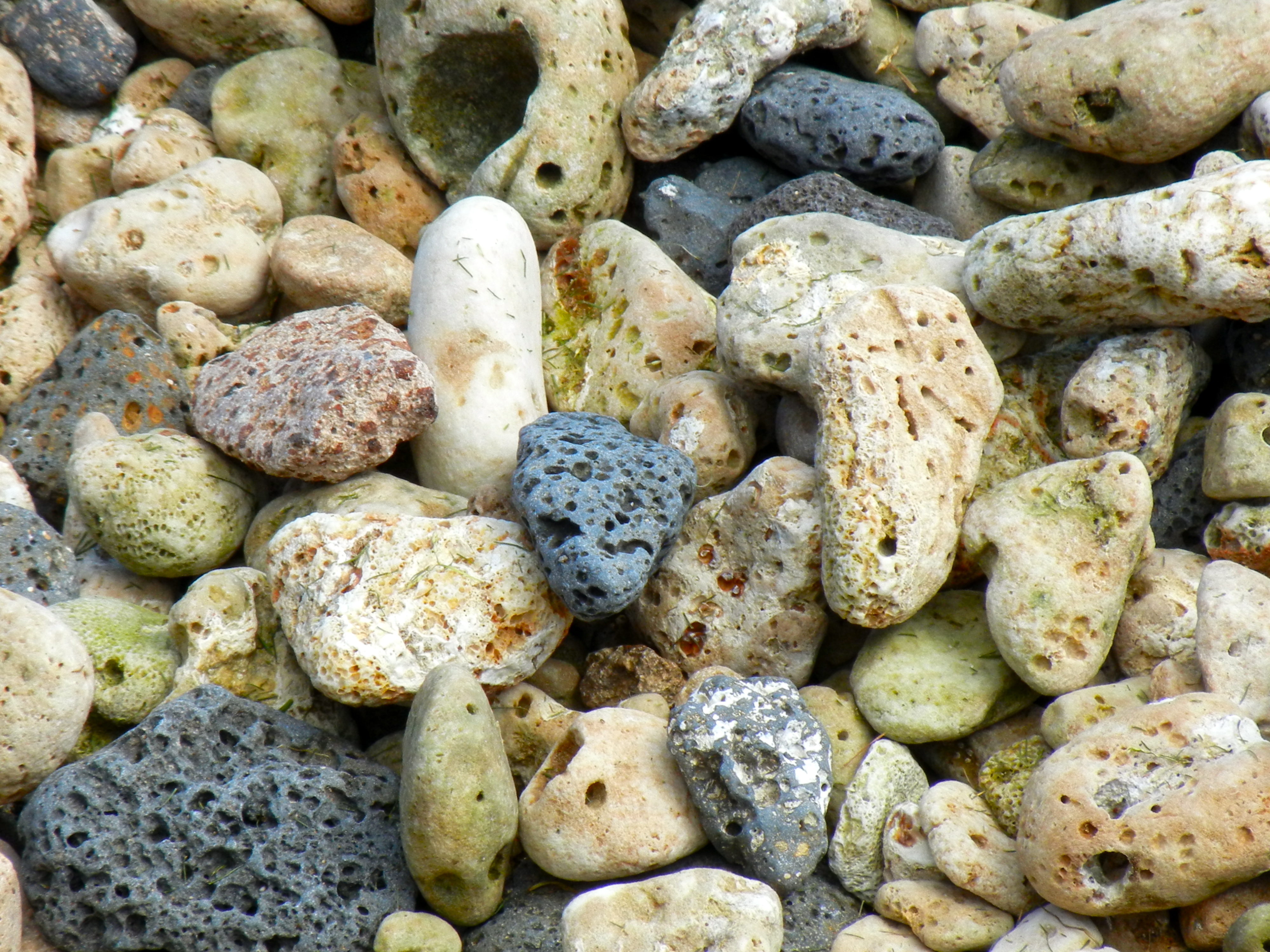
smooth coral

What do you talk about at dinner?

I’ve begun asking friends without children at home this question.

We don’t talk, we watch TV.
I don’t know, nothing, what we did that day.
What’s coming up on our calendar.
Funny stuff the dog did.

What did I expect? The better question is, what do I want, what does J want?  If gathering around the table is a nightly ritual so important that we set its time, its chef and menu (we trade cooking duty), its location and literally light its candles, then doesn’t it follow that we might also guide its conversational swoops and soars?

When our kids were home we had a standard dinner starting point that inevitably opened doors to conversation that often lasted long past dessert.

What was the best part of your day?
What was the worst?

Trials and triumphs of school and sports, of work and home life and friends trickled out over roasted chicken and broccoli.  If friends joined us, they too got pulled into the daily circle, some shy at first to say, but inevitably relaxed enough to tell about a moment that set this day apart.

I eventually bought Chat Packs, those decks of cards with dozens of conversation starters. We played Brain Quest and Would you rather?  I still sometimes put little stacks of these cards next to the napkins at dinner parties or spread them around the appetizers at family gatherings.

Am I inherently nosy? Afraid of conversational lull? Maybe yes and yes. But I like to think that even more than that, I really like the idea of getting to know the people I share time with. The worst kind of dinner is one where I don’t learn a single new thing about the ones I pause with at the end of the gift of another day.

photo-20

Last night I learned two truths. Each day delivers beauty; my husband remembers and honors my requests. Maybe those are really one big truth.

Where did you find beauty today?
~Catherine

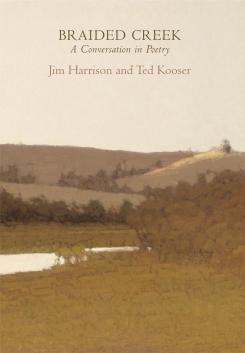
p.s. For literary grace and grandeur, you could do worse than getting your hands on a copy of Braided Creek: A Conversation in Poetry by Jim Harrison and Ted Kooser.
1317_lgTreasure what you find
already in your pocket, friend.
~ Jim Harrison and Ted Kooser
__________________________

The book is the best kind of conversation, where no one voice dominates, in fact no one poet takes individual credit for any of the short stanzas.  From the back cover:

Longtime friends, Jim Harrison and Ted Kooser always exchanged poems in their letter writing. After Kooser was diagnosed with cancer several years ago, Harrison found that his friend’s poetry became “overwhelmingly vivid,” and they began a correspondence comprised entirely of brief poems.

…When asked about attributions for the individual poems, one of them replied, “Everyone gets tired of this continuing cult of the personality…This book is an assertion in favor of poetry and against credentials.”

Maybe I’ll bring it to the dinner table tonight.

The Weekend Dish-Irish Soda Bread

The song begins the moment first guests arrive, a ditty all four Keefes learned by heart one summer when an Irish singalong CD was our soundtrack while driving backroads from Dublin to Shannon.
(Go ahead, click play and listen while you read.)

At our house on March 17, “there’s a welcome there for you” regardless of where you hail from. We invite the intrepid and seasoned St. Patrick Day’s revelers in for a taste of tradition dating beyond our family trip to the homeland, beyond the Backyard Sisters’ mom making corned beef, back, back to the maternal and paternal grandmothers who couldn’t let a March 17 pass without corned beef and a haunting round of “Too-Ra-Loo-Ra-Loo-Ral (That’s an Irish Lullaby) sung a capella in the kitchen.

At the O’Keefe’s Hooley on St. Patrick’s Day, “whoever you are you’re one us,” ’tis true. But there are three hard and fast rules for being a good guest.

Sing along.
Wear green.

St Pattys Day Maizie Maizie the Wonderlab.  Photo Credit: James Keefe

And kick off your shoes to kitchen jig.

kitchen danceWe take care of the rest by creating a feast based on updated versions of the Irish classics of corned beef, cabbage, potatoes; some sort of green vegetable, an ancient green jello salad recipe, and Irish soda bread.

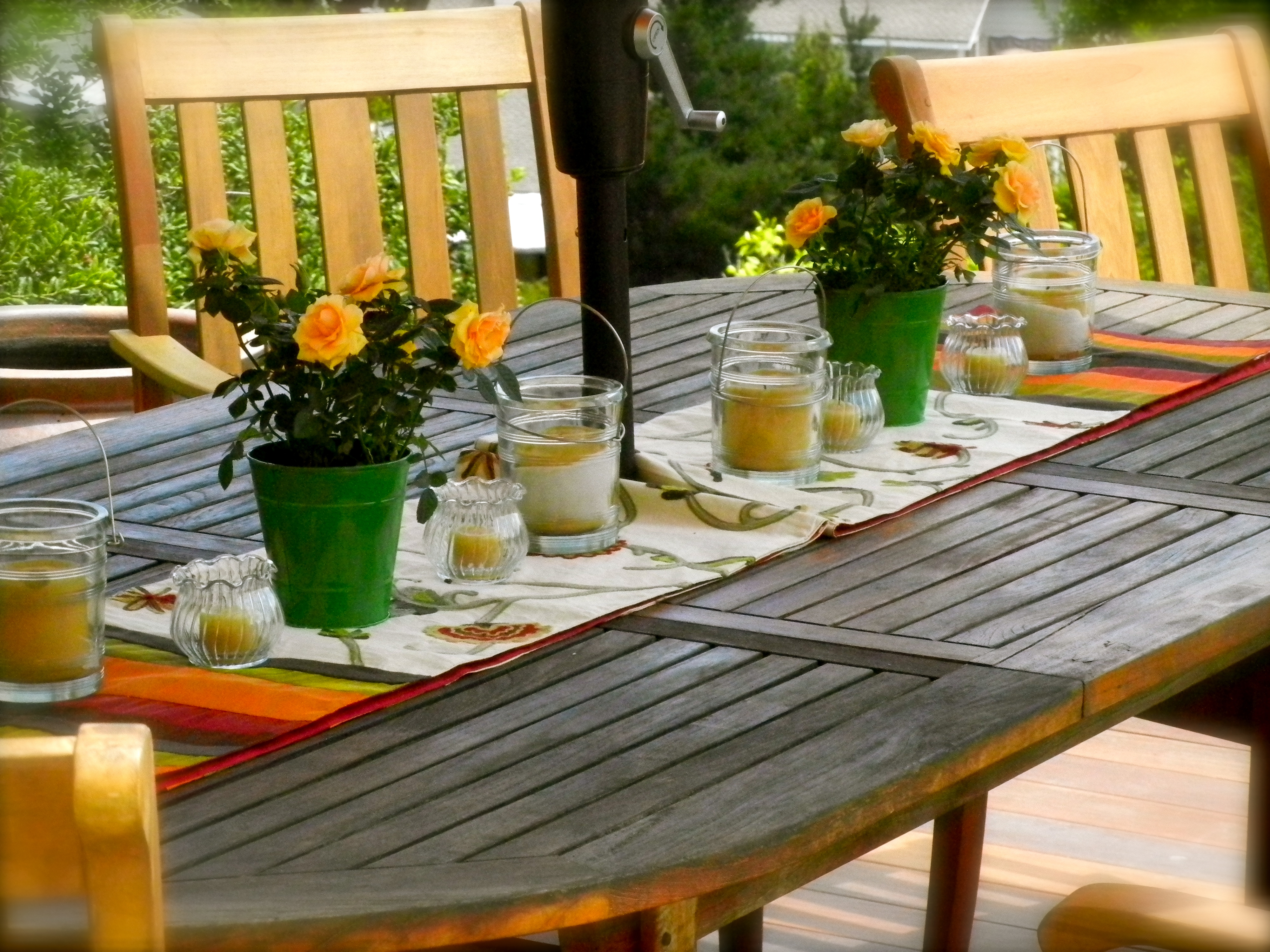
Table Setting

The corned beef is boiled in the conventional manner, then treated with a catsup, horseradish, mustard, brown sugar, and melted butter glaze which is brushed over the beef, then oven roasted for 30 minutes at 350 to create a savory, almost caramelized coating. Cabbage is oven roasted in olive oil so it browns and remains more crisp than its boiled cousin. Potatoes are mashed, country style with roasted garlic and laced with parsley. Usually by the time I’m finished making all of this, enthusiasm and time left to make soda bread have waned.

And honestly, up until last year, for me Irish Soda Bread wasn’t anything worth troubling over. Some years I whipped up Bisquick biscuits; other times I called Pop ‘N Fresh biscuits Irish, or better yet, I passed out bread duty to guests. As the luck of the Irish would have it, last year my friend Maureen brought the bread that changed my mind about it being a second class citizen at the feast. And wouldn’t you know, this recipe is straight from Ireland by way of her mother.

Soda Bread

Eileen Shea’s Irish Soda Bread. Photo Credit: James Keefe

Here’s the story behind the bread, in Maureen’s words.

The Irish soda bread is a very fond memory from my mom, Eileen Shea. Her parents came over from Ireland and met in buffalo NY , settled in an Irish neighborhood there. My mom had been making the bread for many years, always on St. Paddy’s day, along with corned beef and cabbage if course!  I began making the bread when I had our daughters and wanted to keep the Irish tradition alive for them…. I make it every St. Paddy’s…I hope the girls will carry on the recipe when they have their own families….

It’s funny because I am out here in the desert with my Buffalo cousins , who have kept up the same tradition and actually brought us a wonderful loaf of soda bread on the plane …we have been eating it as we speak, the same recipe that our moms have shared ….

So cheers to you and cheers to Eileen and Maureen and the Buffalo cousins.  “Whoever you are, you’re one of us.”
Happy St. Patrick’s Day.
~ Catherine

Eileen Shea’s Irish Soda Bread
Preheat oven to 350

  • 4 Cups flour (scant)
  • 1 T baking powder
  • 1 tsp. baking soda
  • 1 tsp. salt
  • 2/3 Cup sugar
  • 3/4 Cup butter (chilled)
  • 1 Cup raisins
  • 2 tsp. caraway seeds
  • 1 1/3 Cups buttermilk

Mix dry ingredients in large bowl. Cut in butter. Add raisins, caraway seeds, and milk. Turn out on a floured board. Knead about one minute. (Maureen divides dough in half and makes two small round loaves.)

Bake on cookie sheet for 50-60 minutes until brown and crackled.

bread blessing

Cacti and clouds

trail

I’ve run away from home again in the name of love. Book love.

Sometimes this writer needs to stop using her wife voice, mother voice, daughter voice, sister voice, auntie voice, professor voice, neighbor voice to recall the voice that sounds most like her inner soul. Her writing voice.

There was a red suitcase involved, a bag of books heavier than a week’s worth of groceries, my cappuccino maker, and a short to-do list.

  • Write the last poem of THE BOOK.
  • Finalize order of poems in THE BOOK. (Yes, this contradicts Item #1.)
  • Edit all poems in THE BOOK.

On Monday, the list felt an awful lot like this:

Western Prickly Pear

The weird thing is, I chose this week, right in the middle of the Association of Writers and Writing Programs annual conference, the single largest gathering of writers in North America.  More than ten thousand writers and editors traveled to Boston. I stayed in California.  I haven’t missed a conference in five years. And yet I desperately needed to be alone and write more than I needed to schmooze and buy books and be inspired by what other writers were doing.  I couldn’t afford both a writer’s retreat and to put myself up in Boston, so I chose me.  Alone.

As the week winds down, THE BOOK has been tamed back down to all lower case letters.  Needles have been plucked, rough edges smoothed.

The new perspective comes by paying attention to the Backyard Sisters theme for March: contrast.

low tide rocks

Home. Not home.
Clay. Sand.
Dust. Water.
Omnipresent trail. Tidal path.
Warm toes. Cold bed.

Narrative moves forward, I tell my students, when that which is bumps up against that which is not. The best poetry happens, says poet Amy Newlove Schroeder, when there’s “a yoking together of the concrete and the abstract,” like “blending the perfect martini.”  Last year I had the pleasure of hearing Amy give a poetry talk titled “Concrete Abstraction” at Chapman University.  She urged poets to consider how all language is representational and the most “successful” poetry is that which can translate an experience, an idea, an aloneness, “from the tangible to the real.”  It’s how we don’t die of loneliness, Schroeder suggests.

If you’d like your own university classroom experience, you can view her talk here.  And if you’re anywhere near Orange County, you can catch her at Literary Orange, Sat. April 6, 2013, at the Irvine Marriott, a hotel. Not home.

Leaving. Returning.
Watching the sky. Waiting for tomorrow.
Missing you. Knowing I will miss this.
clouds and oceanWith a skip in her step,
~Catherine


Lessons from winter

Can I weave a nest for silence,
weave it of listening,
listening,
layer upon layer?

May Sarton, from “Beyond the Question”

I told you once, there are four of us Backyard Sisters.  Today’s post comes from the eldest,  Theresa, prompted by a telephone conversation.

Winter

“I drove in the dead winter,” she tells me one day.  “From Des Moines to Minneapolis. And it was darker than dark except for headlights on the highway. And I thought of letters flying through cyberspace, of too many words, like those headlights.

DSCN0884

“And I thought of a poem by May Sarton.  Then I wrote this for you.”

Theresa’s my hero. She finds a way to quietly approach life, to focus as if each moment, each person, each word matters.  I’m happy to share my big sister with you.  Here’s Theresa…

sisters

“words once spoken, can tear down or build up – but can never be destroyed.”

I wrote that when I was 14 or 15 years old, probably after an angst-producing adolescent moment – and I still think about words a lot.

DSCN0872

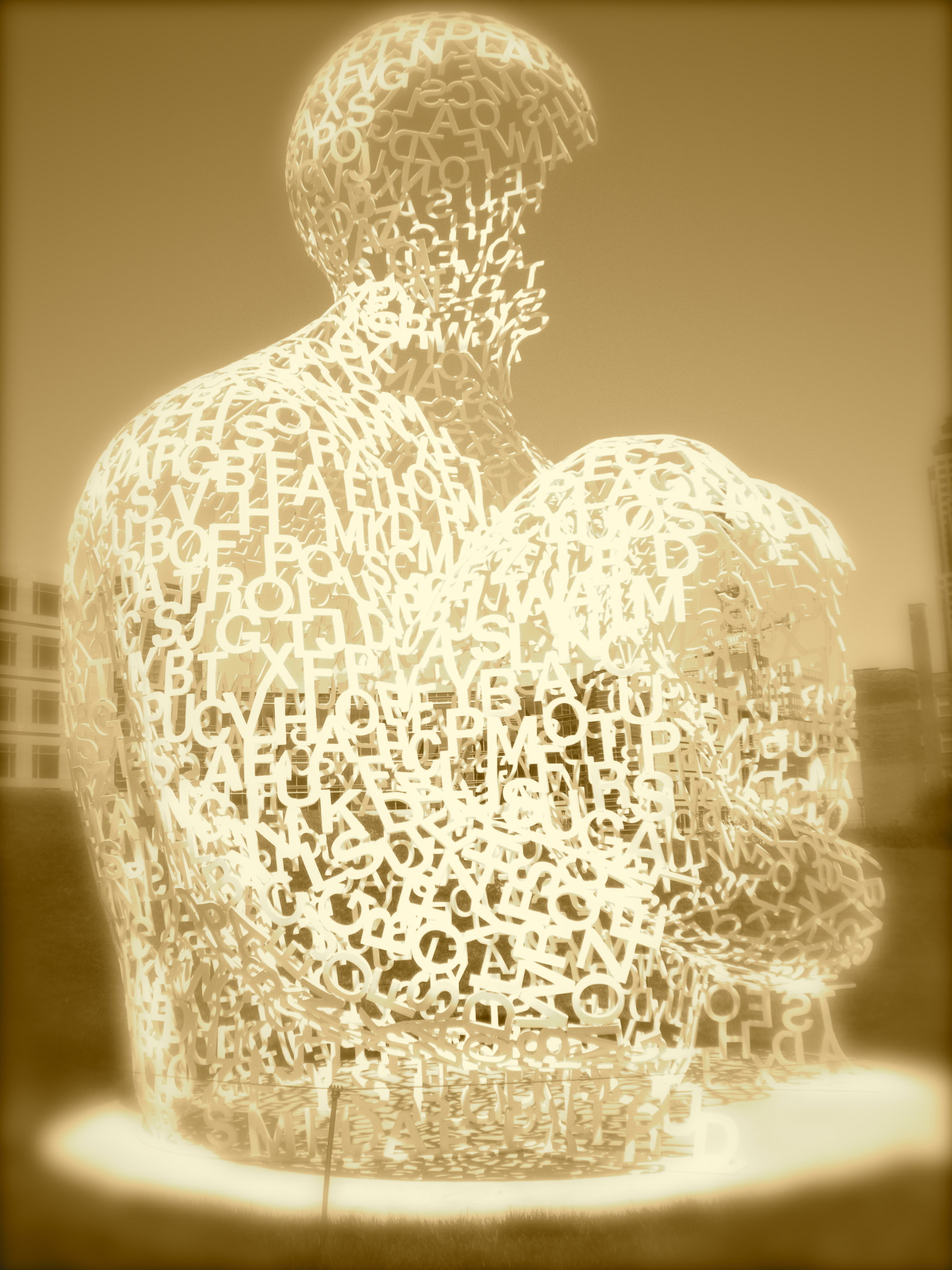
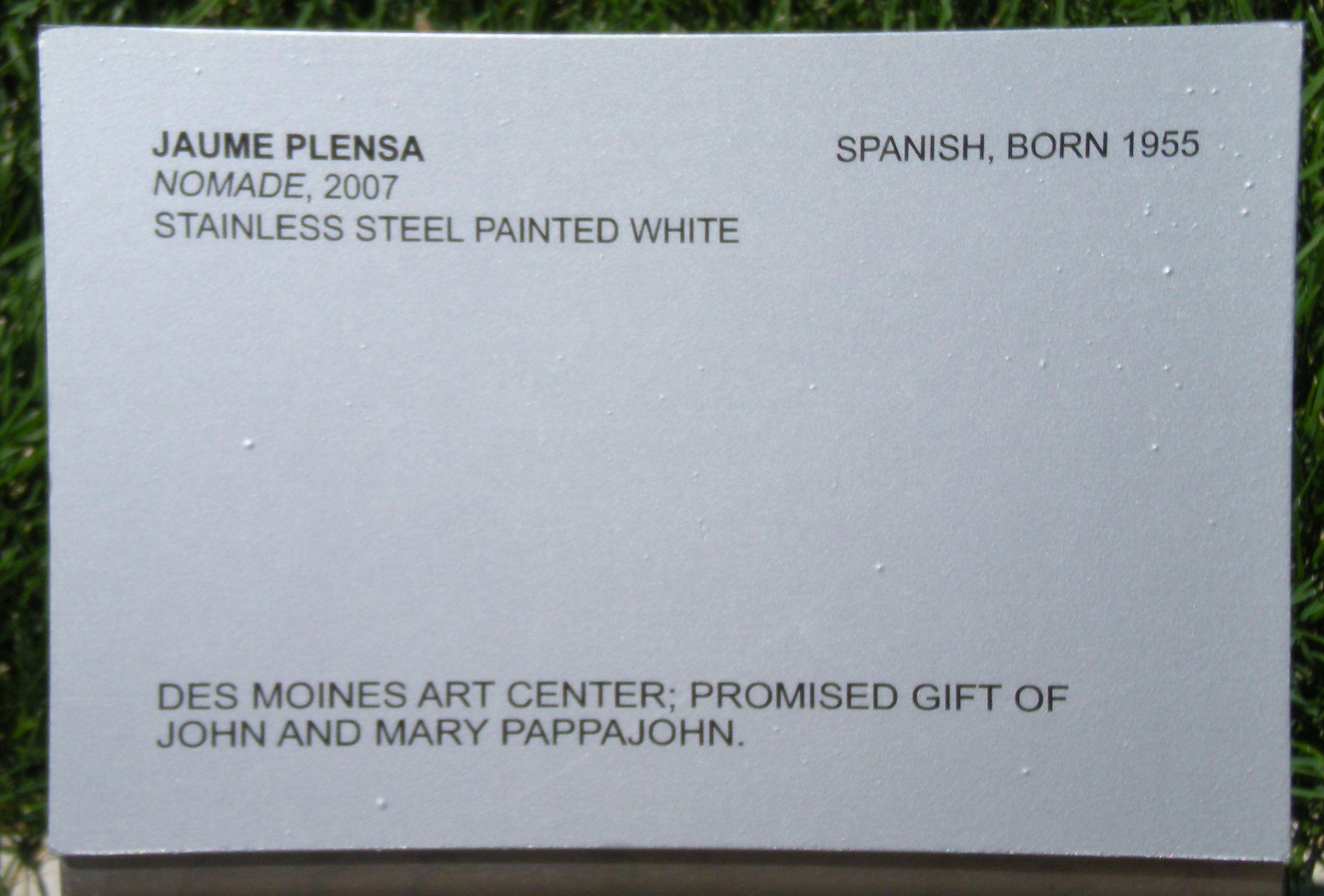
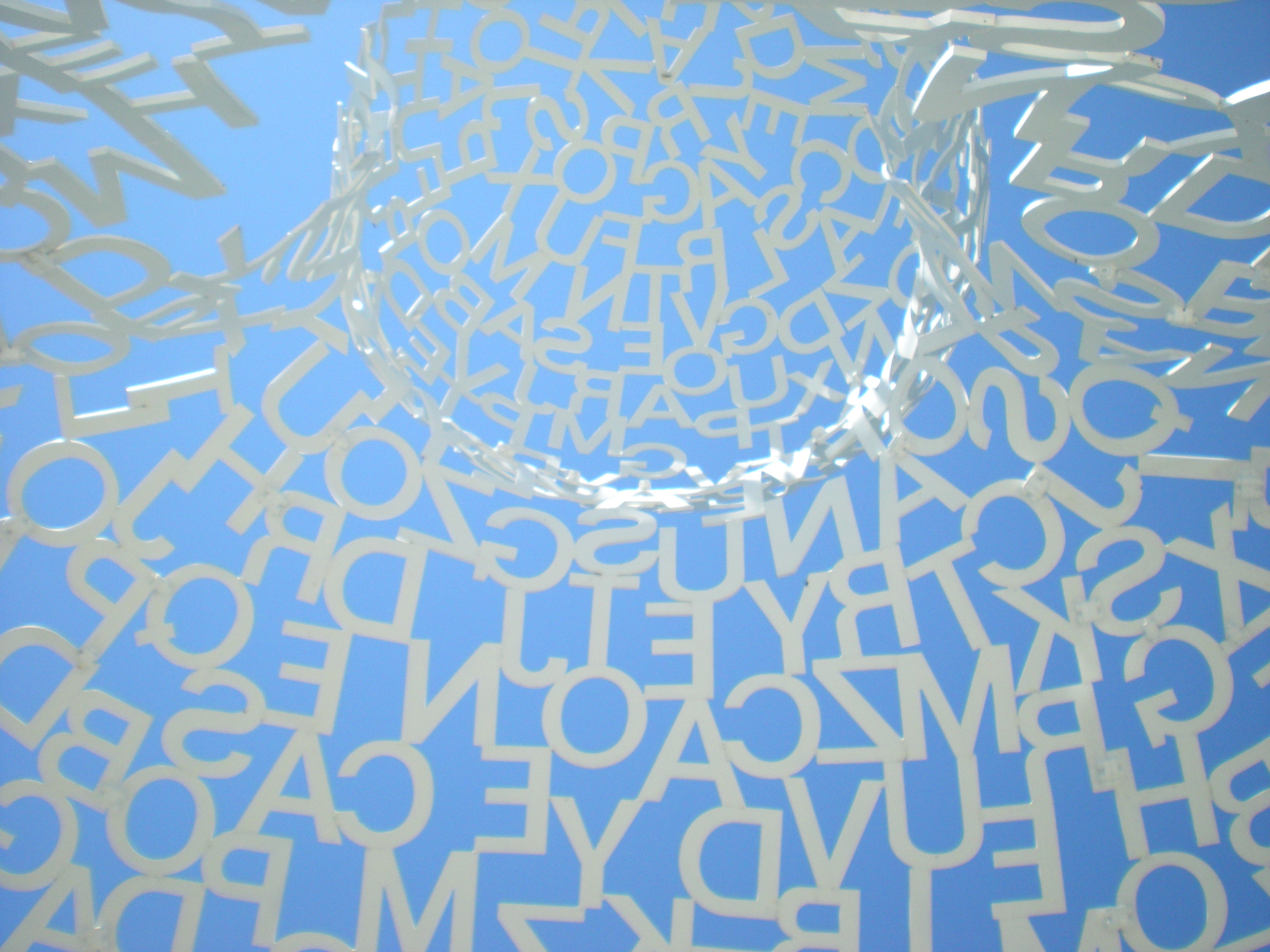
This 27 ft x 17 ft sculpture, Nomade, is by Jaume Plensa, who “envisioned the letters as building blocks for words and ideas, in the same way human cells form tissues, organs and bodies.”  It sits in Des Moines’ outdoor sculpture park.

DSCN0865I too believe that words and ideas form us in the same way our cells give us shape and I believe that we are all the better that words can’t be destroyed or we would have lost our earliest stories.

But one must first become small,

nothing but a presence,

attentive as a nesting bird,

May Sarton, from “Beyond the Question

I also think about how today thoughts can be casually dispatched as quickly as you can type and in a split second be launched at someone or some group and preserved forever in our digital minds.

I picture cyberspace as the darkest of nights, illuminated by flashing lights like lightening bugs and trailing comets, letters strung together careening and whistling to their intended targets.

And then I think about us, how we see this chatter, day and night, incessant words, constant words, bathing our thoughts and I wonder what will come of this, what are we building?

What happens in a world when conversation is mostly visual and  there are few pauses between our words? Where are the spaces in our communication now, the opportunities to pause and reflect before answering, or to just sit in comfortable silence with one and other.

Beyond the question, the silence,

before the answer, the silence.

May Sarton, from “Beyond the Question

DSCN0866

This amazing technology that allows us to connect instantly is for the most part a gift, allowing families and friends to share their lives in a way never before possible. But like all blessings, it might also be a curse, teasing us into believing that putting thoughts into words without pausing to consider the effect or substituting virtual reality for an opportunity to connect with a real person is the way it is supposed to be.

I have no answers – I suppose when the telephone first became available to most people, there were those who declared it unnatural and dangerous to humanity, most likely by someone like me who tends to think too much… However, quite by accident, I stumbled upon a book, Alone Together: Why We Expect More from Technology and Less from Each Other by Sherry Turkle.

alone-together-cover

Sherry Turkle is director of the MIT Initiative on Technology and the Self and spoke with Krista Tippett about this topic on “On Being” recently. Do you think we really expect less from each other?  I’m going to download the book on my Nook and start reading.

You don’t expect me to throw the baby out with the bathwater do you?  I’ll let you know what I learn.  Until then,

Happy wandering –
Theresa

p.s. Catherine here ~ What would happen if today, this week, this year, you focused on treating the words you release as precious as art, as air?  Celebrate silence. Be attentive “as a nesting bird.” Speak and write carefully.


The Weekend Dish – Thank You

Dear One,

DSCN2453

(You are amazing. I love you beyond the clouds and back.)

I found your note, tucked under the honey jar after the dinner party.  It’s hard to know exactly what made you underscore “amazing.” Was it the dancing in the kitchen after cheesecake? The roaring laughter at the table when you told that story about a sprinting basset hound? Whatever dear friend, it was really nothing, you know, nothing more than deciding to open up the door, serve a little food, and add some candlelight. For the record, you are amazing too. And for that, I’m grateful.

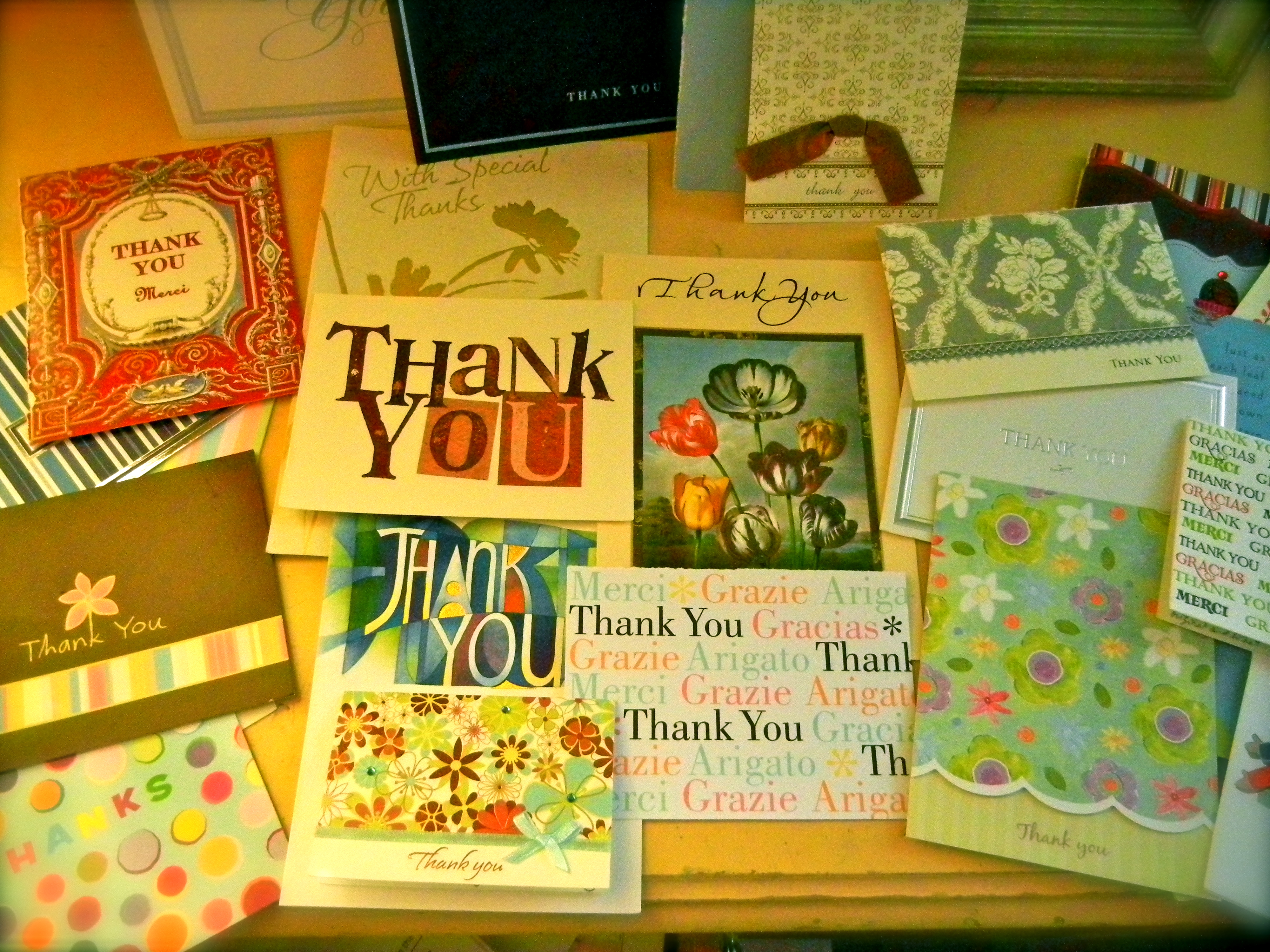
DSCN2554A few years back I had this idea to keep all my Thank You notes. At the time I thought I’d collect a pile, then paper a wall with them, or create a room border, maybe modge-podge them onto a tray. Yes, I’ll pause while you chortle.  At my earnestness. At my utter disregard for the fact that I have no crafting ability. But still, I save these treasures.

Thank you for including us! We enjoyed meeting some of your friends.
Thank you for spending a Saturday afternoon with me at the AFI Fest…

Merci pour the less-buttered chocolate cake…
Thank you for a wonderful semester of learning!
Thanks for your love and support during what has to be one of saddest times of my life…
Thank you so much for sharing your time, your words, and your poetry…

Thank You notes remind me of good times and of the importance of helping friends through  the sad ones.  They’re a living scrapbook of parties I’ve almost forgotten, of cakes I’ve made so frequently that I tend to I overlook how they might still be special to another. Thank You notes, sent and saved, draw in pen the invisible web of connected lives.

This weekend, take a minute – that’s really all it takes – and send a Thank You note.  Or, if you’re like my friend, write a note and tuck it in a hidden spot where it will be discovered later.  Either way, show a little gratitude for big things, yes. But focus on the small things too; the time spent together, the cake, the poem, the words said at just the right time.

DSCN2562

To our readers, on this our 100th post – this one’s for you. You are amazing.

With No Crafting Ability Whatsoever Except When Using Words
~Catherine


Through the open window…

A coyote yips and howls. I don’t know what time it is, still dark. The Siamese jumps onto the sill, presses her body against the screen, hackles raised.  She emits a low moan. In the distance an owl hoots and the dog rumbles a half-hearted growl. J still sleeps, so I get up to close the window and notice a pinking sky over the mountains.  The cat and dog settle back down, tightly tucking into furry curls against the January chill. But for me, the night is over.

Today, this not-the-first-of-the-year, but this ordinary-Thursday-when-the-holiday-rush-has-finally-faded is my annual Life Visioning day.  It begins when I light a candle against the dawn.

Candle

Actually I begin every day by lighting a candle and spending moments deep in reflection.

What am I grateful for from the previous day?

Gratitude Journal

a little dancing after dinner
candles on the hearth
neighbors who share homegrown oranges

With a smile and fortitude from recalling all that’s good, I next invite my sacred heart space to be bathed by a divine floodlight where I cannot hide, not even from myself.  I think back to the day before, and remember ways I did and didn’t act in alignment with my values and intentions.  Can I repeat what went right? Can I correct the imbalances that caused failure?

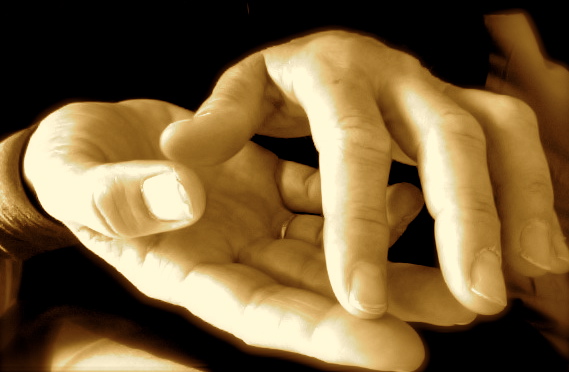
I set me intentions for this day, write my to-do list within this womb of new dawn freshness.  Then, I pray. I trace the presence of my family and friends upon my hands, using one index finger I begin at each fingertip recalling a name, a need, until the faces and the names of all those who are close to me are joined in the center of my heart-side palm.

Hands

I leave this meditation time by rejoining the entire human chain with an invocation for peace and love, “For those who will be born today, and those who will die.”  Each month I also add a special intention.  My January focus is, “For those who struggle with addiction or mental illness and for those who care for and try to love them.” I join my hands together, press them to my heart, bow to the sunrise and begin my “real” day.

Oh my goodness, telling you all this was difficult.

I’m an intensely private person by nature. There were years and years and when I didn’t even tell my own husband that I prayed, let alone that I meditated and lit candles in the dark and drew his name upon my palm.

Why change?

Maybe I’ve decided that being myself is something I should do publicly.

Maybe I wrote, be yourself out loud on my to-do list this morning and it’s too early in the year to break promises to myself.

It is, in fact, right in the middle of the month the Backyard Sisters have dedicated to focus and while Susan will tell you how to focus your camera, I am relegated to suggesting ways to focus your writing life.

I learn today that the word focus comes from the Latin focus, meaning “hearth, fireplace.

DSCN2468

focus (n.) 1640s, from L. focus “hearth, fireplace” (also, figuratively, “home, family”), of unknown origin, used in post-classical times for “fire” itself, taken by Kepler (1604) in a mathematical sense for “point of convergence,” perhaps on analogy of the burning point of a lens (the purely optical sense of the word may have existed before Kepler, but it is not recorded). Introduced into English 1650s by Hobbes. Sense transfer to “center of activity or energy” is first recorded 1796.

Inspired by the connectivity to the word focus and home, as nurturing my family ties always rises to the top of any priority list, I reread my last year’s life vision and adjust paragraphs or sections that no longer seem important.  I focus on the lines that have followed me from year to year to year.

Write a book. Write a book. Write a book.

I realize I am. I have. Written the book(s). I just haven’t pushed hard enough for publication.  I cross out the line. Write a book. I revise: Send out book.  We are only in control of our own actions, I realize. And now is the time to act with focus, with fire, with the kind of fierceness you would use to advocate for someone that you love.

With light and love
~Catherine

Précis: (This is a lovely new word I discover today. It means a summary.)
When you sit in peace, quiet self-truth speaks loudly. Pay attention to what you’re trying to tell yourself.

Practice:  
Can you create a vision for your life?  Nothing fancy, just write about the life you want to live.  I live in a house small enough to vacuum in an hour.  Date it.  Remember to include all the elements of nature: Air-spirit.  Fire-ambition.  Water-refreshment.  Earth-body.  Space-mind.  Focus on one action for each element that you can accomplish within the next month or so.  Write that down too.

Play:
Create a scene of dialogue between two characters, one whose inner and outer life is aligned – think Atticus Finch from To Kill A Mockingbird by Harper Lee – and another who projects a false outward image – think Fermina Daza from Love in the Time of Cholera by Gabriel García Márquez. Now what would happen if they end up in a story together?

reflections

lake with mountain reflectionThis week while reflecting on some past photos, the idea to explore reflections struck.
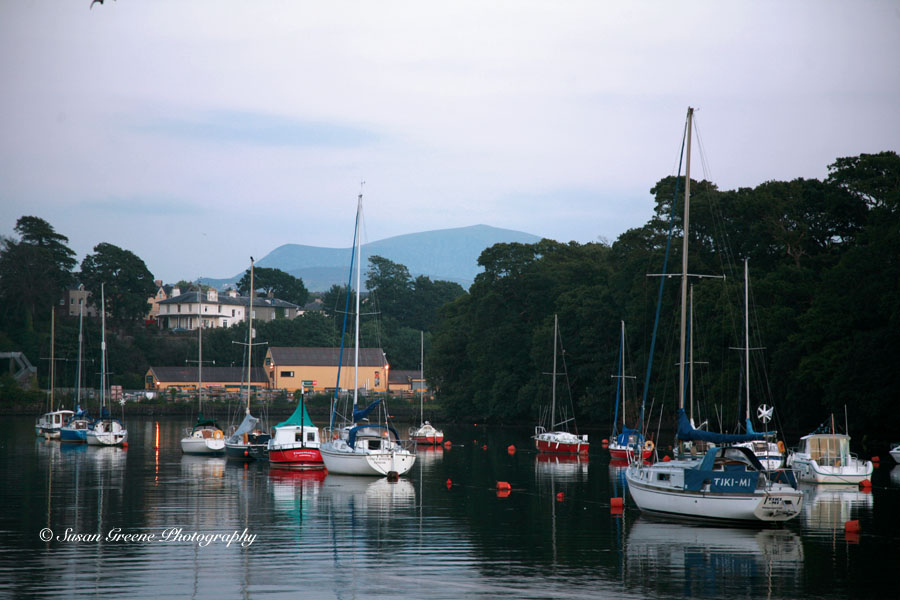
Reflections can be created by many different shiny surfaces.  Water, is a natural.

harbor, Gwynedd, Wales

Buildings can be reflective as well. In this instance, in Chicago, the reflection of the older intricate architecture in the sleek more modern building is a nice study in contrasts.

Chicago buildings reflected in side of building


The building at 333 W. Wacker in Chicago’s riverside facade is curved to mirror the shape of the bend in the river. The surface is highly reflective which showcases the river, surrounding buildings and sky.

Chicago skyline reflected in buildings


Glass, of course, is another reflective surface which can be used very creatively because you get a picture within a picture effect.

gorilla with child's reflectionThe children here are reflected in the glass of the gorilla’s enclosure.

A shiny counter top serves as an interesting reflective subject also.

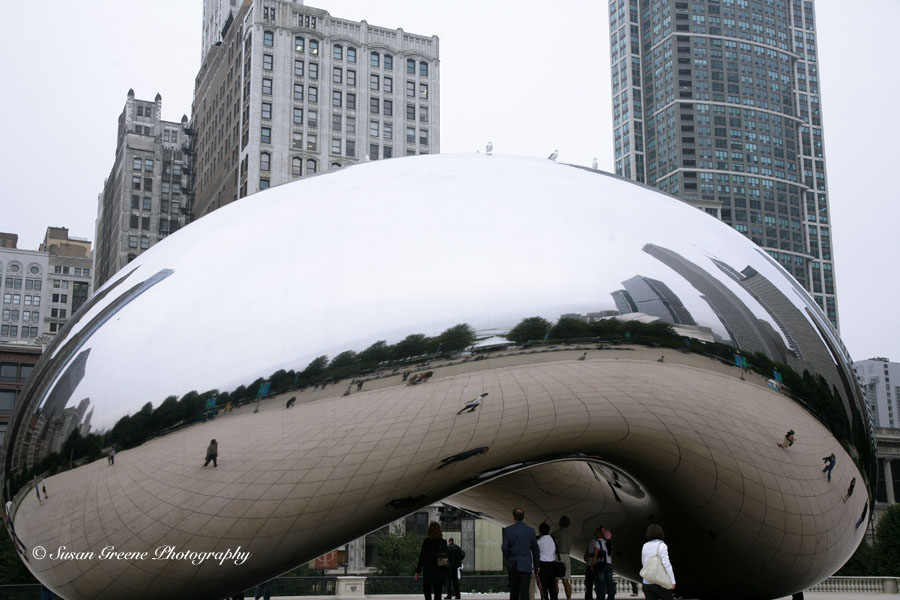
tomatoes reflected in counter top  One of the funnest places I have found for reflective pictures is the Cloud Gate sculpture, aka the bean, in Chicago.

Chicago, the bean
The skyline and sky are reflected as are the many people enjoying their reflections and the city’s too.

chicago bean and sky

The shape of the bean can distort the images creating a fun house mirror effect. Go inside the structure and you will be treated to an abstract reflective delight.

inside the Chicago bean

This week I encourage you to look to the reflections presenting themselves in your daily life and maybe snap a photo of a few.

~Sue