The Weekend Dish

Write now!

National Novel Writing Month begins in exactly six days and you can get a jump start on outlining, prewriting, researching, and yes, writing your book-length project this weekend.

NaNoWriMo, as its known to those in the know, is an annual event billed on the website as “thirty days and nights of literary abandon” where the challenge is to complete 50,000 words within 30 days. You do the math, that’s a lot of writing.  But a perusal of the list of published NaNoWriMo authors includes titles put out by major houses and may include a few names and novels you’ve read like Sara Gruen and Like Water For Elephants.

The concept is pretty simple. You register on the website.  It’s free.

In return for your public declaration of intent, you receive cyber pep talks and support from NaNoWriMo staff and information about local writing groups and in-person events.

You buckle your seat belt to your writing chair. You write.

I’ve already started writing.

Why I Can’t Write 50,000 Words This November
Thirty people are coming for Thanksgiving dinner and I recently moved and I’m not finished unpacking yet and there’s no mirror in the downstairs bath (and no light either) so how can I host a holiday without also doing a little shopping for the house and the new backyard is still mud and the rainy season is imminent and how can I ignore that November is an ideal month to plant in California and did I mention I have no backyard, (seriously, it’s dirt, just dirt which turns into mud when it rains and you know I have Chester and he needs to go outside because that’s what dogs do) and the new issue of dirtcakes is due out so I’ve got writers to contact and contracts to send and design to oversee and the semester is winding down and I know my students paid for and expect to receive not only teaching but grading which means I’ve got dozens and dozens of papers to read and comment upon and did I tell you me daughter’s in-laws are coming to town and I’d be rude not to plan some time for them and surely I’ve mentioned that I’m also a writer which means that all those family things and foody things and editor things and house things and garden things and teaching things will have to somehow bow to this writing thing but I’m old now and I have to sleep so maybe I just won’t eat and I certainly won’t clean (although I should shower and do laundry so as not to offend those standing nearby) but of course I’ll cook the week of Thanksgiving because I really love all those 30 people who will show up on my front porch that day –

Ack! Stop the chatter and just write.

You’ll find inspiration some where. Mine arrived in my e-mail in-box earlier this year. With permission, I’m excerpting it here:

Hi Professor,
It’s Brian Ducoffe.  I was in your “Composing the Self” class last fall. I don’t know if you remember but I participated in National Novel Writing Month and finished. I ended up spending the next 9 months editing and revising it and the book is now published. I ended up going the self publishing route after a couple conversations with some literary agents just so I could have more control but am hoping I can pick up some attention and possibly make some publishing houses take notice. Anyway I just thought you’d like to check it out since I wrote it during your class! Thanks!
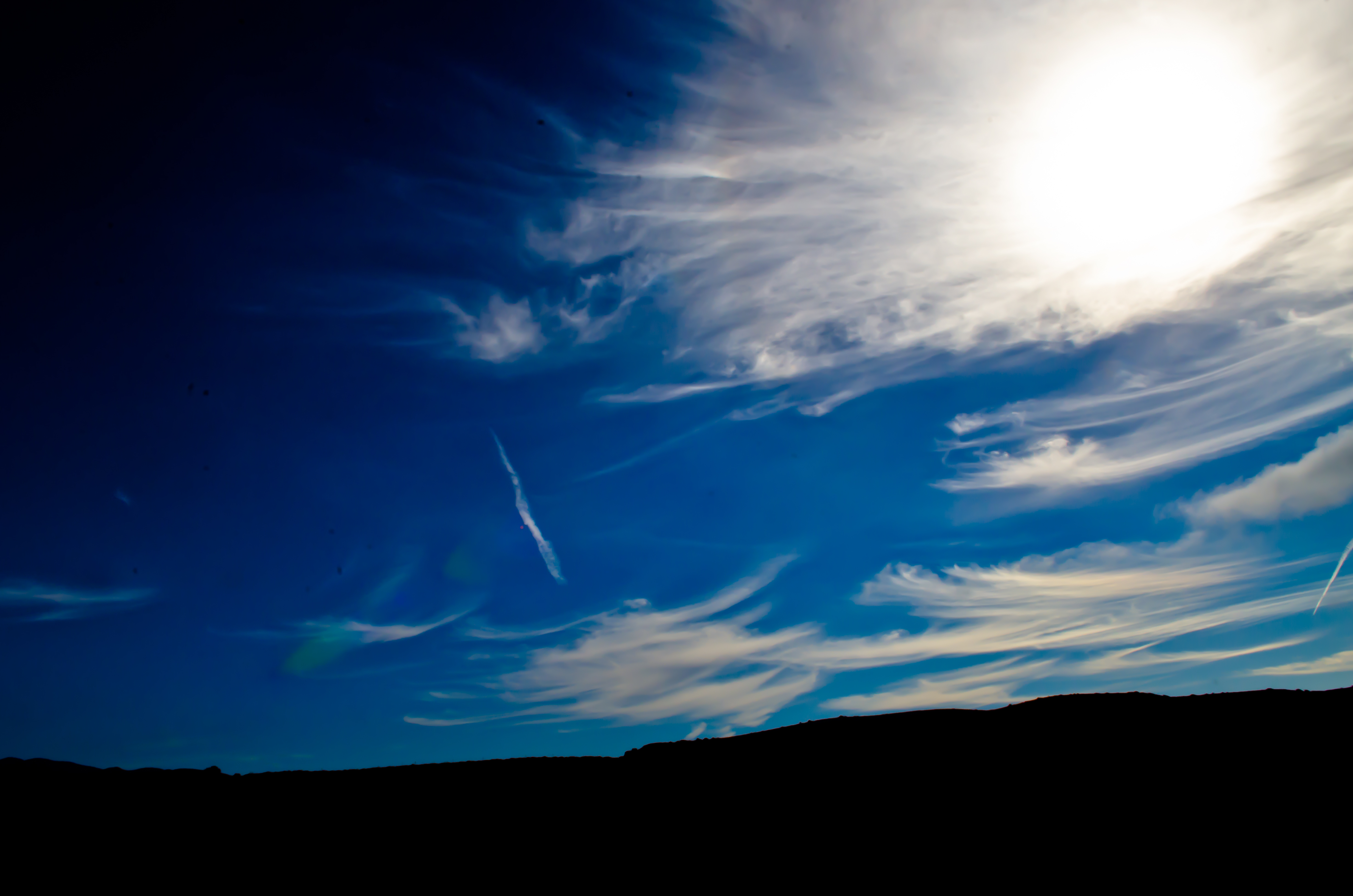
See, the cool thing is that Brian never once missed an assignment or asked for an extension he just kept showing up, doing his school thing while finishing Our Elephant Graveyard.
So here’s to you and here’s to me and here’s to a growing word count.
What are you waiting for?
See you on the bright side of November.
Full details of NaNoWri Mo can be found by clicking here.
With high expectations,
~Catherine

Five lines to challenge chaos

Is it possible to offset the apparent randomness of the universe?

California Morning Sky.       Photo Credit: James Keefe Photography

Some ladies put up tomatoes, or peaches, or apple jam against the coming winter. I decide to create a stock of writing projects as sustenance against the lengthening darkness.  By spring, I’ll have a larder of poems that adhere to formal patterns found in nature, the sunflower, for example, or the whorl of a seashell, the number of legs on a spider for instance, or the swoop of an orb found glistening in early morning.

The idea takes root as I introduce my students to poetic form and we discuss the state of poetry as a mostly formless country these days, flowing as it does so frequently in free verse.  What is found when form is lost? I prod.  What is gained when form is followed?

I ask this, of course because it’s a good beginning for an Introduction to Creative Writing unit on poetry. But the debatable merits of structured versus unstructured poetry are making headlines these days within the literary community and I want my students to understand the fray. Before you roll your eyes and wonder who cares outside of a classroom or a Paris garret, consider that poets have long considered themselves to be what the English poet Percy Bysshe Shelley writes “In Defense of Poetry” as:

“… the mirrors of the gigantic shadows which futurity casts upon the present; the words which express what they understand not; the trumpets which sing to battle, and feel not what they inspire; the influence which is moved not, but moves. Poets are the unacknowledged legislators of the world.”

(You can read Shelley’s essay in its entirety here.)

It’s this role of poets as “mirrors of society,” that most concerns William Childress, a noted poet and National Geographic photojournalist, in a recent letter to the editor of the Virginia Quarterly Review, a journal of Literature and Discussion.

“Is free verse killing poetry…A blind person can see that American society is in turmoil…shouldn’t poets be trying to change things instead of writing chaos-poetry or “woe is me” diaries? Who will read poetry when they can’t find a common bond in a poet’s writing? Who likes ruptured grammar, twisted syntax and what my grandpa called flapdoodle? There’s at least a partial consensus that free verse these days consists of a lot of badwriting. I forget who said, “Poets should learn to write before they try to write poetry.”  Many of today’s poets don’t seem to realize that all writing is connected.”

All writing must be connected because all life is braided together in one way or another isn’t it.

As go the poets…
As go the canaries…
So go the humans?

Does nature, I ask my students, follow predictable patterns?

“No,” says the student who arrived late for the semester because Hurricane Isaac interrupted her flight plans from Florida. “It’s random and unpredictable.”

“Of course,” answers the biology major who cites genus and species classifications as one example of nature’s way of behaving according rules.

“Does art that most mirrors nature create more of an impact than art which seems more artificial?” I prod, quoting the philosopher Pseudo-Longinus‘ line about finding sublimity.

For art is perfect when it seems to be nature, and nature hits the mark when she contains art hidden within her.”

My students and I decide we’ll compose one sample of as many structured poetic forms as possible before we write any more free verse. We’ll read deeply from poets who follow form and from poets who made their break with form for reasons buried within the poem itself. We begin small, with a tanka, “a thirty-one-syllable poem, traditionally written in a single unbroken line. A form of waka, Japanese song or verse, tanka translates as “short song,” and is better known in its five-line, 5/7/5/7/7 syllable count form.”

Here’s my tanka-in-progress:

What one spider knows
spinning glass in dawn-dark fall —
even leaves let go.
Brilliance against the barren
this alone.  Can I believe?

Wishing you enough chaos to unsettle and enough structure to soothe,
~Catherine

p.s. Care to join our writing challenge? Up next is the cinquain, a five-line poem with 22 syllables broken down, according to lines as:  2, 4, 6, 8,and 2.