Why do you do what you do?

“When did you become a writer?”

The question, coming as it does from an artist at a gallery reception, surprises me. It’s like hearing, “when did you become a fish?”

“I always was one,” I reply, hoping for the simpatico understanding of a creative soul to bridge this non-specific-date-naming response, not an evasive conversational gambit, but a strange truth that still perplexes sometimes.  Decoding the world through language is as natural to me as skipping. One of my earliest childhood memories includes tracing the letters of words being spoken, turning them into stories and pictures with my right forefinger upon my left palm.

Meera's MehndiSounds and ideas danced upon my hand, to be released later onto the unlined light brown paper of a Mickey Mouse drawing pad.  I didn’t plan to be this way, I just was. Most writers I know say the same thing.

It’s this recognition of the magnetic power of some creative pull that frequently leads me to invent new ways to spark leaps in my technique.  Learning West African drum rhythms interrupts a rut of a cadence; reading books I don’t understand hopefully sparks new brain synapses and invites new subject matter into my writing.  Fifteen hundred pages of Critical Theory Since Plato anyone?  There’s a playfulness with these kinds of things, sure, but there’s also a dogged determination bordering on compulsive.  I laugh when I see myself in other writers and while reading Christian Wiman‘s Ambition and Survival: Becoming a Poet  I found a mirror self in the first few pages. Wiman writes:

When I read Samuel Johnson’s comment that any young man could compensate for his poor education by reading five hours a day for five years, that’s exactly what I tried to do, practically setting a timer every afternoon to let me know when the little egg of my brain was boiled…

I’m not quite as odd a person as I was once on the verge of becoming.

Of course my weirdness waxes and wanes.  I may be tipping the balance back toward odd as I begin a new poetry writing project for the month of July.

“Why do you do what you do?” my family wonders.

Why, when it’s summer and school’s out and nothing dictates my days but my own gentle taskmaster self, why would I commit to writing and posting a poem a day for Tupelo Press?  I believe in the need for literary presses and, being the editor of dirtcakesa small press of my own, I know  it’s impossible to sustain any sort of momentum and foster good work without readers and backers and contributors. The Tupelo Press 30/30 Project is a nifty little way for writers to forge new work and for readers to discover new writers.  It’s a community of writers that opens its hands to invite in a community of readers to share the stories written on our palms.

DSCN3284

I’ve got a few ideas of how we can work together through July. I’ll be posting them in the coming weeks. In the meantime, remember that which you love you will spend time doing. That which you spend time doing will attract your energy. That which captures your spirit will shine out from you, and ultimately reflect back upon you.  As for me and my attraction to poetry? I defer once again to Christian Wiman’s words:

…in the end we go to poetry for one reason, so that we might more fully inhabit our lives and the world in which we live them, and that if we more fully inhabit these things, we might be less apt to destroy both.

Who doesn’t want to be fully inhabit each precious moment of life?

Meerags Wedding

Stretching and spinning in anticipation of lining up a long dance with the muse,
~ Catherine

p.s. Christian Wiman is an iconic figure in the world of poetry. From 2003 – 2013 he edited Poetry magazine, “the oldest monthly devoted to verse in the English-speaking world.” The depth of his poetry knowledge and ability to articulate the aesthetic strengths of particular poets is precise and sharp, though do know his taste runs to the traditional which sometimes can miff a lover of more experimental verse. Ambition and Survival is a collection of essays to dip in and out of when you need a strong voice in your head to guide your writing practice.
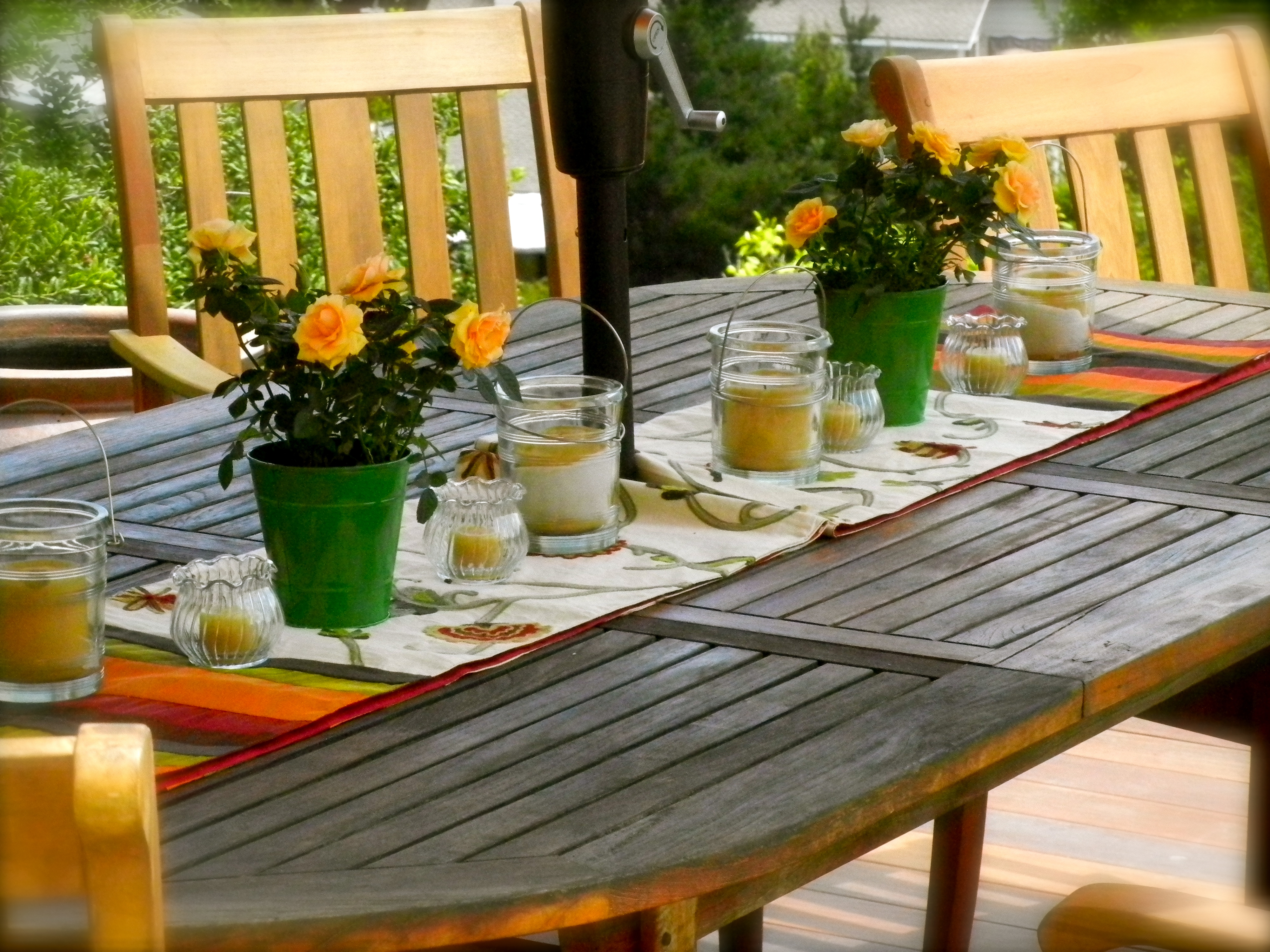
What do you bring to the table?

Which way will the creek
run when time ends?
Don’t ask me until
this wine bottle is empty.

~ Jim Harrison and Ted Kooser
_________________________

“What did you notice that was beautiful today?” When J asked me this last night, just as we sat down to dinner, I cracked up.

Table

It’s not a funny question, but rather an example of his dear effort to honor a request I made after breakfast.

“Please don’t ask me at dinner what I did today, or how my day went, ask where I found beauty.” I implored him in the morning as I hustled to my office.

“And what do you want me to ask you tonight?” I called over my shoulder.

“You can ask how my day went. I like to remember what I got done.”
___________________________

Life has always yelled at me,
“Get your work done.” At least
that’s what I think she says.
~ Jim Harrison and Ted Kooser
___________________________

What we focus upon comes to light. My request was part self defense – I always give myself more to do in any given day than I can ever accomplish and then feel bad when I don’t finish. And it was part new strategy; I want to pay more attention to life’s surprises of  grace and grandeur hiding in plain sight rather than concentrating only on how I try to unruffle its challenges.  I’m trying to adjust the outlook I bring to my day and our dinner table.

smooth coral

What do you talk about at dinner?

I’ve begun asking friends without children at home this question.

We don’t talk, we watch TV.
I don’t know, nothing, what we did that day.
What’s coming up on our calendar.
Funny stuff the dog did.

What did I expect? The better question is, what do I want, what does J want?  If gathering around the table is a nightly ritual so important that we set its time, its chef and menu (we trade cooking duty), its location and literally light its candles, then doesn’t it follow that we might also guide its conversational swoops and soars?

When our kids were home we had a standard dinner starting point that inevitably opened doors to conversation that often lasted long past dessert.

What was the best part of your day?
What was the worst?

Trials and triumphs of school and sports, of work and home life and friends trickled out over roasted chicken and broccoli.  If friends joined us, they too got pulled into the daily circle, some shy at first to say, but inevitably relaxed enough to tell about a moment that set this day apart.

I eventually bought Chat Packs, those decks of cards with dozens of conversation starters. We played Brain Quest and Would you rather?  I still sometimes put little stacks of these cards next to the napkins at dinner parties or spread them around the appetizers at family gatherings.

Am I inherently nosy? Afraid of conversational lull? Maybe yes and yes. But I like to think that even more than that, I really like the idea of getting to know the people I share time with. The worst kind of dinner is one where I don’t learn a single new thing about the ones I pause with at the end of the gift of another day.

photo-20

Last night I learned two truths. Each day delivers beauty; my husband remembers and honors my requests. Maybe those are really one big truth.

Where did you find beauty today?
~Catherine

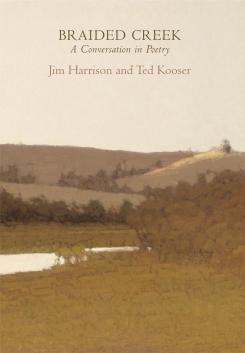
p.s. For literary grace and grandeur, you could do worse than getting your hands on a copy of Braided Creek: A Conversation in Poetry by Jim Harrison and Ted Kooser.
1317_lgTreasure what you find
already in your pocket, friend.
~ Jim Harrison and Ted Kooser
__________________________

The book is the best kind of conversation, where no one voice dominates, in fact no one poet takes individual credit for any of the short stanzas.  From the back cover:

Longtime friends, Jim Harrison and Ted Kooser always exchanged poems in their letter writing. After Kooser was diagnosed with cancer several years ago, Harrison found that his friend’s poetry became “overwhelmingly vivid,” and they began a correspondence comprised entirely of brief poems.

…When asked about attributions for the individual poems, one of them replied, “Everyone gets tired of this continuing cult of the personality…This book is an assertion in favor of poetry and against credentials.”

Maybe I’ll bring it to the dinner table tonight.

Weekend Dish-Summer!

I know what you want.
Cherries. Peach juice dripping down your chin. Bare feet. Sandy toes.

Chair

You want 101 days of summer.
The countdown officially begins today. 5 p.m. Pacific Standard Time.

What will you do with these 2,420 hours, these 145,440 minutes, these 8,726,400 seconds of your one precious life?

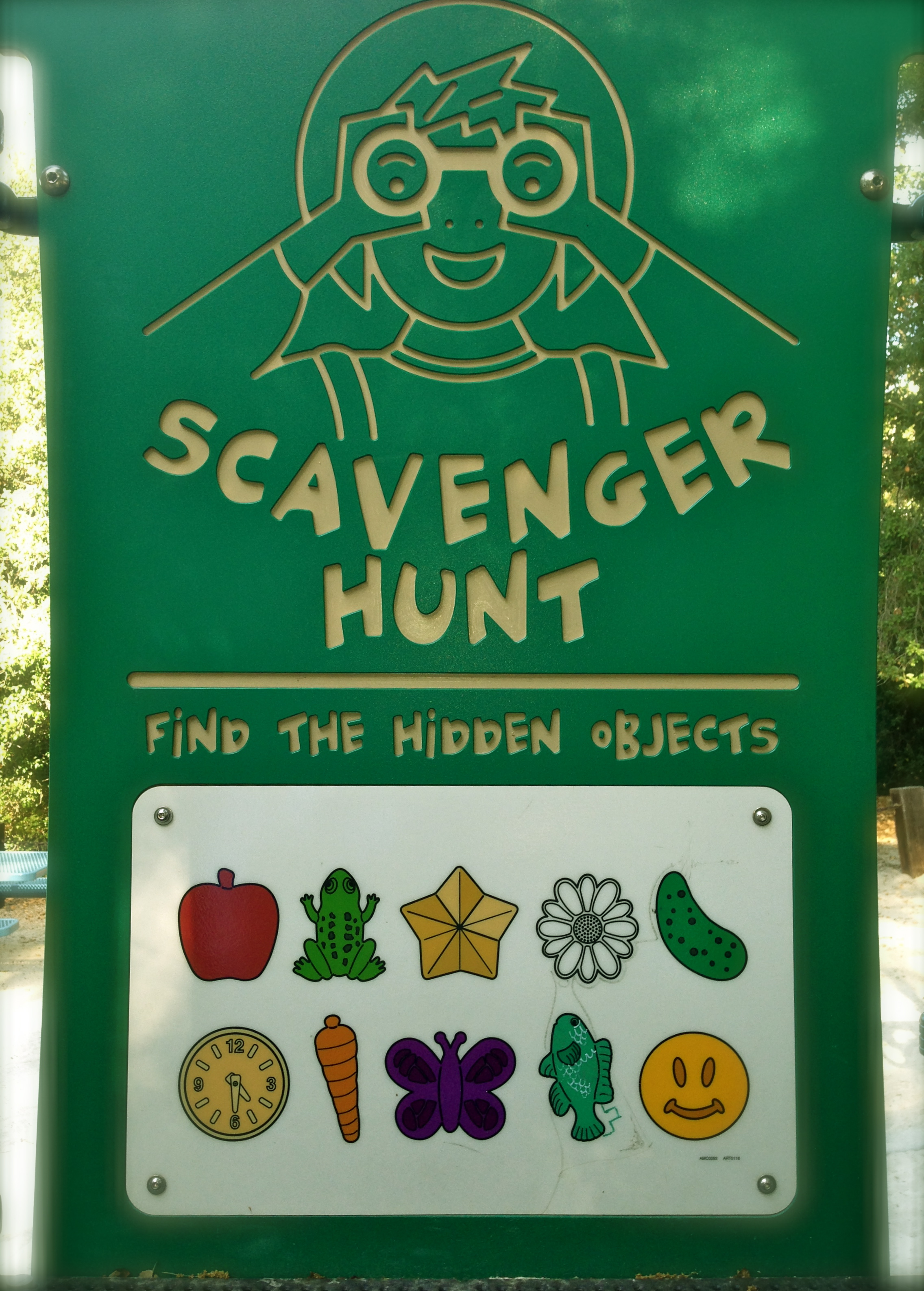
There’s no way you’ll make a to-do list. You want a game.

Scavenger Hunt

Remember summer night scavenger hunts? You and your friends split into groups then set out in the neighborhood with a list? First one back with all the loot won?  Yeah. You’d like to try that again.

Take a photo of each of the 101 Days of Summer.
Post them on Instagram. Hash tag the photos with #backyardsisters_101days

Ready. Set. Go!

Epic BBQ

1. Perfect your go-to summer barbecue meal.
2. Learn a new grilling technique. For a great veggie grilling video, click here.
3. Invite a new neighbor for dinner.
4. Eat outside. Every night. Unless there’s thunder and lightening.
5. Eat by candlelight. Every night. Outside. Unless.
6. Sit on the grass with your dog’s head in your lap.
7. Watch fireflies.  If you catch them in a jar, be sure to let them out before you go to bed.
8. Learn 5 new objects in the night sky.  The free app SkyViewFree uses an i-phone’s camera as viewfinder.
9. Plan ahead to find a dark viewing spot for the Perseid Meteor Shower, August 11 and 12.  You’ll catch the summer’s best display of shooting stars. More info here.
10. Make your own ice cream. You don’t even need an ice cream maker. Check it out here.
sunset

11. Stay up late.
12. Get up early. Photograph your days.
13. Learn the names of 5 birds in your neighborhood.  The Cornell Lab of Ornithology has an amazing library of birdcalls. Link here.
14. Take your morning beverage on the porch, patio, or near an open window.
15. Prop your bare feet on a ledge.
16. Plant one living thing, even in a small pot if you don’t have a yard.
17. Plant something you can eat. A few green onions. Parsley. One tomato plant.
18. Visit a farmer’s market.
19. Take home something you’ve never eaten before.
20. Eat it.
21. Learn to make the perfect margarita or mojito or favorite frozen treat.
22. Invite neighbors over to help you drink it.

Gammy and girls

23. Visit your mom and dad.
24. Look at photos from childhood family vacations; yours and theirs.
25. Record favorite memories either on video or audio.
26. Visit your children.
27. Look at photos from family vacations; yours and theirs.
28. Record favorite memories.
29. Create a family yearbook of photos.
30. Do one thing that scares you.

get wet

31. Swim in a natural body of water.
32. Cannonball into the deep end of a pool.
33. Play Marco Polo.
34.  Learn one new water skill: surfing, body surfing, paddle boarding, water ballet moves.
35. Teach your new skill.
36. Pick fresh blueberries.
37. Make a summer fruit cobbler. For the Backyard Sisters favorite cobbler recipe, click here.
38. Eat dinner on a blanket under a tree.
39. Walk after dinner through town or your neighborhood.
40. Listen.
Waimea
41. Hike a new trail.
42. Learn the names of 5 new native plants in your region.
43. Visit 3 new state parks. The rangers there will know the names of the plants.
44. Take a new friend with you.
45. Volunteer for a park clean-up day.
46. Tune your guitar, your piano, your cello, your drum, your voice.
47. Learn one solid song.
48. Lose your inhibition.
49. Make a campfire.
50. Sing under the stars.
51. Make s’mores.
52. Sleep under the stars.
53. Learn how to remove ticks from your dog. (Same concept applies to humans.) Great video here.
Art

54. Sketch, photograph, or journal what distinguishes your local ecosystem from others.
55. Learn 5 edible plants.
56. Learn 5 poisonous plants.
57. Learn to pack lightly.
58. Learn to clean up after yourself.
59. Learn to read a map.
60. Get lost.
61. Go to a car show.
62. Attend your state or county fair.

stevenson quote

63. Submit something: homemade beer, photography, literature.
64. Hold hands on the Ferris wheel.
65. If you win a giant stuffed panda, give it away to a neighborhood kid.
66. Visit the booths with prize-winning pies and jams and wines.
67. Congratulate the blue-ribbon winners. Ask one fine question about their process.
68. Hear an outdoor concert.
69. Watch an outdoor movie.
70. Wait for the Milky way.
71. Visit your local library.
72. Remember summer reading when you were a kid? Check out ten books.
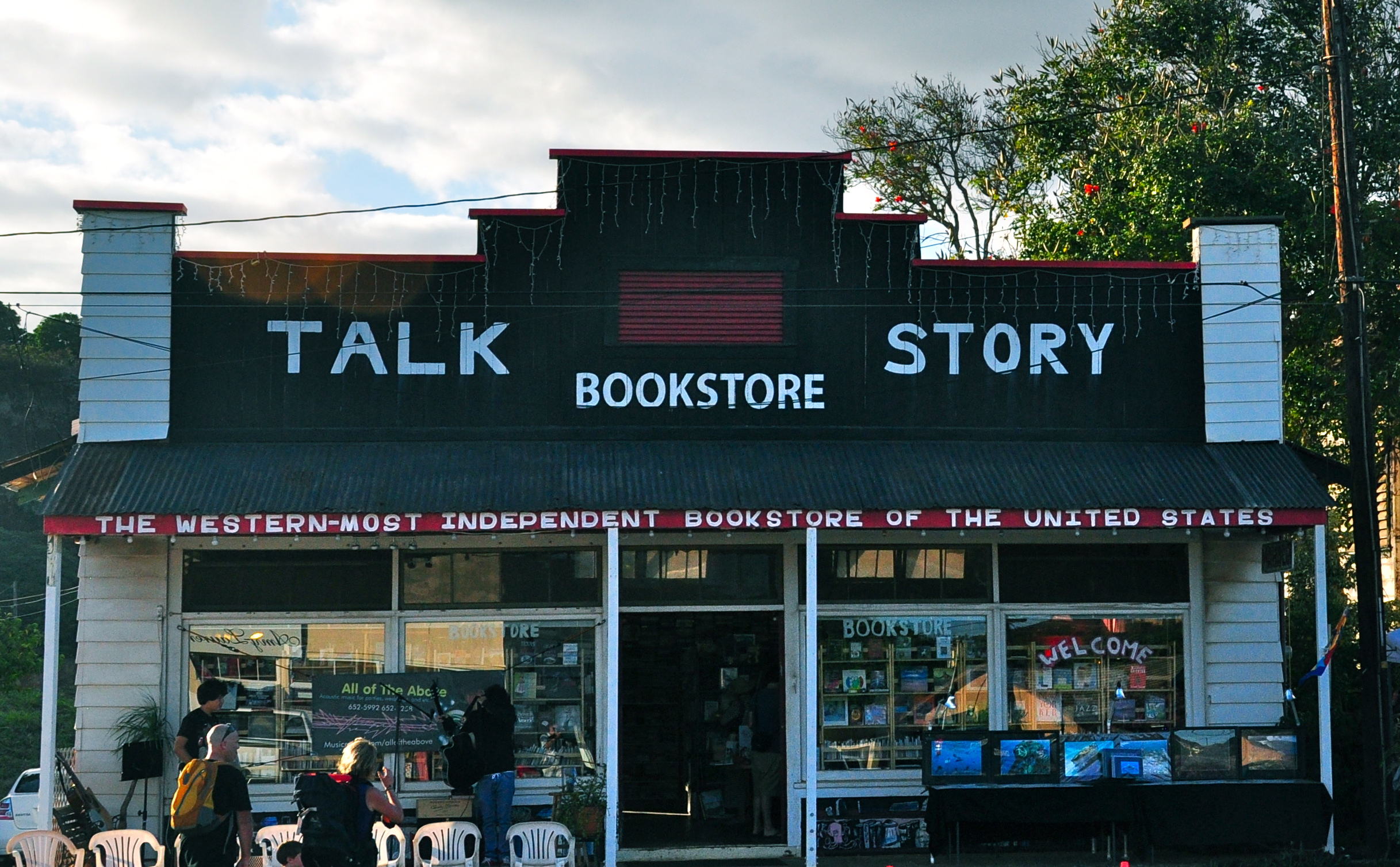
73. Visit an independent bookstore. Buy one thing.
bookstore

74. Hear a live author reading.
75. Thank the author in person.
76. Perfect one aspect of your craft: Great openings. Killer closings. Trimming the fat from word count.
77. Slow dance under the Full Flower Moon on May 25.
78. Sip strawberry wine under the Full Strawberry Moon on June 23.
79.  Dance with abandon under the Full Thunder Moon on July 22.
80. Fish under the Full Sturgeon Moon on August 20.   For full moon name meanings, click here.
81. Invite neighbors over for a pancake breakfast.
82. Visit the housebound neighbor who couldn’t come.
83. Bring flowers, or stories, or one of your photos.

all birds and sand

84. Call your grandmother or grandfather or aunt or uncle or long lost cousin.
85. Tell them about the trees and birds and stars. Ask about the view from their window.
86. Ask about their favorite summer memory.
87. Remember to return your library books.
88. Lie on your back on the grass and watch the clouds.
89. Swing.
90. Swim again. Again. Again.

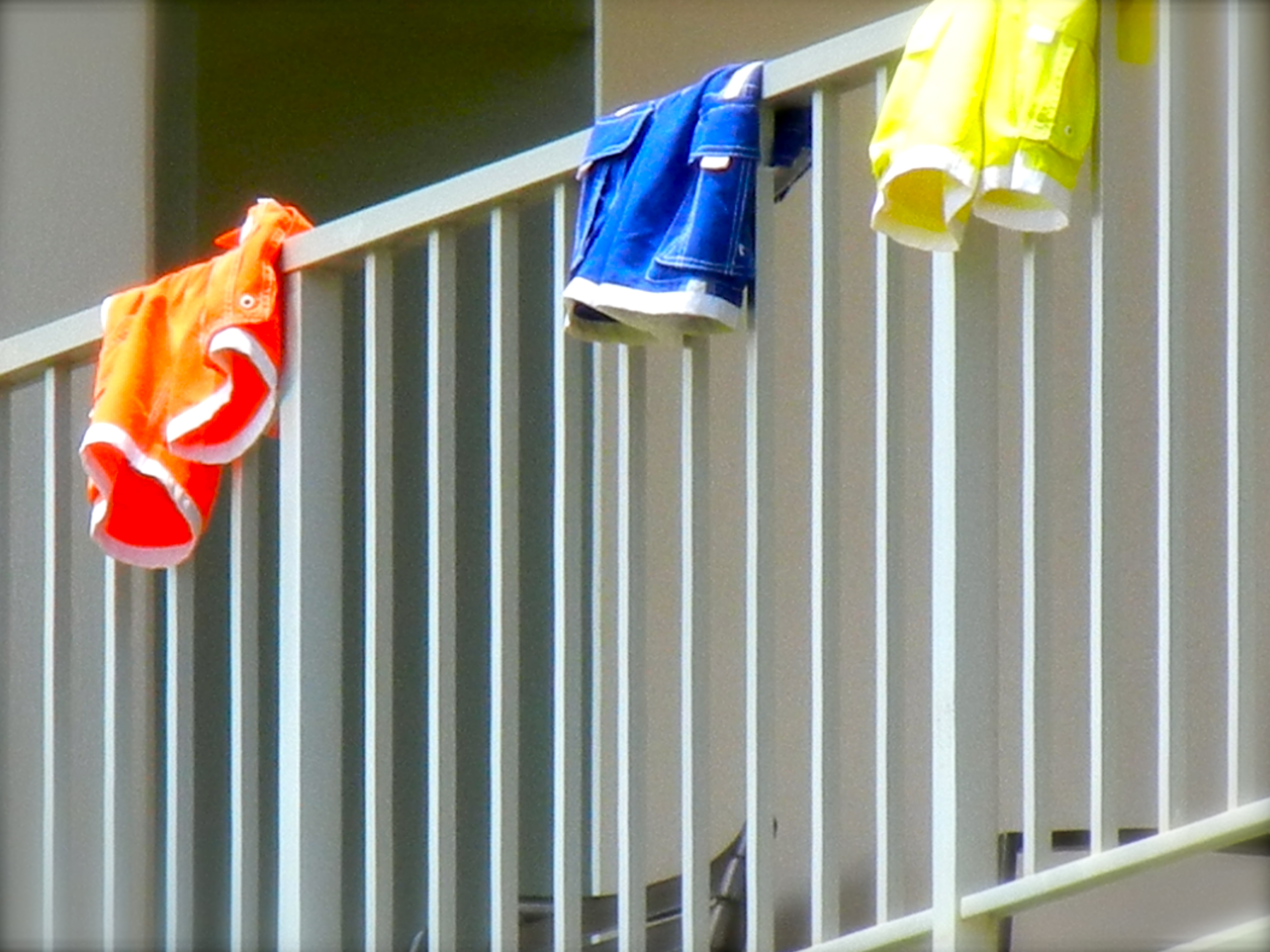
balcony art
91. Travel.
92. Learn five bits of history about one place you’ll visit.
93. Read before you go.  You can find a literary companion for more than 20 destinations from Whereabouts Press where the mission “is to convey a culture through its literature.”
94. Attend an outdoor art show.
95. Bike ride. On a beach cruiser. Along the beach if you’re lucky.
96. Learn hello, goodbye, please, thank-you and I love you in five new languages.
97. Learn how to come home.
98. Harvest and eat your one small thing standing barefoot on your own patch of ground, balcony, stone or wood.
99. Cut flowers from your yard. Take some to your neighbor.
100. Send an old fashioned hand-written note, with some herbs or fragrant leaves.
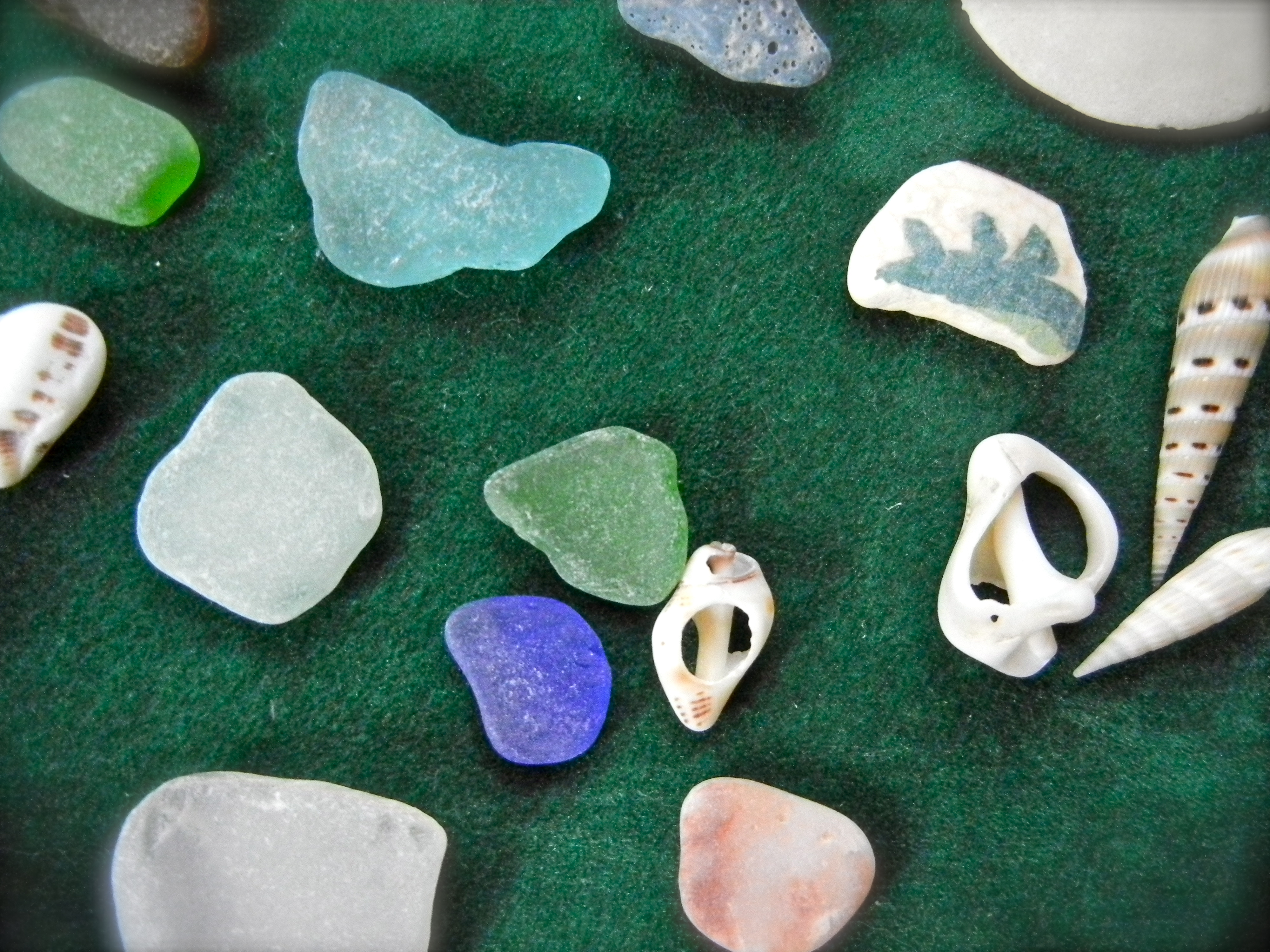
101. Set 5 small items – a shell, a rock, a poem – from your summer on your desk.

DSCN2585

Last one done is a rotten egg.
~Catherine

Touchstone

I am drawn to certain empty things like urns and skies.
I abhor other barrenness, like empty promises or hearts.

I rail against the empty life. Fill it with books, philosophies, a deep well of love.
I protect certain empty hours. Create a space for dreams and meditation, staring into spring.

EdenMy backyard before I moved

When I am on the abandoned beach, I miss you.
When I am deserted, I miss my beach.

Patterns emerge against emptiness.
Sound breaks silence.
Silence relieves talk.

Knit one. Pearl two. Add one. Drop a stitch.

My grandmother used to mutter directions for a sweater or scarf she was knitting.  If the pattern were disrupted she’d have to rip the stitches out.

You can unravel yarn but it always shows the kinks of where it’s been.
If you don’t know how to knit, what do you imagine?

DSCN2735

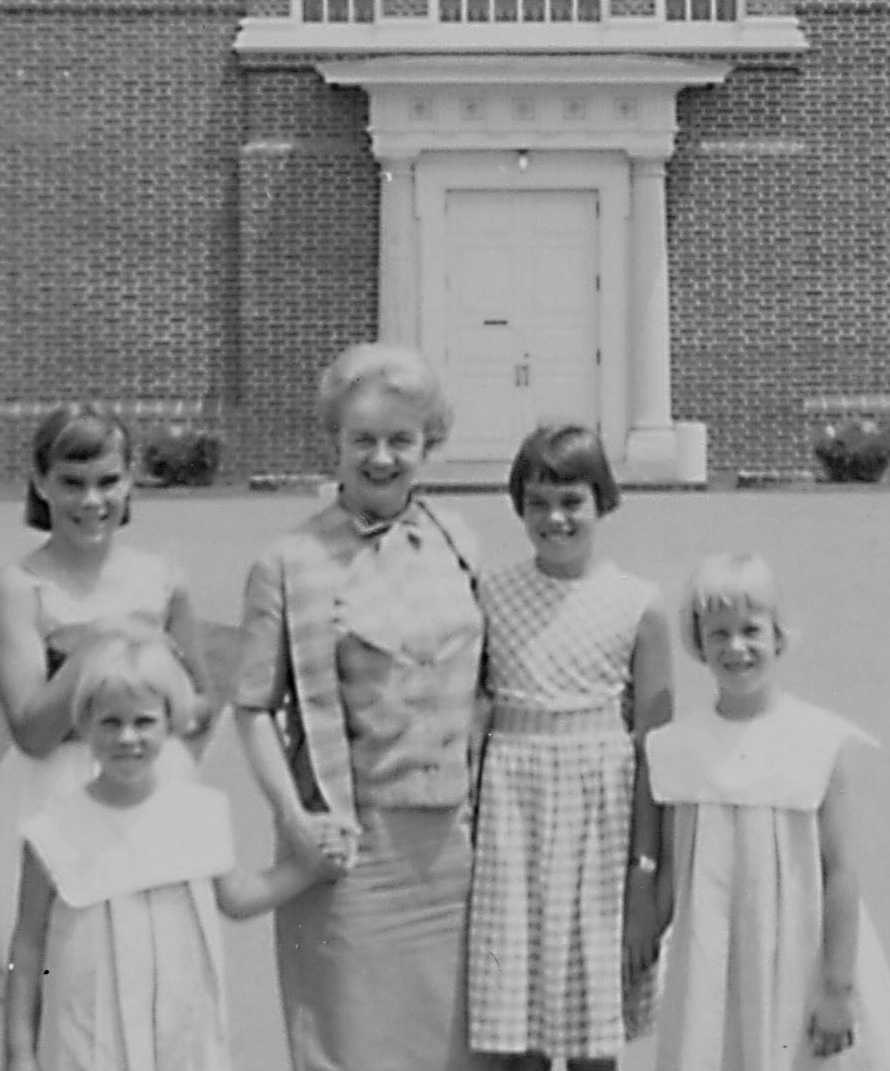
Backyard Sisters’ mom and dad

A pattern emerges against the emptiness.
Knit two. Pearl: One.
Now isn’t that a fine direction?

~Catherine

p.s. Maybe you like to read. I do. Maybe you like to knit. I don’t. Either way, a rather interesting book crossed my path. Literary Knits: 30 Patterns Inspired by Favorite Books,by  Nikol Lohr, is a book about as self-explanatory as its title.

9781118216064_cover.inddLohr has created knitting patterns for clothes items for women, like the Daisy cloche inspired by F. Scott Fitzgerald’s The Great Gatsby; for men, like the Gregor sweater inspired by Franz Kafka’s The Metamorphosis; and for young girls, like the Anne Shirley dress inspired by Anne of Green Gables by Lucy Maud. If knitting is your thing, or if you want to see one yarn artist’s rendering of a word artist’s description, check it out.

Admirable use of the concept of patterns in literature I would say.

Give me a break

Sometimes I have an urge to use big words I don’t yet know the meaning of, or better yet to make up new words to describe certain perfections, like this dawn when the sun rose into a fog-shrouded sky at the exact moment the mist receded. For one instant the dark flared – gilded with stars – then gave way to morning.  The camera was no match, nor really is this description.

I’ll remember the moment, keep working to get it right. And then I’ll drub it up against something rugged to set the beauty in relief. “No threat, no poem” is a truism we poets abide and practice and teach. As Dave Smith writes in his essay “St. Cyril’s Dragon” The Threat of Poetry:

Great art intends threat…The good poem destabilizes, unbalances, stirs up, digs down, demands feeling in exact circumstances…No poem succeeds without threat, implied or explicit. Threat manifests what is important to know. Threat engineers the struggle of self to come into being.

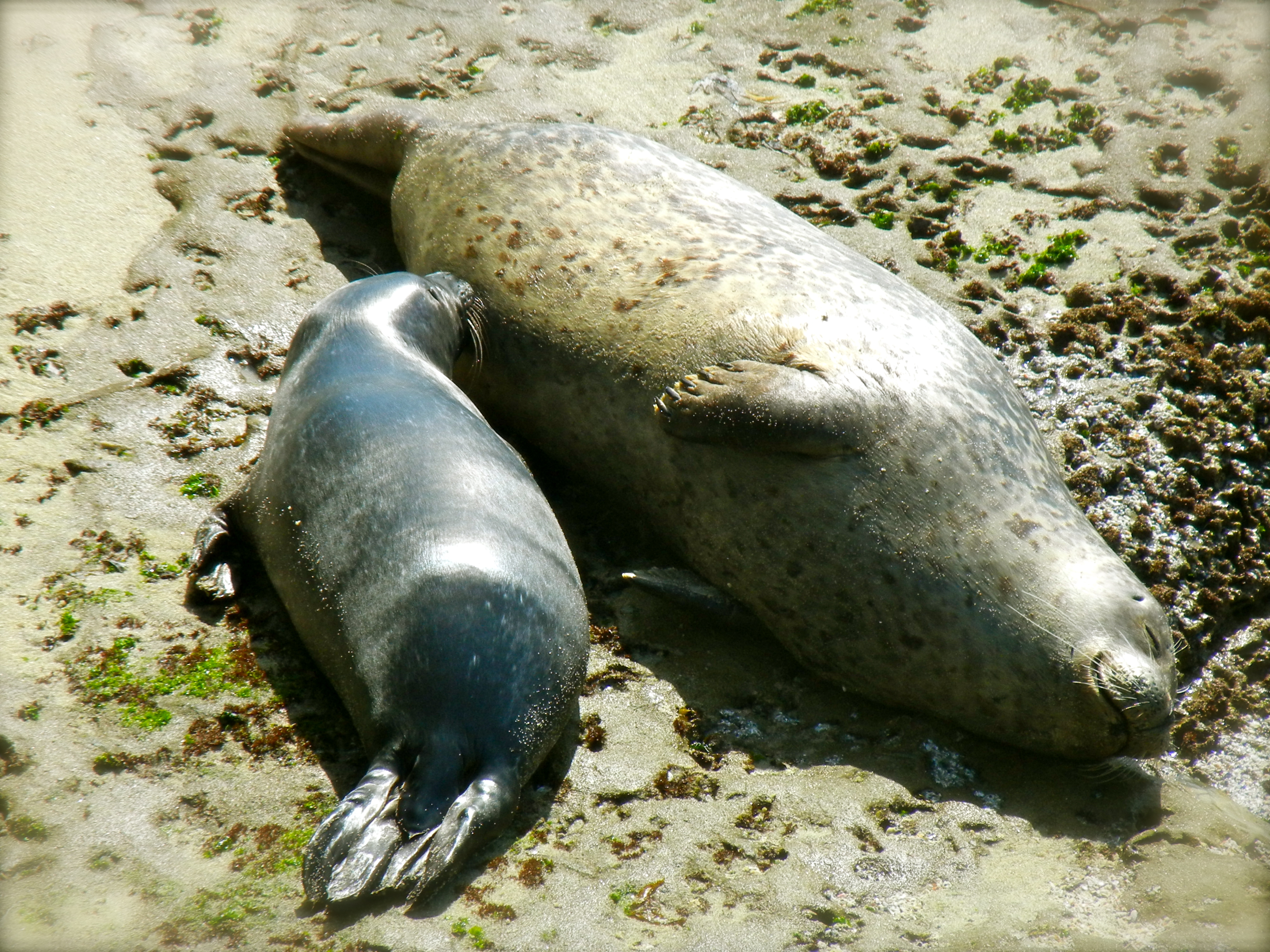
That’s all well and good, but the constant struggle takes energy and it’s necessary for me, for you, to take time to revive.  Whenever I forget to build rest into my schedule, the universe has a gentle way of reminding me. The cast of characters hanging around La Jolla Cove this weekend taught infinitely wise lessons with their presence.

Seal with ballJPG

Play whenever you can.baby sealTake care of your own.

full beach

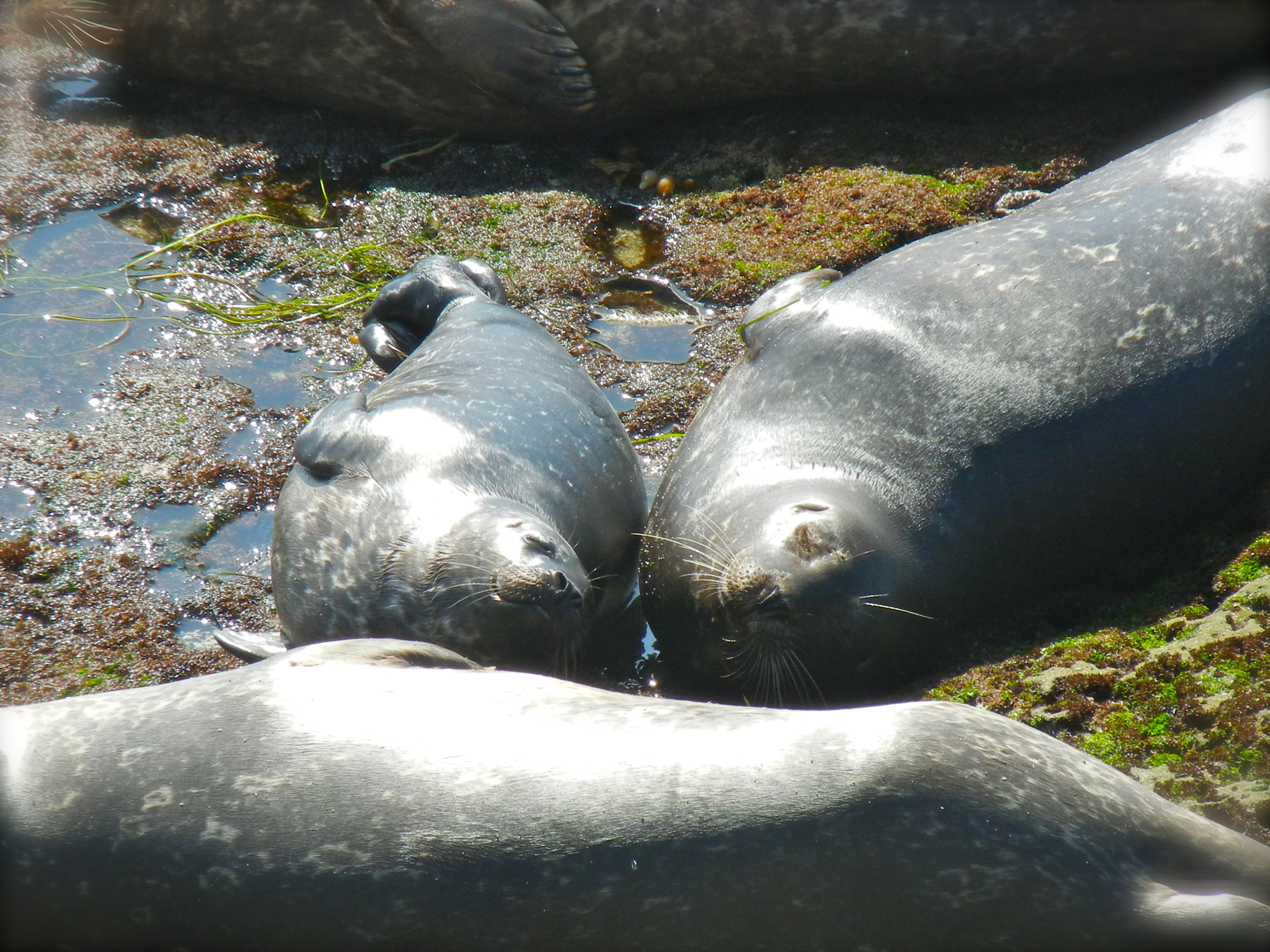
It’s great to hang out with friends.

two sleeping

But having someone special is the best gift of all.

Now before you think there’s no threat here, consider. The La Jolla Cove seals are no stranger to peril. Tourists and restaurateurs complain about the stench of too many seals too close to town.  Conservationists and environmentalists clash with businesses to protect the seals. You can read a roundup of the controversy, or crisis as some call it, at the Seal Sitters link here.

Or you cannot. Sometimes it’s alright to take a break from crisis or controversy and simply enjoy the beauty right in front of you.

And that, good readers, is the last word on the March of contrasts.

Sealed with a kiss
~Catherine

p.s. When you are revived and ready to seriously consider how addressing the threat can create a fine poem, do revisit Dave Smith’s essay, “St. Cyril’s Dragon” The Threat of Poetry.”  In fact, you might even sign up for Poetry Daily. From the “About Poetry Daily” page:

Poetry Daily is an anthology of contemporary poetry. Each day, we bring you a new poem from new books, magazines, and journals.

Poems are chosen from the work of a wide variety of poets published or translated in the English language. Our most eminent poets are represented in the selections, but also poets who are less well known. The daily poem is selected for its literary quality and to provide you with a window on a very broad range of poetry offered annually by publishers large and small.

The next big thing

Poet Mary Biddinger has one of those voices that feels like a long lost friend. She’s the author of several poetry books, including Prairie Fever and editor of Barn Owl Review. According to her website, in her spare time she likes “to photograph garbage.” She also has great ideas like starting an author interview series called The Next Big Thing.  This is a chainlinking of writers who are asked to divulge details of “the next big thing” they’re working on.  Sandy Marchetti, poetry editor of Minerva Rising asked me to participate. If you want to learn more about Sandy’s Next Big Thing, you can read her post here.

So here’s the project that keeps Catherine Keefe up at night…

Japan 153

Helen of Troy was here

What’s the working title of your book?
refrain: lost notes from helen’s songbook

Where did the idea come from?
I’ve always imagined all of poetry as one long interconnected verse, printed in a colossal book floating in the ether, bound together loosely with something like strips of dried moose hide. In that lyric, Helen of Troy, is a recurring undersong. Why haven’t we let her go?

This colossal book image came from visiting my grandfather who kept a yellowed collection of sheet music open on his piano. Over the years, the book’s binding loosened. Inevitably when my grandfather played, a few pages fell and slid under the couch or blew out the open front door on a gust of wind.  As a girl I wondered who might find “Que Sera Sera” on their porch and what meaning they would derive from the discovery. Would it even be intact?
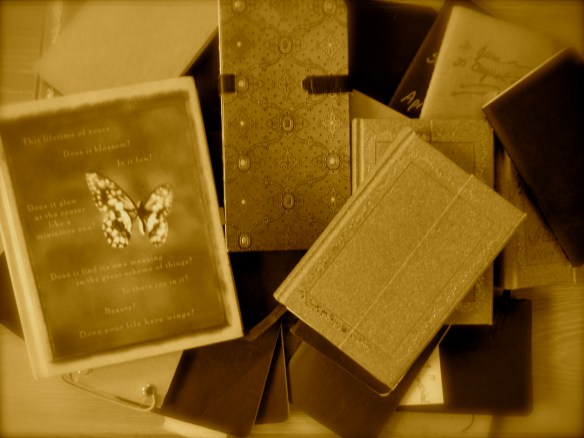
As a woman I wanted to poetically play with that lost note idea. Helen of Troy’s myth offers love, adultery and war, a far more interesting story than a girl and her grandfather singing “Give My Regards to Broadway.”

refrain’s poems are framed as if they blew out of the great lyric book by accident. They’re written in conversation with poets who have immortalized Helen, as formal poetry and also as fragment poetry collaged with art reviews, museum catalogs, grocery lists, quotes from other poets, philosophers, scientists, and titles taken from drawings by A-bomb survivors.

What genre does your book fall under?
refrain is poetry.

Which actors would you choose to play your characters in a movie rendition?
Someone unknown. Someone fierce.

What’s the one-sentence synopsis?
Helen of Troy abdicates role as poster girl for destruction in the name of beauty.

Will your book be self-published or represented by an agency?
The typical path for first book poetry publication is to win a publication prize established by small presses or literary magazines. I’ve given myself a budget to submit refrain to poetry contests.

How long did it take to write the first draft?
The first draft tumbled out in middle-of-the- night writing frenzies during the nine weeks I spent alone in a writer’s cottage in Port Townsend, WA.  I was interning at Copper Canyon Press, reading some of the world’s best poetry by day and composing by night. Distant foghorns, buoy bells, and Helen’s voice drifted in through the open window.

That was in 2008 (I was the oldest intern.) Since then I’ve picked at refrain but mostly abandoned it to other projects. Helen started invading my dreams recently, so I’m spending time in a writer’s cottage in Laguna Beach to finish and begin to send it out on a regular schedule.  Helen insisted I return to the sea to finish her story. Who am I to argue?

What other books would you compare to this within your genre?
refrain strives for the aesthetic restraint of One Robe, One Bowl: The Zen Poetry of Ryōkan, transl. by John Stevens.  It’s in the loose narrative model of something like C.D. Wright‘s One With Others or Narrow Road to the Interior by Kimiko Hahn.

Who or what inspired you to write this book?
Helen’s story, ancient as it is, represents two persistent beliefs I want to test and explore. The first is that war is justified if there’s a perception of being wronged, and that once war is declared, all means to win are allowed.

The word “refrain” is a single phonetic tick from “reframe,” an underlying motif of the book. refrain picks up the challenge Alice Notley issued in Homer’s Art

Another service would be to write a long poem, a story poem, with a female narrator/hero.  Perhaps this time she wouldn’t call herself something like Helen; perhaps instead there might be recovered some sense of what mind was like before Homer, before the world went haywire & women were denied the participation in the design & making of it.  Perhaps someone might discover that original mind inside herself now, in these times. Anyone might.

The other assumption is that love is a single thing between two people, not a universal light that shines upon us all. How do we reconcile the Zen philosophy that we are all interconnected if we are proprietary about the bodies we claim as ourselves and “the one” we love?

I write to inquire. Is there such a thing as enough?  This is one of the book’s fundamental questions; I play with all meanings of “refrain” including the imperative.  Lastly, refrain is the story of yearning to go home, to a place where heroics and tragedies can be laid to rest.  But what if the home door is bolted yet two people stand on either side of the door, hands on the lock wishing to dissolve the barrier, but not knowing how. How do you suspend blame? How do you ask for forgiveness?

What else about your book might pique the reader’s interest?
You mean beyond adultery, love and war? Well, there’s spaghetti sauce, cherry blossoms, and a Helen whose voice ranges from Yeats, to Whitman, to Euripides and CS Lewis depending on whose rendering she’s mirroring.

There’s a funny story about Helen’s voice from when I read excerpts from refrain at an Iowa Summer Writing Festival author’s reading.

I stood up and said I really wasn’t going to read something I’d written, rather I was going to read something I’d found.

Scouts Honor, I’d found bits of a journal and this journal was written by Helen of Troy. Does anyone remember who Helen was?

Hands up. Nods yes.

I then read 3 short poems from refrain.  And maybe I was dressed in a long Grecian dress and maybe I added a bit of theatre technique with hand gestures – nothing too over the top, you know, just me talking with my body.

And then the reading was over and two people approached. Both of them both of them! said they very much enjoyed my reading but wondered why I hadn’t read from my own work.  But, that was my work, I said. Helen of Troy didn’t have a journal, and if she did, (and was she even real?) it hasn’t been found. And if it was, it most certainly wouldn’t be written in English.

Both of them both of them! looked at me so oddly, I fled.

Then, I chuckled in my room all night and thought, well, I guess I’ve captured a voice which isn’t my own. Thank you Helen for letting me share your refrain.

~Catherine

Please check in next week when Denise Cecila Banker shares her “Next Big Thing.”

You are a human treasure

DSCN2586

Dear One,
Your compliment, so kind, compels me to remind you how much beauty also lives in you. You, of course, the person,  and you the word, so small in all the language.  “You” can mean the one, or “you” can mean the many. “You” can mean the Angel who I wrote about last May in “Stop this day and night with me.”

Angel returns one morning last week.  I open the oak front door to see him standing on the porch.  He shuffles his feet, looks at the stone, points to the empty dirt in my new yard and wonders if I need help planting.  His eyes are bloodshot, the scent of alcohol sweet in the morning air.  He smiles as he gestures toward the mud.

“Would you like me to put in roses? Fruit trees?”

“Let me check with J,” I say, acting like it hasn’t been months and months since he stopped gardening for me, acting like this newly emaciated body clothed in muddy khaki pants, cinched with a black belt flapping several extra inches at the end, might actually be able  to dig holes and tamp mud any better than my own.  He has a gift, this man who knows exactly how to coax a growing thing to triumph. Should I stand in the way of allowing him to work?

“Can you come next week?”

“Sure, sure.”

I give him J’s number to arrange a day, a time, a price.  Angel calls on Sunday.

“I can’t make it on Monday. I’m in the hospital. For tests. Maybe I can come on Tuesday.”

On Tuesday night Angel calls.

“I have stomach cancer. I have an operation tomorrow. I cannot come and plant your garden. Maybe next week.”

You are a human treasure.

Must I know exactly where I’m going when I compose a leading line?

chester on trail

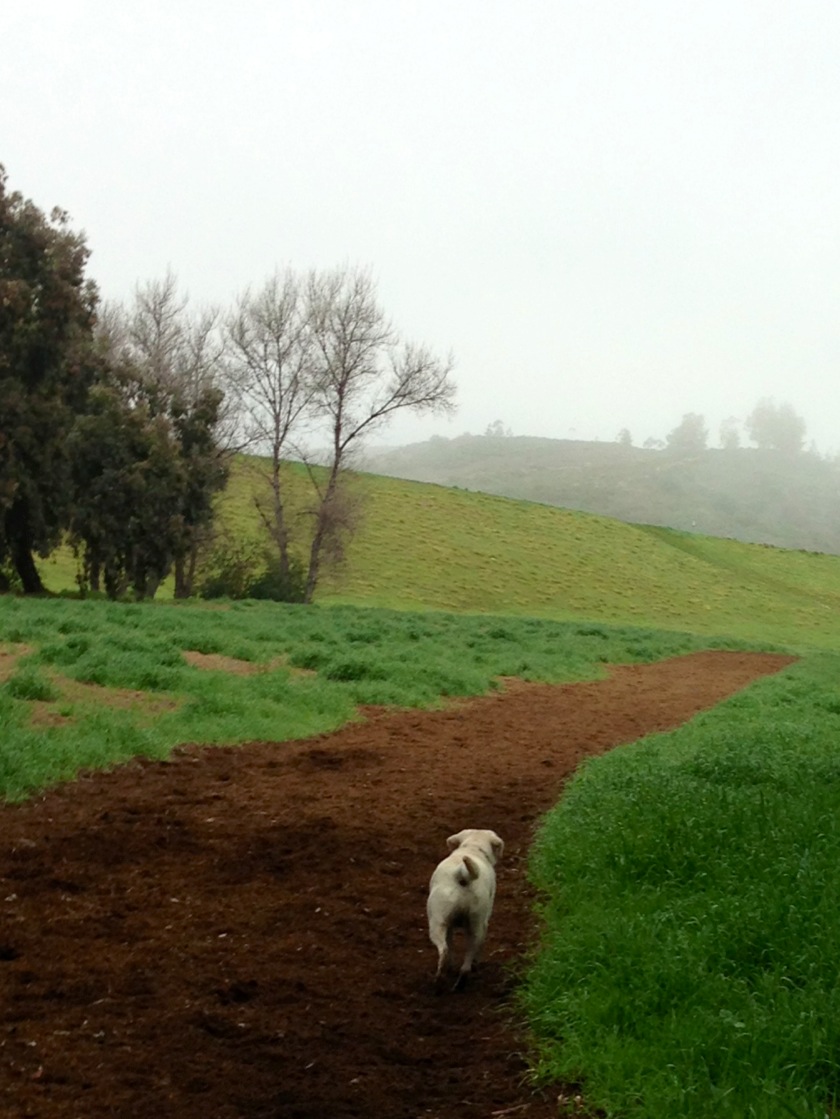
What if I have no idea how the story ends, or how to compose a view for effect, or how to make any sense of muddy paths leading straight into the fog?

Is it an accident, or part of nature’s wondrous plan that the view when looking up

Light and lattice

offers much more hope and light than the gaze that meets the ground?Two muddy feet

Yet it’s on the ground where the growing things begin. Salt of the earth.  Grounded. It’s the earth we all return to.

When a writer thinks of leading lines, a writer thinks of books, that first taste of a voice which can make a difference in the way a reader sees the world.

I am an invisible man. No, I am not a spook like those who haunted Edgar Allan Poe; nor am I one of your Hollywood-movie ectoplasms. I am a man of substance, of flesh and bone, fiber and liquids – and I might even be said to possess a mind. I am invisible, understand, simply because people refuse to see me.

from Invisible Man, Ralph Ellison

There is nothing worse I think, than the feeling of not being seen.

Even among books, some seem small in stature, insignificant when compared to the legacy of others based on copies sold, appearances on syllabi, or inclusion in the conversation among critics.

DSCN2591

Some books, some lives, are at risk of getting lost.  I’d like to highly recommend such a book that might have missed your radar.  Dominque Fabre’s The Waitress Was New, (translated from the French by Jordan Stump) is the perfect little 106 page gem to reacquaint yourself with what  Fabre describes as the, “genuine beauty, genuine dignity of  places or people that have been somehow overlooked.”

Unknown

It’s the story of an entirely undistinguished bartender.  It offers a leading line straight to the very mystery of the beauty of the anonymous life most of us exalt in. It reminds us that we must take the time to tell each other, You are a human treasure. And then, we must live as if we believe it to be true.

With all due respect,
~Catherine

Lessons from winter

Can I weave a nest for silence,
weave it of listening,
listening,
layer upon layer?

May Sarton, from “Beyond the Question”

I told you once, there are four of us Backyard Sisters.  Today’s post comes from the eldest,  Theresa, prompted by a telephone conversation.

Winter

“I drove in the dead winter,” she tells me one day.  “From Des Moines to Minneapolis. And it was darker than dark except for headlights on the highway. And I thought of letters flying through cyberspace, of too many words, like those headlights.

DSCN0884

“And I thought of a poem by May Sarton.  Then I wrote this for you.”

Theresa’s my hero. She finds a way to quietly approach life, to focus as if each moment, each person, each word matters.  I’m happy to share my big sister with you.  Here’s Theresa…

sisters

“words once spoken, can tear down or build up – but can never be destroyed.”

I wrote that when I was 14 or 15 years old, probably after an angst-producing adolescent moment – and I still think about words a lot.

DSCN0872

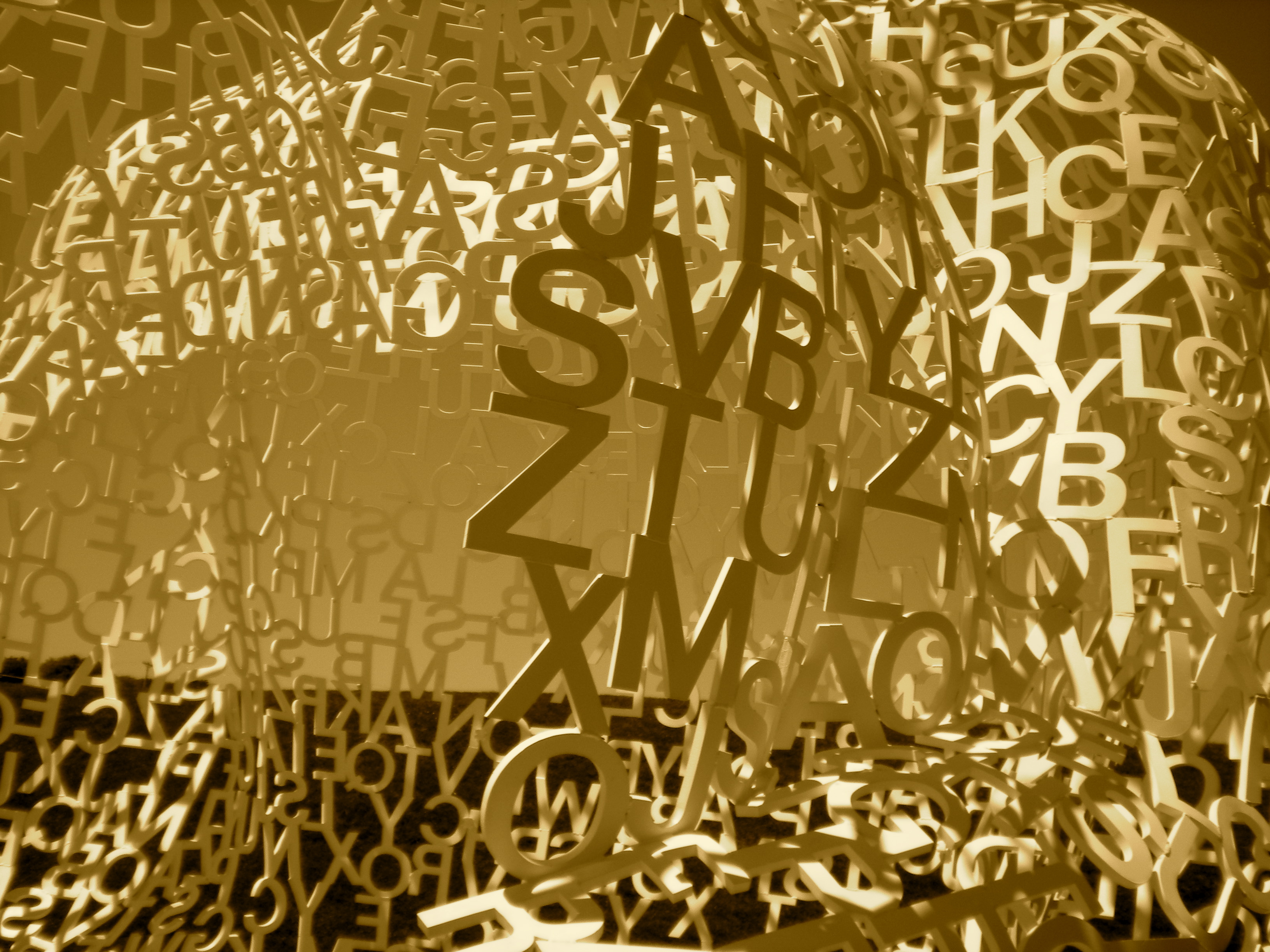
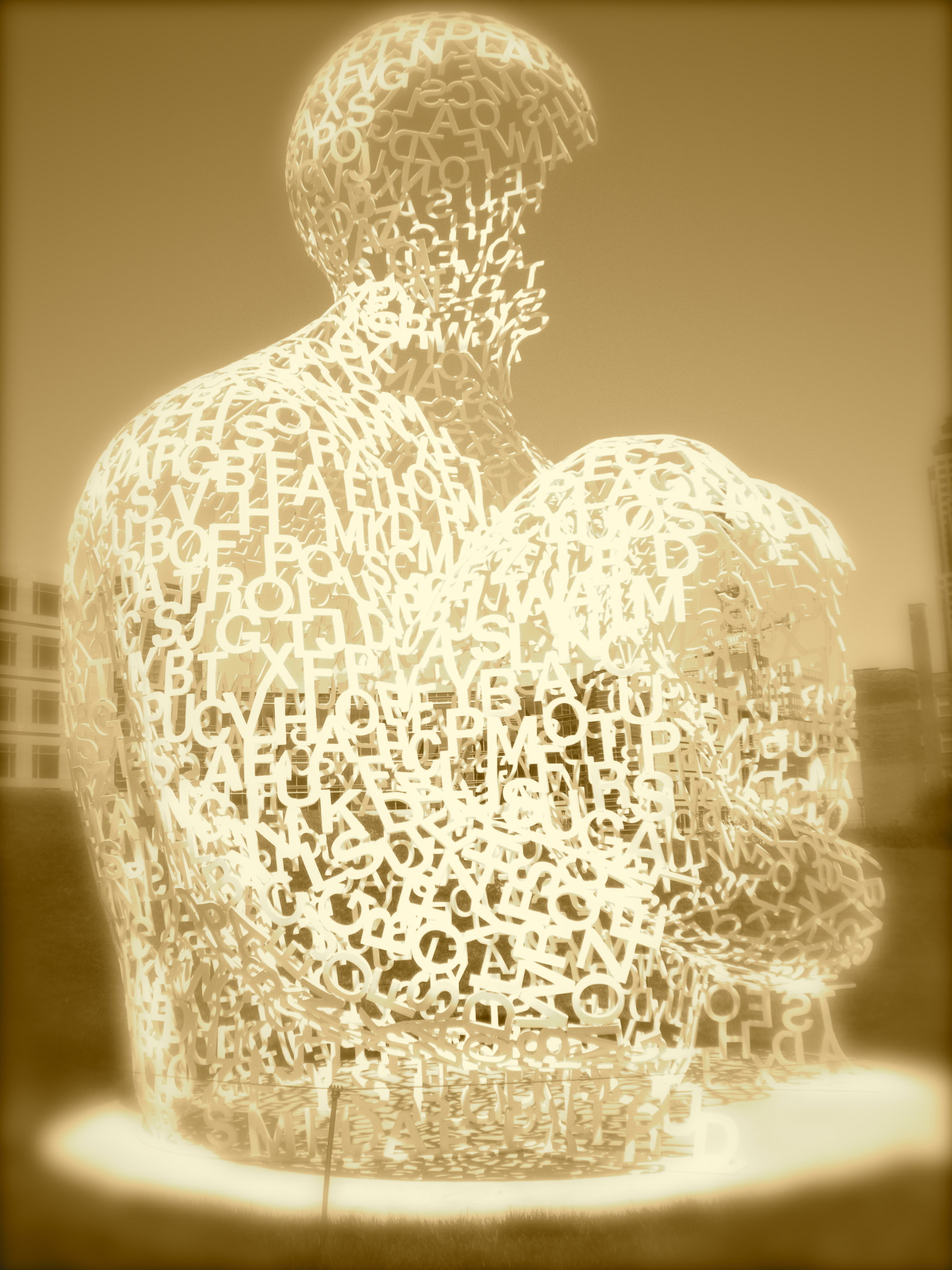
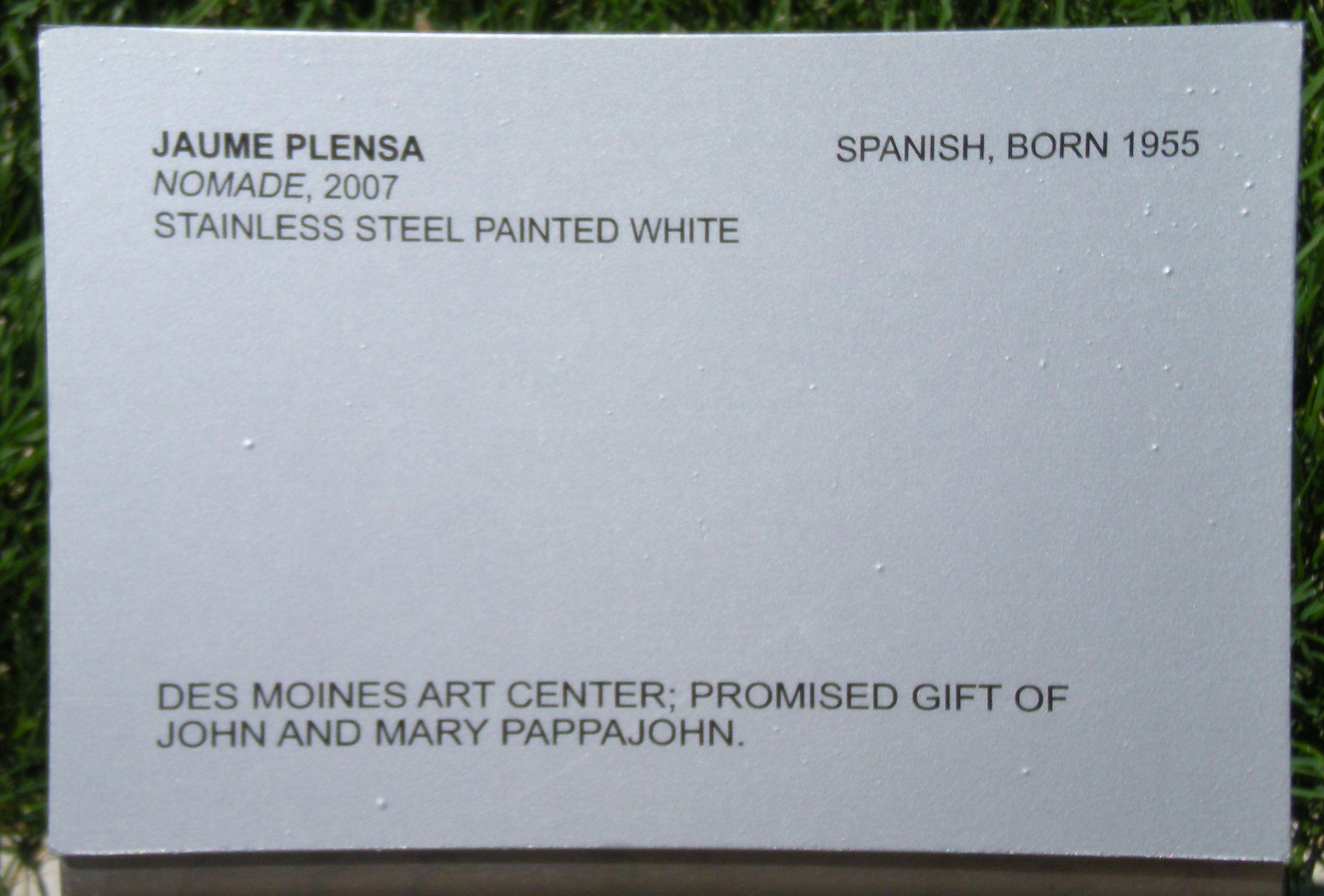
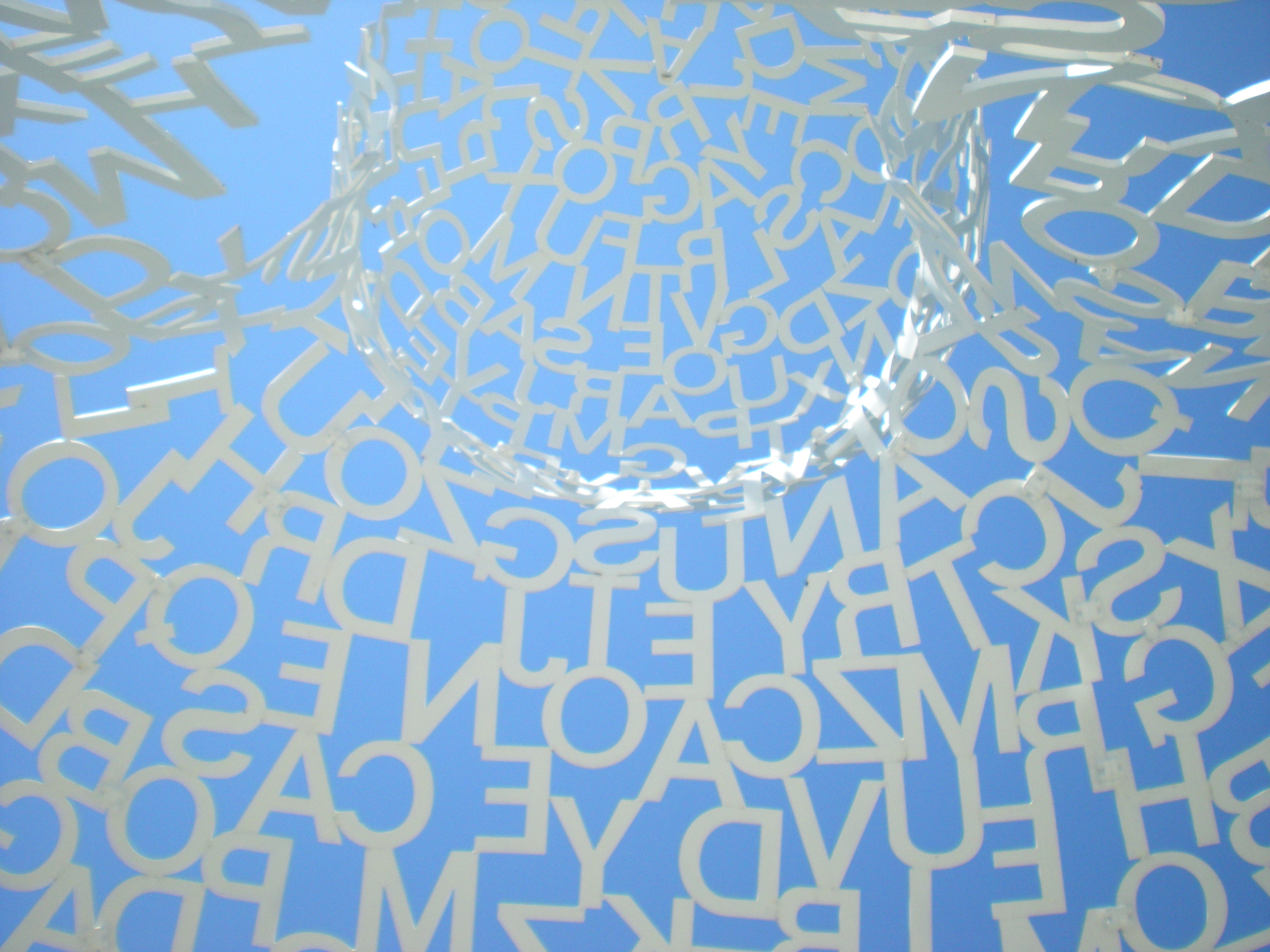
This 27 ft x 17 ft sculpture, Nomade, is by Jaume Plensa, who “envisioned the letters as building blocks for words and ideas, in the same way human cells form tissues, organs and bodies.”  It sits in Des Moines’ outdoor sculpture park.

DSCN0865I too believe that words and ideas form us in the same way our cells give us shape and I believe that we are all the better that words can’t be destroyed or we would have lost our earliest stories.

But one must first become small,

nothing but a presence,

attentive as a nesting bird,

May Sarton, from “Beyond the Question

I also think about how today thoughts can be casually dispatched as quickly as you can type and in a split second be launched at someone or some group and preserved forever in our digital minds.

I picture cyberspace as the darkest of nights, illuminated by flashing lights like lightening bugs and trailing comets, letters strung together careening and whistling to their intended targets.

And then I think about us, how we see this chatter, day and night, incessant words, constant words, bathing our thoughts and I wonder what will come of this, what are we building?

What happens in a world when conversation is mostly visual and  there are few pauses between our words? Where are the spaces in our communication now, the opportunities to pause and reflect before answering, or to just sit in comfortable silence with one and other.

Beyond the question, the silence,

before the answer, the silence.

May Sarton, from “Beyond the Question

DSCN0866

This amazing technology that allows us to connect instantly is for the most part a gift, allowing families and friends to share their lives in a way never before possible. But like all blessings, it might also be a curse, teasing us into believing that putting thoughts into words without pausing to consider the effect or substituting virtual reality for an opportunity to connect with a real person is the way it is supposed to be.

I have no answers – I suppose when the telephone first became available to most people, there were those who declared it unnatural and dangerous to humanity, most likely by someone like me who tends to think too much… However, quite by accident, I stumbled upon a book, Alone Together: Why We Expect More from Technology and Less from Each Other by Sherry Turkle.

alone-together-cover

Sherry Turkle is director of the MIT Initiative on Technology and the Self and spoke with Krista Tippett about this topic on “On Being” recently. Do you think we really expect less from each other?  I’m going to download the book on my Nook and start reading.

You don’t expect me to throw the baby out with the bathwater do you?  I’ll let you know what I learn.  Until then,

Happy wandering –
Theresa

p.s. Catherine here ~ What would happen if today, this week, this year, you focused on treating the words you release as precious as art, as air?  Celebrate silence. Be attentive “as a nesting bird.” Speak and write carefully.


Through the open window…

A coyote yips and howls. I don’t know what time it is, still dark. The Siamese jumps onto the sill, presses her body against the screen, hackles raised.  She emits a low moan. In the distance an owl hoots and the dog rumbles a half-hearted growl. J still sleeps, so I get up to close the window and notice a pinking sky over the mountains.  The cat and dog settle back down, tightly tucking into furry curls against the January chill. But for me, the night is over.

Today, this not-the-first-of-the-year, but this ordinary-Thursday-when-the-holiday-rush-has-finally-faded is my annual Life Visioning day.  It begins when I light a candle against the dawn.

Candle

Actually I begin every day by lighting a candle and spending moments deep in reflection.

What am I grateful for from the previous day?

Gratitude Journal

a little dancing after dinner
candles on the hearth
neighbors who share homegrown oranges

With a smile and fortitude from recalling all that’s good, I next invite my sacred heart space to be bathed by a divine floodlight where I cannot hide, not even from myself.  I think back to the day before, and remember ways I did and didn’t act in alignment with my values and intentions.  Can I repeat what went right? Can I correct the imbalances that caused failure?

I set me intentions for this day, write my to-do list within this womb of new dawn freshness.  Then, I pray. I trace the presence of my family and friends upon my hands, using one index finger I begin at each fingertip recalling a name, a need, until the faces and the names of all those who are close to me are joined in the center of my heart-side palm.

Hands

I leave this meditation time by rejoining the entire human chain with an invocation for peace and love, “For those who will be born today, and those who will die.”  Each month I also add a special intention.  My January focus is, “For those who struggle with addiction or mental illness and for those who care for and try to love them.” I join my hands together, press them to my heart, bow to the sunrise and begin my “real” day.

Oh my goodness, telling you all this was difficult.

I’m an intensely private person by nature. There were years and years and when I didn’t even tell my own husband that I prayed, let alone that I meditated and lit candles in the dark and drew his name upon my palm.

Why change?

Maybe I’ve decided that being myself is something I should do publicly.

Maybe I wrote, be yourself out loud on my to-do list this morning and it’s too early in the year to break promises to myself.

It is, in fact, right in the middle of the month the Backyard Sisters have dedicated to focus and while Susan will tell you how to focus your camera, I am relegated to suggesting ways to focus your writing life.

I learn today that the word focus comes from the Latin focus, meaning “hearth, fireplace.

DSCN2468

focus (n.) 1640s, from L. focus “hearth, fireplace” (also, figuratively, “home, family”), of unknown origin, used in post-classical times for “fire” itself, taken by Kepler (1604) in a mathematical sense for “point of convergence,” perhaps on analogy of the burning point of a lens (the purely optical sense of the word may have existed before Kepler, but it is not recorded). Introduced into English 1650s by Hobbes. Sense transfer to “center of activity or energy” is first recorded 1796.

Inspired by the connectivity to the word focus and home, as nurturing my family ties always rises to the top of any priority list, I reread my last year’s life vision and adjust paragraphs or sections that no longer seem important.  I focus on the lines that have followed me from year to year to year.

Write a book. Write a book. Write a book.

I realize I am. I have. Written the book(s). I just haven’t pushed hard enough for publication.  I cross out the line. Write a book. I revise: Send out book.  We are only in control of our own actions, I realize. And now is the time to act with focus, with fire, with the kind of fierceness you would use to advocate for someone that you love.

With light and love
~Catherine

Précis: (This is a lovely new word I discover today. It means a summary.)
When you sit in peace, quiet self-truth speaks loudly. Pay attention to what you’re trying to tell yourself.

Practice:  
Can you create a vision for your life?  Nothing fancy, just write about the life you want to live.  I live in a house small enough to vacuum in an hour.  Date it.  Remember to include all the elements of nature: Air-spirit.  Fire-ambition.  Water-refreshment.  Earth-body.  Space-mind.  Focus on one action for each element that you can accomplish within the next month or so.  Write that down too.

Play:
Create a scene of dialogue between two characters, one whose inner and outer life is aligned – think Atticus Finch from To Kill A Mockingbird by Harper Lee – and another who projects a false outward image – think Fermina Daza from Love in the Time of Cholera by Gabriel García Márquez. Now what would happen if they end up in a story together?

Here a word, there a word…

“Did I forget to look at the sky this morning / 
when I first woke up?”

Dawn

So begins Jim Moore’s,”Twenty Questions,” one of my favorite poems to read as a reminder to live attentively. When I take Moore’s attitude of inquiry into the day, I’m frequently rewarded with a high word count of odd snippets which I hoard like gold to incite new projects. And then I lose my words within the dozens and dozens of journals I’ve kept for years.

I once attended a reading where Charles Simic and Laure-Anne Bosselaar stood in front of a large audience and spun magic from their tattered leather journals, taking rapt listeners from first jot to finished poem like sure-footed adults leading children over stepping stones in a rushing river.

My process is infinitely messier.

DSCN2341

I keep journals everywhere.  Stacks of filled Moleskins pile up in a purple silk-wrapped box on my bookshelf. There are three journals on my bedside table, one in my purse, another in my messenger bag, and a water-spotted, sandy one in my beach backpack. There’s a slim brown journal in my car, a hardback one in my upstairs office, and the smallest journal of all waits downstairs by my muddy shoes.  I slip it into my jeans pocket before every hike.

Writing is the easy part.  Keeping track of my observations is the trick. Yet I find that randomly picking and choosing to read from this year or that, from land observations or seaside ruminations can be weirdly fun.

It’s never a good thing to be a cautious trumpeter, I wrote while listening to music at San Francisco’s now defunct Jazz at Pearl’s club.

Do not ever show an oak a photo of a pine. When you write about the aspen, don’t let the birch read a word about it, came after a late fall walk in the canyon near my house.

I’d rather lose an armpit than a finger, was gleaned at the AFI Film fest while riding the elevator from the parking garage to the ArcLight Theater in Los Angeles.

And then, my most promising:
”                                                         ”

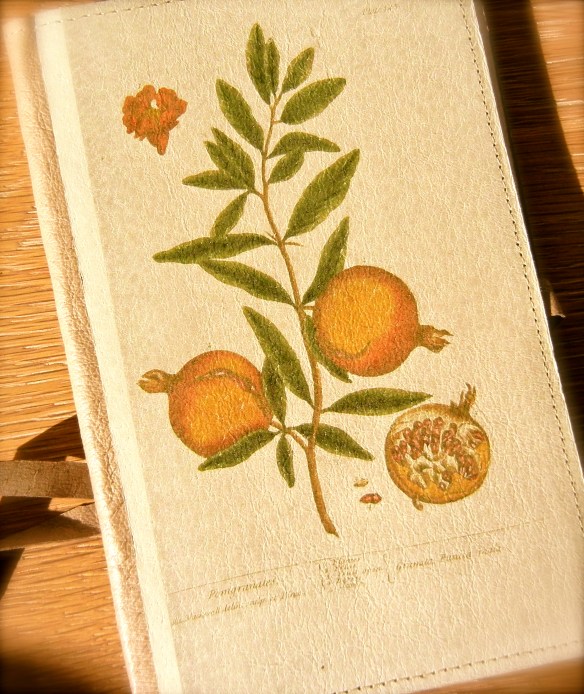
This emptiness  lies within the small leather book, decorated with with a botanical pomegranate image, that I picked up at Charta an exquisite book bindery in Venezia.

DSCN2337

The proprietor, whose name I’ve sadly forgotten, warned me that I’d never write in this book.

“No one ever does,” he said as he wrapped the small book in gold paper.  “But just so you know, I offer free refills.  When you fill this up, you send me a letter and I will send you more pages.”

“Oh, don’t worry, I’ll fill it up. I’m a writer.”

He nodded sagely, patted the package before he handed it to me.

“You’ll be the first.”

I think of this – self-fulfilling prophecies and keeping track of journal notes –  as I bid my students a semester’s-end goodbye.  They tell me they’ve turned into writers now and they want to know how to continue the practice.

Off the top of my head, I offer my own best advice.

* Write frequently, at least 1,000 words a day.
* Save your writing in documents titled by month and year.
* Take a journal with you everywhere. (Shhh, I didn’t tell them the story of what happens to mine.)
* Make a regular practice of transcribing your journal notes once a month. (Now there’s a thought.)
* When a new month rolls around, open a new document and begin again.
* At that time, make a regular practice of reading the previous years’ journal entries for that month. For example, every December I read all the December documents from previous years.
* And lastly, don’t ever let someone tell you that you won’t write.

I always miss my students, for their optimism, their tenacity, their freshness, and finally because without them I’d have no occasion to hear myself say aloud things I know to be true.

“Don’t ever let someone tell you that you won’t write.”

It’s time to face down the Pomegranate journal.

bare feet
low sun
blue in the afternoon

There. In pencil, with eraser marks, a far from perfect entry.  And then I remember my second favorite line from the poem “Twenty Questions.”

“Wouldn’t it be wrong not to mention joy?”

I scribble joy! in Pomegranate journal, just to remind myself.

Joy! I tell my students instead of goodbye.  And then, because a statement offers no possibility for dialogue, I ask a question.

Will you remember to look at the sky at dusk?

DSCN2182

With joy,
~ Catherine

P.S.  Jim Moore is an American poet and recent recipient of a John Simon Guggenheim Memorial Foundation fellowship.

He writes in the his fellowship profile about spending time in prison and learning that his fellow inmates were poetry lovers.

I discovered that a big notebook was kept secretly (passed from inmate to inmate so the risk was shared)  and at some cost (its discovery would have resulted in the loss of good time, which meant a longer stay in prison) in which inmates kept poems—poems of their own and poems by poets whose work they loved, mostly Black poets, but I remember Neruda was there, Whitman, and Longfellow, of all people.

You can read the entire poem “Twenty Questions” here.