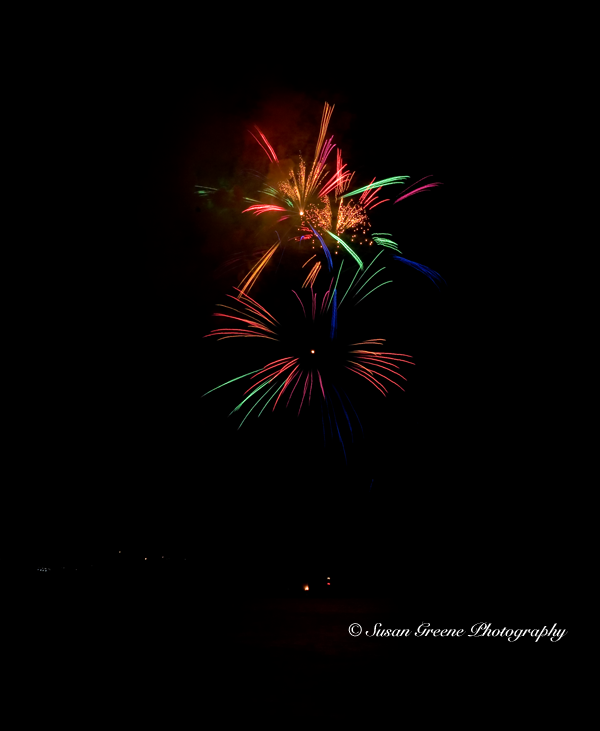
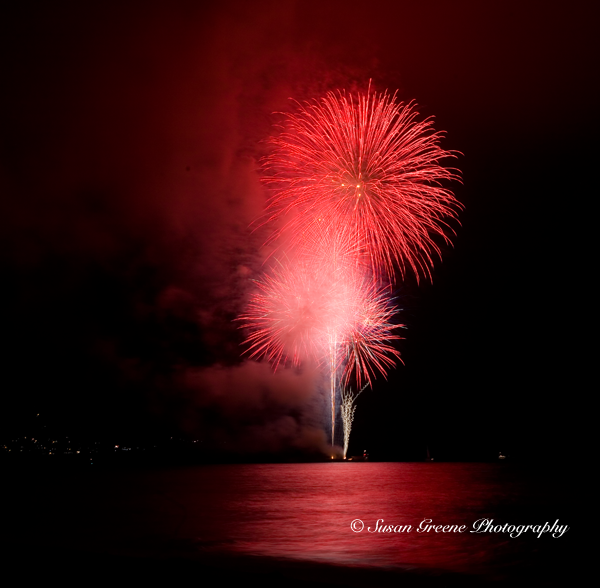
There is nothing for making a celebration grander than fireworks! Watching the flare ascending and then bursting with colors filling the sky with light gets my spirits soaring as high as those fireworks.
July 4th marks our country’s 237th birthday and it’s the perfect occasion to take in a fireworks show. I have the opportunity to be on the edge of the continent, in a bay and when the weather is nice, I can see many displays from a seat at the local beach.
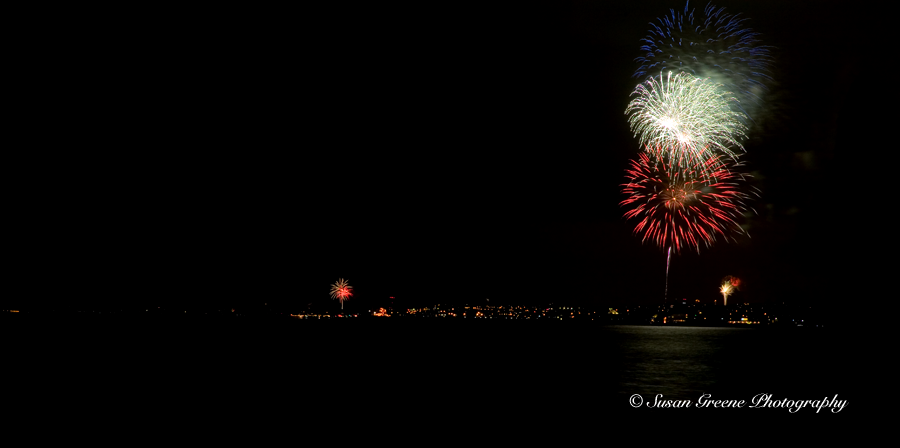
When one show ends you simply sit back and wait for the next one to begin.
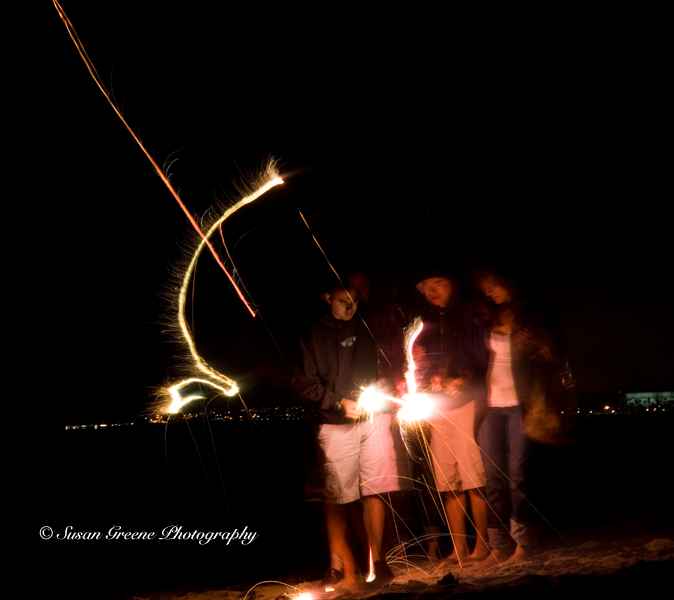
Sometimes the down time is filled with people’s own shows.
With so much going on, it’s the perfect opportunity to capture the revelry.
Here are some tips for you to capture your experience:
First you need a camera with manual mode. To minimize camera shake, a tripod and a remote release are recommended. Set your camera to a low ISO setting of 100-200. Fireworks are bright and an f-stop in the mid range of f/9-f/16 lets enough light in to allow the colors to stay true and not get washed out. Set your shutter to bulb (B on Canon), this setting will keep the shutter open as long as you hold down the shutter button. Make sure your lens is on manual focus, and focus to infinity or wait until the fireworks begin and focus on them. A medium telephoto zoom lens works well, I use 24-105mm. Now position yourself so you will have an unobstructed view and you are ready to shoot. Listen for the launch and release the shutter and hold open for anywhere from 2-30 seconds. The longer you hold it open the more bursts you will capture.
Some locations add music and the fireworks exploding to beats in the songs makes for an especially thrilling experience.
Happy Independence Day and hope you can get to a fireworks show to celebrate, and stay until the grand finale!
The question, coming as it does from an artist at a gallery reception, surprises me. It’s like hearing, “when did you become a fish?”
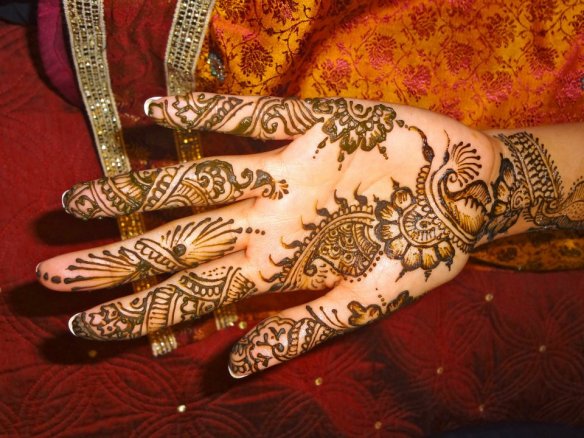
“I always was one,” I reply, hoping for the simpatico understanding of a creative soul to bridge this non-specific-date-naming response, not an evasive conversational gambit, but a strange truth that still perplexes sometimes. Decoding the world through language is as natural to me as skipping. One of my earliest childhood memories includes tracing the letters of words being spoken, turning them into stories and pictures with my right forefinger upon my left palm. Sounds and ideas danced upon my hand, to be released later onto the unlined light brown paper of a Mickey Mouse drawing pad. I didn’t plan to be this way, I just was. Most writers I know say the same thing.
It’s this recognition of the magnetic power of some creative pull that frequently leads me to invent new ways to spark leaps in my technique. Learning West African drum rhythms interrupts a rut of a cadence; reading books I don’t understand hopefully sparks new brain synapses and invites new subject matter into my writing. Fifteen hundred pages of Critical Theory Since Plato anyone? There’s a playfulness with these kinds of things, sure, but there’s also a dogged determination bordering on compulsive. I laugh when I see myself in other writers and while reading Christian Wiman‘s Ambition and Survival: Becoming a Poet I found a mirror self in the first few pages. Wiman writes:
When I read Samuel Johnson’s comment that any young man could compensate for his poor education by reading five hours a day for five years, that’s exactly what I tried to do, practically setting a timer every afternoon to let me know when the little egg of my brain was boiled…
I’m not quite as odd a person as I was once on the verge of becoming.
Of course my weirdness waxes and wanes. I may be tipping the balance back toward odd as I begin a new poetry writing project for the month of July.
“Why do you do what you do?” my family wonders.
Why, when it’s summer and school’s out and nothing dictates my days but my own gentle taskmaster self, why would I commit to writing and posting a poem a day for Tupelo Press? I believe in the need for literary presses and, being the editor of dirtcakes, a small press of my own, I know it’s impossible to sustain any sort of momentum and foster good work without readers and backers and contributors. The Tupelo Press 30/30 Project is a nifty little way for writers to forge new work and for readers to discover new writers. It’s a community of writers that opens its hands to invite in a community of readers to share the stories written on our palms.
I’ve got a few ideas of how we can work together through July. I’ll be posting them in the coming weeks. In the meantime, remember that which you love you will spend time doing. That which you spend time doing will attract your energy. That which captures your spirit will shine out from you, and ultimately reflect back upon you. As for me and my attraction to poetry? I defer once again to Christian Wiman’s words:
…in the end we go to poetry for one reason, so that we might more fully inhabit our lives and the world in which we live them, and that if we more fully inhabit these things, we might be less apt to destroy both.
Who doesn’t want to be fully inhabit each precious moment of life?
Stretching and spinning in anticipation of lining up a long dance with the muse,
~ Catherine
p.s. Christian Wiman is an iconic figure in the world of poetry. From 2003 – 2013 he edited Poetry magazine, “the oldest monthly devoted to verse in the English-speaking world.” The depth of his poetry knowledge and ability to articulate the aesthetic strengths of particular poets is precise and sharp, though do know his taste runs to the traditional which sometimes can miff a lover of more experimental verse. Ambition and Survival is a collection of essays to dip in and out of when you need a strong voice in your head to guide your writing practice.
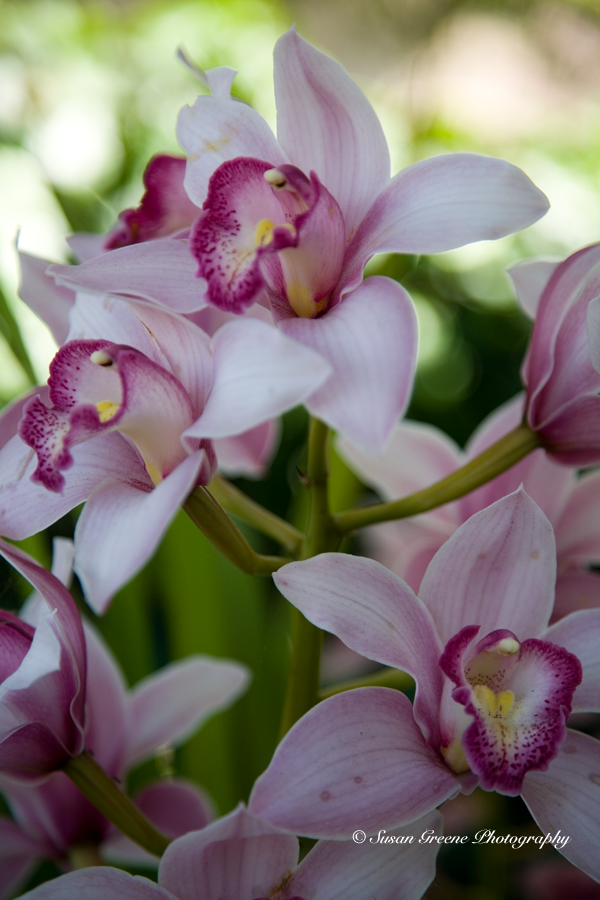
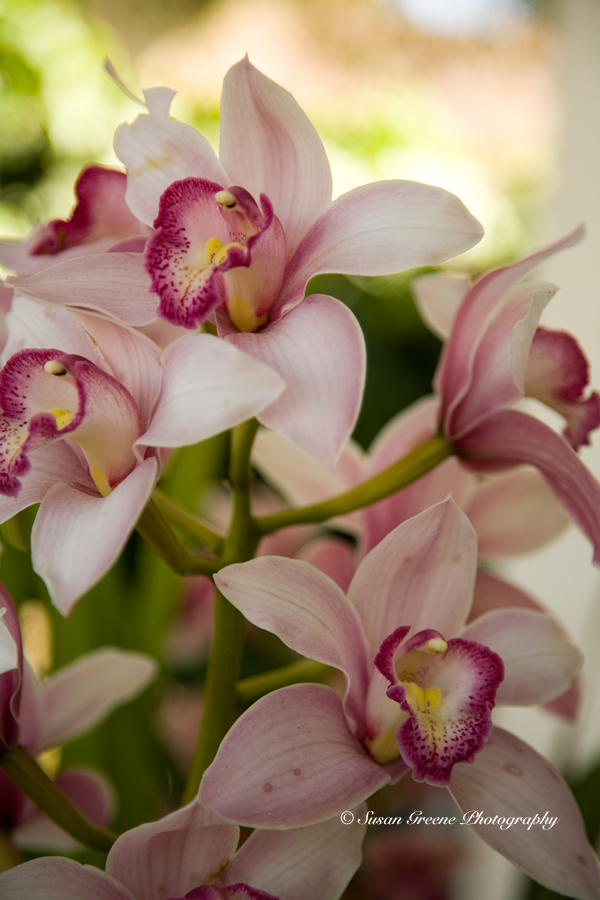
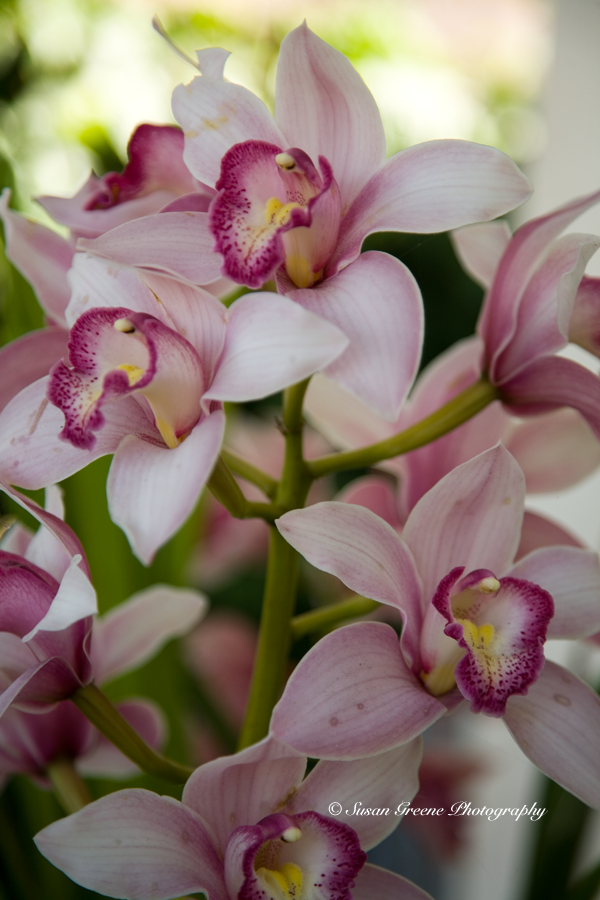
A light is a light is a light, right? Nope. Light sources can be warmer (with more reddish tones) such as a candle or an incandescent light, or they can also be cooler (with more blueish tones) such as in the shade or a cloudy day. You may have noticed that some times your pictures have certain tints to them and the color doesn’t look natural. This is where white balance comes to the rescue. The camera will add more of the missing hue in an effort to balance out the tint created by a light source and achieve more natural looking colors. I used the last blooms of the orchid on my patio as a subject. The plant is in open shade. Auto white balance will often produce a fine result but sometimes some tweaking is necessary or just fun to try.
This is the auto white balance shot:
In this case, it is a fairly accurate color depiction but I will carry on. Different cameras have different white balance settings so you will have to get out your manual for your particular camera’s settings.
Next I used the daylight setting:
This adds a slight warmth to the picture.
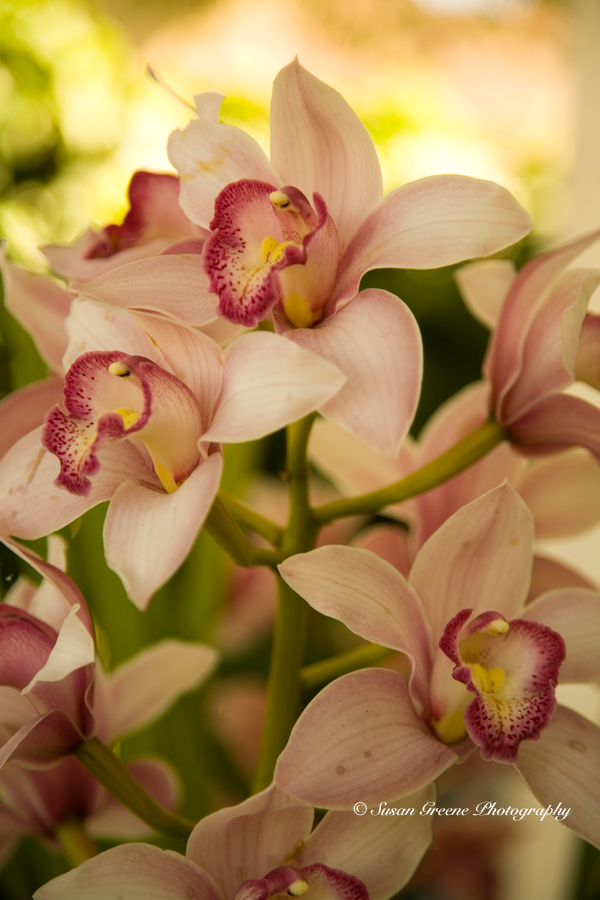
The shade setting, symbolized by a house with diagonal lines off one side, is next:
Shade is a cooler light and the camera adds warmer tones with this setting.
The cloudy setting:
Once again warmer tones are added.
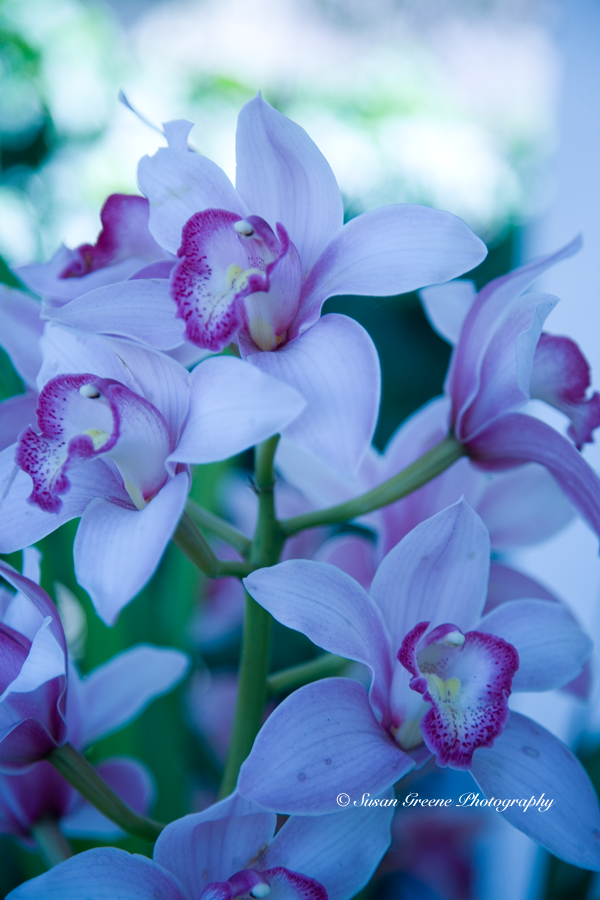
Next the tungsten setting:
The blue tones are strong with this setting because pictures taken under tungsten lighting will have a strong orange hue to them and the blue will balance it out. Generally, this is used indoors.
Next, fluorescent setting:
This is a cooler hue also.
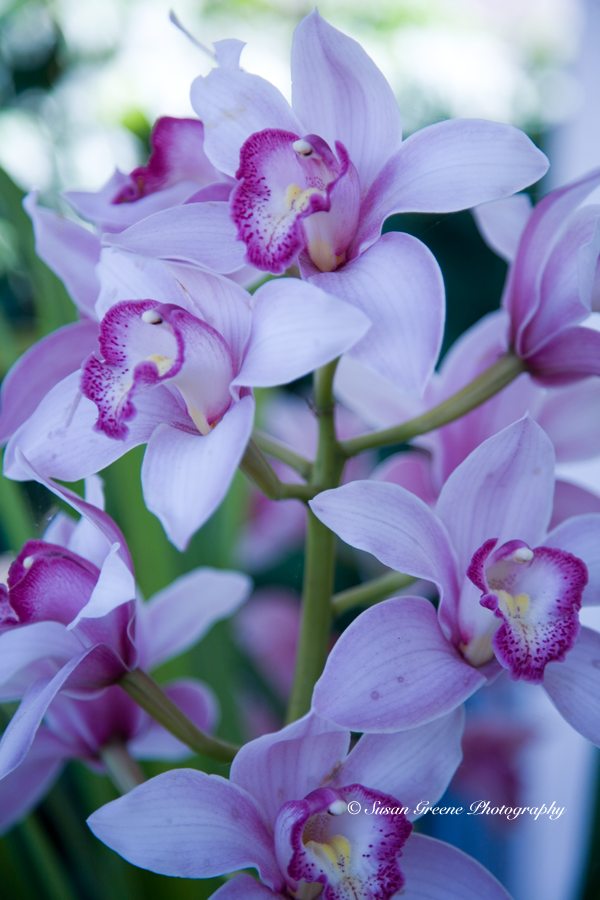
Another method of white balancing is using the Kelvin scale of color temperature. The lower numbers are the warmer hues so the camera will add cooler colors. When I set my temperature at 2800K this is the result:
Inversely, the higher numbers are cooler temperature colors so the camera adds warmer tones, this is set to 10,000K:
Then, there is a range in between these. You can also set a custom white balance by taking a picture of a white or neutral gray sheet and thus telling your camera what white is and it will adjust accordingly.
There is no rule that you must use a certain setting in a certain condition. You can decide what you prefer as the photographer. Maybe you like warmer tones in your photos or cooler. It is fun to play around with them and see what you like; just one more creativity tool!
Which way will the creek
run when time ends?
Don’t ask me until
this wine bottle is empty.
~ Jim Harrison and Ted Kooser
_________________________
“What did you notice that was beautiful today?” When J asked me this last night, just as we sat down to dinner, I cracked up.
It’s not a funny question, but rather an example of his dear effort to honor a request I made after breakfast.
“Please don’t ask me at dinner what I did today, or how my day went, ask where I found beauty.” I implored him in the morning as I hustled to my office.
“And what do you want me to ask you tonight?” I called over my shoulder.
“You can ask how my day went. I like to remember what I got done.”
___________________________
Life has always yelled at me, “Get your work done.” At least
that’s what I think she says. ~ Jim Harrison and Ted Kooser
___________________________
What we focus upon comes to light. My request was part self defense – I always give myself more to do in any given day than I can ever accomplish and then feel bad when I don’t finish. And it was part new strategy; I want to pay more attention to life’s surprises of grace and grandeur hiding in plain sight rather than concentrating only on how I try to unruffle its challenges. I’m trying to adjust the outlook I bring to my day and our dinner table.
What do you talk about at dinner?
I’ve begun asking friends without children at home this question.
We don’t talk, we watch TV.
I don’t know, nothing, what we did that day.
What’s coming up on our calendar.
Funny stuff the dog did.
What did I expect? The better question is, what do I want, what does J want? If gathering around the table is a nightly ritual so important that we set its time, its chef and menu (we trade cooking duty), its location and literally light its candles, then doesn’t it follow that we might also guide its conversational swoops and soars?
When our kids were home we had a standard dinner starting point that inevitably opened doors to conversation that often lasted long past dessert.
What was the best part of your day?
What was the worst?
Trials and triumphs of school and sports, of work and home life and friends trickled out over roasted chicken and broccoli. If friends joined us, they too got pulled into the daily circle, some shy at first to say, but inevitably relaxed enough to tell about a moment that set this day apart.
I eventually bought Chat Packs, those decks of cards with dozens of conversation starters. We played Brain Quest and Would you rather? I still sometimes put little stacks of these cards next to the napkins at dinner parties or spread them around the appetizers at family gatherings.
Am I inherently nosy? Afraid of conversational lull? Maybe yes and yes. But I like to think that even more than that, I really like the idea of getting to know the people I share time with. The worst kind of dinner is one where I don’t learn a single new thing about the ones I pause with at the end of the gift of another day.
Last night I learned two truths. Each day delivers beauty; my husband remembers and honors my requests. Maybe those are really one big truth.
Where did you find beauty today?
~Catherine
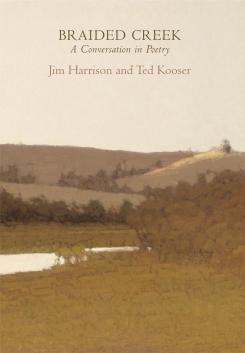
p.s. For literary grace and grandeur, you could do worse than getting your hands on a copy of Braided Creek: A Conversation in Poetry by Jim Harrison and Ted Kooser. Treasure what you find already in your pocket, friend.
~ Jim Harrison and Ted Kooser
__________________________
The book is the best kind of conversation, where no one voice dominates, in fact no one poet takes individual credit for any of the short stanzas. From the back cover:
Longtime friends, Jim Harrison and Ted Kooser always exchanged poems in their letter writing. After Kooser was diagnosed with cancer several years ago, Harrison found that his friend’s poetry became “overwhelmingly vivid,” and they began a correspondence comprised entirely of brief poems.
…When asked about attributions for the individual poems, one of them replied, “Everyone gets tired of this continuing cult of the personality…This book is an assertion in favor of poetry and against credentials.”
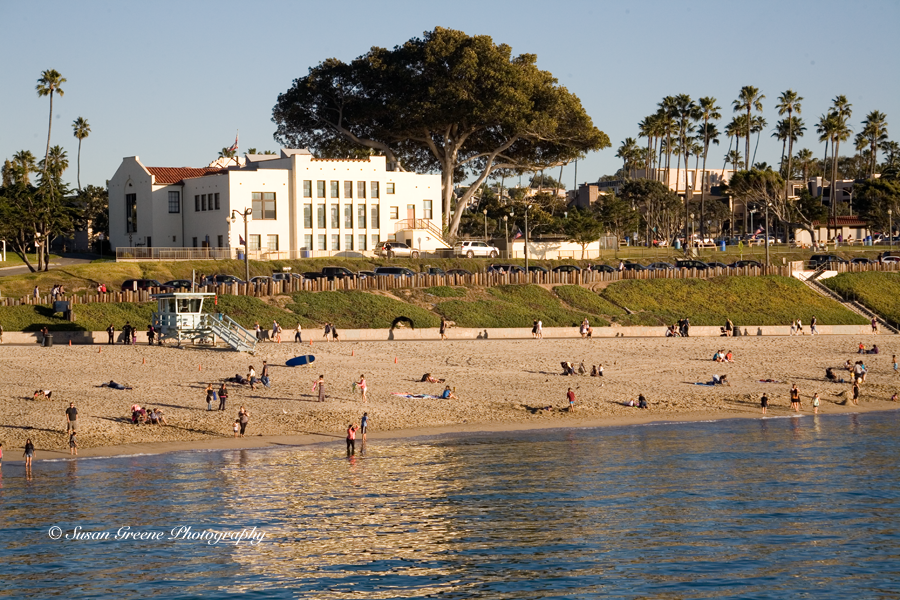
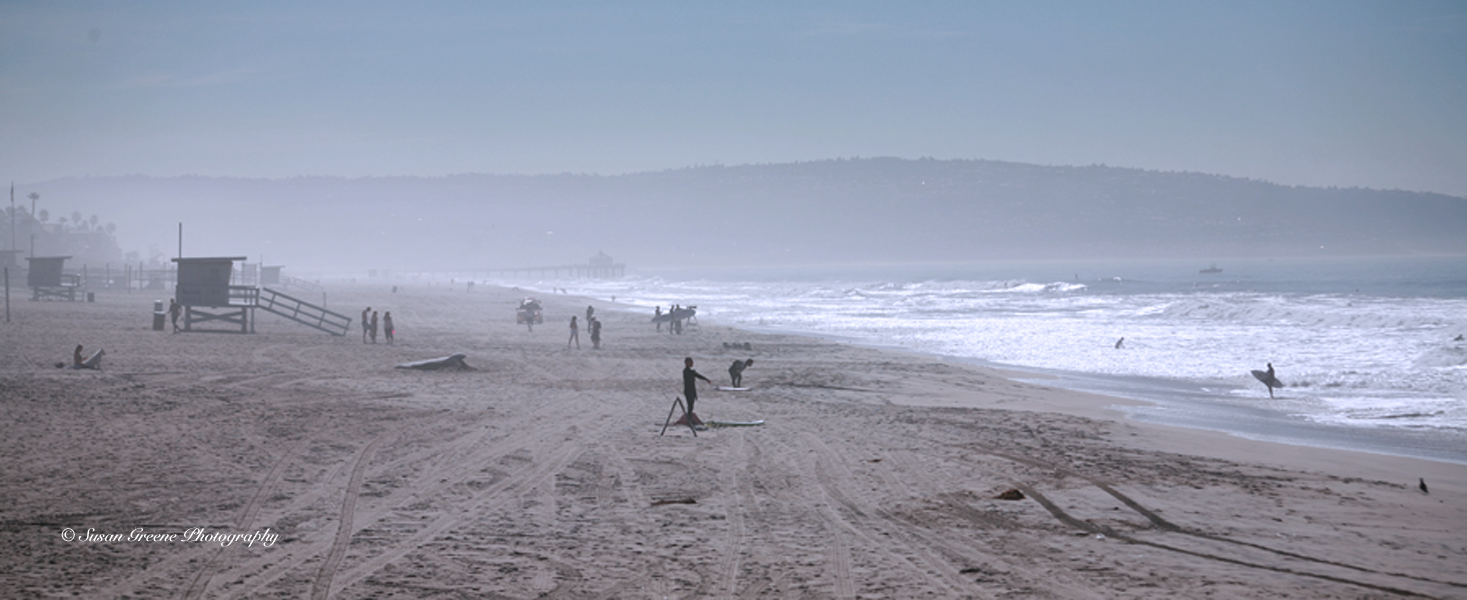
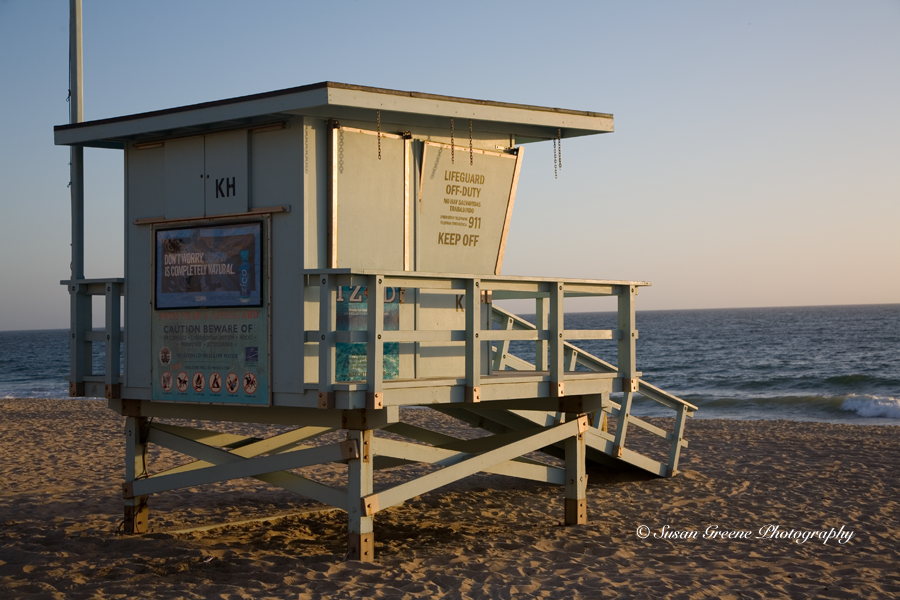
Any sunny summer day at the beach, you will find them; working the shore with red bathing suits, and hanging red canisters at the ready, eyes fixed on the water. They are lifeguards and their “office” – the lifeguard tower. The towers dot the sand up and down the beach.
Summer time is the busy season but they are at their posts year round.
The water is too enticing, most days, for all sorts of water activity enthusiasts to be left unattended.
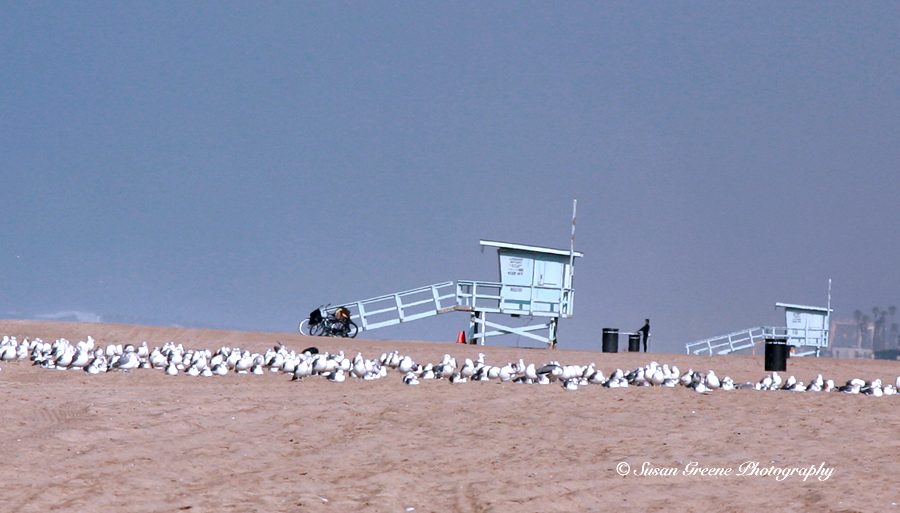
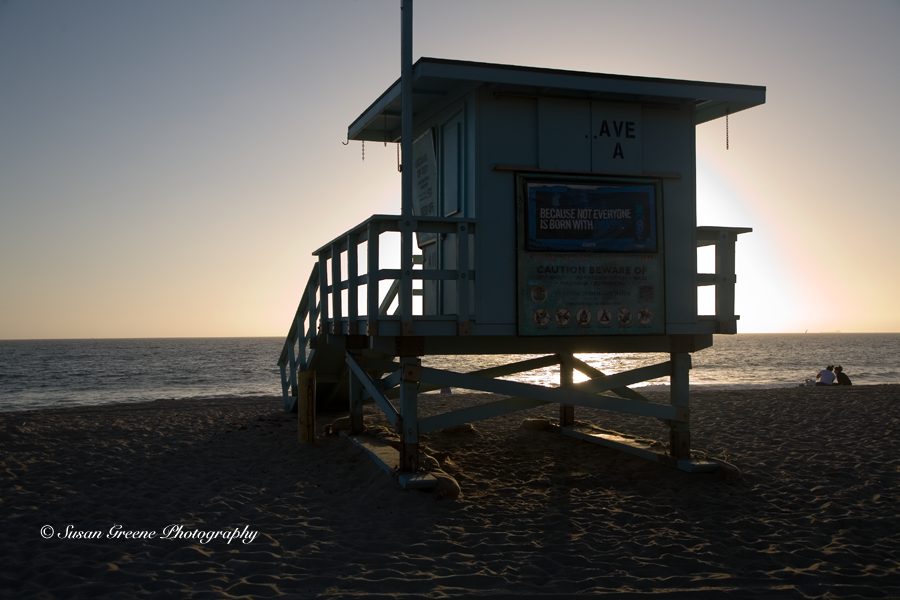
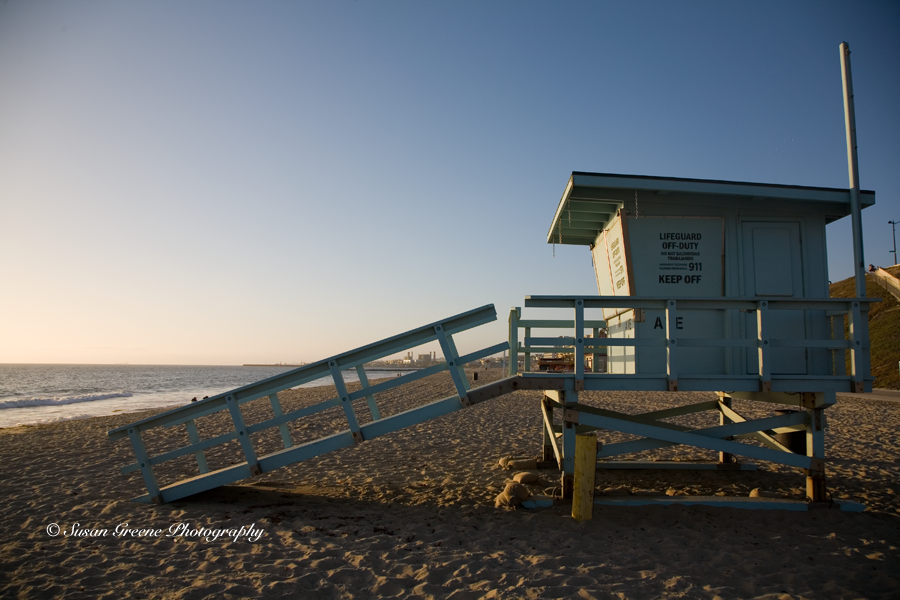
Or, some days there are more birds than people but there is still a lifeguard somewhere on the beach keeping watch. The lifeguard tower itself is a simple structure, architecturally speaking, constructed of wood with a ramp leading up to the door and shelter. It is elevated about three feet off the ground, just enough to give the guard an unobstructed view of the beach and water. These towers remind me of many a day spent at the shore and feeling sentimental, I chose the lifeguard towers as a subject of an evening photo shoot. The sun, low in the sky, on its way to setting, giving a golden hue to the light. I decided to walk around the tower and play with different lighting situations. First, I placed the sun behind the tower thus back-lighting it.
As you can see the tower is more in silhouette but the background is the ocean, which I like. Next, I walked to the side and gave it a side light.
First one side, then the other. . .
This creates different effects and backgrounds so keep this in mind when choosing what to photograph. Turning and facing the tower and using front lighting was next.
This gives the front of the tower full exposure and allows the ramp to be visible. Another angle using front lighting is explored.
The towers are a constant at the beach. They get moved back away from the water in the winter and brought closer to the shoreline in the spring but are ever present on the sand standing tall. Sometimes, they are used in perhaps unexpected ways.
The blue towers are iconic representations of the beach to me and I appreciate the role they play in the dance of the shore. If you have an interest in lifeguard towers check out the fun colors and patterns they were decorated with a few years back in an earlier post: “Flashback Summer of Colors“.
“I believe that what we become depends on what our fathers teach us at odd moments, when they aren’t trying to teach us.” ~Umberto Eco
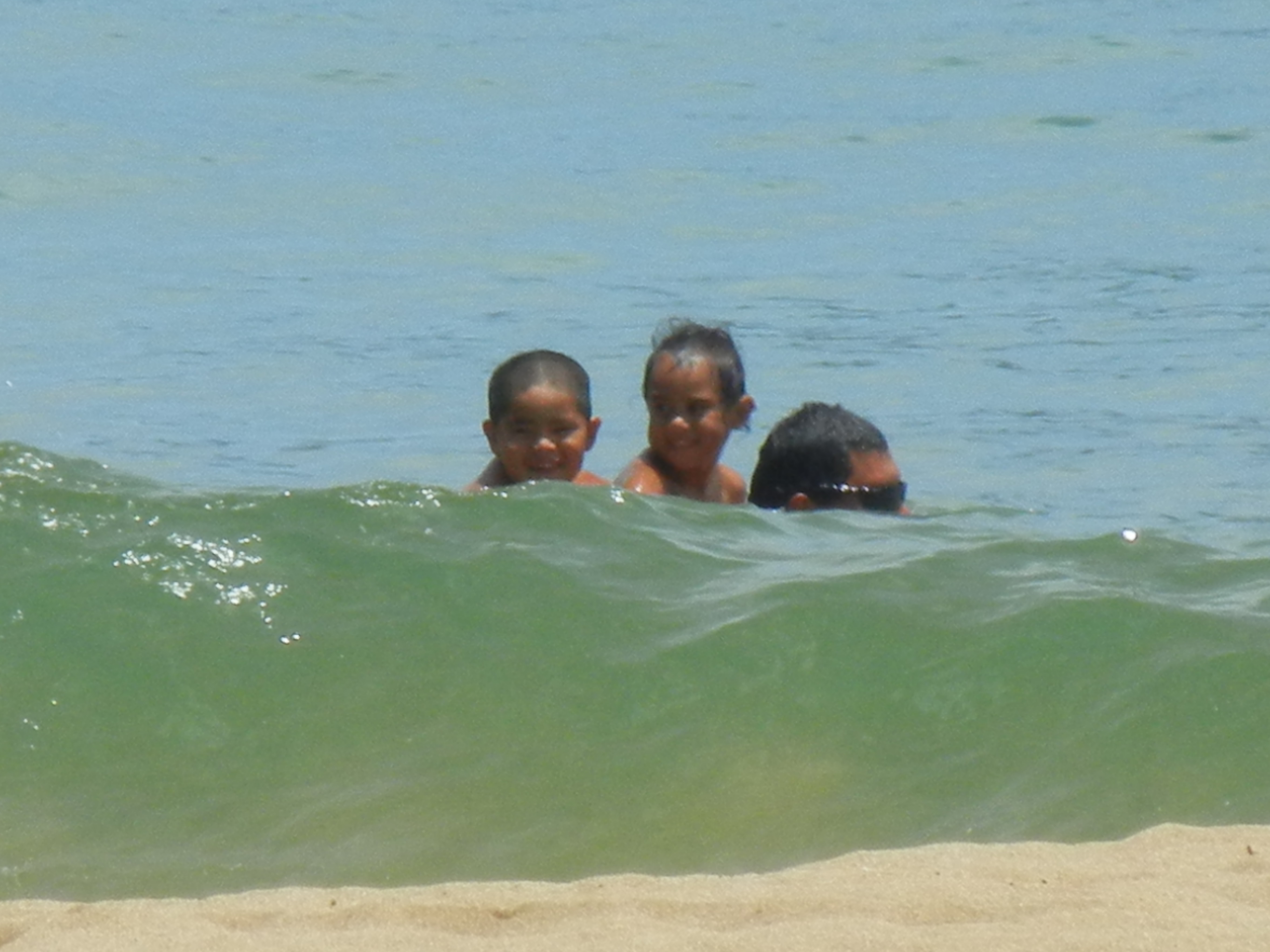
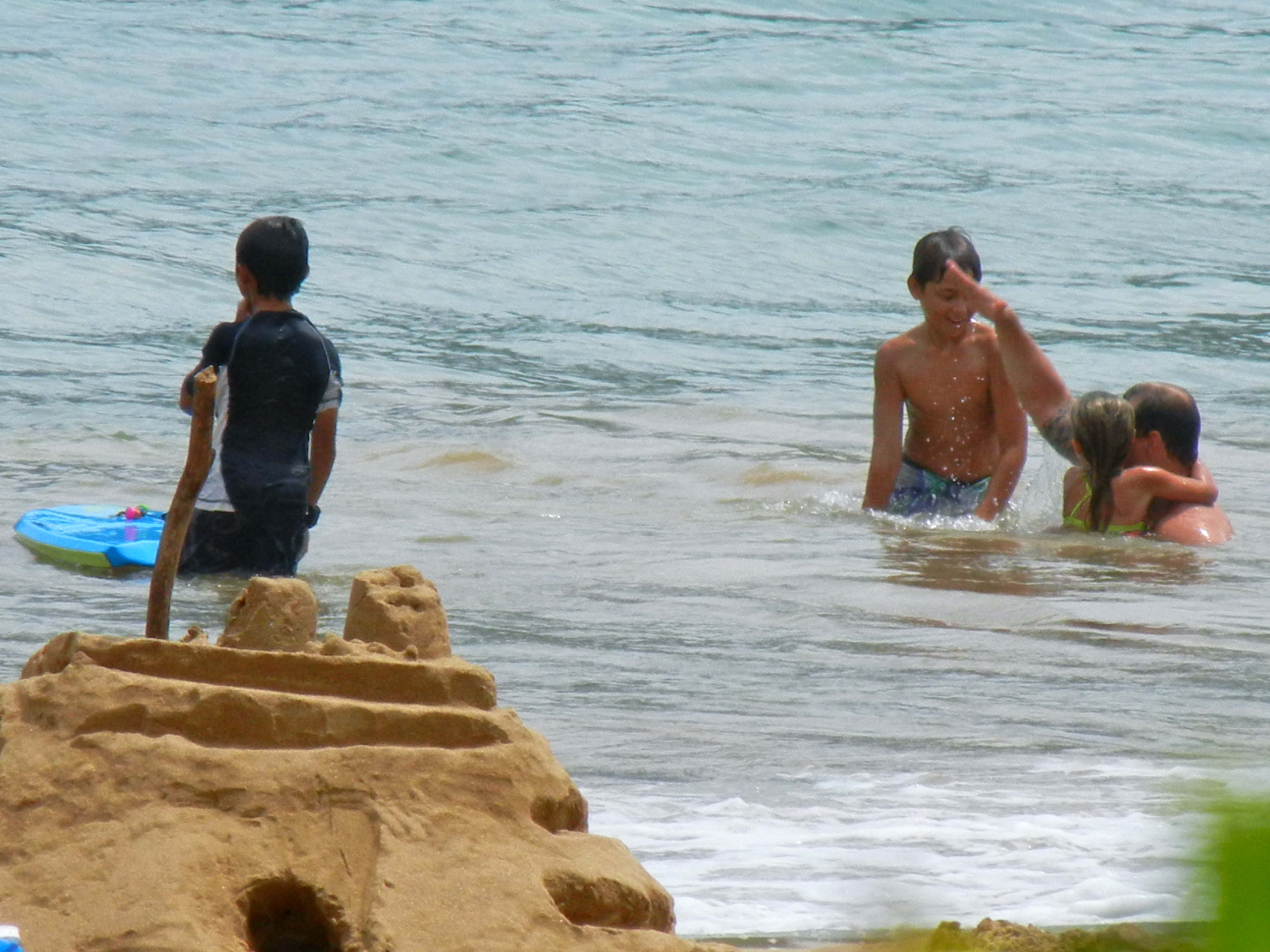
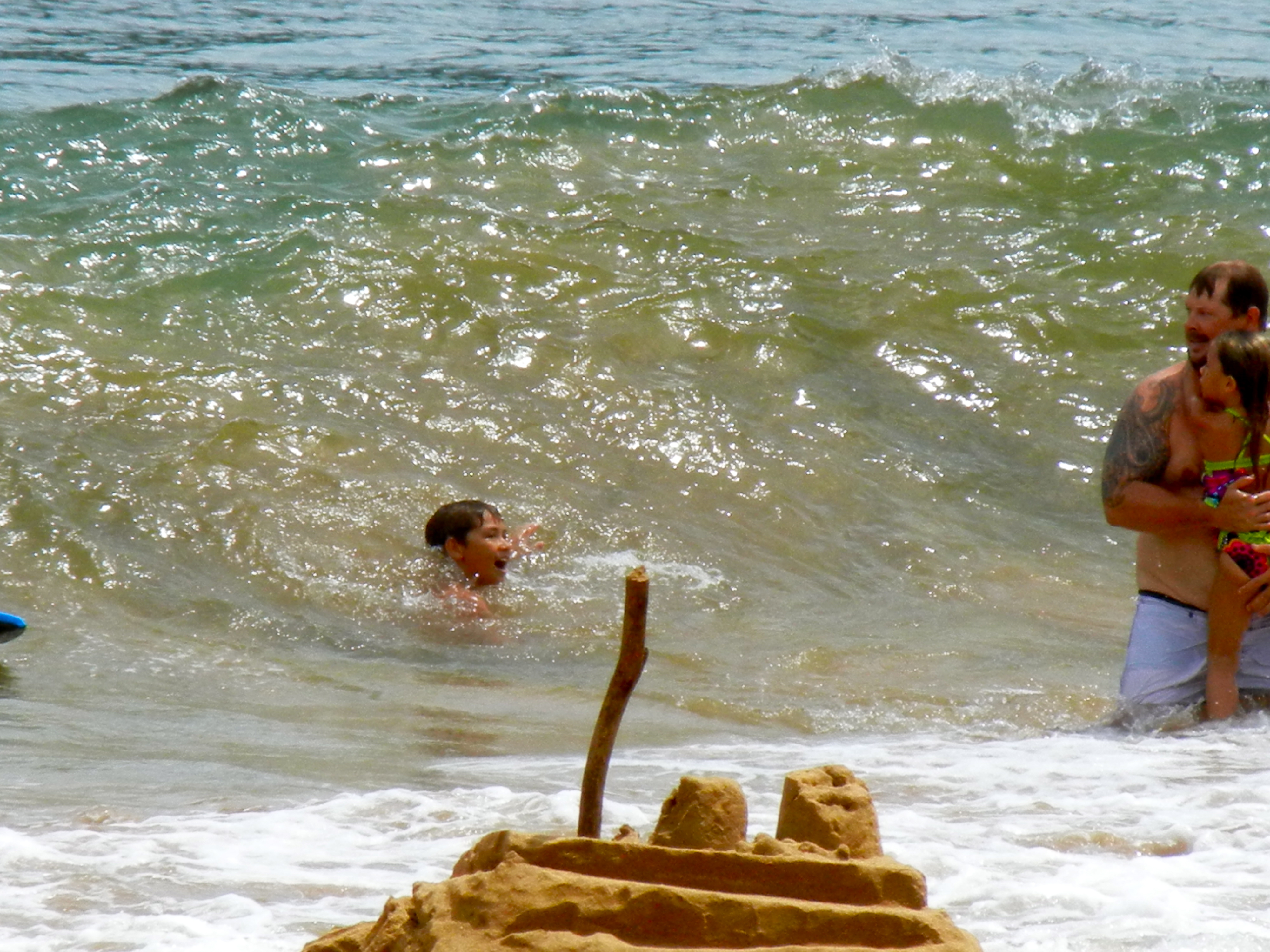
Fathers play harder than mothers. Mothers stand at the edge of the sea, snapping photos of fathers teaching the children that fun might include being roughed up by the ocean.
I suspect mothers are secretly glad the fathers take this job. Children don’t whine when the broad-shouldered fathers take them out in water well over their head. Come on. You can do it. I’m right here.
The children show off a little. Splash their dad. Swim away from him, then back. Cling to his neck. I want to tell the children how this memory will imprint on their bodies. When they are decades older, swimming in the even deeper waters of life, they will recall a surge of power, an inner rush that feels like being a super hero, a whisper from one strong enough to hold you up. You can do this. Yes you can. Come on, I’m right here.
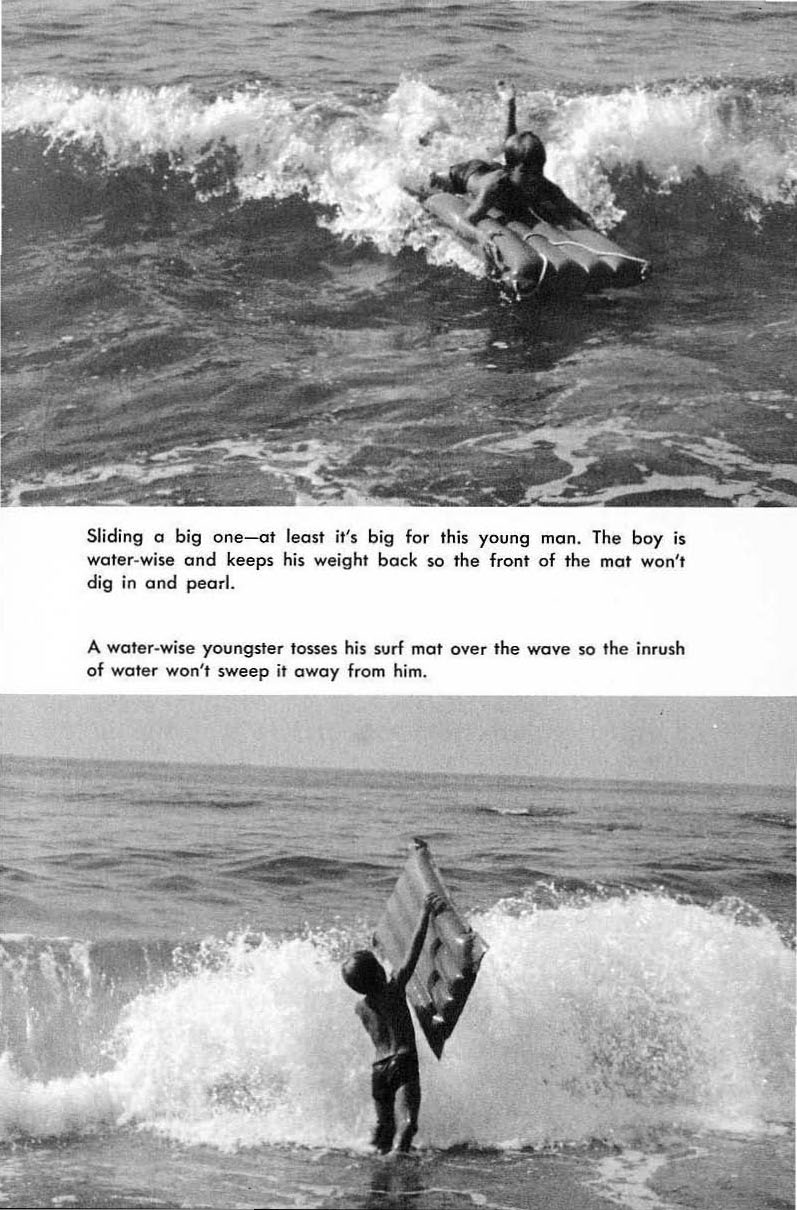
My father taught me, among many things, to body surf and ride waves with a bouncy rubber surf mat in the olden days before Boogie Boards. We roamed Hermosa Beach, Manhattan Beach, Newport Beach, La Jolla. Family outings and vacations were frequently at the beach, always in the water riding waves on rubber mats.
How did my dad, a boy from upstate New York, learn enough wave riding skills to guide his four daughters through all the surf the Pacific could muster, including the most memorable session of all, riding the June, 1973 epic Newport Beach surf churned up by Hurricane Ava? When I ask my father a question, he responds.
In 1945 Richard J. (Dick) Beachman, Captain, USMC, took me, his ten year old second cousin, into the surf at Pacific Beach, CA. He held class. “I’m going to show you how to to swim out into the surf. How to use this piece of ‘gear’ to catch a wave and ride the wave onto the shore.” What he called “a piece of gear” was a mattress cover he had taken (his term was “I liberated it”) from the U.S. Naval Hospital, San Diego where he was being treated. A Japanese sniper’s bullet went through his left hand as he waved his Marines forward during the battle for the island of Guam in July, 1944.
“First thing you do is wet the mattress cover in the surf so it’ll hold some air. Then, hold the open end toward the wind and let it fill up with air. At the same time tie the open end shut. Now you’ve got a big wet cloth balloon. Quick, wade out into the surf, look for a wave coming in. When you see one, turn your back toward the wave, put your arms and chest onto the cover and ride in onto the beach.”
Dick, my younger brother Kevin and I went ‘surfing’ several times. He always brought his ‘liberated’ mattress cover. But, in time he was discharged from the Marine Corp. Dick and his Navy nurse, Juna, fell in love, were married 62 years and raised six children. The mattress cover went with him, or them — or, maybe, he returned it to the hospital.
Though Dick’ mattress cover disappeared I was hooked on riding waves onto the shore. it didn’t take long to learn how to body surf without artificial aid. I enjoyed the sport for many years; a sport I shared with our four daughters.
There are no photos of the young father with his four daughters in the sea because the picture taking job would have fallen to the mother, a woman unable to swim but determined that her children would learn, love, and thrive in the water. She wouldn’t have taken her eyes off the lifeguard, making sure he was doing his job watching us.
The lessons learned in the ocean have lingered with all the Backyard Sisters, proving to be as valuable in life as in the Pacific.
Respect the ocean. Never turn your back on here. That isn’t the same as being afraid. Respect and fear both have a place in life and the wise know which is which.
Walk behind your children. They learn to lead but know you always have their back.
If your daughter crashes and burns, let her cry on your shoulder for just a minute, then remind her of all the way she succeeds.
It’s OK not to know how to do something, but it’s not OK not to try it.
The thrill of learning something from your dad will linger for a lifetime.
Thanks dad for making it seem like you were just playing hard with your kids in the ocean. I see now what you were really doing.
What memory will you share with your father this weekend?
With gratitude,
~Catherine
June has arrived and with it comes warmer weather, longer days and temperate nights. One of the many bonuses of longer days is more time for outside photography. We are exploring light this month. Light is the most important element in photography. Without it all photos would be pure black. I am beginning with an exploration of the lights at night.
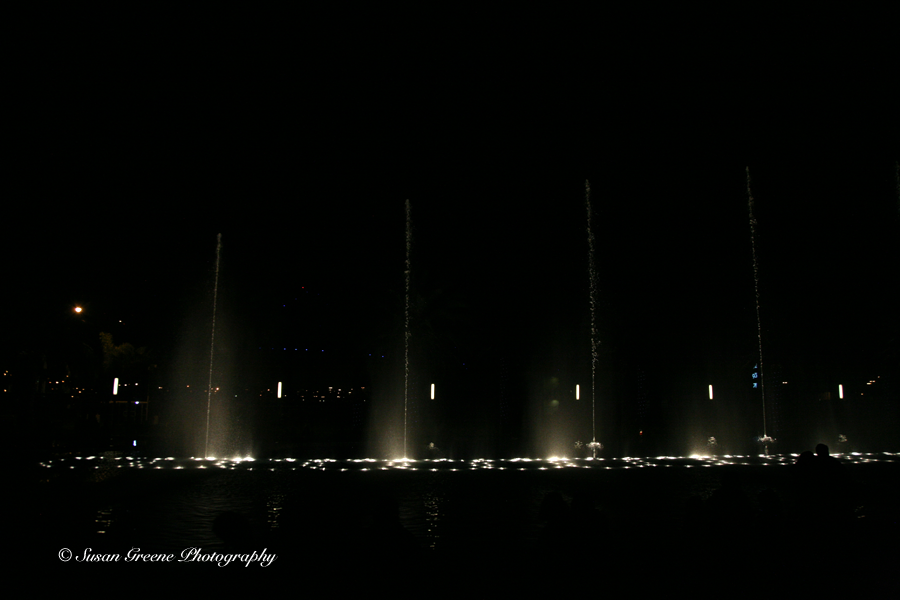
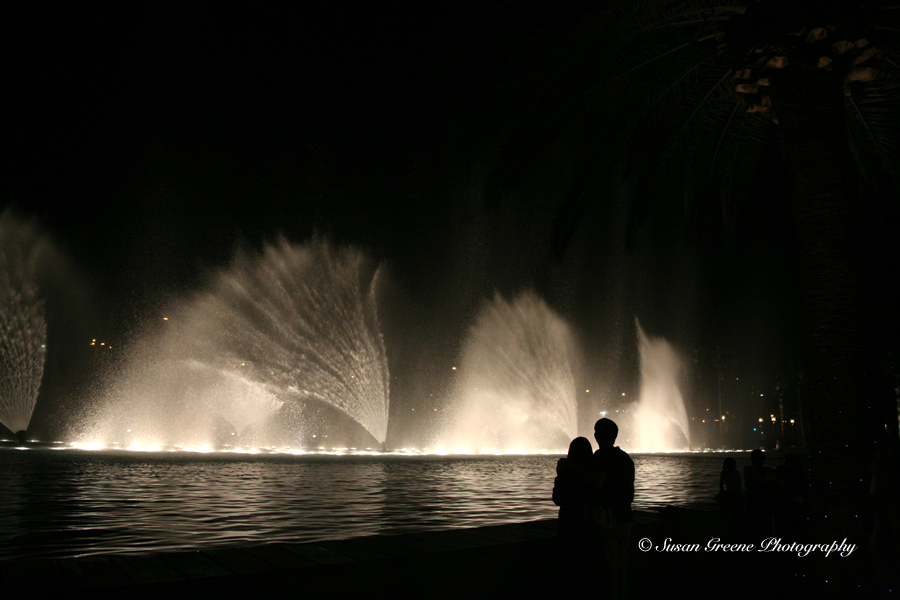
Anticipation growing during the quiet before the show got started at the Fanfare fountain at the Gateway in San Pedro, CA.
The fountains are choreographed to songs as if the water is dancing.
When photographing lights, I like to expose for the light and create a silhouette of foreground subjects.
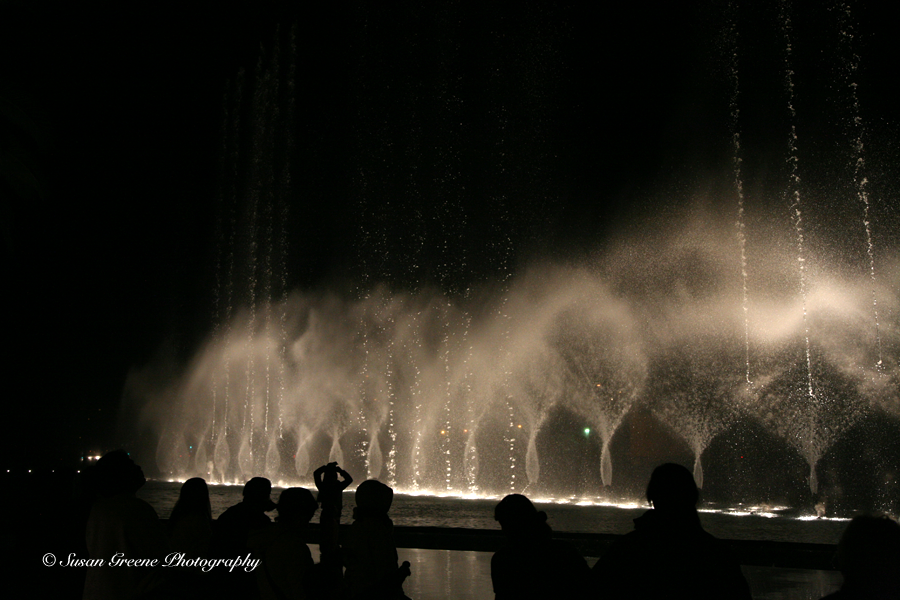
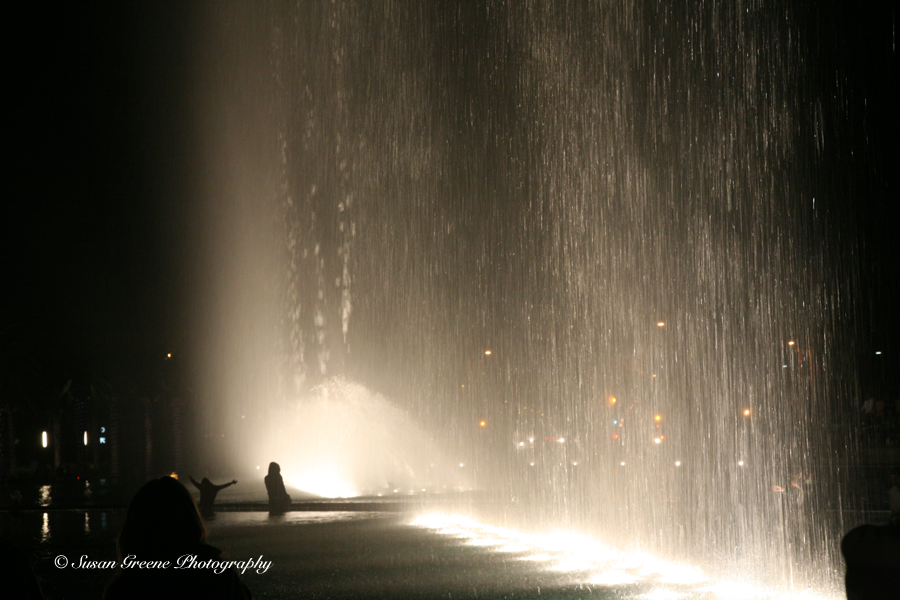
Seeing the water moving in time to the music is magical. To capture it, I chose 1600 ISO, set the f-stop at 4 and varied the shutter speed depending on whether I was going to freeze the water,
or let it blur. Getting swept up in the music and water motion and breaking into your own dance is not uncommon.
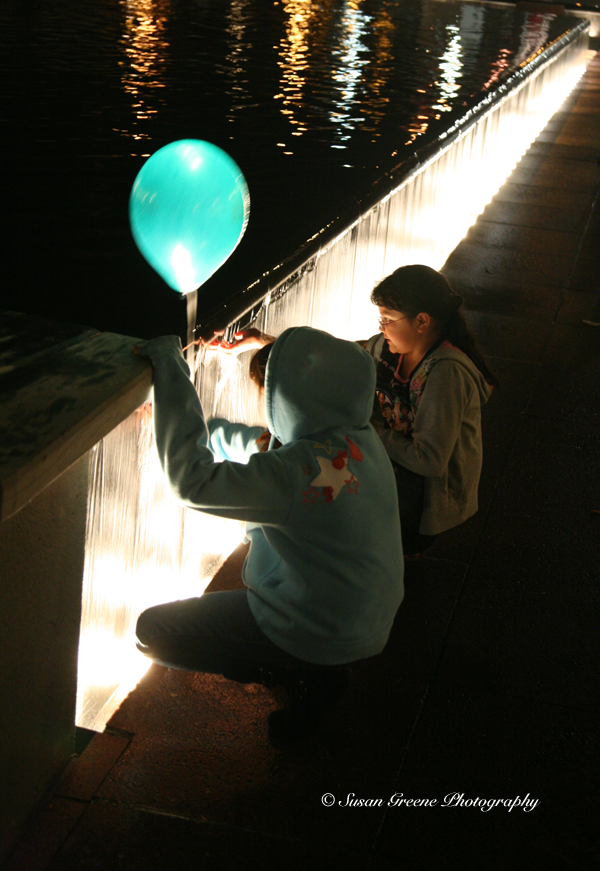
Sometimes, it can be hard to resist touching the water.
A tripod is a good idea when photographing in low light situations to avoid blur from camera movement. If you don’t have one with you, placing your camera on a solid surface is an alternative (keeping your camera away from the water, of course!)
Coyote yips drift through the open bedroom window sometime before dawn. It’s May’s most consistent night song. Chester’s hackles rise and he growls low. I pull the sheet over my ears.
Chester’s been chased by a coyote three times. These aren’t the lean, mangy, skulking wild dogs of past years. This crop of fat boys trot across the trail. They sit. Cross their legs. Light a cigarette, pinky ring glinting in the morning glare before they chase.
First time it happened, J was walking Chester. He stood his ground, raised his arms and yelled “Stop!” When it was my turn at the wrong end of a coyote chase I did the same. The coyote cocked his head, tightened his silk cravat, emulated the Don Draper eyebrow lift and then slowed his pursuit to a model-like prowl.
Chester bolted, leaving me to walk backwards until I couldn’t see the whites of coyote’s eyes any more. A chilling sweep of goose bumps rose on my neck.
It’s not an option to stay indoors when this is steps from my backyard.
But where there is prey, there are predators.
Last night, I dream there’s a lion with full mane in my house, barreling down the hallway toward my bedroom. I slam and lock the door, lean against the wood which cracks and creaks and splinters against my hand. I call out to J in his office. There’s a lion in the hallway! Shut your door! He’s working on his computer and not paying attention and the lion pounces. I wrestle the lion, wrangle his scruffy neck and heave him out the office window which somehow overlooks a high stony cliff to the sea even though we’re nowhere near the ocean.
I’m sure it’s a dream inspired by recent sightings that frighten me more than coyotes. Yesterday when Chester and I walked, we heard a rustling in the oak grove at the bottom of the hill.
The noise spooked us both, much louder than the familiar rabbit scurry or quail scuttle through dry leaves. It sounded human-size, but stopped as we neared, the instinct of an animal. Chester’s fur ruffled; he hush-growled and we turned heel, Chester wildly scanning the scrub oak lining the trail. To one side stands a solitary oak and within it we heard another great flurry of leaves overhead. I expected a hawk, a peregrine falcon, maybe even the screech owls that have taken up in the neighborhood but the shadow didn’t fly. It scampered down the branches, down the trunk, a shadow bigger than my dog.
It’s been about a month since J and I spotted a mountain lion off the trail about a five minute walk from this grove and a neighborhood association warning came last week.
A mountain lion has been seen in the Dove Canyon area.
Additionally, this past week Dr. Don Earl of Lido Animal Hospital treated a greyhound that survived a serious attack from a mountain lion that climbed into the backyard of a home in Dove Canyon. The Department of Fish and Game is aware of the dog attack and has tips on its website should you encounter a mountain lion.
I read the “Keep Me Wild” tips.
If you encounter a mountain lion, do not run; instead, face the animal, make noise and try to look bigger by waving your arms; throw rocks or other objects. Pick up small children.
If attacked, fight back.
I don’t have a great track record with looking big. And I’m an awful thrower. But I sing when I’m nervous and there’s one song that’s on rerun this spring.
This morning, I hurl lyrics, loudly, and yes, maybe dance and air guitar a bit on the trail. Chester didn’t seem to mind, but I might have some explaining to do to the woman who caught me coming around a blind curve. Last I saw, she was backing away, waving her arms to the sky.
With a song on my lips,
~Catherine
Gary Snyder wrote a spot-on poem about sensing the presence of a wild thing.
Discovering something new is exhilarating, even if it is only new to you. It was my experimentation with the slow sync flash mode that led to a recent exhilaration. The slow sync flash mode allows a longer shutter speed to be used with flash. This creates the opportunity to gather more ambient light and also have the subject be in focus. This also makes it possible to see light trails. I grabbed my most willing subject, a couple of flashlights, my camera and a tripod, and headed to the backyard one recent night. I envisioned the backyard daughter with some lines created next to her by her moving the lights around. We did that and realized there was enough time to try to write a word.
The first attempt time ran out and the shutter closed before she was able to complete the word. But after readjusting the settings – making the aperture smaller therefore creating the need for a longer shutter speed, there was plenty of time.
The first few times she wrote the word so that she would be able to read it (from her left to right or backwards for me) and I flipped the photo in Photoshop in order to be able to read it correctly. Then, she wrote backwards when we realized there was an abundance of time for writing. This very same daughter used to write messages in the steam on the shower door, backwards! We had such fun playing around with the lights and were delighted by how well it came out. Most cameras have a slow sync setting for the flash. I highly recommend checking your camera for it and getting shooting, signing off with a flourish. . .
I know what you want.
Cherries. Peach juice dripping down your chin. Bare feet. Sandy toes.
You want 101 days of summer.
The countdown officially begins today. 5 p.m. Pacific Standard Time.
What will you do with these 2,420 hours, these 145,440 minutes, these 8,726,400 seconds of your one precious life?
There’s no way you’ll make a to-do list. You want a game.
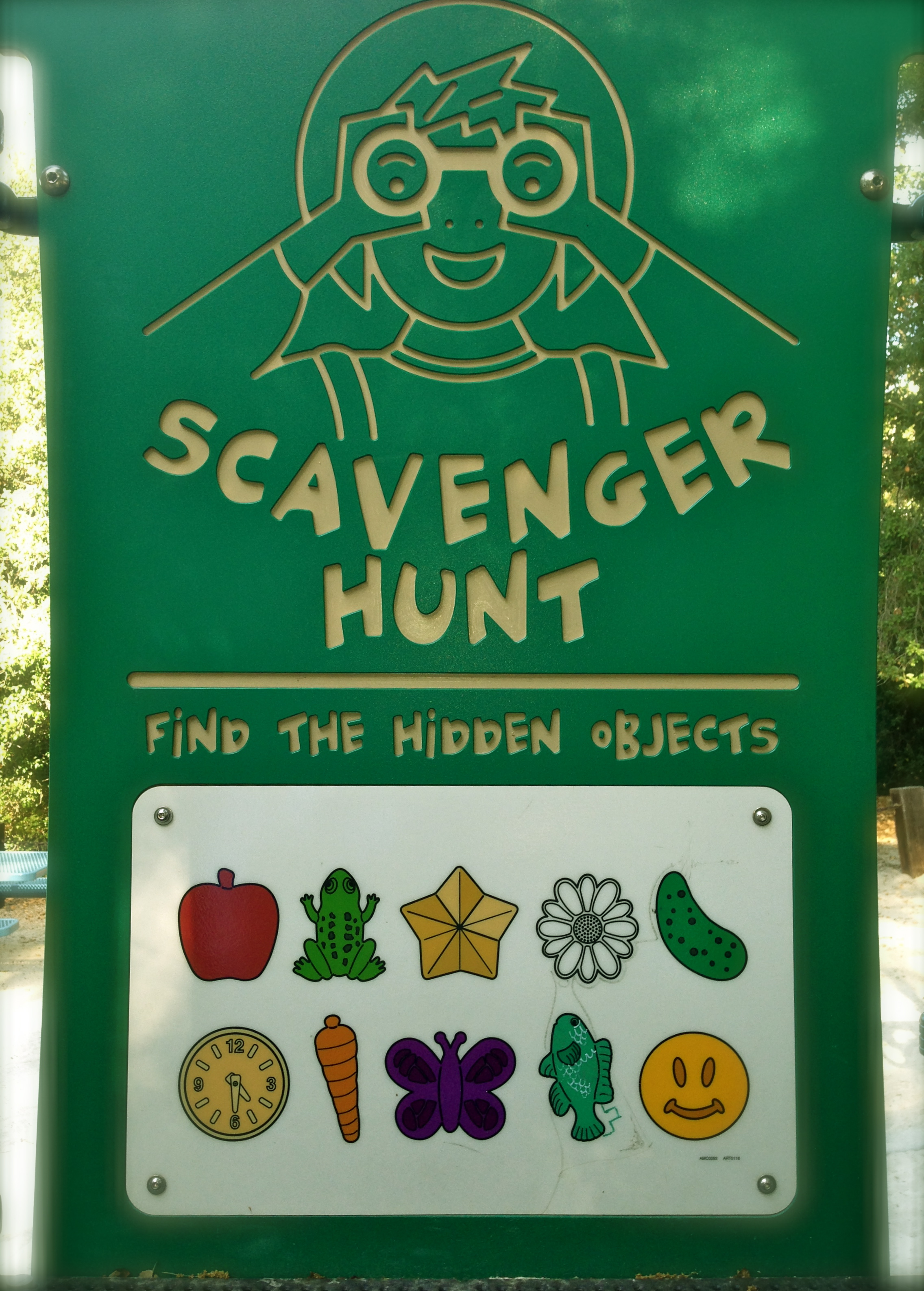
Remember summer night scavenger hunts? You and your friends split into groups then set out in the neighborhood with a list? First one back with all the loot won? Yeah. You’d like to try that again.
Take a photo of each of the 101 Days of Summer.
Post them on Instagram. Hash tag the photos with #backyardsisters_101days
Ready. Set. Go!
1. Perfect your go-to summer barbecue meal.
2. Learn a new grilling technique. For a great veggie grilling video, click here. 3. Invite a new neighbor for dinner.
4. Eat outside. Every night. Unless there’s thunder and lightening.
5. Eat by candlelight. Every night. Outside. Unless.
6. Sit on the grass with your dog’s head in your lap.
7. Watch fireflies. If you catch them in a jar, be sure to let them out before you go to bed.
8. Learn 5 new objects in the night sky. The free app SkyViewFree uses an i-phone’s camera as viewfinder.
9. Plan ahead to find a dark viewing spot for the Perseid Meteor Shower, August 11 and 12. You’ll catch the summer’s best display of shooting stars. More info here.
10. Make your own ice cream. You don’t even need an ice cream maker. Check it out here.
11. Stay up late.
12. Get up early. Photograph your days.
13. Learn the names of 5 birds in your neighborhood. The Cornell Lab of Ornithology has an amazing library of birdcalls. Link here. 14. Take your morning beverage on the porch, patio, or near an open window.
15. Prop your bare feet on a ledge.
16. Plant one living thing, even in a small pot if you don’t have a yard.
17. Plant something you can eat. A few green onions. Parsley. One tomato plant.
18. Visit a farmer’s market.
19. Take home something you’ve never eaten before.
20. Eat it.
21. Learn to make the perfect margarita or mojito or favorite frozen treat.
22. Invite neighbors over to help you drink it.
23. Visit your mom and dad.
24. Look at photos from childhood family vacations; yours and theirs.
25. Record favorite memories either on video or audio.
26. Visit your children.
27. Look at photos from family vacations; yours and theirs.
28. Record favorite memories.
29. Create a family yearbook of photos.
30. Do one thing that scares you.
31. Swim in a natural body of water.
32. Cannonball into the deep end of a pool.
33. Play Marco Polo.
34. Learn one new water skill: surfing, body surfing, paddle boarding, water ballet moves.
35. Teach your new skill.
36. Pick fresh blueberries.
37. Make a summer fruit cobbler. For the Backyard Sisters favorite cobbler recipe, click here.
38. Eat dinner on a blanket under a tree.
39. Walk after dinner through town or your neighborhood.
40. Listen.
41. Hike a new trail.
42. Learn the names of 5 new native plants in your region.
43. Visit 3 new state parks. The rangers there will know the names of the plants.
44. Take a new friend with you.
45. Volunteer for a park clean-up day.
46. Tune your guitar, your piano, your cello, your drum, your voice.
47. Learn one solid song.
48. Lose your inhibition.
49. Make a campfire.
50. Sing under the stars.
51. Make s’mores.
52. Sleep under the stars.
53. Learn how to remove ticks from your dog. (Same concept applies to humans.) Great video here.
54. Sketch, photograph, or journal what distinguishes your local ecosystem from others.
55. Learn 5 edible plants.
56. Learn 5 poisonous plants.
57. Learn to pack lightly.
58. Learn to clean up after yourself.
59. Learn to read a map.
60. Get lost.
61. Go to a car show.
62. Attend your state or county fair.
63. Submit something: homemade beer, photography, literature.
64. Hold hands on the Ferris wheel.
65. If you win a giant stuffed panda, give it away to a neighborhood kid.
66. Visit the booths with prize-winning pies and jams and wines.
67. Congratulate the blue-ribbon winners. Ask one fine question about their process.
68. Hear an outdoor concert.
69. Watch an outdoor movie.
70. Wait for the Milky way.
71. Visit your local library.
72. Remember summer reading when you were a kid? Check out ten books.
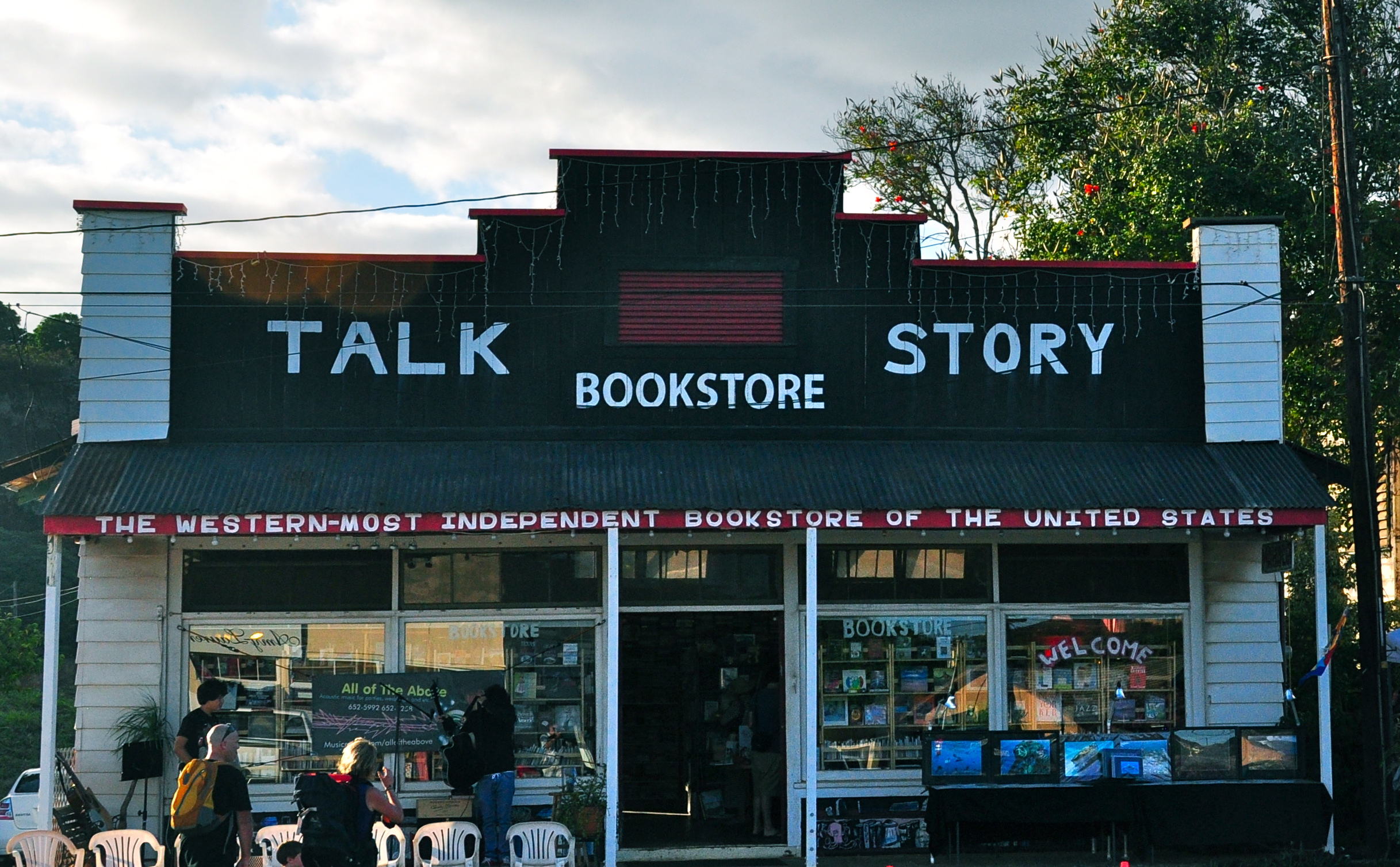
73. Visit an independent bookstore. Buy one thing.
74. Hear a live author reading.
75. Thank the author in person.
76. Perfect one aspect of your craft: Great openings. Killer closings. Trimming the fat from word count.
77. Slow dance under the Full Flower Moon on May 25.
78. Sip strawberry wine under the Full Strawberry Moon on June 23.
79. Dance with abandon under the Full Thunder Moon on July 22.
80. Fish under the Full Sturgeon Moon on August 20. For full moon name meanings, click here. 81. Invite neighbors over for a pancake breakfast.
82. Visit the housebound neighbor who couldn’t come.
83. Bring flowers, or stories, or one of your photos.
84. Call your grandmother or grandfather or aunt or uncle or long lost cousin.
85. Tell them about the trees and birds and stars. Ask about the view from their window.
86. Ask about their favorite summer memory.
87. Remember to return your library books.
88. Lie on your back on the grass and watch the clouds.
89. Swing.
90. Swim again. Again. Again.
91. Travel.
92. Learn five bits of history about one place you’ll visit.
93. Read before you go. You can find a literary companion for more than 20 destinations from Whereabouts Press where the mission “is to convey a culture through its literature.”
94. Attend an outdoor art show.
95. Bike ride. On a beach cruiser. Along the beach if you’re lucky.
96. Learn hello, goodbye, please, thank-you and I love you in five new languages.
97. Learn how to come home.
98. Harvest and eat your one small thing standing barefoot on your own patch of ground, balcony, stone or wood.
99. Cut flowers from your yard. Take some to your neighbor.
100. Send an old fashioned hand-written note, with some herbs or fragrant leaves.
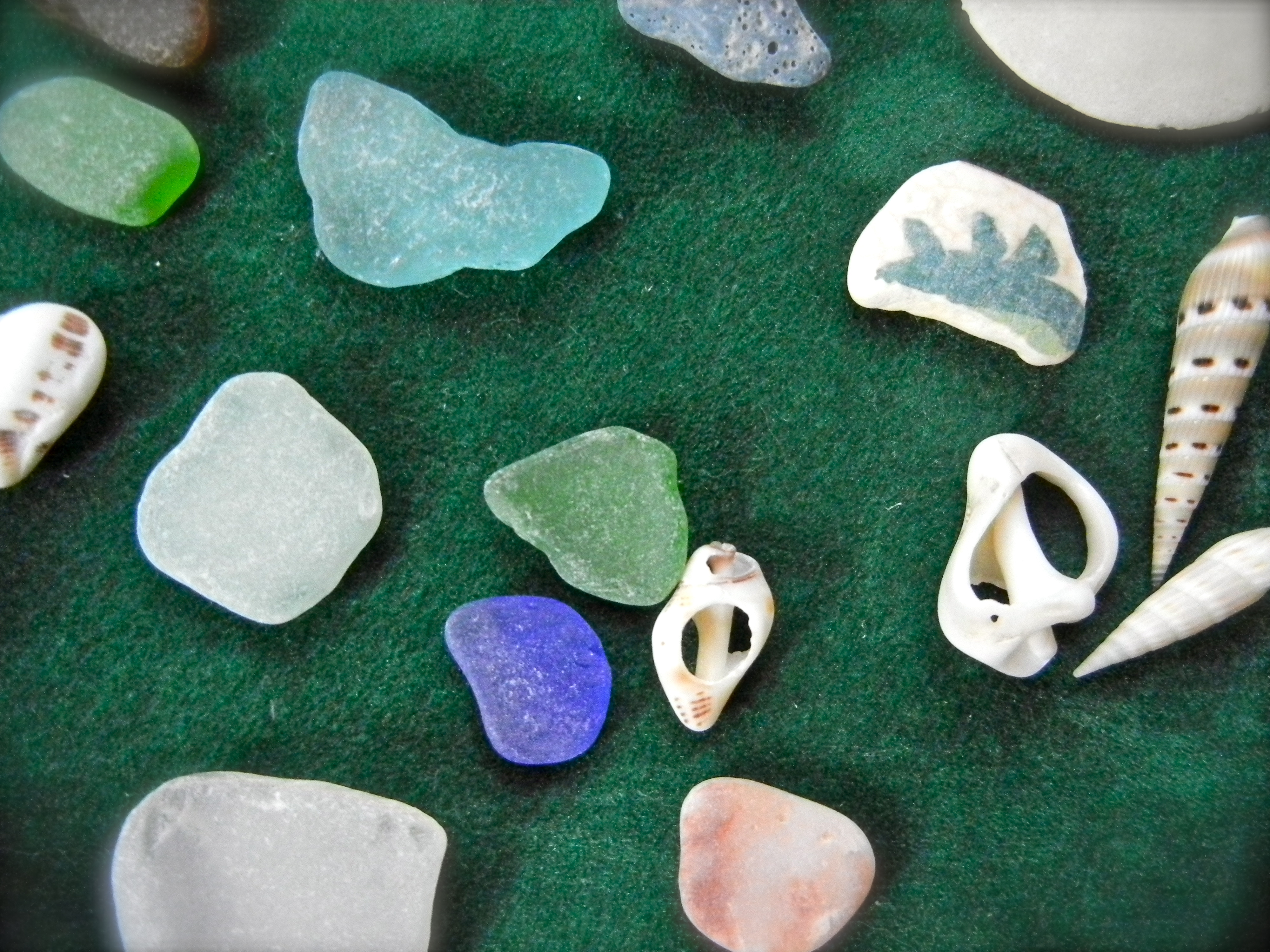
101. Set 5 small items – a shell, a rock, a poem – from your summer on your desk.
 There is nothing for making a celebration grander than fireworks! Watching the flare ascending and then bursting with colors filling the sky with light gets my spirits soaring as high as those fireworks.
 July 4th marks our country’s 237th birthday and it’s the perfect occasion to take in a fireworks show. I have the opportunity to be on the edge of the continent, in a bay and when the weather is nice, I can see many displays from a seat at the local beach.
 When one show ends you simply sit back and wait for the next one to begin.
 Sometimes the down time is filled with people’s own shows.
 With so much going on, it’s the perfect opportunity to capture the revelry.
 Some locations add music and the fireworks exploding to beats in the songs makes for an especially thrilling experience.
 Happy Independence Day and hope you can get to a fireworks show to celebrate, and stay until the grand finale!
 Sounds and ideas danced upon my hand, to be released later onto the unlined light brown paper of a Mickey Mouse drawing pad. I didn’t plan to be this way, I just was. Most writers I know say the same thing.




 Treasure what you find














 backyard sisters