It’s a Wild Life

I am a paparazzo. Positioning myself in the optimum position to capture the subject while trying to remain hidden so as not to spook it. There have been rumors of sightings. I have actually seen them here before, in this exact location, but this time they are proving to be elusive. I lay on the ground as flat as possible behind a large bush, checking the camera settings; at the ready, finger on the shutter. . . there he is! Snap!_MG_8627birds
It’s a goldfinch! Joining another one for breakfast.

_MG_8625birdsNot unlike celebrities going about their daily lives, birds are difficult subjects – camera shy, flighty, never staying too long in the same spot – downright evasive.

IMG_0893birds

Sometimes you get lucky and are able to catch them at rest.

IMG_0885birds

Giving you more time for focusing and composing the shot.

_MG_4522birds

More often than not though, you will be trying to capture a moving object . . .

hummingbird and sage

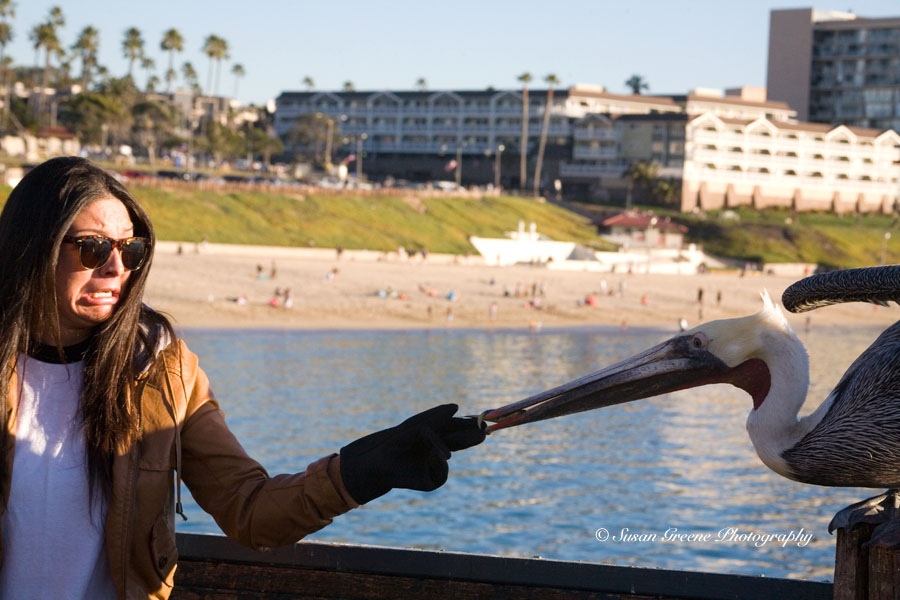
When trying to get that shot, and focus on the avian subject, you have choices. You can use auto-focus or manual focus. When choosing, auto-focus there are options within that choice – the options I describe pertain to Canon cameras, so if you have another type you will have to refer to your user’s manual for the exact terms for your camera. The auto-focus options are:  One Shot mode – which is used for still subjects,  AI Servo – for moving subjects ( if the subject is moving and the focusing distance keeps changing the camera tracks the subject) or AI Focus – for switching between the two ( if the subject is still and then moves it will switch to the AI Servo mode from the one shot mode). The auto-focus mode can be nice for capturing active subjects out in the open.Take your camera to a location where you know those celebrities congregate out in the open; perhaps near your local watering hole.

pelicanStart in either the AI Servo or AI Focus modes and shoot away.
_MG_8569birds

Often, our feathered friends choose to hang out in trees or on bushes with a lot of branches. This can create a problem with auto-focus because if the bird takes flight the camera will sometimes try to focus on the branches. The other option is manual focus discussed last week.  If having trouble in auto-focus mode switch to manual focus and see which setting works best for you in your situation.

Sometimes those avians can be very accommodating. . . “I’m ready for my close-up!”

_MG_8552birdsKeeping both eyes focused in the trees.

~ Susan

Précis:
When using auto-focus there are options as to how the camera handles the focusing of a subject. If your subject is still use One Shot mode, if your subject is moving use AI Servo mode and if your subject will be still at times and then move choose AI Focus mode.

Practice:
Use auto-focus in each of the three different settings and conditions this week and see how your camera responds. Birds make excellent action subjects but choose whatever you like.

Play:
Become a bird paparazzo capturing your subjects by being as unobtrusive as possible so you can catch them acting naturally, or catch them before they fly away!

Take Back the Control, and Focus

Cameras are great! They are tools for capturing our lives and expressing ourselves, but there are times when they just don’t get it right. Using the auto features on a camera will often work and produce the desired vision but … it’s those times when they don’t that can be exasperating. There are certain situations, when using auto-focus, the lens will have trouble bringing into focus what you want in focus. Low light, low contrast, trying to take a picture of something behind another object and active subjects are all situations that can bring on the frustrating state of the lens searching for focus but never achieving focus lock. There is a solution! Slide the button on the lens over to MF (manual focus). Follow me as I tackle some of these situations on my photographic journey . . .

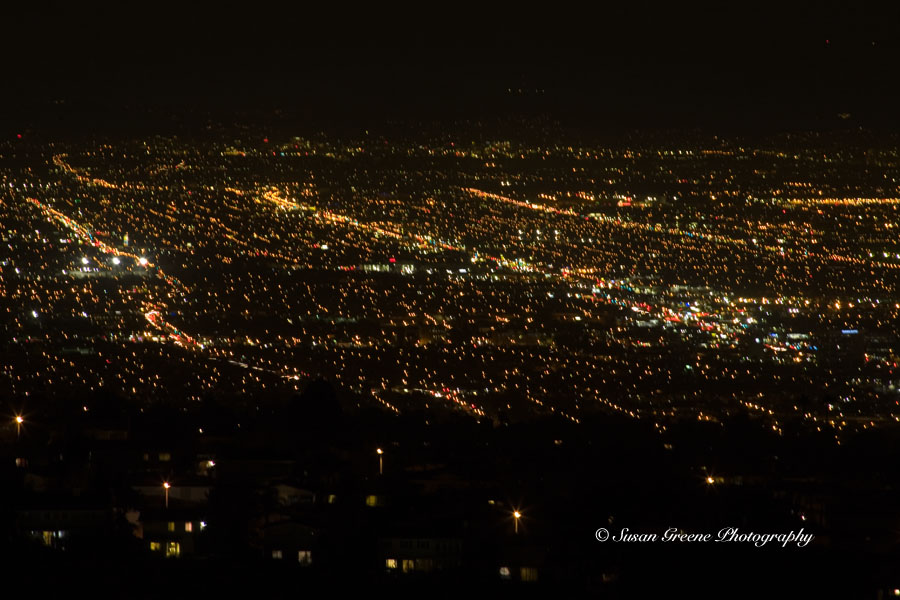
We have had some clear nights here in Los Angeles lately and the city lights have been shining and twinkling brightly. Wanting to capture the lights of downtown with the outlying suburbs, I drive to my favorite city light vantage point, set up with a tripod and find that in the low light of night, manually focusing the lens is the best way to achieve focus.

_MG_8386It makes me feel as if I am in an airplane looking out at the lights below.

_MG_8389

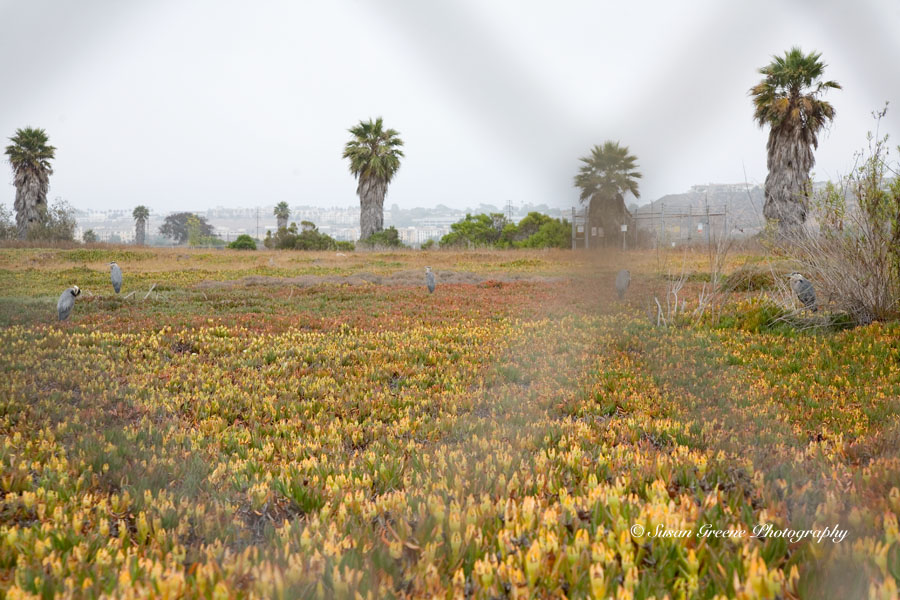
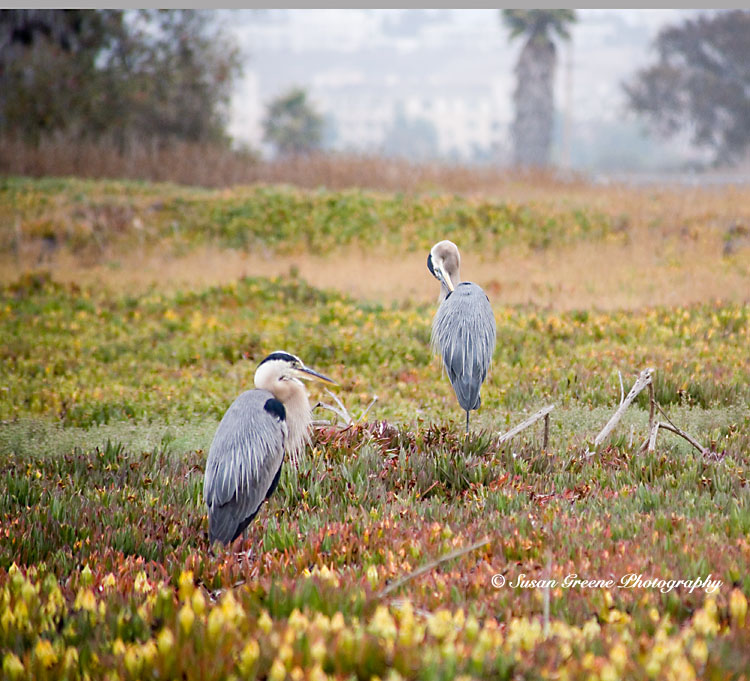
On a recent bike ride, I spot five great blue herons in a field behind a chain link fence. This is a rare occurrence in my experience on this bike path, the most I have seen before is three. Wanting to capture all five in one shot but not being able to get around the fence, I put the lens in manual focus and use the focusing ring to focus through the fencing. Maybe not the ultimate shot but I was able to capture it nonetheless._MG_5542

Can you see them? Then, I kept manually focusing, so any fencing wouldn’t interfere with my intended subject, and zoomed in on them, one and two at a time, through the links.

_MG_5545 _MG_5548

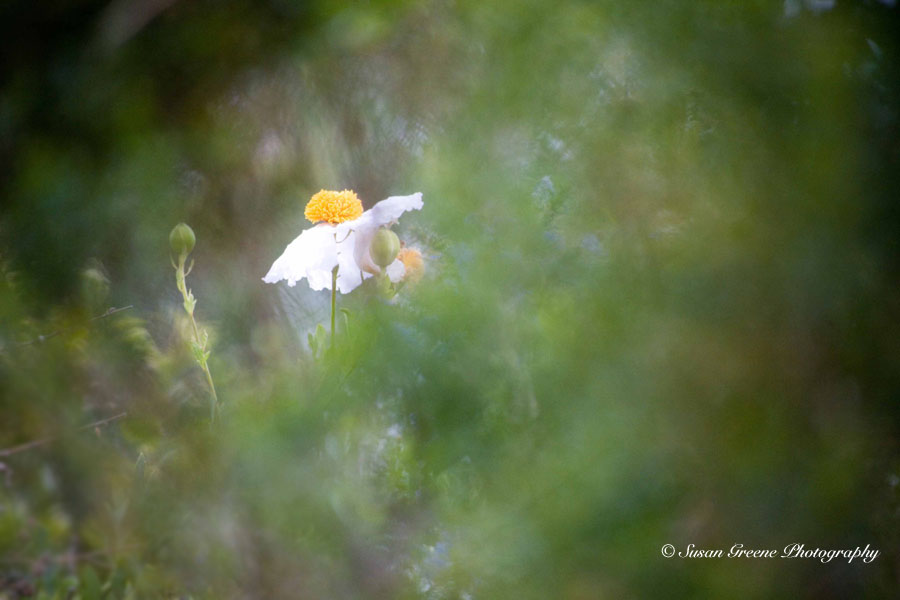
Sitting in my backyard, I notice the flash of white of a Matilija poppy peeking through the other foliage in the garden. I decide to take the shot through the other foliage, which is out of focus, and thus creating a frame of sorts for the poppy.

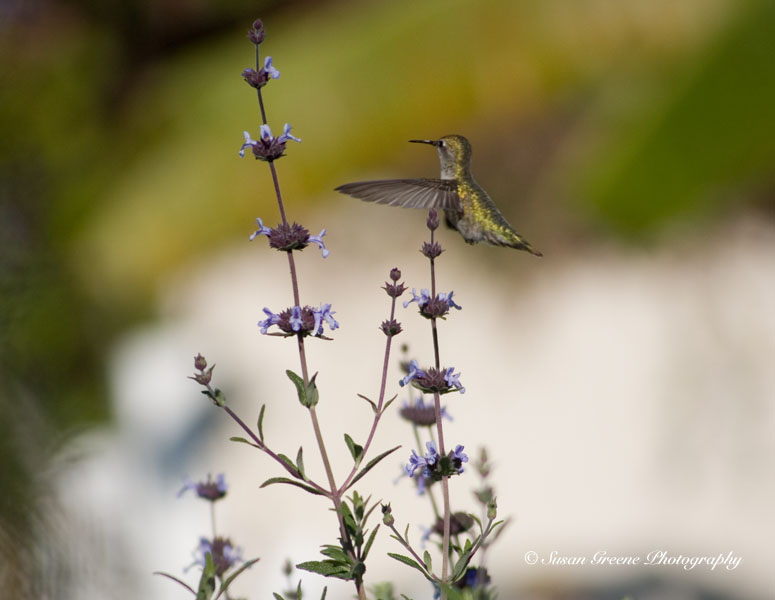
matilija copyA hummingbird is flying around a sage bush searching for nectar, so I focus on the area using manual focus and capture it. Pre-focusing on the spot the subject is expected to appear is a technique to use to help you get the shot.

hummingbirdThe pre-focus technique will work for sports, dancing, anything where the subject is in motion and is in a fairly predictable location. Simply focus on the spot the subject is expected to appear using the focus ring in manual focus and take the shot once the subject enters the frame.

Now you are ready to take on some difficult shooting situations and conquer them!

~ Susan

Using Catherine’s lovely alliterative terms from last week,

Précis:
The camera doesn’t always get it right in auto modes. Certain situations, such as low light, low contrast, moving subjects and subjects behind another object, are best approached with the lens in manual focus rather than auto focus.

Practice:
Familiarize yourself with your lenses and the manual focus ring on them (it is different from the ring you turn on a zoom lens to zoom in and out.) Think of situations where you have had trouble focusing in auto-focus. Go out of your way to put yourself in those situations this week.

Play:
Get creative in low light or shooting through objects. Take a portrait in candle light or in a garden search out a flower or fruit hiding behind leaves and see if you can capture it through manual focusing.

Pay Attention and Focus

Focus . . .

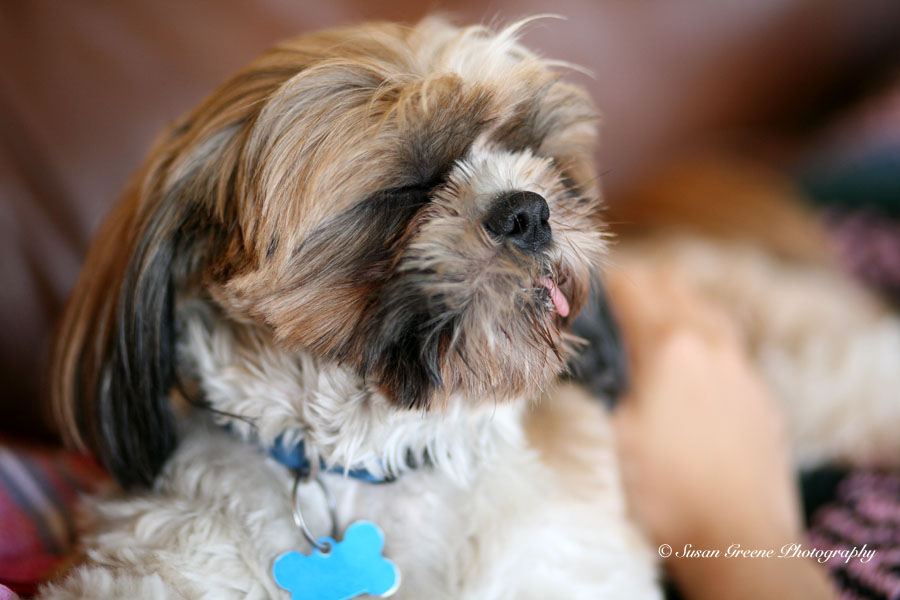
Shih tzu dogMaybe it’s just me, but why can it be so hard to focus sometimes? Is it that there is so much to do that choosing one or two things to concentrate on is downright difficult? Or, is it that fun opportunities trump work, which can be OK, for awhile, but eventually those responsibilities won’t be able to be put off any longer? Once the decision has been made to buckle down and focus on a task at hand, it can be eye opening.

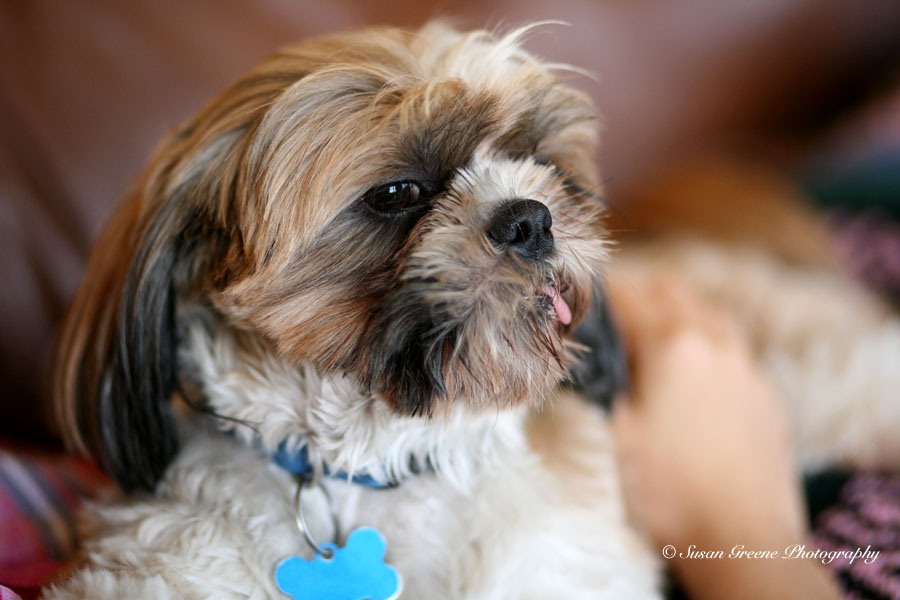
Shih tzu dogPhotographically speaking, focus is important. It shows what a photographer is trying to express by drawing attention to an object or person or part of a whole. Yet, achieving focus on the subject in your pictures can be as difficult as focusing on areas of your life. For DSLR users, I have a few tips to offer and aid in finding focus this month. First things first, it’s time for you to tell the camera what you want to focus on and don’t rely on the camera to know what you want automatically. When in auto mode, the camera chooses the focus points based on the shooting conditions. Sometimes this works, but sometimes it doesn’t and when it doesn’t it can be frustrating. You end up with your subject out of focus and something in the background in focus. To correct this, put your camera in manual, aperture priority, shutter priority or program mode,Shih tzu dog choose a focus point and take back creative control.

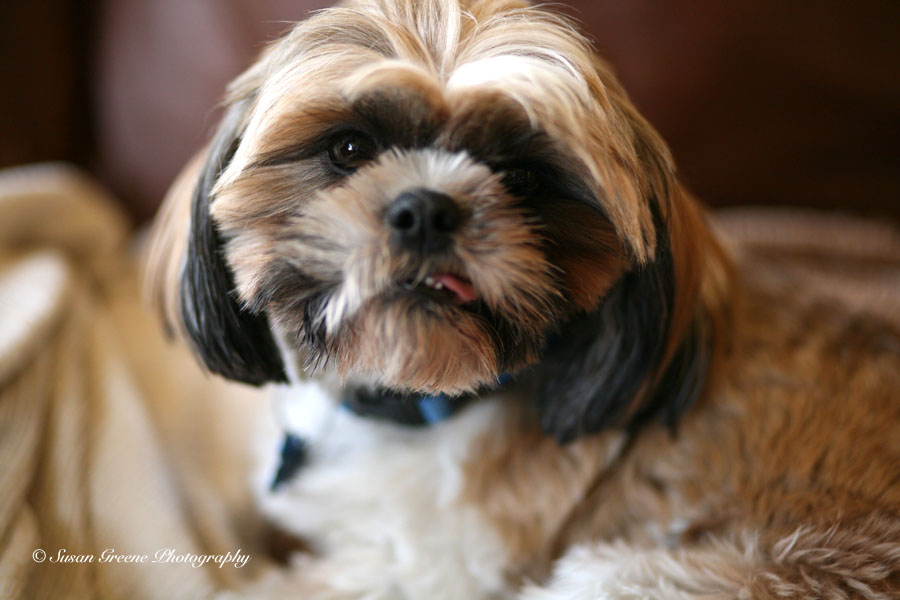
Shih tzu dogIt can turn your world upside down, in a good way! Now that you are out of auto, the first thing is telling your camera where to focus. Go ahead get bossy! Most modern cameras have at least nine auto-focus points (some have many more), which are the spots the camera will look to achieve focus when you have your lens set to auto-focus. Using the selection point button, you can choose one of the nine points by highlighting one and then using the dial to move the highlighter to the different points. If you highlight all the points the camera chooses automatically which point for each shot, so choose one. Often, the center point is the most sensitive and hence fastest at achieving focus, because it uses cross type focusing and the others don’t. But, maybe you don’t always want your subject in the center of your picture. What then? You can do one of two things; either change your auto-focus point to one of the others that is closer to your subject or focus using the center point and then recompose your shot. To do this, push half way down on the shutter button and when focus is locked in, you will either see a red highlight of your focus point and/or hear a beep, keep holding the shutter down half way while recomposing your shot and placing the subject where you would like; then push all the way down on the shutter button taking your shot.

Shih tzu dogWhile recomposing, it is important to remember to keep your subject in the same focal plane or risk loosing focus. Now, go out and practice, practice, practice!

This year, we are offering suggestions of ways to practice and hone the skills you may learn from Backyard Sisters and feel free to let us know how it’s going.

To Recap:

  • Getting out of auto mode and telling the camera where to focus, will give you more creative control in your photography.

Challenge Yourself:

  • Think about what you want to say in your photos this week and how focus can help convey that message.
  • Use any mode but auto and use the center point to focus lock and recompose
  • Also, try switching auto focus points using the point selection button

Cavort:

  • Try using the eyes of a person or an animal as your focus point in a photo this week. If the person is angled and the eyes are not on the same plane, focus on the eye closest to you.

Keep in mind, according to Mark Twain, “you cannot depend on your eyes if your imagination is out of focus.”

Imagine away,

Susan