Does this voice make my thoughts look big?

By Catherine Keefe
I’m waiting for the call that I’ve been accepted as a voice surrogate to create a custom synthetic vocalization for a female “target talker,” one of the 2.5 million Americans with a speech impediment so severe she must rely upon a computer voice.
041

Right now, if you want a mechanical voice, there are about 60 to choose from, the most popular being “Perfect Paul.”  You’ve heard “Perfect Paul” if you’ve listened to Stephen Hawking speak. You don’t have to be a math wizard to quickly figure that a choice of 60 voices for 2.5 million speakers constructs an incredible long shot that a person will sound distinct, which is one basic human characteristic. Each being’s voice creates an utterance so individual that voiceprints are as singularly identifiable as fingerprints.

Life takes odd twists and turns when you wonder what to write about on a Thursday and a Google search for “human voice as unique as a fingerprint” turns up a TED talk by a speech scientist named Rupal Patel who’s developed the VocaliD project to “create unique voices for the voiceless.”

I register as a donor.

If I’m needed, my voice will be recorded for about 3-4 hours, then a computer will chop it into vowel and consonant bits that can be blended with the range of sounds the target talker is able to make.  Most likely it will be for a woman roughly my age as voices develop different pitch and tonal characteristics as we age.  The “target talker” will create the prosody with utterances like “ahhhhhhhh.”  I’ll provide the sound for word pieces.  Together we’ll create a voice, that for the first time will sound like her.

Giving voice to the voiceless.

I’m thinking of this because “voice” is the Backyard Sisters theme this month and also because my students are drafting their first formal projects and the distinct sound of their writing when I first met their voices in informal exercises has taken on a more constricted, stilted tone.

“I’m worried about my grade,” the young man in the front row tells me when I present this observation to the class and wonder aloud what has caused them to change.

Another student ventures, “We don’t know how you want us to sound. ”

Like yourselves?

I introduce a game developed by one of my philosophy and rhetoric heroes, Desiderius Erasmus of Rotterdam.  As an example of the impact that language can have, Erasmus famously wrote 150 variations on the sentence, “Your letter delighted me greatly.”

Your pages suffused me with unspeakable joy.

Your lines were as sweet to me as the sweetest of all things.

May I die if anything more delightful than your letter has ever happened.

Your letter to me was pure honey.
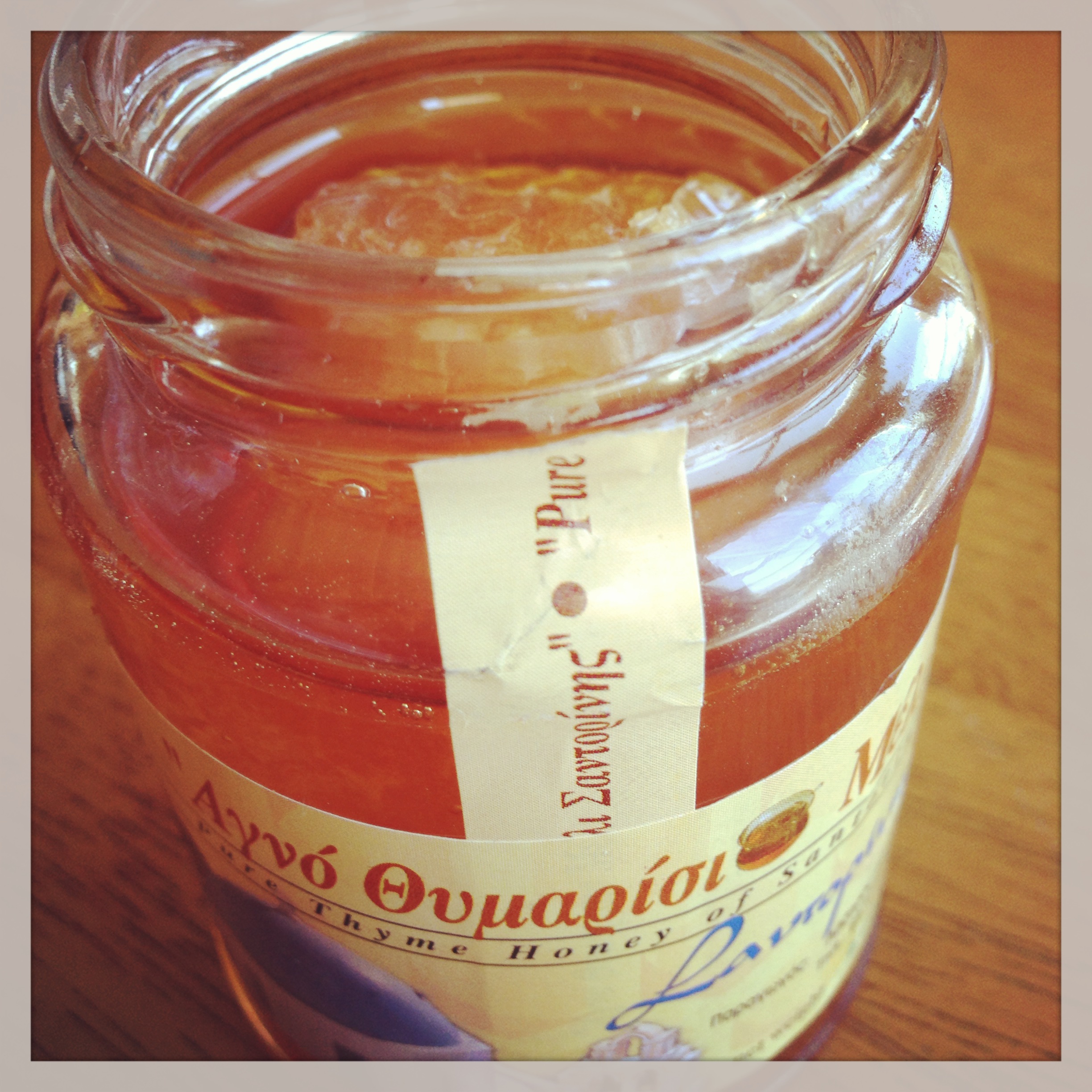
honey

My students and I laugh, then I challenge them to write, in one sentence, the primary idea they are trying to express.  It seems extreme to suggest they rephrase 150 times, so I suggest they come up with 10 ways to say the same thing.

While they infuse their ideas with new language, I perform a twist on that exercise, using quotes I find on voice which utter similar ideas.

“A powerful and fundamental aspect of who we are: our voice.” – Rupal Patel (TED talk).

 …a voice is like a fingerprint, possessing a constant and unique signature.” – Seamus Heaney (from a 1974 lecture).

“Oh how wonderful is the human voice! It is indeed the organ of the soul!” Flemming, the protagonist in Henry Wadsworth Longfellow’s novel, Hyperion: A Romance.

Now I’ve slightly misled you with that last quote as I didn’t easily find it, although a variation of it appears in Patel’s TED talk, is easily found on Brainy Quote and Goodreads and ThinkExist in a cleaned up, simplified, edited version of the above, stripped of its two exclamation marks, devoid of its sounding like a man falling in love which is exactly what’s happening to Flemming in Hyperion: A Romance, a thinly disguised Longfellow at the time.

Time has been kind and replaced Longfellow’s romantic exuberance with a more mature sound.

“The human voice is the organ of the soul.” – Longfellow

In that revision I hear a restrained baritone utterance with a genteel New England accent.  It took quite a bit of sleuthing to find the original from Hyperion: A Romance.  

It can be difficult to find your voice, I tell my students. But if you don’t, someone will speak for you, or paraphrase you, or give you “Perfect Paul” when you’re really Perfect Cath.

They nod and we begin anew the effort to sound like no one but our selves.

With fingers crossed I’ll be a surrogate,
~Catherine

You can watch Rupal Patel explain her VocaliD project in this video:


That awkward phase

photo-67By Catherine Keefe
Oh, the late 1980s. Neon ruled; hair was big, and bib ski overalls were still in fashion.

While it’s easy to observe fashion’s fluctuations it’s a little more difficult to discern how the adult phases of life slowly meander bearing unexpected gifts and challenges.  One thing that surprises me at this mother-of-young-adult-children phase is how difficult it is to make new friends.

I do have a deep connection to many wonderful women. But I’m often reminded how impermanent relationships are. This friend followed her husband’s job to Davenport, Iowa. That friend is eyeing a move to Phoenix when she retires to be closer to her grandchildren.  And so I begin a plunge into the inevitable awkward phase of trying to build new friendships. As if the universe listens to me, the following e-mail arrived from a woman I barely know.

Hi Gals,
I’m starting something new this year. It’s a salon (ala Dorothy Parker’s soirees at the Algonquin Hotel in New York), and I’m calling it “The Interestings.”

Did the woman who sent this, a former Broadway actress, current screenwriter and almost novelist, know she had me with the Dorothy Parker reference? It’s forever been my dream to start or belong to a salon like the Algonquin Round Table, a daily gathering of poets, writers and critics that convened in NYC from June 1919 until 1929, a group that “strongly influenced young writers like Fitzgerald and Hemingway” and where “Harold Ross, legendary editor and friend of The Round Table, created The New Yorker” according to the hotel’s website.

I immediately imagined a group of smart women, part writing group, part literary critique and visionaries who might support my desire to turn the abstract concepts I glean from literature into concrete action to affect social change.  Would we begin a new magazine or a Writer’s House? Start a movement?

I wondered what connection there was between us and the novel the group took its name from. In The Interestingsby Meg Wolitzer one character famously blurts, “Specialness — everyone wants it. Most people aren’t talented. So what are they supposed to do — kill themselves?”

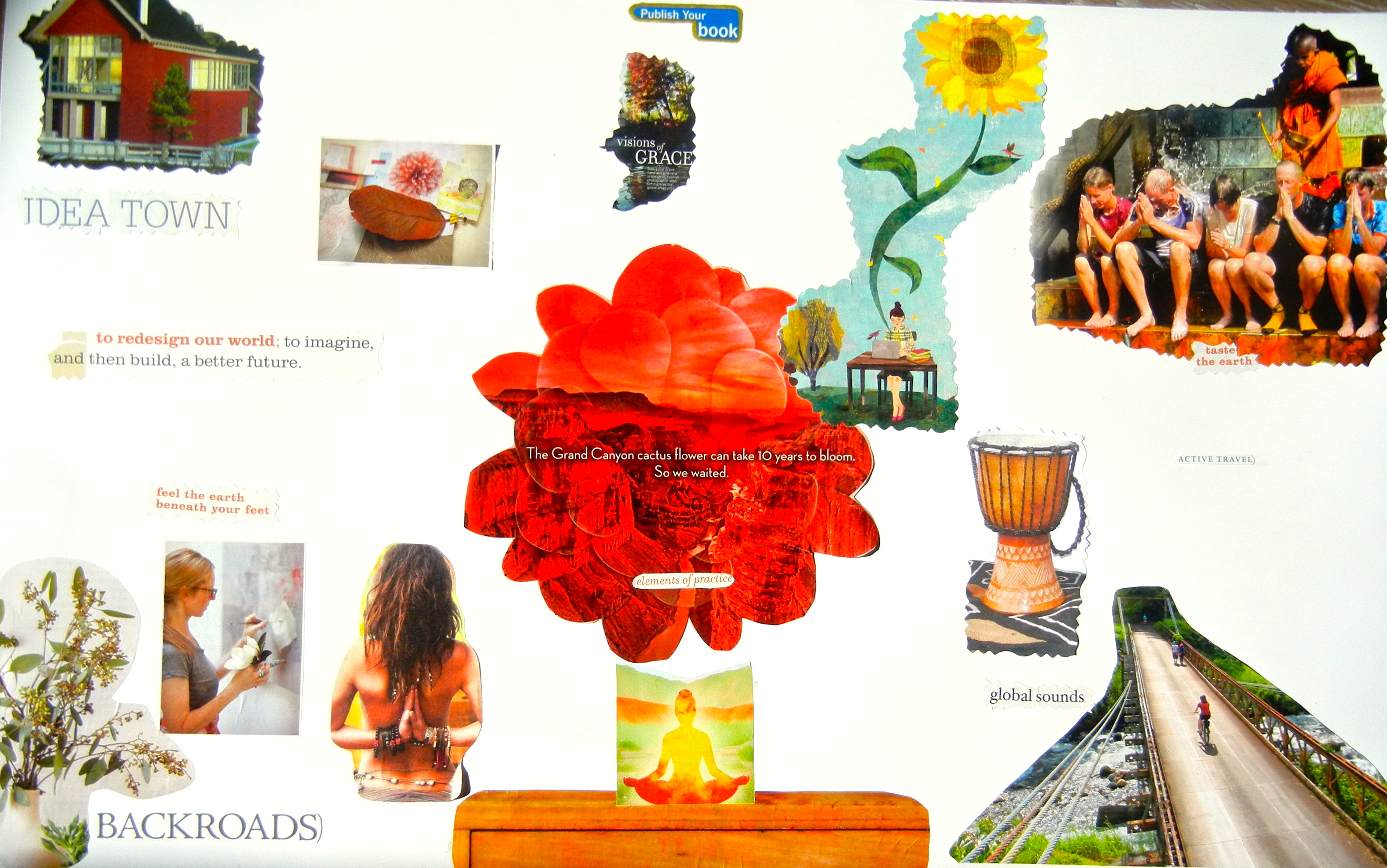
Last night’s inaugural agenda was to create vision boards, something I was a little snarky about. “I feel like Oprah will show up any moment,” I said not long after I walked in and eyed the leaning stacks of magazines, scissors and glue sticks. The circle laughed, a little uneasily and I made a mental note to be more open-minded and close-mouthed.  I wondered what Dorothy Parker would have made of our earnestness.  Quit talking about what you want to do and just do it.

But there I was and so I sat around a table with 8 other women snipping pictures and words from travel brochures, Yoga Journal, Bloomingdale’s catalogs, and a beauty salon’s stash of titles like O: The Oprah Magazine, InStyle, and bon appétit. I felt like a little Brownie Girl Scout at Craft Afternoon as we diligently put ruffled cut edges around camels in Saudi Arabia or a front porch weeping wisteria blossoms and I wondered if I was destined to wander alone through the end of my life unable to fit in with a group of nice women.

What didn’t we talk about? Our jobs. Our children. Our relationship to the hostess. We were untethered to any identity other than what made us smile for our future.

Finally, like kindergartners as Star of the Week, we held up our vision boards. “An open-mouthed shark bursting through the ocean’s surface represents a desire to attack new projects,” one woman said. The next woman pointed to a small photo of hundreds of lanterns floating on a river.  “Not that we’ll get to the Loi Kratong festival this year, but this reminds me to spend more time with my daughter who will go to college next year.”

There was a murmur of low sighs. Oh. Mhmm. A recognition of that awkward phase when who we were, who we are and who we want to be eddy in the rapids. Last night I heard enough dreams to light a million candles and enough desire to share those dreams even at the risk of seeming hopelessly earnest and decidedly unliterary and I think how no amount of talent or literature can save a person or sustain forever a circle of friends.

As we walked together into the full moon night, each of us clutching one cardboard idea of a life, the relentless Santa Ana winds battered our newly envisioned futures so we had to protect them tightly against our bodies. We agreed to meet in a month, to talk about and write poetry. Who knows what will happen? Our called-out promises were blown away under watchful stars.  

DSCN3659

With more white space than most,
~Catherine

p.s. You can read one idea on how to create a vision board version here, but I highly recommend instead, gathering a group you don’t know well. Make small talk as you release your rational brain and sift through images to see what makes you sigh or your heart quicken.  We all agreed there were more surprises than deliberate compositions and for that we were grateful.

Pomegranates, Poetry, and Play

I was invited on a field trip.  My Backyard Sisters post, “Pomegranates, Poetry, and Play” shows up today over on the Minerva Rising Literary Journal blog. Minerva Rising’s mission is, “to celebrate the creativity and wisdom in every woman.” I’m honored to be included among the fine group of writers and artists represented there.DSCN3482
I was asked to guest blog because one of my poems, “Early Warning,” appeared in the Minerva Rising’s June 2013 edition titled “Rebellion.” When I submitted the poem – a dark piece dedicated to women in history who suffered years of domestic abuse until they finally murdered their husbands- I wrote:

When I think of rebellion from a Minerva Rising perspective, I think of June Jordan‘s poem, “In My Own Quietly Explosive Here.” Women silenced sometimes feel as if we are “dying underground,” yet we discover strength when “circles hold us together.” We find wings when we tell our stories and listen to one another.

My poem was a challenge to us all not to judge, nor to ignore, unsettling behavior. Today’s post is much lighter in tone than the poem, yet it also is related to a type of rebellion. It tells the story of a front porch encounter with a group of neighbor girls playing Bigger and Better. Here’s an excerpt:

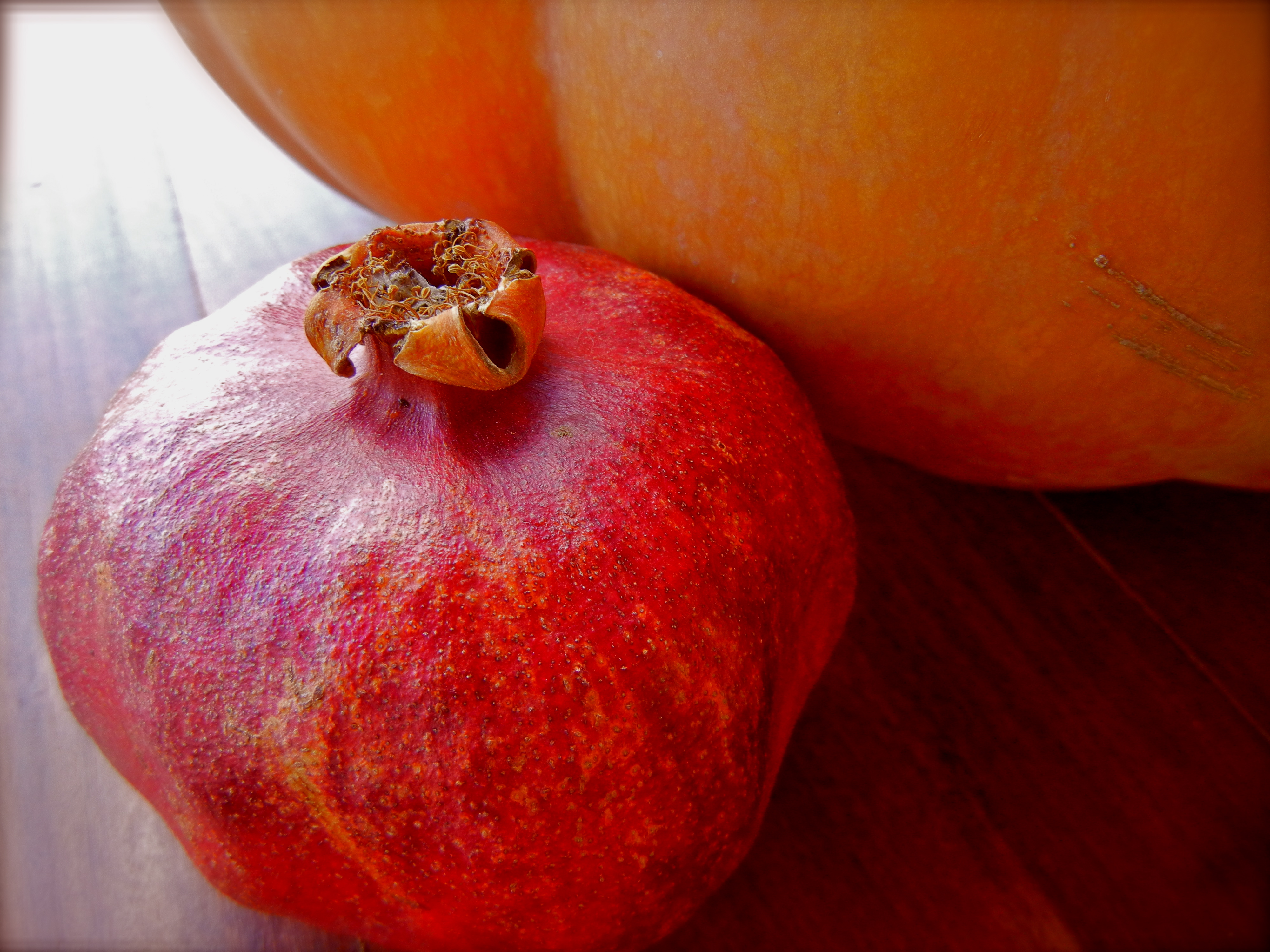
Maybe it’s the poet in me, or maybe I spy the pomegranate perched on my porch next to the pumpkin and find the perfect metaphor for why bigger isn’t always better. Pumpkins and pomegranates both ripen at this time of year with their fiery oranges and red in defiance of the coming brown and deadness. But they couldn’t be more different.

You can read the entire post on the Minerva Rising Literary Journal blog here. I’d be remiss not to mention the influence of Joan Houlihan‘s The Us upon my musing.  I was in the middle of that unique and haunting poetry book when interrupted by the neighbor girls. I doubt it’s an accident that my mind went to questioning the value of bigger over better while hypnotized by what is described on the back cover as:

The Us, Joan Houlihan’s mesmerizing new book, is a sequence of poems spoken in the collective voice of nomadic hunter-gatherers. Incompatible with a stronger, more developed culture (“thems”), the us must live outside civilization in order to be free and fully alive.

the_us225

The Us is stunning.

If you’re inspired to “be free and fully alive,” through prose,  you might appreciate these recent posts of mine.

“Anything Can Happen”
“Be small. Feel big.”
“What do you bring to the table?”

May the goblins you meet tonight scare you just enough to keep the porch light on, but not enough to ruin your evening with nightmares.

~Boo!
Catherine

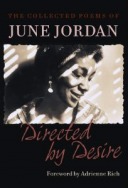
p.s. You can read Darrel Lorenzo Wellingtons’ fine review of “Directed by Desire: The Collected Poems of June Jordan,” here. Jordan, whose spirit inspired my poem “Early Warning,” was the author of  “political verse, protest poetry, folk poetry, love poetry, scenic poetry, surrealist and associative poetry, light and humorous verse, spoken word poetry and even a few sonnets.” The collection, published by Copper Canyon Press in 2007, is big:  649 pages. Rebellion indeed.
7074322


Strange things happen at midnight

“This is thy hour O Soul, thy free flight into the wordless,
Away from books, away from art, the day erased, the lesson
done…”    from “A Clear Midnight” by Walt Whitman


My head has been in perpetual midnight this month. I walked off an airplane and into the terminal leaving my gate-checked carry-on luggage sitting on the tarmac. I accidentally left my cell phone on my car’s back bumper and drove away. I’ve taken Chester out for walks without his leash and set off the smoke alarm when the bread I forgot in the oven burned. For 25 days now my body has been on earth, but my heart and soul have been tuned into the frequency of the poetic muse on the Tupelo Press 30/30 Project.  Sometimes I look at my feet just to see if they’re on the ground, craving the “free flight into the wordless.”

IMG_0801

The experience has been weird and wonderful and I heartily recommend a one-month total immersion in whatever you love to do. Your support – by reading and forwarding the poems, by joining the Orange Whistle Secrets Divulged group, by e-mailing to discuss poems, and by donating to Tupelo Press – is deeply appreciated. You have no idea how much a kind word fuels literature.

Just for you, dear readers, I’ve reprised two favorites from the 30/30 Project website.

From Day 20
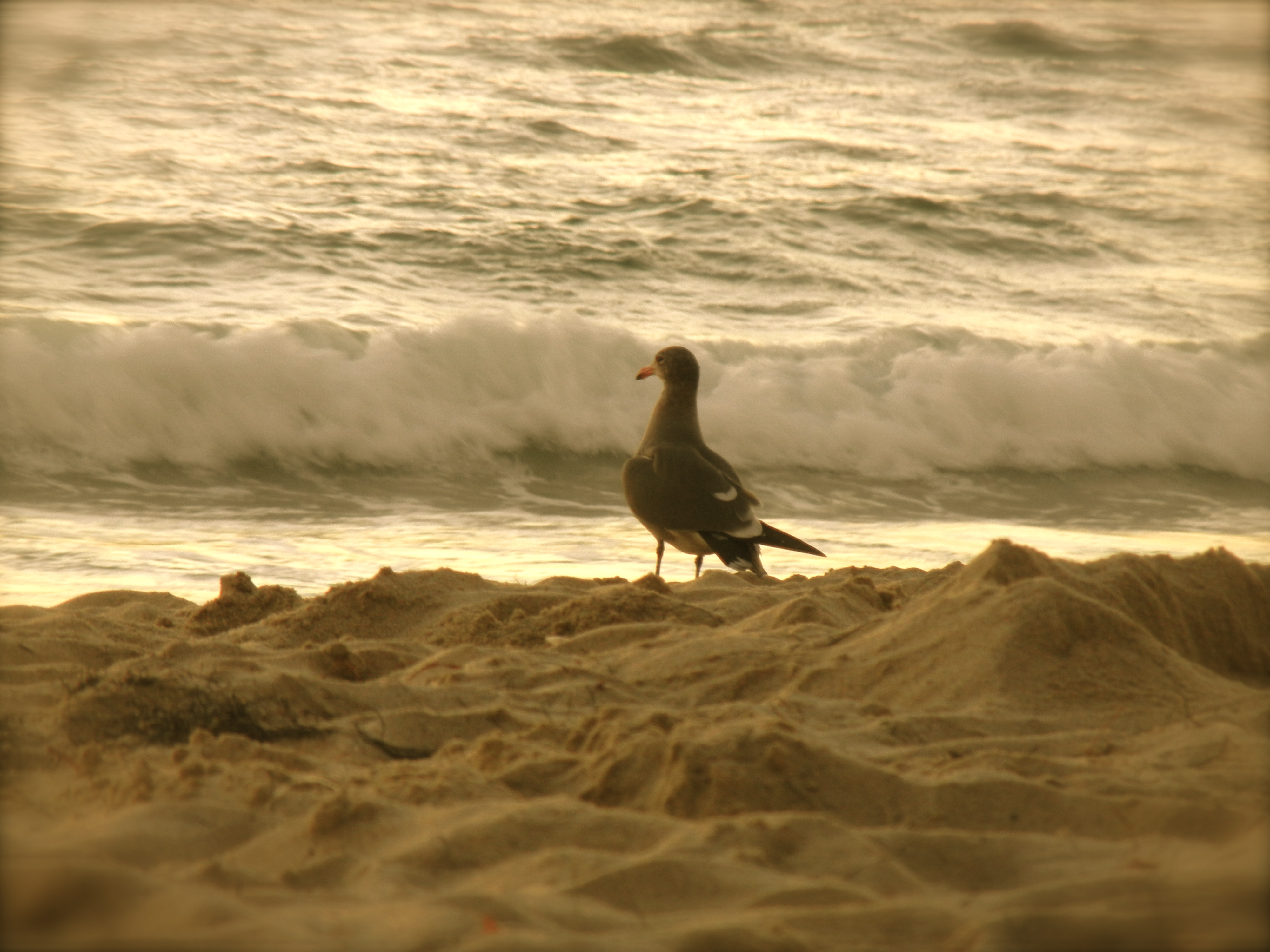
gullWhat the Gull Heard One July, Main Beach, Laguna   

If I tell you a secret, will you promise not to tell?
Never trust a woman sitting at a table alone without a glass of wine at dinner.
Of course she’s difficult, that’s her schtick. She calls herself a Mensa puzzle.
“What did you expect, hula girls?”

Careful, surf’s rough.
My wife thinks I’m at work today.
That seagull, like your eyes when you wake up before you put your glasses on.

Before I wanted to be an artist I wanted to be a saint.
What did you create this afternoon? Havoc at the very least.
I wonder if the pigs are out. No sharks today.
Only looking, no touching.

I thought the ocean would be bluer.

Mama, can we have our Daddy back?
Living gives you heart trouble.
We have so many issues we should open a newsstand.
I’m a lot like Barbara Streisand except that I don’t sing.
Would you mind if I walk alone for a bit?
This would be a great spot to get married.
Hey, hey, don’t run. You’ll knock people over.

I’m starving. I’m cold.
Hit your mute button.

Things that are worthwhile are sometimes more difficult.
There’s no need to yell.
That wave that knocked you over was God’s way of saying you shouldn’t walk out so far.
It’s nothing like the pictures.
It looks just like the photo!
3.  2.  1.
Snap.

And from today:
photo-21

Faith

We hear of rain
some years
breeching banks
creating a right flood.
Horses stampede. Fish take up in the basement. Whippoorwill trills all night.
Other times
drought.
Cicadas. Flat shimmer. Dust for breakfast.

 Water, so very much like love.

 Saying It’s the season
isn’t enough to end a parch
right where you stand
palms up, head tilted skyward, mouth an open urn.
I see you wait like you are sure
it will rain once again.


You can read all 25 poems at the 30/30 Project.  (Day 22 was written just for one of the Backyard Cousins.) If you’ve been meaning to make a small donation to the press, time’s almost up if you’d like to mark “In Honor of Catherine Keefe.” Come August 1, I’ll be back to my more grounded self and you’ll never hear me ask you for a single thing again.

Long live books and readers and poets who write at midnight. Long live those who support the arts rather than grumble about the decline of fine publishing.

Looking toward dawn,
~Catherine

Why do you do what you do?

“When did you become a writer?”

The question, coming as it does from an artist at a gallery reception, surprises me. It’s like hearing, “when did you become a fish?”

“I always was one,” I reply, hoping for the simpatico understanding of a creative soul to bridge this non-specific-date-naming response, not an evasive conversational gambit, but a strange truth that still perplexes sometimes.  Decoding the world through language is as natural to me as skipping. One of my earliest childhood memories includes tracing the letters of words being spoken, turning them into stories and pictures with my right forefinger upon my left palm.
Meera's MehndiSounds and ideas danced upon my hand, to be released later onto the unlined light brown paper of a Mickey Mouse drawing pad.  I didn’t plan to be this way, I just was. Most writers I know say the same thing.

It’s this recognition of the magnetic power of some creative pull that frequently leads me to invent new ways to spark leaps in my technique.  Learning West African drum rhythms interrupts a rut of a cadence; reading books I don’t understand hopefully sparks new brain synapses and invites new subject matter into my writing.  Fifteen hundred pages of Critical Theory Since Plato anyone?  There’s a playfulness with these kinds of things, sure, but there’s also a dogged determination bordering on compulsive.  I laugh when I see myself in other writers and while reading Christian Wiman‘s Ambition and Survival: Becoming a Poet  I found a mirror self in the first few pages. Wiman writes:

When I read Samuel Johnson’s comment that any young man could compensate for his poor education by reading five hours a day for five years, that’s exactly what I tried to do, practically setting a timer every afternoon to let me know when the little egg of my brain was boiled…

I’m not quite as odd a person as I was once on the verge of becoming.

Of course my weirdness waxes and wanes.  I may be tipping the balance back toward odd as I begin a new poetry writing project for the month of July.

“Why do you do what you do?” my family wonders.

Why, when it’s summer and school’s out and nothing dictates my days but my own gentle taskmaster self, why would I commit to writing and posting a poem a day for Tupelo Press?  I believe in the need for literary presses and, being the editor of dirtcakesa small press of my own, I know  it’s impossible to sustain any sort of momentum and foster good work without readers and backers and contributors. The Tupelo Press 30/30 Project is a nifty little way for writers to forge new work and for readers to discover new writers.  It’s a community of writers that opens its hands to invite in a community of readers to share the stories written on our palms.

DSCN3284

I’ve got a few ideas of how we can work together through July. I’ll be posting them in the coming weeks. In the meantime, remember that which you love you will spend time doing. That which you spend time doing will attract your energy. That which captures your spirit will shine out from you, and ultimately reflect back upon you.  As for me and my attraction to poetry? I defer once again to Christian Wiman’s words:

…in the end we go to poetry for one reason, so that we might more fully inhabit our lives and the world in which we live them, and that if we more fully inhabit these things, we might be less apt to destroy both.

Who doesn’t want to be fully inhabit each precious moment of life?

Meerags Wedding

Stretching and spinning in anticipation of lining up a long dance with the muse,
~ Catherine

p.s. Christian Wiman is an iconic figure in the world of poetry. From 2003 – 2013 he edited Poetry magazine, “the oldest monthly devoted to verse in the English-speaking world.” The depth of his poetry knowledge and ability to articulate the aesthetic strengths of particular poets is precise and sharp, though do know his taste runs to the traditional which sometimes can miff a lover of more experimental verse. Ambition and Survival is a collection of essays to dip in and out of when you need a strong voice in your head to guide your writing practice.

What do you bring to the table?

Which way will the creek
run when time ends?
Don’t ask me until
this wine bottle is empty.

~ Jim Harrison and Ted Kooser
_________________________

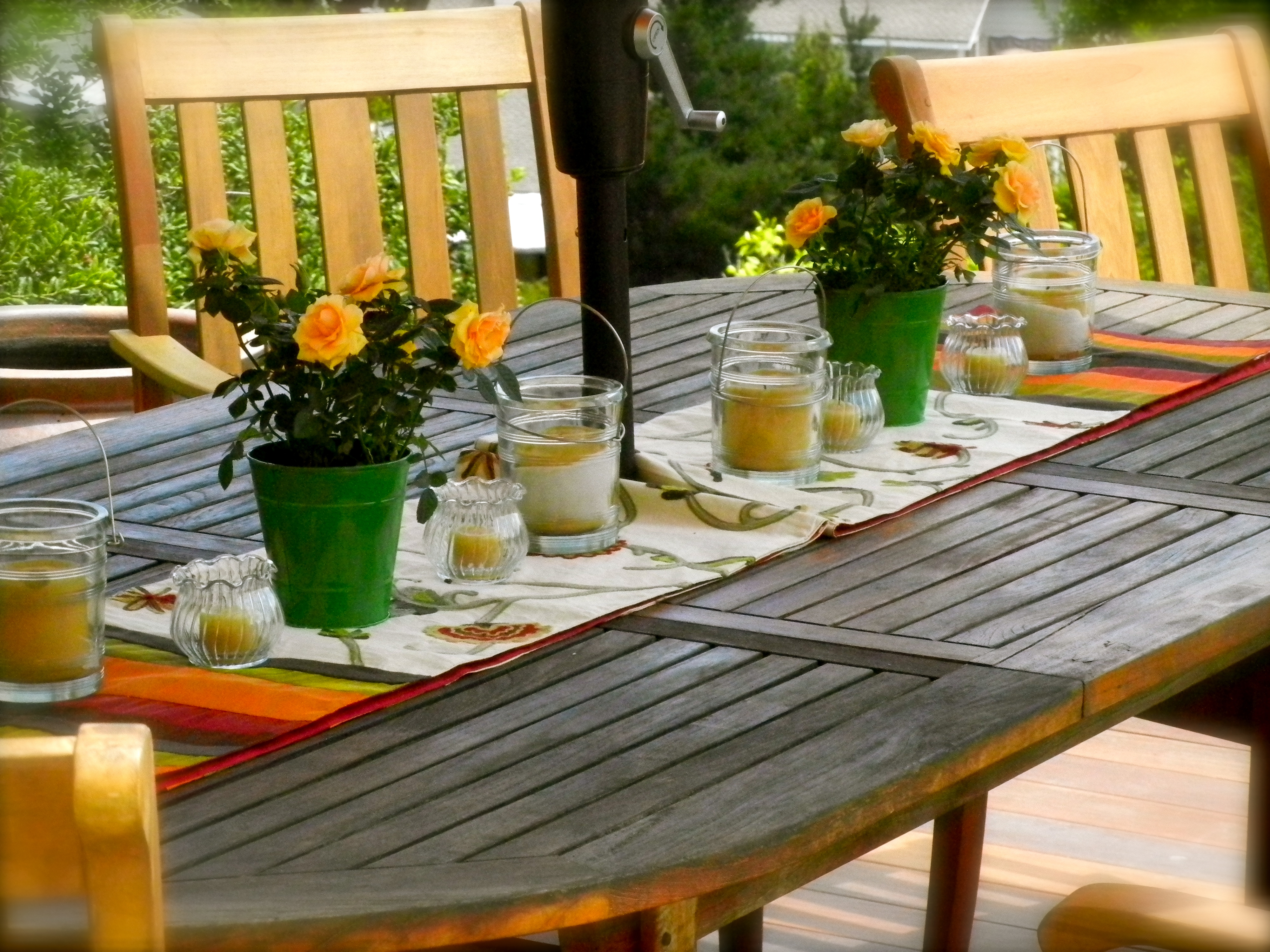
“What did you notice that was beautiful today?” When J asked me this last night, just as we sat down to dinner, I cracked up.

Table

It’s not a funny question, but rather an example of his dear effort to honor a request I made after breakfast.

“Please don’t ask me at dinner what I did today, or how my day went, ask where I found beauty.” I implored him in the morning as I hustled to my office.

“And what do you want me to ask you tonight?” I called over my shoulder.

“You can ask how my day went. I like to remember what I got done.”
___________________________

Life has always yelled at me,
“Get your work done.” At least
that’s what I think she says.
~ Jim Harrison and Ted Kooser
___________________________

What we focus upon comes to light. My request was part self defense – I always give myself more to do in any given day than I can ever accomplish and then feel bad when I don’t finish. And it was part new strategy; I want to pay more attention to life’s surprises of  grace and grandeur hiding in plain sight rather than concentrating only on how I try to unruffle its challenges.  I’m trying to adjust the outlook I bring to my day and our dinner table.

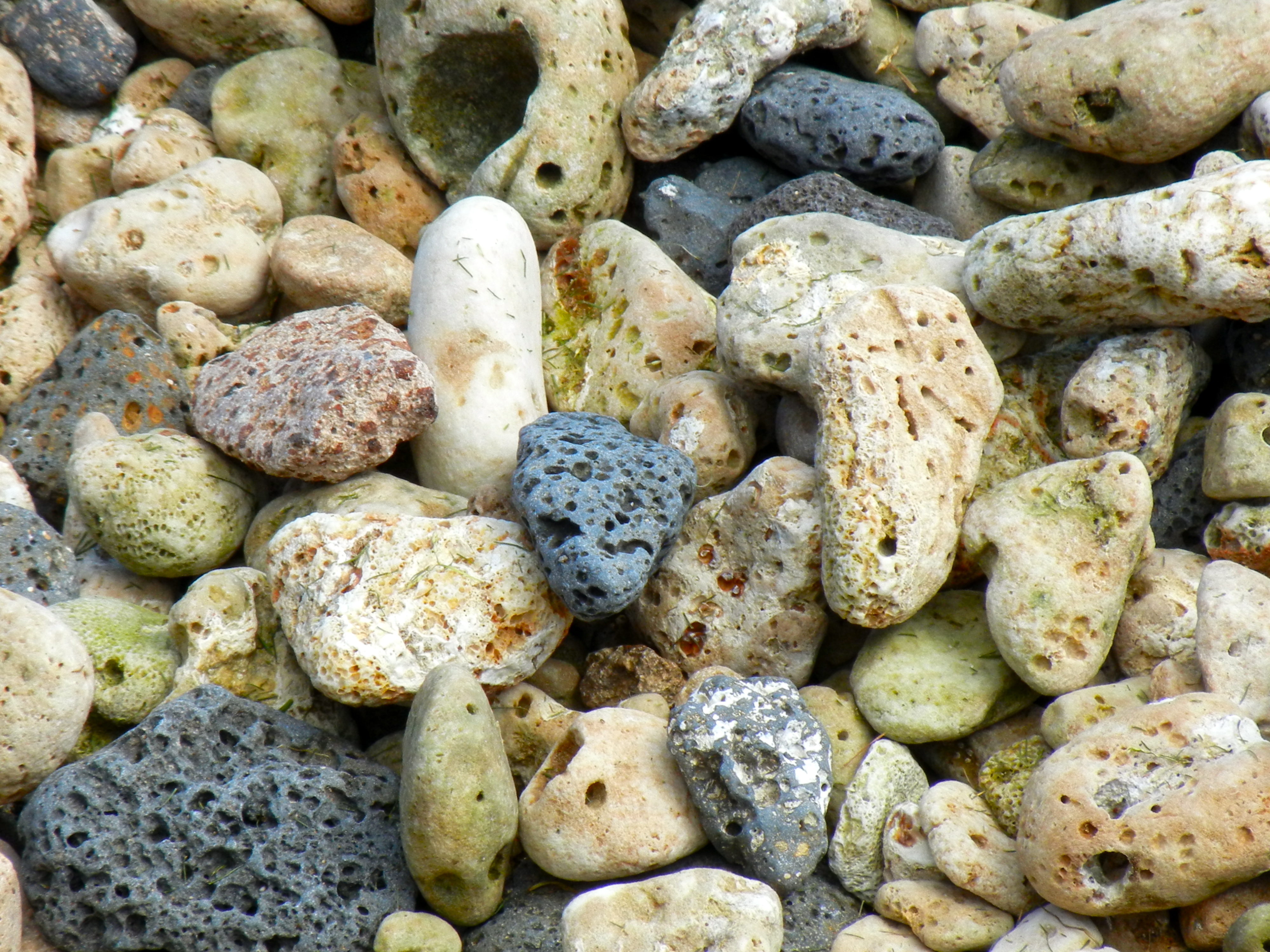
smooth coral

What do you talk about at dinner?

I’ve begun asking friends without children at home this question.

We don’t talk, we watch TV.
I don’t know, nothing, what we did that day.
What’s coming up on our calendar.
Funny stuff the dog did.

What did I expect? The better question is, what do I want, what does J want?  If gathering around the table is a nightly ritual so important that we set its time, its chef and menu (we trade cooking duty), its location and literally light its candles, then doesn’t it follow that we might also guide its conversational swoops and soars?

When our kids were home we had a standard dinner starting point that inevitably opened doors to conversation that often lasted long past dessert.

What was the best part of your day?
What was the worst?

Trials and triumphs of school and sports, of work and home life and friends trickled out over roasted chicken and broccoli.  If friends joined us, they too got pulled into the daily circle, some shy at first to say, but inevitably relaxed enough to tell about a moment that set this day apart.

I eventually bought Chat Packs, those decks of cards with dozens of conversation starters. We played Brain Quest and Would you rather?  I still sometimes put little stacks of these cards next to the napkins at dinner parties or spread them around the appetizers at family gatherings.

Am I inherently nosy? Afraid of conversational lull? Maybe yes and yes. But I like to think that even more than that, I really like the idea of getting to know the people I share time with. The worst kind of dinner is one where I don’t learn a single new thing about the ones I pause with at the end of the gift of another day.

photo-20

Last night I learned two truths. Each day delivers beauty; my husband remembers and honors my requests. Maybe those are really one big truth.

Where did you find beauty today?
~Catherine

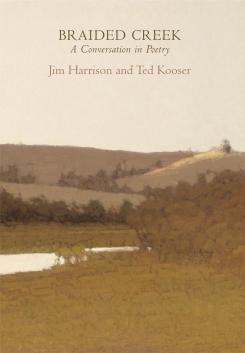
p.s. For literary grace and grandeur, you could do worse than getting your hands on a copy of Braided Creek: A Conversation in Poetry by Jim Harrison and Ted Kooser.
1317_lgTreasure what you find
already in your pocket, friend.
~ Jim Harrison and Ted Kooser
__________________________

The book is the best kind of conversation, where no one voice dominates, in fact no one poet takes individual credit for any of the short stanzas.  From the back cover:

Longtime friends, Jim Harrison and Ted Kooser always exchanged poems in their letter writing. After Kooser was diagnosed with cancer several years ago, Harrison found that his friend’s poetry became “overwhelmingly vivid,” and they began a correspondence comprised entirely of brief poems.

…When asked about attributions for the individual poems, one of them replied, “Everyone gets tired of this continuing cult of the personality…This book is an assertion in favor of poetry and against credentials.”

Maybe I’ll bring it to the dinner table tonight.

Wild thing

Coyote yips drift through the open bedroom window sometime before dawn. It’s May’s most consistent night song. Chester’s hackles rise and he growls low. I pull the sheet over my ears.

Regal ChesterChester’s been chased by a coyote three times. These aren’t the lean, mangy, skulking wild dogs of past years. This crop of fat boys trot across the trail. They sit. Cross their legs. Light a cigarette, pinky ring glinting in the morning glare before they chase.

First time it happened, J was walking Chester. He stood his ground, raised his arms and yelled “Stop!” When it was my turn at the wrong end of a coyote chase I did the same. The coyote cocked his head, tightened his silk cravat, emulated the Don Draper eyebrow lift and then slowed his pursuit to a model-like prowl.

Chester bolted, leaving me to walk backwards until I couldn’t see the whites of coyote’s eyes any more. A chilling sweep of goose bumps rose on my neck.

It’s not an option to stay indoors when this is steps from my backyard.

trail vista

But where there is prey, there are predators.

oh deer

Last night, I dream there’s a lion with full mane in my house, barreling down the hallway toward my bedroom.  I slam and lock the door, lean against the wood which cracks and creaks and splinters against my hand. I call out to J in his office. There’s a lion in the hallway! Shut your door!  He’s working on his computer and not paying attention and the lion pounces. I wrestle the lion, wrangle his scruffy neck and heave him out the office window which somehow overlooks a high stony cliff to the sea even though we’re nowhere near the ocean.

I’m sure it’s a dream inspired by recent sightings that frighten me more than coyotes. Yesterday when Chester and I walked, we heard a rustling in the oak grove at the bottom of the hill.

cool oak tree

The noise spooked us both, much louder than the familiar rabbit scurry or quail scuttle through dry leaves.  It sounded human-size, but stopped as we neared, the instinct of an animal.  Chester’s fur ruffled; he hush-growled and we turned heel, Chester wildly scanning the scrub oak lining the trail.  To one side stands a solitary oak  and within it we heard another great flurry of leaves overhead. I expected a hawk, a peregrine falcon, maybe even the screech owls that have taken up in the neighborhood but the shadow didn’t fly. It scampered down the branches, down the trunk, a shadow bigger than my dog.

It’s been about a month since J and I spotted a mountain lion off the trail about a five minute walk from this grove and a neighborhood association warning came last week.

A mountain lion has been seen in the Dove Canyon area.

The animal was picked up on cameras operated at Starr Ranch Sanctuary.

Additionally, this past week Dr. Don Earl of Lido Animal Hospital treated a greyhound that survived a serious attack from a mountain lion that climbed into the backyard of a home in Dove Canyon. The Department of Fish and Game is aware of the dog attack and has tips on its website should you encounter a mountain lion.

I read the “Keep Me Wild” tips.

  • If you encounter a mountain lion, do not run; instead, face the animal, make noise and try to look bigger by waving your arms; throw rocks or other objects. Pick up small children.
  • If attacked, fight back.

I don’t have a great track record with looking big. And I’m an awful thrower.  But I sing when I’m nervous and there’s one song that’s on rerun this spring.

http://www.youtube.com/watch?v=z9DVJE_bhVU

This morning, I hurl lyrics, loudly, and yes, maybe dance and air guitar a bit on the trail. Chester didn’t seem to mind, but I might have some explaining to do to the woman who caught me coming around a blind curve. Last I saw, she was backing away, waving her arms to the sky.

With a song on my lips,
~Catherine

Gary Snyder wrote a spot-on poem about sensing the presence of a wild thing.
One granite ridge
A tree, would be enough
Or even a rock, a small creek,
A bark shred in a pool.
Hill beyond hill, folded and twisted
Tough trees crammed
In thin stone fractures
A huge moon on it all, is too much.
The mind wanders. A million
Summers, night air still and the rocks
Warm.   Sky over endless mountains.
All the junk that goes with being human
Drops away, hard rock wavers
Even the heavy present seems to fail
This bubble of a heart.
Words and books
Like a small creek off a high ledge
Gone in the dry air.
A clear, attentive mind
Has no meaning but that
Which sees is truly seen.
No one loves rock, yet we are here.
Night chills. A flick
In the moonlight
Slips into Juniper shadow:
Back there unseen
Cold proud eyes
Of Cougar or Coyote
Watch me rise and go.

Touchstone

I am drawn to certain empty things like urns and skies.
I abhor other barrenness, like empty promises or hearts.

I rail against the empty life. Fill it with books, philosophies, a deep well of love.
I protect certain empty hours. Create a space for dreams and meditation, staring into spring.

EdenMy backyard before I moved

When I am on the abandoned beach, I miss you.
When I am deserted, I miss my beach.

Patterns emerge against emptiness.
Sound breaks silence.
Silence relieves talk.

Knit one. Pearl two. Add one. Drop a stitch.

My grandmother used to mutter directions for a sweater or scarf she was knitting.  If the pattern were disrupted she’d have to rip the stitches out.

You can unravel yarn but it always shows the kinks of where it’s been.
If you don’t know how to knit, what do you imagine?

DSCN2735

Backyard Sisters’ mom and dad

A pattern emerges against the emptiness.
Knit two. Pearl: One.
Now isn’t that a fine direction?

~Catherine

p.s. Maybe you like to read. I do. Maybe you like to knit. I don’t. Either way, a rather interesting book crossed my path. Literary Knits: 30 Patterns Inspired by Favorite Books,by  Nikol Lohr, is a book about as self-explanatory as its title.

9781118216064_cover.inddLohr has created knitting patterns for clothes items for women, like the Daisy cloche inspired by F. Scott Fitzgerald’s The Great Gatsby; for men, like the Gregor sweater inspired by Franz Kafka’s The Metamorphosis; and for young girls, like the Anne Shirley dress inspired by Anne of Green Gables by Lucy Maud. If knitting is your thing, or if you want to see one yarn artist’s rendering of a word artist’s description, check it out.

Admirable use of the concept of patterns in literature I would say.

Give me a break

Sometimes I have an urge to use big words I don’t yet know the meaning of, or better yet to make up new words to describe certain perfections, like this dawn when the sun rose into a fog-shrouded sky at the exact moment the mist receded. For one instant the dark flared – gilded with stars – then gave way to morning.  The camera was no match, nor really is this description.

I’ll remember the moment, keep working to get it right. And then I’ll drub it up against something rugged to set the beauty in relief. “No threat, no poem” is a truism we poets abide and practice and teach. As Dave Smith writes in his essay “St. Cyril’s Dragon” The Threat of Poetry:

Great art intends threat…The good poem destabilizes, unbalances, stirs up, digs down, demands feeling in exact circumstances…No poem succeeds without threat, implied or explicit. Threat manifests what is important to know. Threat engineers the struggle of self to come into being.

That’s all well and good, but the constant struggle takes energy and it’s necessary for me, for you, to take time to revive.  Whenever I forget to build rest into my schedule, the universe has a gentle way of reminding me. The cast of characters hanging around La Jolla Cove this weekend taught infinitely wise lessons with their presence.

Seal with ballJPG

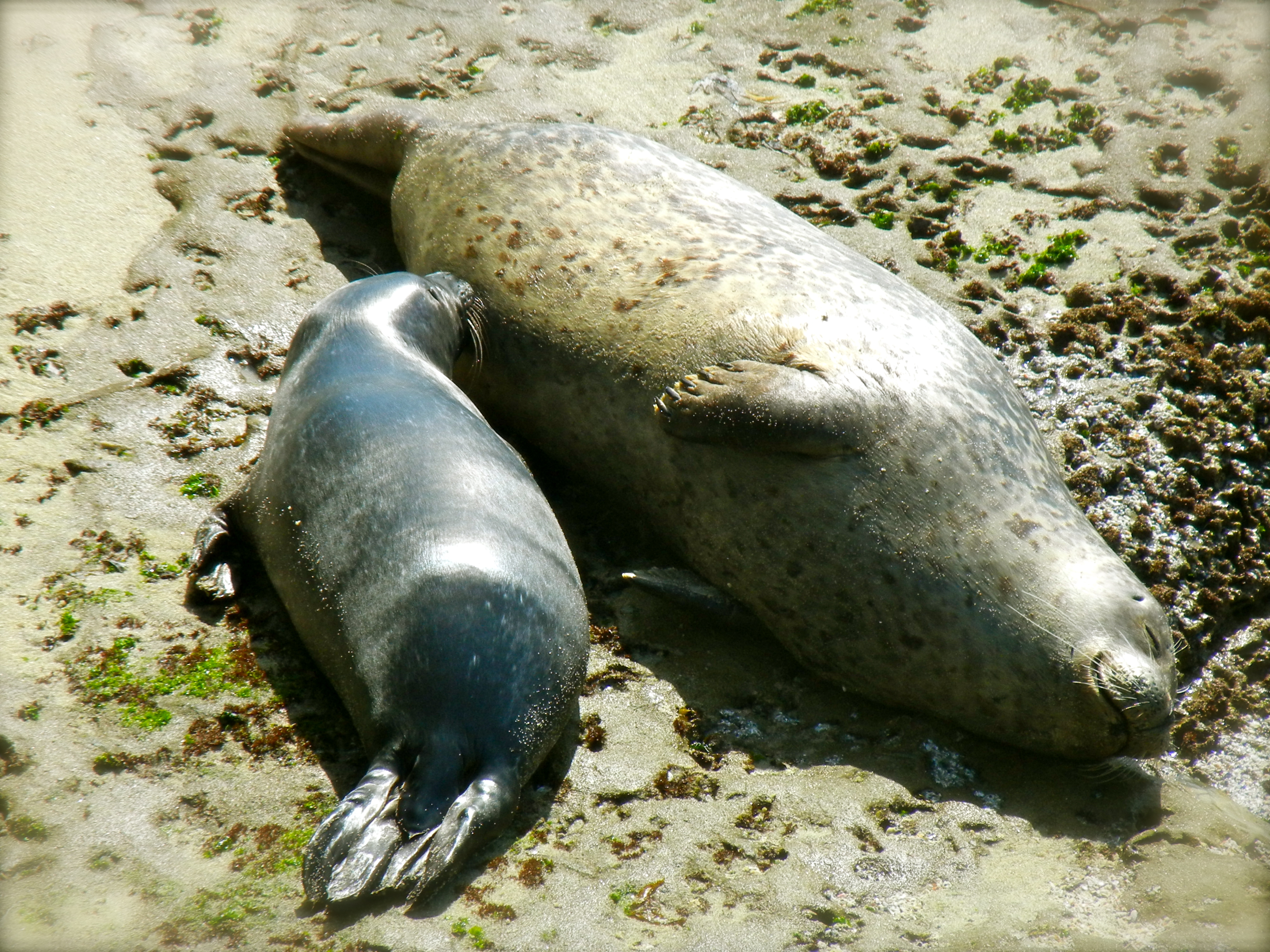
Play whenever you can.baby sealTake care of your own.

full beach

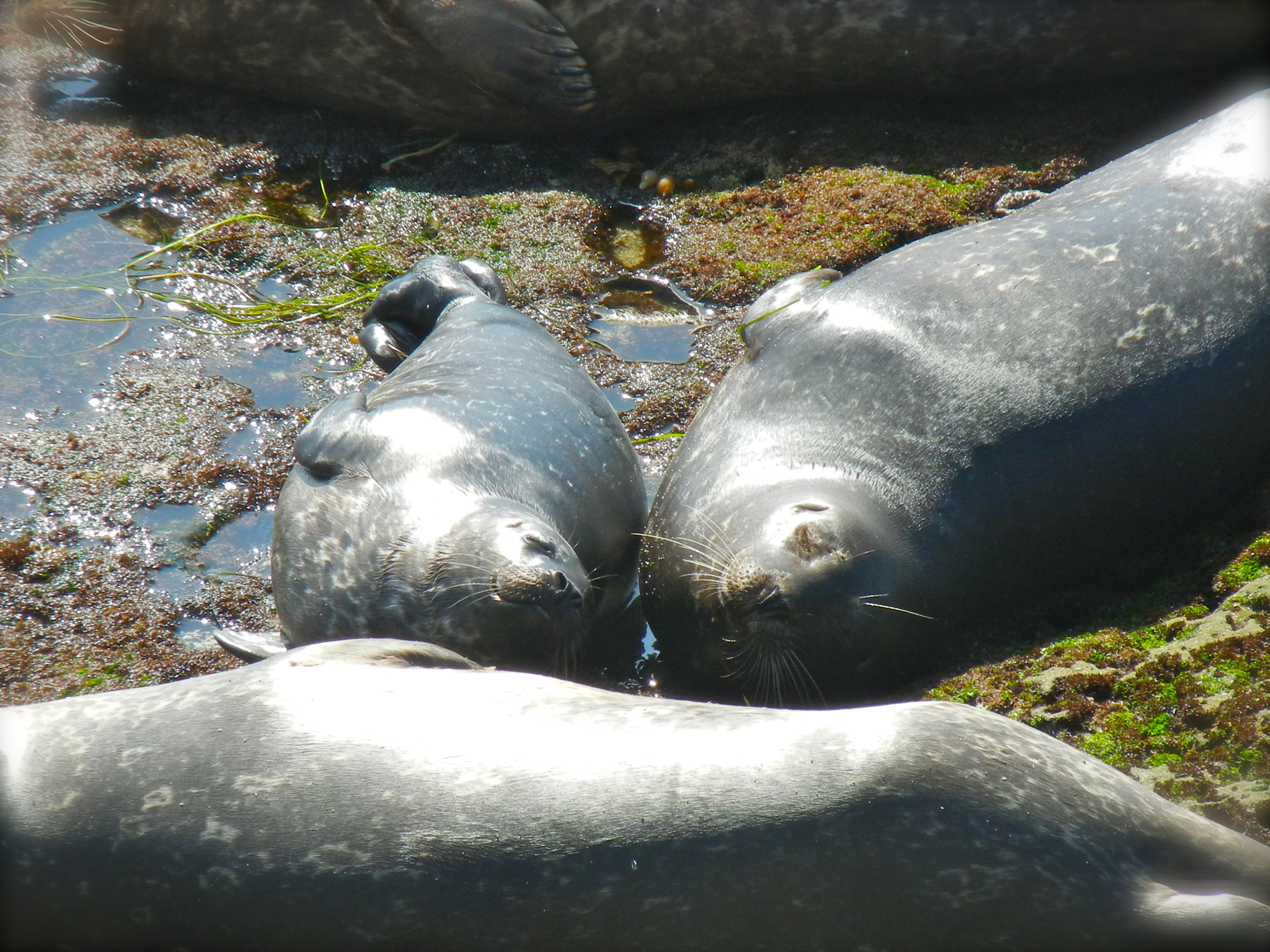
It’s great to hang out with friends.

two sleeping

But having someone special is the best gift of all.

Now before you think there’s no threat here, consider. The La Jolla Cove seals are no stranger to peril. Tourists and restaurateurs complain about the stench of too many seals too close to town.  Conservationists and environmentalists clash with businesses to protect the seals. You can read a roundup of the controversy, or crisis as some call it, at the Seal Sitters link here.

Or you cannot. Sometimes it’s alright to take a break from crisis or controversy and simply enjoy the beauty right in front of you.

And that, good readers, is the last word on the March of contrasts.

Sealed with a kiss
~Catherine

p.s. When you are revived and ready to seriously consider how addressing the threat can create a fine poem, do revisit Dave Smith’s essay, “St. Cyril’s Dragon” The Threat of Poetry.”  In fact, you might even sign up for Poetry Daily. From the “About Poetry Daily” page:

Poetry Daily is an anthology of contemporary poetry. Each day, we bring you a new poem from new books, magazines, and journals.

Poems are chosen from the work of a wide variety of poets published or translated in the English language. Our most eminent poets are represented in the selections, but also poets who are less well known. The daily poem is selected for its literary quality and to provide you with a window on a very broad range of poetry offered annually by publishers large and small.

Life after death

Dear One,
Last time we met, 40 years ago, you were five, maybe seven? Would I recognize you today if we passed on a trail?

I hear yesterday from my father – still close with your father who passes along your news – your husband is dead.

I dream you last night. I see you far off, vulnerably alone, head hunched against a great grey howling landscape.

caterpillar

I didn’t know your husband, don’t know your children, can only impose any understanding of your grief based upon imagination and experience losing others who are not my husband.

So, why write now? I have no balm to erase pain.

I do have one small wonder to offer. Have you ever, as mother, as teacher, observed how very much we are already our one true self in childhood? As we age we grow longer legs, big teeth replace baby teeth, our noses broaden a little. We learn about history, mathematics, physics, and literature.  What I’m talking about though, is that flickering now, flaring then, essence of our true being that burns through the years of a life.

I vividly remember an essence of you: your all out glee when playing Hide and Seek, as if the thrill of returning to base, of throwing yourself absolutely into the game was the secret to staying alive; the way you measured both sides of an argument and implored us squabbling playmates to just get over it; your unruly hair and dirty knees when there were hills to charge or mud to tame; the way you begged us to play wedding and house. You loved those games more than the others and cared for dolls and the mop-stick man with fierce fervor. I love you forever you’d say to the wooden handle. You’d swoon and we’d giggle until breathless.

When we lose someone, I know it is the person we miss. We miss their laugh and their warm hand, their scent, and voice, and the way they break into a smooth slide and spin us around the kitchen on a Tuesday night for no reason. I love you forever.

But more than that, there is a singular way we see ourselves reflected in the eyes of a person who absolutely knows us and loves us in spite of all we are. We simply are with some people in a way we aren’t with the rest of the world.

Your husband isn’t here to look at you that way now. Unfathomable.

But I see you, that fiercely strong and passionate girl. There are many others who still see you with love and caring. We reflect your deep goodness back upon you. We are here, not in your kitchen yet here, a steady presence for you and your children, holding you up in our hearts while you tumble upon grit and boulders. We will wait with you through the grey.

DSCN2076

With gentleness,
~Catherine

p.s. There is no one way that grief happens, though many doctors and psychologists refer to its five stages: denial, anger, bargaining, depression, acceptance.  Whenever I hear this, I imagine a five ring circus. The audience is an assemblage of family and friends peripherally affected by the grief waiting and watching for signs that the new widow, the newly one-child-less parent, the orphan, will make it through a little tap dance, a little hissy fit, a little barter or a wailing upon a stage set up in each ring before being allowed to exit stage left and reenter The Land Of Normalcy.

I don’t know what to do.

I hate being audience. I hate doing nothing. I write.

I offer Mary Oliver‘s book Thirst, a collection of the most achingly beautiful poems written by a poet in a state of grief.

Heavy

That time
I thought I could not
go any closer to grief
without dying

I went closer,
and I did not die.